Turbochargers in the UAE: new, remanufactured and used units, and how to order the right one
The quick answer
A turbocharger in the UAE is ordered by the number on its nameplate, not by the car's model name, and a seller can mean any of four things by turbo: new from the vehicle maker's channel, new from an independent brand, remanufactured on exchange, or used. The nameplate sits on the turbo housing and carries the vehicle maker's number, the turbo maker's number and a serial number, and the engine code and chassis number confirm the match. BorgWarner puts 90 per cent of turbo failures down to four causes that arise outside the turbo itself: foreign bodies, dirty oil, a poor oil supply and high exhaust temperature, so the cause has to be found before a replacement goes on. We publish no turbocharger prices because we hold no dated quotes. Send a photo of the nameplate and your chassis number on WhatsApp and matched suppliers quote against them.
Ask a human · free · no account
Not sure which part fits your car?
Tell us the make, model and year — we check fitment and come back with prices from UAE sellers who have it on the shelf.
Free · usually a reply in minutes · no obligation
Key facts
- A turbocharger uses engine exhaust gas to spin a turbine wheel that is joined by a shaft to a compressor wheel, and Garrett Motion describes that shaft as turning at up to 350,000 revolutions per minute. The compressor feeds the engine more air than it could draw in alone, and that air lets the fuel burn more efficiently.
- The nameplate is fitted to the compressor housing on BorgWarner turbos and shows the vehicle maker's part number, a serial number and BorgWarner's own number. BorgWarner says the nameplate information must be quoted for service and parts support, and calls its own number the most useful one for service purposes.
- Garrett part numbers have six digits, a dash and four more digits, and the first of those four says which channel the unit came through: 0 for original equipment, 5 for original equipment spares or independent aftermarket, and 9 for remanufactured. Garrett's published example is 721021, sold as 721021-0006 original equipment and 721021-5006S aftermarket.
- Garrett treats remanufactured, refurbished and used turbochargers as different things and says only a full remanufacturing process, with disassembly, cleaning, inspection, replacement of worn parts, reassembly, calibration and testing, restores factory performance. IHI warns that some remanufactured units on the market are assembled from copied parts.
- BorgWarner attributes 90 per cent of turbocharger failures to four causes: foreign bodies in the turbine or compressor, dirt in the oil, an inadequate oil supply, and high exhaust gas temperatures. It also warns against assuming the turbo is at fault when an engine misbehaves, because fully working turbos are replaced when the fault is in the engine.
- Garrett recommends a new oil inlet pipe, a new gasket or O-ring, new air, oil and fuel filters and clean engine oil to the vehicle maker's specification whenever a turbo is replaced, and no liquid sealant on the oil inlet and outlet connections. Those items belong on the quote with the turbo.
- Two large SUVs sold in the UAE now use twin-turbo V6 engines: Toyota UAE lists the Land Cruiser 3.5 as a twin-turbocharged V6, which Toyota's global release says was developed to surpass a conventional V8, and Nissan's announcement of the new Patrol describes the shift from its outgoing V8 to a 3.5-litre twin-turbo V6. For owners of the newest generations, turbo parts are now part of ownership.
Rather fill in a form? Send the same request here and matched UAE suppliers reply on WhatsApp either way.
Open the request formTurbochargers — types and specifications
- Complete turbocharger
- Compressor, turbine and centre housings with the rotating assembly
- Cartridge (CHRA)
- Centre housing with shaft, wheels and bearings only; the old housings are reused
- Remanufactured exchange unit
- Taken apart, cleaned, inspected, rebuilt with new wear parts and tested, against your old turbo
- Wastegate turbo
- A valve lets a controlled flow of exhaust bypass the turbine wheel
- Variable nozzle (VNT) turbo
- Moving vanes vary the gas passage continuously
- Electronic actuator
- Self-blocking gears, so never move it by hand
- Oil inlet pipe
- Garrett recommends a new one with every new turbo
- Turbo gasket kit
- New gaskets or O-rings, with no liquid sealant on the oil connections
- Charge air hoses
- Garrett asks for clean, undamaged air hoses before fitting
What a turbocharger is, and what you are buying when you order one
A turbocharger is an exhaust-driven air pump. Garrett Motion, one of the large turbo makers, describes it as a turbine wheel driven by the engine's exhaust gas and joined by a shaft to a compressor wheel, with the shaft turning at up to 350,000 revolutions per minute. The compressor feeds the engine more air than it could draw in on its own, and Garrett says that compressed air makes the fuel burn more efficiently, which is where the extra power and the better fuel economy come from.
That description tells a buyer what the part is made of. There is a turbine housing on the exhaust side, a compressor housing on the intake side, and between them a centre housing that holds the shaft and its bearings. Oil goes in through a feed pipe and drains out through a return line, and on many turbos a wastegate or vane actuator controls the boost. A turbo glossary published by the remanufacturer Melett calls the centre section with its rotating parts a CHRA, short for centre housing rotating assembly, and describes it as essentially a turbocharger without the compressor and turbine housings. Each of those pieces can be bought on its own, and which one you are quoted decides what the quote covers.
The other thing to hold onto is that a turbocharger is not a generic part. Garrett says a fixed-geometry turbo is precisely matched to its engine during the engine development phase, and in practice every turbo is specified for an engine rather than for a model name. The rest of this page is about how to pin down exactly which unit your engine uses, what sellers mean by new, remanufactured and used, and what has to be replaced alongside the turbo so the new one survives.
Where the turbocharger number is, and what each number on the nameplate means
Every serious turbo carries a nameplate, and the number on it is the one to order by. BorgWarner fits its nameplate to the compressor housing of the turbocharger, and Garrett puts its nameplate on the turbo housing. The plate is small, so on a car that has spent years in an engine bay it is worth wiping it clean and photographing it before anything is unbolted.
BorgWarner's own identification page says its nameplate carries three numbers. The first is the OEM part number, which is the number the vehicle or engine maker gave the turbo. The second is the serial number, which is unique to each turbocharger and refers to the production date and similar details. The third is the BorgWarner part number, which BorgWarner says is its former 3K or Schwitzer number and is the most useful one for all service purposes. The page also says the information on the nameplate must be quoted for service and parts support.
Garrett's nameplate shows the customer or Garrett part number, the turbo model, and a serial number that identifies the assembly date, the batch and the production facility. Garrett adds that an original-equipment nameplate may carry the vehicle maker's logo or name, while an aftermarket nameplate does not, and that aftermarket plates also show the country of origin. That difference is one of the quickest ways to tell which channel a Garrett unit came through.
The engine code and the chassis number still matter, because they tell a supplier which turbo the car left the factory with, while the nameplate tells them which turbo is on the car now. If the two disagree, because an earlier owner fitted a different unit, that is worth raising before an order is placed, since one of the two is not what the supplier assumes.
If the plate is missing, painted over or too heat-darkened to read, say so in your message. A supplier can often work from the engine code and the chassis number, but a quote on that basis is a quote on a catalogue match rather than on the unit in your car, and it should be described that way.
| Field on the nameplate | What it is | Why the supplier wants it |
|---|---|---|
| Vehicle maker's part number | The OEM number set by the vehicle or engine maker; Garrett shows it as the customer part number | Ties the turbo to the car's own parts catalogue |
| Turbo maker's part number | BorgWarner's own number, or Garrett's six-digit and four-digit number | BorgWarner calls its number the most useful for service purposes |
| Turbo model | Shown on Garrett plates | Narrows the frame size and the variant |
| Serial number | Unique to each unit; on Garrett plates it identifies assembly date, batch and production facility | Identifies the individual unit so it can be traced |
| Country of origin | Shown on Garrett aftermarket plates | Helps tell which channel the unit came through |
Reading a Garrett part number
Garrett publishes the structure of its part numbers, which makes them the easiest ones to check. A number has six digits, a dash and four more digits, and Garrett says the six digits start with a 4, a 7 or an 8. The first of the four digits after the dash records how the unit reached the market: a 0 marks original equipment, a 5 marks original equipment spares or independent aftermarket, and a 9 marks a remanufactured unit.
Garrett's own worked example is the turbo 721021. The original-equipment version is 721021-0006. The independent aftermarket version is 721021-5006S, and the original-equipment spares version is 721021-5006, the same number without the final letter. Aftermarket numbers usually carry a suffix letter such as S, and original-equipment numbers do not.
Two cautions. First, other makers use different formats, so do not apply the Garrett digits to a BorgWarner or IHI plate; quote whatever is on the plate exactly as printed. Second, the channel digit says which route a unit took, not whether it is good or bad. It matters most when two sellers offer the same base number, because a unit with a 9 after the dash is remanufactured and a unit with a 0 is original equipment, and the two should not be compared as like for like.
| Part of the number | What Garrett says it means | Example |
|---|---|---|
| Six digits before the dash | Identifies the turbo; the first digit is a 4, a 7 or an 8 | 721021 |
| Four digits after the dash | A variant of that turbo; the first of the four gives the channel | 5006 |
| First digit after the dash is 0 | Original equipment | 721021-0006 |
| First digit after the dash is 5 | Original equipment spares or independent aftermarket; aftermarket numbers usually end in a letter such as S | 721021-5006S and 721021-5006 |
| First digit after the dash is 9 | Remanufactured unit | No worked example published |
Four routes to a replacement turbocharger
A seller who says they have that turbo could mean any of four different things, and settling which one is the first job. The first three routes below are the ones the turbo makers describe themselves. The fourth is the one the dismantling trade supplies.
New original equipment or original equipment spares is a unit of the kind fitted at the vehicle maker's factory, or sold afterwards through the vehicle maker's own spares channel. Garrett marks these with a 0, or for original equipment spares a 5, after the dash.
New from the turbo maker's aftermarket line, or from another brand, is the second route. Garrett sells aftermarket units under its own name and says that since 2018 it has used one standardised packaging format worldwide, which gives a buyer something to compare a box against. Other brands also sell new turbochargers into the aftermarket, and our brand pages for Nissens and febi bilstein record that both list turbochargers in their ranges.
Remanufactured on exchange is the third. BorgWarner, Garrett and IHI all run remanufacturing programmes and the shape is the same: your old turbo goes back, and a unit that has been taken apart, cleaned, inspected, rebuilt with new wear parts and tested comes out. The next section sets out what each maker says goes into that.
Used is a turbocharger taken from another vehicle with nothing done to it. The UAE's used-parts trade supplies these from dismantled cars and half-cuts, and our engines page records the trade's own description that turbochargers are among the parts routinely stripped from a used engine and sold separately. No turbo maker we found describes a used unit as restored, and Garrett separates used from remanufactured explicitly. The condition of a used turbo's bearings and seals cannot be judged from a listing or a photograph, so a used unit is a purchase to make against a written warranty and a named donor vehicle, or not at all.
| Route | What it is | What to get in writing |
|---|---|---|
| New, original equipment or original equipment spares | A unit of the kind fitted at the vehicle maker's factory or sold through its spares channel | The nameplate number on the unit, and that the box, the plate and the invoice agree |
| New, independent aftermarket | A new unit from a turbo maker's aftermarket line or another brand, outside the vehicle maker's channel | The brand, the number, and whether the actuator and a gasket kit are included |
| Remanufactured on exchange | An old turbo taken apart, cleaned, inspected, rebuilt with new wear parts and tested, supplied against return of your old one | Who remanufactured it, what was replaced, the warranty terms and the condition required of your old unit |
| Used | A turbo pulled from another vehicle, with no work done to it | The donor vehicle, the nameplate number, and a written warranty or return term |
Remanufactured, rebuilt, refurbished and used: what the makers say separates them
Garrett's position is that remanufactured, refurbished and used turbochargers differ significantly in process and quality, and that remanufactured is the only category that restores a turbo to its original factory performance, durability and emissions standards. It describes the process as full disassembly, thorough cleaning and inspection, replacement or repair of worn or damaged components, precision reassembly, and factory-level calibration and testing.
The makers are specific about what gets replaced. For Garrett Original Reman units it lists actuators, compressor wheels, bearing systems, seals, O-rings, piston ring seals, bolts and clamps, including upgraded parts where a part has been improved. BorgWarner says all bearing and sealing parts, and any worn or damaged parts, are replaced with new parts, and that every unit meets its quality standards after balancing and thorough testing. IHI says its remanufacturing follows its mass-production standard and uses genuine new centre sections combined with recycled parts.
IHI also makes a point worth keeping in mind when a quote simply says remanufactured. It says some remanufactured products sold on the market are assembled with copied parts, and that this is a durability problem its own process is meant to avoid. The word on a quote is a claim about a process. The useful follow-up questions are who did the work and with which parts.
The exchange itself works on cores. BorgWarner describes its REMAN process as supplying a remanufactured turbocharger while you send the used one back, and says it will reject returned units that have been dismantled or that have broken connecting flanges. Whichever supplier you use, treat your old turbo as an asset: keep it whole, do not let a workshop strip it for parts, and ask before the job what condition the supplier requires it in and what happens if it is refused.
Garrett says it offers warranties on its remanufactured turbochargers and its product page says the minimum warranty term can vary by region. For that reason this page states no warranty length. Get the term, what it covers and what it requires of the fitting in writing, for any route.
Cartridge or complete turbocharger: what is being replaced
A cartridge, or CHRA, is the centre housing with the shaft, wheels and bearings, sold without the compressor and turbine housings. A complete turbocharger includes the housings too. Both are legitimate purchases, and the right one depends on where the damage is.
If the damage is inside the centre section, a cartridge replaces the part that failed and nothing else. If a compressor wheel has been rubbing its housing, or the turbine housing is cracked or corroded, a cartridge alone does not cure that, because the damaged housing goes back on the car. That is reasoning rather than a manufacturer statement, but it gives the two questions to put to a seller: which housings stay on the car, and are they undamaged. Ask the seller to state which turbocharger number the cartridge belongs to, and not just which car it suits.
The remanufacturing programmes described by Garrett and BorgWarner supply whole turbochargers, and Garrett lists actuators among the components it replaces in its Original Reman line, which means a complete remanufactured turbo comes with the actuator question largely answered. With a new or used complete unit, and especially with a cartridge, whether the actuator is included is something to ask rather than assume.
| Purchase | What you receive | What to check before ordering |
|---|---|---|
| Complete turbocharger | Compressor housing, turbine housing and centre housing with the rotating assembly | Whether the actuator and a gasket kit are included |
| Cartridge (CHRA) | Centre housing with shaft, wheels and bearings only; the old housings are reused | That the old housings are undamaged, and which turbo number the cartridge belongs to |
| Actuator only | The wastegate or vane actuator without the turbo | That the actuator was actually proven to be the fault |
Wastegate, variable geometry and electronic actuators: the part most often misjudged
Garrett describes four families of turbo. A fixed-geometry turbo has no integral control over its speed or boost pressure and is matched to the engine during development. A wastegate turbo has a valve that lets a controlled flow of exhaust gas bypass the turbine wheel, operated by a pneumatic or electric actuator that responds to boost pressure. A variable nozzle turbine, or VNT, uses moving vanes to vary the gas passage continuously, and Garrett calls it much more complex than wastegate technology. The fourth family is the electrically assisted turbo.
The actuator is where mistakes happen. Garrett says the typical error rate in diagnosing actuator faults is 40 to 50 per cent, and as high as 100 per cent on some newer applications, because engine systems have become more complex, and it says working turbos are removed as a result. It has a tester that can check an electronic actuator on the car without removing the turbo, but says that tester is available only to authorised Garrett distributors. For a buyer, the practical question for a workshop is how it proved that the turbo or the actuator was at fault.
Two details from Garrett's installation guide are useful to a buyer. The gears in an electronic actuator are self-blocking, so moving one by hand damages it and Garrett says that voids warranty cover. And after fitting, it is normal for a VNT turbo to show movement in the actuator, the vane arm and the vane mechanism at key-on and start-up, and normal to hear a high-pitched noise from electric actuators. A buyer who has been told that is a fault can ask whether the workshop has checked Garrett's guide.
When you order, say which kind of actuator your turbo has. A photograph of the actuator, its linkage and whatever hose or electrical connector goes to it settles most of the question, and it is the reason to send a photo of the turbo in place as well as a photo of the nameplate.
| Turbo type | What Garrett says | What to settle when ordering |
|---|---|---|
| Fixed geometry | No integral control over speed or boost pressure; precisely matched to the engine during development | That the number matches exactly, since there is no control to compensate |
| Wastegate | A valve lets a controlled flow of exhaust bypass the turbine wheel; the actuator is pneumatic or electric | Which actuator type the car has, and whether it is included |
| Variable nozzle (VNT) | Moving vanes vary the gas passage continuously; much more complex than wastegate technology | Whether the actuator is included and new, and that actuator movement at start-up is checked after fitting |
| Electronic actuator on either type | Self-blocking gears, so it must not be moved by hand; actuator faults are widely misdiagnosed | How the fault was proven, and a photo of the actuator and connector |
Gaskets, oil feed pipe, filters and oil: what Garrett lists with a replacement turbo
A replacement turbo is not only the turbo. Garrett's installation guide, which is written for workshops, lists items that should be new or clean when the turbo goes on, and a good quote names them rather than leaving them to be discovered on the day.
The oil inlet pipe comes first. Garrett recommends fitting a new one with a new turbo, because a pipe can be damaged inside by heat or have a collapsed hose liner, and Garrett notes this is difficult to detect without cutting the pipe. The oil drain line must be inspected and be clean and undamaged so that oil can flow away without restriction.
Then the gaskets. Garrett says to use the correct new gasket or O-ring, with the centre hole of the oil inlet gasket aligned with the oil inlet flange of the turbo, and to remove old gasket material from the exhaust manifold and pipe. It advises against liquid sealant on the oil inlet and outlet connections so that debris cannot get into the turbo.
Then the filters and the oil. Garrett says to use new air, oil and fuel filters and clean engine oil to the engine or vehicle maker's specification as part of a turbo replacement, to fill the new oil filter with clean oil where possible, and to make sure every air hose connected to the turbo, and the air filter housing, is completely clean and undamaged. Our engine oil and filters pages cover the grades and the parts. Garrett's guide also has the fitter prime the oil system before the first start, which is a workshop step rather than a part, so we leave it there.
| Item | What Garrett's guide says | On the quote? |
|---|---|---|
| Oil inlet pipe | Fit a new one with the new turbo; internal heat damage or a collapsed liner is hard to see without cutting it | Ask for it |
| Oil drain line | Inspect it; it must be clean and undamaged so oil flows away freely | Check, and replace if damaged |
| Gaskets or O-rings | Use the correct new ones, with the oil inlet gasket hole aligned; no liquid sealant on the oil connections | Ask for the gasket kit |
| Air, oil and fuel filters | New filters as part of the replacement; fill the new oil filter with clean oil where possible | Ask for them |
| Engine oil | Clean oil to the engine or vehicle maker's specification | Ask for it |
| Air hoses and filter housing | Completely clean, with no damage or debris | Inspect before fitting |
Why turbochargers fail, and why the cause decides whether the new one lasts
BorgWarner says 90 per cent of all turbocharger failures are due to four things: penetration of foreign bodies into the turbine or the compressor, dirt in the oil, an inadequate oil supply caused by the oil pressure or filter system, and high exhaust gas temperatures traced to the ignition or injection system. It lists the oil supply and the exhaust temperature causes against the engine systems that produce them, which is the important detail.
Three of the four are about the air and oil the turbo is fed, which are matters of service history and the condition of the filters. The fourth is a fuel or ignition fault that makes the exhaust run hot. None of the four is a defect in the turbo as made, and each of them will still be there after a new unit is fitted unless somebody finds and fixes it.
BorgWarner also warns that if an engine does not run properly, one should not assume the turbo is the cause, and that fully functioning turbochargers are replaced when the fault lies in the engine. Garrett's installation guide asks for a thorough diagnostic check of the engine systems before a turbo is replaced, and says symptoms such as power loss, noise, smoke or oil consumption can come from the fuel injection, the air filters, the exhaust system or the lubrication system rather than from the turbo.
For a buyer this turns into three practical requests. Ask what evidence says the turbo is at fault. Ask what the workshop found upstream, meaning the condition of the oil, the oil pressure, the air filter and the intake path. And keep the old turbo whole, because it is both your core for an exchange and the evidence of what went wrong. A new turbo fitted to an engine that is still sending it dirty oil is likely to fail for the same reason, which is the logic of the four causes rather than a measured rate.
Not sure what you're looking at? Send a photo and the car — we'll tell you what you're seeing and what the parts cost. Free, no form.
Symptoms that point at the turbocharger, and the ones that do not
BorgWarner's troubleshooting page sets out four symptoms, and its most useful feature is that every one of them has several causes and most of those are not the turbo. A symptom is a reason to inspect, not an order for a replacement.
Loss of power is listed against dirty air and charge systems, exhaust restrictions and worn engine parts. Noise is listed against dirty components, exhaust leaks and bearing damage. Black smoke is listed against dirty filters, defective fuel systems, worn engine components and bearing damage. Blue smoke is listed against a clogged crankcase ventilation system, problems with the oil lines and worn piston rings.
Read that list the way a buyer should. A noise that sounds like a failing turbo can be an exhaust leak. Loss of power can be a blocked filter. Blue smoke is as likely to point at piston rings or crankcase ventilation as at the turbo, and a replacement turbo does not cure either. When a seller or a workshop says the turbo is gone on the strength of one symptom, the question to ask is what they ruled out first.
| Symptom | Causes BorgWarner lists | What it means for the order |
|---|---|---|
| Loss of power | Dirty air or charge systems, exhaust restrictions, worn engine parts | Check the filter, the charge path and the exhaust before a turbo |
| Noise | Dirty components, exhaust leaks, bearing damage | A turbo-like noise can be an exhaust leak |
| Black smoke | Dirty filters, defective fuel systems, worn engine components, bearing damage | Fuel and air faults come first |
| Blue smoke | Clogged crankcase ventilation, oil line problems, worn piston rings | Often not the turbo, so rule out the engine |
Heat, shutdown and the UAE summer: what is known and what is reasoning
Garrett's guidance on water-cooled turbochargers describes the mechanism that matters most for heat. After the engine is shut down, heat stored in the turbine side soaks back into the centre section where the bearings are. Garrett says water cooling reduces the peak heat-soak temperature after shutdown and that it eliminates oil coking, the breakdown of oil into deposits in the bearing housing. It also says that where a turbo has water cooling, the water lines should be connected so the benefit is realised, and that incorrect water line set-ups can damage the turbo.
That has a purchasing consequence. If your turbo has coolant pipes going to the centre housing, say so when you order, because a replacement for a water-cooled turbo has to be a water-cooled one with its connections. Our cooling page covers the coolant side of the engine.
BorgWarner lists high exhaust gas temperatures among its four main causes of failure and traces them to the ignition or injection system. Garrett's installation guide asks for clean engine oil to the vehicle maker's specification, and our engine oil page covers grades. Neither says anything about the UAE.
We looked for UAE-specific data on turbocharger life and found none, so nothing on this page says that turbos fail sooner here, and we would not trust a page that did. What can be said is the mechanism. The failure routes the manufacturers describe are heat after shutdown, oil quality and debris in the intake, and the UAE has hot summers and fine dust. Whether that shortens turbo life is reasoning, not a measurement. The practical steps are the manufacturers' own: the oil grade the vehicle maker specifies, a clean air filter system, and the shutdown routine in your owner's manual after hard driving.
Who makes the turbocharger on your car
The nameplate says who made the unit. The makers below are the ones whose own pages we could read and that matter for the cars and trucks on UAE roads. This is a list of who each maker says it is, not a ranking.
Garrett Motion sells original equipment, remanufactured and other lines, and its parts are numbered in the six-digit and four-digit form described above. BorgWarner runs a nameplate system and a REMAN exchange programme and says its own number is the one to quote. IHI says it develops, produces and sells turbochargers and superchargers globally, supplies major automobile manufacturers in Japan and overseas, and has produced more than 100 million units. Mitsubishi Heavy Industries Engine and Turbocharger lists the design, manufacture, sales and servicing of turbochargers as its business, and is a different company from the car brand Mitsubishi Motors.
Holset is the one to know for diesel trucks and heavy equipment. It began as a British company, has belonged to Cummins since 1973 and trades as Cummins Turbo Technologies while the turbochargers still use the Holset name, and its turbochargers are made for medium and heavy-duty commercial diesel engines. If your unit came off a truck or a piece of equipment rather than a car, the nameplate is as important as ever, and the make of the engine is as useful to the supplier as the make of the vehicle.
Beyond the original makers there are aftermarket parts brands whose ranges include turbo parts. Our brand pages for Nissens and febi bilstein record that Nissens lists turbochargers, intercoolers and oil feed pipes in its emissions range, and that febi took over the turbocharger specialist Motair and moved the business under the febi name in 2025. Each page carries its own sources.
| Maker | What its own pages say | Worth knowing when ordering |
|---|---|---|
| Garrett Motion | Sells original equipment, remanufactured and other lines; one packaging format worldwide since 2018 | Six digits, a dash, four digits; the digit after the dash gives the channel |
| BorgWarner | Fits a nameplate to the compressor housing and runs a REMAN exchange programme | Quote the BorgWarner number, formerly the 3K or Schwitzer number |
| IHI | Develops, produces and sells turbochargers globally and has produced over 100 million units | Also remanufactures, and warns about copied parts in some remanufactured units |
| Mitsubishi Heavy Industries Engine and Turbocharger | Lists design, manufacture, sales and servicing of turbochargers as its business | A different company from the car brand Mitsubishi Motors |
| Holset (Cummins Turbo Technologies) | British-origin brand owned by Cummins; turbochargers for medium and heavy-duty commercial diesel engines | Mostly for trucks and heavy equipment rather than cars |
Turbocharged vehicles sold in the UAE: examples, with the engine named
The table below names four vehicles that manufacturers' own UAE or regional pages describe as turbocharged. It is a short list of examples, not a ranking of UAE sales and not a fitment list, because the manufacturer pages say what a maker sells and not what a given car on the road is fitted with.
The Toyota and Nissan entries are the most telling. Toyota UAE lists the Land Cruiser 3.5 as a twin-turbocharged V6, and Toyota's global releases describe a newly developed twin-turbo V6 built to surpass a conventional V8 for drivability and name the engine V35A-FTS. Nissan's announcement of the new Patrol, made in Abu Dhabi, describes the move from the outgoing V8 to a 3.5-litre twin-turbo V6, and a later Nissan release names the engine VR35DDTT. For owners of those newest generations, turbo parts are now part of the car.
The same Nissan announcement also lists a naturally aspirated 3.8-litre V6 for the Patrol. So one model name carries a turbocharged engine and a non-turbo one, which is the plainest example of why a turbo cannot be ordered by model name. Hyundai's UAE page for the Palisade lists a 2.5 T-GDI turbo petrol engine and a hybrid version of the same turbo engine, and Toyota UAE lists a 2.4-litre four-cylinder turbo as the engine of the 2026 Land Cruiser Prado.
These are current models. Earlier generations of the same names on UAE roads carried different engines, and the engine and the chassis number tell a supplier which. For other makes, start from the make page for your car, which links through to parts by model.
| Vehicle | Turbocharged engine | Where we read it |
|---|---|---|
| Toyota Land Cruiser (current generation) | 3.5-litre twin-turbo V6, Toyota's V35A-FTS | Toyota UAE Land Cruiser 3.5 page and Toyota's global newsroom |
| Toyota Land Cruiser Prado (2026 model) | 2.4-litre four-cylinder turbo | Toyota UAE Prado page |
| Nissan Patrol (current generation) | 3.5-litre twin-turbo V6, VR35DDTT | Nissan global newsroom, Abu Dhabi debut and Patrol NISMO releases |
| Hyundai Palisade | 2.5 T-GDI turbo petrol, also offered as a hybrid | Hyundai UAE Palisade performance page |
Counterfeit and look-alike turbochargers
Garrett has publicly described counterfeit turbochargers seized in Guangzhou that were marked Garrett on the compressor housing and came with copied fitting and safety instructions in replica packaging. It says such products can compromise both the life of vehicles and the safety of installers and consumers, and its own guide to common myths says counterfeits use low-grade materials, inconsistent processes and poor-quality components.
The same problem has a quieter version inside remanufacturing. IHI says some remanufactured products on the market are assembled from copied parts, so a unit can be branded and packaged properly and still contain parts that are not what the box implies.
The checks available to a buyer are modest but real. Make sure the number on the nameplate matches the box and the invoice. On a Garrett unit, look for the serial number that identifies assembly date, batch and production facility, and remember that an aftermarket plate shows the country of origin and carries no vehicle maker's logo. Compare the nameplate against the maker's own examples, since BorgWarner's identification page shows original nameplates for exactly that purpose. Ask where the unit was bought, and be wary of a branded unit offered far below every other quote.
We found no UAE statistics on counterfeit turbochargers and state none. The point of the checks is that they cost a photograph and a question, and a supplier with a genuine unit will not mind either.
What to send on WhatsApp for a fast turbocharger quote
The aim is a message that a supplier can quote from without asking anything back. Six things do that.
First, a clear photograph of the nameplate, taken before the turbo is removed if the car is still apart. BorgWarner says the nameplate information must be quoted for service and parts support, and it is the single most useful thing you can send.
Second, your chassis number, which is on the vehicle registration card, and the engine code if you can read it. Together with the nameplate they let the supplier check the number against the car.
Third, a photograph of the turbo where it sits, showing the actuator and any coolant pipes, so the supplier can see whether it is a wastegate or a variable-geometry turbo and whether it is water cooled.
Fourth, what happened: the symptom, the colour of any smoke, any noise, and whether the engine has been using oil. Given BorgWarner's list, that tells a supplier whether you are describing a turbo problem or an engine problem.
Fifth, the route and the scope you want: new, remanufactured on exchange or used, and a complete turbo or a cartridge. Ask for the actuator, the gasket kit and the oil inlet pipe to be named in the quote, and say whether you can return your old unit and in what condition.
Sixth, ask for the quoted unit's nameplate number and the warranty terms in writing. Then compare the written quotes on those two points before you compare anything else.
Turbochargers in the UAE — what is different
- One model name can carry a turbo engine and a non-turbo one. The same Nissan announcement lists a naturally aspirated 3.8-litre V6 for the Patrol next to the twin-turbo 3.5, so a turbocharger cannot be ordered by model name.
- Toyota UAE lists a 2.4-litre four-cylinder turbo as the engine of the 2026 Land Cruiser Prado, and Hyundai's UAE site lists a 2.5 T-GDI turbo petrol engine for the Palisade, so turbo parts matter well beyond the big SUVs.
- We found no UAE data on turbocharger life, failure rates or counterfeit prevalence, so this page states none. The heat and dust points are the manufacturers' mechanisms applied to a hot, dusty country, and are labelled as reasoning.
- Turbochargers are among the parts the used-engine trade describes as routinely stripped and sold separately, so check whether a turbo is included when buying a used engine or half-cut, and treat a used turbo as an unknown unit.
- Trucks and heavy equipment commonly use Holset turbochargers, the Cummins brand for medium and heavy-duty commercial diesel engines, and a part number on the nameplate is as necessary there as on a car.
Turbochargers suppliers across the UAE
 Top-Rated
Samdo Auto Spare Parts Trading LLC
Dubai · AL Asmawi Commercial Building 1 El - Shop 17 - Al Manama St - Ras Al Khor Industrial Area 2 - Dubai
 Top-Rated
Oscar Auto Spare Parts Co LLC SP
Sharjah · Building 20 - First Industrial St - beside Em-post Office - Industrial Area 2 - Industrial Area - Sharjah
 Top-Rated
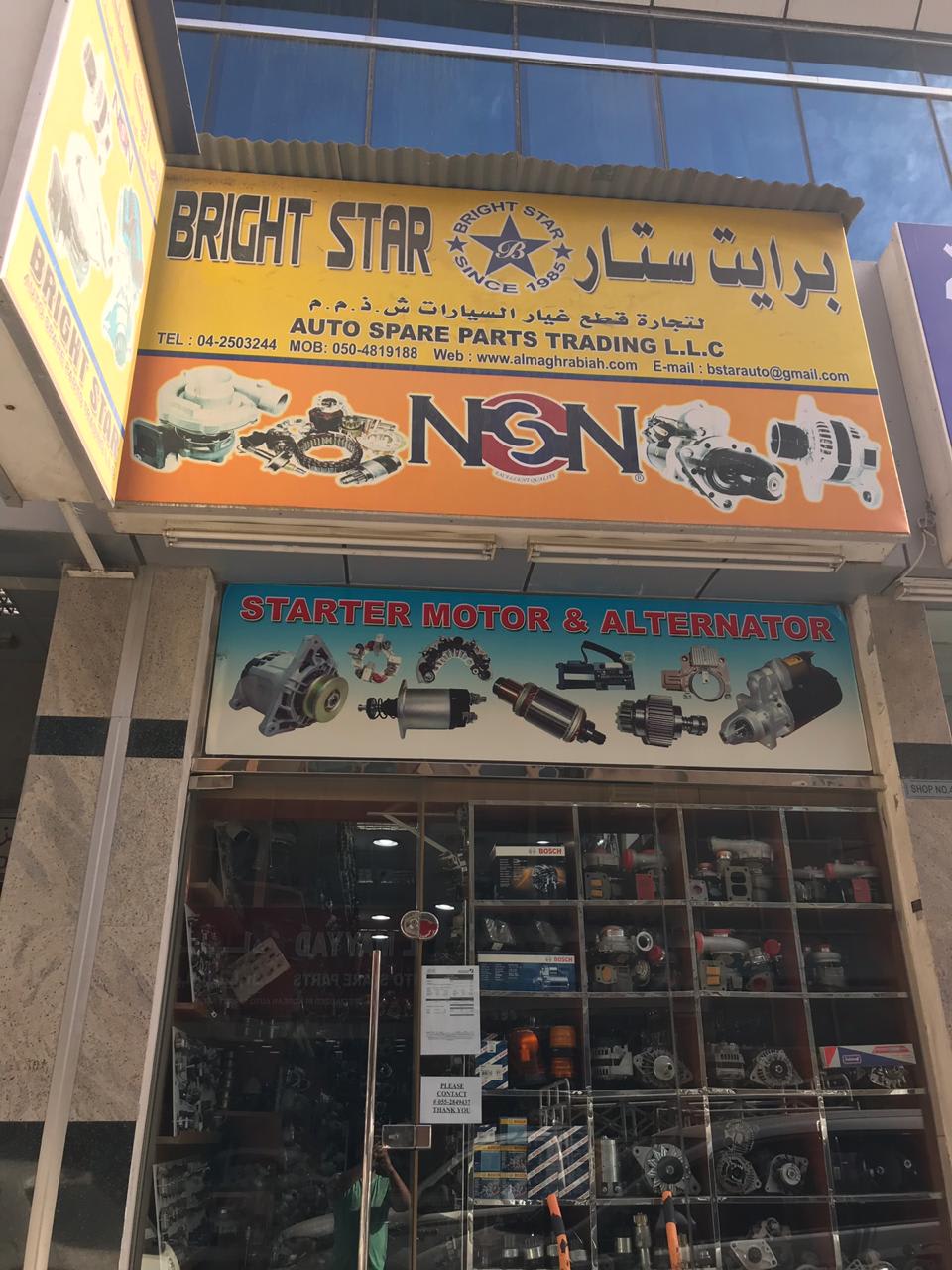
BRIGHT STAR AUTO SPARE PARTS TRADING LLC
Shop # 4, Silver Island Building, 38 C Street, Near Fish Roundabout
 Top-Rated
Al Amani TVR Group
Dubai · Business Bay - Dubai
 Top-Rated
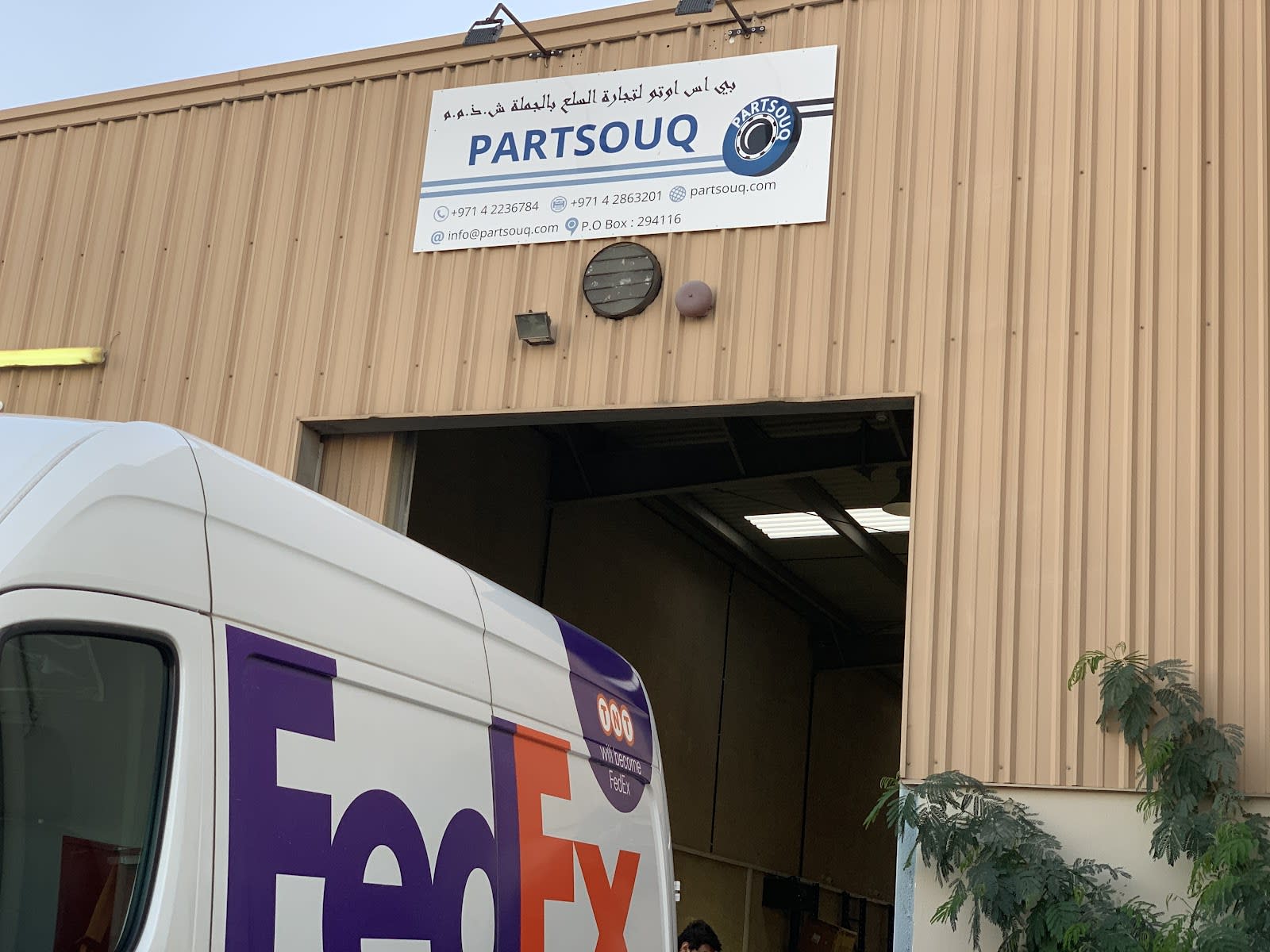
PARTSOUQ - PS AUTO GOODS WHOLESALERS L.L.C
Dubai · RAS AL KHOR 2, ST 7, Building 7, WH-11 - Dubai
 Top-Rated
Noor Din Ditta Auto Spare Parts Trading Branch-3
Sharjah · 8C56+QVF - Shop 1, 56th Street, Industrial Area 3 - Industrial Area 3 - Industrial Area - Sharjah
Where to actually buy this
Shops whose own website lists these parts, or whose stock we have recorded ourselves. Last checked July 2026. Not paid placement.
Stocks turbochargers — genuine and aftermarket, both new and used. It carries Caterpillar, CTP and Cummins and delivers across all seven emirates.
5.0 on Google from 1 reviews
- Dar Al Kanz Auto Spare PartsSharjah
Stocks turbochargers — genuine OEM. It carries Euroricambi, ZF, Knorr and Wabco and 1 more, fits what it sells and delivers across all seven emirates.
4.1 on Google from 7 reviews
- Deep Performance Auto Spare Parts TradingRas Al Khaimah
Stocks turbochargers — aftermarket, new parts. It carries Accel ignition, Acl performance, Aem electronics and Afe power and 9 more.
4.4 on Google from 159 reviews
- AL IHTHIYATI SPARE PARTS ESTRas Al Khaimah
Stocks turbochargers — genuine OEM. It ships outside the UAE.
4.8 on Google from 5 reviews
- ATOMIC SHOP DubaiDubai
Stocks turbochargers — aftermarket, new parts. It carries Garrett, Recaro and Red line and fits what it sells.
4.7 on Google from 74 reviews
Stocks turbochargers — new parts.
4.7 on Google from 179 reviews
Listings are compiled from each business’s own public information. If you run one of these shops and want the entry corrected or removed, email easycarpartsteam@gmail.com.
Ask a human · free · no account
Rather not ring around?
Tell us the car and the part once — we'll send you the shops that actually stock it.
Free · usually a reply in minutes · no obligation
Still easier on a form? The request goes to the same matched UAE suppliers, free, with only the number of shops you choose able to contact you.
Open the request formKeep reading
Turbochargers — FAQs
- What does a turbocharger do?
- It uses the engine's exhaust gas to spin a turbine wheel, which is joined by a shaft to a compressor wheel. The compressor pushes more air into the engine than it could draw in on its own, and Garrett says that compressed air makes the fuel burn more efficiently, giving more power and better fuel economy. Garrett describes the shaft as turning at up to 350,000 revolutions per minute.
- Where is the part number on a turbocharger?
- On a nameplate fitted to the turbo. BorgWarner fits its nameplate to the compressor housing and Garrett puts its nameplate on the turbo housing. The plate carries the vehicle maker's part number, the turbo maker's number, a serial number and on Garrett plates the turbo model. Photograph it before removal, because it is the number a supplier needs.
- How do I read a Garrett turbo part number?
- Garrett numbers have six digits, a dash and four more digits. The six digits start with a 4, a 7 or an 8. The first of the four digits after the dash gives the channel: 0 is original equipment, 5 is original equipment spares or independent aftermarket, and 9 is remanufactured. Aftermarket numbers usually end in a letter such as S. Garrett's example is 721021-0006 for original equipment and 721021-5006S for aftermarket.
- Can I order a turbocharger by my car model?
- Not reliably. One model name can carry turbocharged and non-turbo engines, and Nissan's announcement of the new Patrol lists a twin-turbo 3.5-litre V6 and a naturally aspirated 3.8-litre V6 under the same name. Order by the number on the nameplate, confirmed with the engine code and the chassis number.
- What is the difference between a new, remanufactured and used turbocharger?
- New means a unit made new, either for the vehicle maker's channel or for the independent aftermarket. Remanufactured means an old turbo that has been taken apart, cleaned, inspected, rebuilt with new wear parts, calibrated and tested, usually supplied against return of your old unit. Used means a turbo pulled from another vehicle with nothing done to it. Garrett treats the three as different in process and quality, and says only remanufacturing restores factory performance.
- Is a remanufactured turbo the same as a rebuilt or refurbished one?
- Garrett says no. It says remanufactured, refurbished and used turbochargers differ significantly, and that the full remanufacturing process of disassembly, cleaning, inspection, replacement or repair of worn parts, reassembly, calibration and testing is what restores factory performance. IHI adds that some remanufactured products on the market use copied parts, so ask who did the work and with which parts.
- What is a turbocharger cartridge, or CHRA?
- CHRA stands for centre housing rotating assembly. It is the centre housing with the shaft, the two wheels and the bearings, and it is essentially a turbocharger without the compressor and turbine housings. A cartridge can replace a failed centre section, but the old housings stay on the car, so they need to be undamaged. Ask the seller which turbo number the cartridge belongs to.
- Does a replacement turbo come with the actuator?
- It depends on the unit. Garrett lists actuators among the components it replaces in its Original Reman line, but with a new or used complete unit, and especially with a cartridge, you should ask rather than assume. Garrett says actuator faults are misdiagnosed at a typical rate of 40 to 50 per cent, so also ask how the fault was proven.
- What else should be replaced when a turbo is fitted?
- Garrett recommends a new oil inlet pipe, the correct new gasket or O-ring, new air, oil and fuel filters, and clean engine oil to the vehicle maker's specification. It also says the oil drain line, the air hoses and the air filter housing must be clean and undamaged, and advises against liquid sealant on the oil inlet and outlet connections. Ask for these on the quote with the turbo.
- Why do turbochargers fail?
- BorgWarner says 90 per cent of failures are due to four causes: foreign bodies entering the turbine or compressor, dirt in the oil, an inadequate oil supply, and high exhaust gas temperatures. None is a defect in the turbo as made, and each will remain after a replacement unless it is found and fixed. That is why the cause matters as much as the part.
- What are the symptoms of a failing turbo?
- BorgWarner lists loss of power, noise, black smoke and blue smoke, and for each it names several causes that are not the turbo. Loss of power can be a dirty air system or an exhaust restriction, noise can be an exhaust leak, and blue smoke can be a crankcase ventilation or piston ring problem. A symptom is a reason to inspect rather than a reason to buy.
- Will my new turbo fail the same way as the old one?
- It can, if the cause is still there. Garrett asks for a thorough diagnostic check of the engine systems before a turbo is replaced, and BorgWarner warns against assuming the turbo is at fault. Ask what the workshop found in the oil, the oil pressure, the air filter and the intake path, and keep your old turbo whole so the failure can be inspected.
- How do I avoid a fake turbocharger?
- Check that the number on the nameplate matches the box and the invoice, look for a serial number, compare the plate with the maker's own examples, and ask where the unit was bought. Garrett has described seized counterfeits that carried its name on the compressor housing and came in replica packaging, and IHI says some remanufactured units use copied parts. We found no UAE statistics on counterfeits.
- What happens to my old turbo when I buy a remanufactured one?
- Normally it goes back as the core. BorgWarner describes supplying a remanufactured unit while you send the used one back, and says it rejects units that have been dismantled or have broken connecting flanges. Keep your old turbo whole, do not let it be stripped, and ask the supplier before the job what condition it must be in.
- Is a used turbocharger worth buying?
- Only on terms. The condition of a used turbo's bearings and seals cannot be judged from a photograph, and no turbo maker we found describes a used unit as restored. If you buy one, ask for the donor vehicle, the nameplate number and a written warranty or return term. For most buyers, a remanufactured exchange unit with written terms is the less uncertain choice.
- Does the UAE heat damage turbochargers?
- We found no UAE data measuring it, so we do not claim it. What manufacturers describe is heat soaking back into the bearing housing after shutdown, which Garrett counters with water cooling to prevent oil coking, and high exhaust temperatures, which BorgWarner lists as a cause of failure. The UAE has hot summers, so that mechanism applies, but whether it shortens turbo life here is reasoning rather than a measurement.
- Which companies make turbochargers?
- The ones whose own pages we read are Garrett Motion, BorgWarner, IHI, Mitsubishi Heavy Industries Engine and Turbocharger, and Holset, which is the turbocharger brand of Cummins Turbo Technologies and is aimed at medium and heavy-duty commercial diesel engines. The nameplate on your unit says which one made it.
- How much does a turbocharger cost in the UAE?
- We do not publish a figure, because we hold no dated quotes and would rather leave a number out than invent one. The price depends on the route, meaning new, remanufactured or used, on the brand, on whether the unit is complete or a cartridge, and on whether the actuator and gasket kit are included. Send the nameplate photo and the chassis number on WhatsApp and suppliers quote against them.
- What should I send to get a turbocharger quote?
- A clear photo of the nameplate, your chassis number, the engine code if you can read it, a photo of the turbo in place showing the actuator and any coolant pipes, and what the car has been doing. Say whether you want new, remanufactured or used, and a complete turbo or a cartridge, and ask for the actuator, gasket kit and oil inlet pipe to be named in the quote with the warranty terms.
Ask a human · free · no account
Still not the question you had?
Ask it directly — a person reads every message.
Free · usually a reply in minutes · no obligation