Used and reconditioned engines in the UAE: prices, engine codes and warranties
The quick answer
A tested used engine for a common Japanese or Korean car typically costs AED 2,500 to 7,000 in the UAE, while European premium and large V8 engines run AED 4,500 to 18,000 or more, and independent fitting labour adds roughly AED 800 to 2,500 on top. Those bands are indicative trade ranges rather than quotes we have collected, and they are wide on purpose, because the price of a specific engine is set by its code, its mileage and its warranty and not by the model name on the car. Two things decide whether you buy well: order against the engine code stamped on the block rather than the model, and get the warranty written on the invoice before any money moves.
Ask a human · free · no account
Not sure which part fits your car?
Tell us the make, model and year — we check fitment and come back with prices from UAE sellers who have it on the shelf.
Free · usually a reply in minutes · no obligation
Key facts
- Used engines for volume Japanese and Korean cars typically run AED 2,500 to 7,000, European and large V8 engines AED 4,500 to 18,000 or more, and independent fitting labour AED 800 to 2,500. These are indicative trade ranges carried forward from this site's earlier engines page and from our used-engine price guide, not a survey of quotes, and they are labelled as estimates everywhere they appear.
- The depth of the UAE's used-engine supply is a by-product of insurance rules. The Unified Motor Vehicle Insurance Policy Against Loss and Damage, issued under Insurance Authority Board of Directors Decision No. 25 of 2016, treats a vehicle as a total loss once repair costs exceed 50 per cent of its value before the accident, so cars with perfectly healthy engines are written off here at a rate that keeps the dismantling yards stocked.
- An engine is ordered by its code, not by the car. One Land Cruiser generation was sold in this region with a 4.0 V6 and with two different V8s, and none of the three interchange, so a request that names only the model and year cannot be answered accurately by any counter.
- A half-cut is the front section of a donor car with the engine, gearbox, wiring harness and ECU still installed. It typically costs AED 1,000 to 3,000 more than the bare engine alone and includes the gearbox, ECU, harness and accessories, which is why much of the trade imports engines this way.
- Reputable yards give a written warranty on major units, commonly one month and up to three to six months from the better Sharjah suppliers, and it is almost always conditional on professional fitting at a workshop.
- Fitting a different engine to the one recorded against the vehicle is permitted in Dubai but has to be declared and re-registered. The route described by vehicle-registration service providers is an RTA inspection, referral to the RTA Technical Committee, then a re-test once the committee approves. We have not located an official RTA page setting out the timings, so treat the durations as trade description.
Rather fill in a form? Send the same request here and matched UAE suppliers reply on WhatsApp either way.
Open the request formEngines — types and specifications
- Bare or long block
- Block, crank, pistons, head and timing, no ancillaries
- Complete engine
- Long block plus whatever ancillaries the yard names
- Half-cut
- Donor front section, engine and gearbox still installed
- Reconditioned engine
- Stripped, measured and rebuilt with new wear parts
- Short block
- Bottom end only, for a rebuild rather than a swap
- Cylinder head
- Bought alone after a gasket failure or a warp
- Engine mounts
- Cheap while the engine is out, expensive the week after
- Timing kit
- Belt, tensioner, idlers and usually the water pump
- Turbocharger
- Separately saleable, so confirm it is included
- Engine ECU
- Often paired to the immobiliser and to the donor car
What a replacement engine costs in the UAE, and what the number does not include
The UAE is one of the cheapest places in the region to replace an engine, and the reason is supply rather than generosity. Engines arrive here from Japanese and American auctions, from GCC-spec accident cars written off locally, and as half-cuts through Sharjah's Industrial Area and the auction-fed Sajaa market. That competition is what pushes a used engine down to a small fraction of an agency's new-engine quote.
The ranges below are the ones the trade quotes, and we should be straight about what they are. They are indicative bands carried forward from this site's earlier engines page and its used-engine price guide, widened on purpose. They are not a survey of dated quotes, and we do not currently hold enough of our own quote data to publish one. Treat them as the shape of the market rather than the price of your engine.
| Engine type | Typical used price (AED) | Notes |
|---|---|---|
| Japanese and Korean four-cylinder (Corolla, Sunny, Elantra) | 2,500 to 6,000 | Deepest supply, fastest to find |
| Japanese V6 (Camry, Altima VQ, Pathfinder) | 3,500 to 8,000 | Ask about oil-consumption history on early VQs |
| Four-cylinder turbo, German and newer Japanese | 4,500 to 10,000 | Match the exact engine code, not the displacement |
| V8 (Land Cruiser, Patrol, American trucks) | 5,000 to 15,000 | Wide spread by condition and mileage |
| European premium (BMW, Mercedes, Range Rover) | 4,500 to 18,000 or more | Buy only with a written warranty |
These are UAE market ranges. The price for your car depends on the model, the year and which brand you fit.
Get the exact priceWhat is not in the engine price, and usually should be in the budget
A quoted engine price normally covers the long block or the complete engine as it was pulled, plus whatever accessories the yard names. It routinely does not cover the work and the wear parts around it, and that gap is where a swap goes over budget.
Independent fitting labour runs roughly AED 800 to 2,500 for most cars, and agency labour is a multiple of that. On top sit fresh fluids and filters, a new thermostat and coolant, and the timing service that any sensible mechanic does while the engine is out of the car, because doing it later means taking half of it apart again. On a belt-driven engine that is a belt, tensioner, idlers and usually the water pump.
Then there are the parts that fail on the old engine and get reused out of habit: the engine mounts, the clutch on a manual car, the flexplate on an automatic, the rear main seal, and the crankshaft position sensor. None of them is expensive on its own and all of them are cheap while the engine is out and expensive the week after.
The honest planning number most independent workshops describe for a complete, sensible swap on a volume Japanese car is AED 4,000 to 8,000 all in, engine included. That figure comes from the trade rather than from our own invoices, and it is the number to price a decision against rather than the bare engine price.
Why the UAE has the deepest used-engine supply in the region
This is worth understanding because it explains both the price and the risk. Three separate pipelines feed the same yards.
The first is the local insurance write-off. Under the Unified Motor Vehicle Insurance Policy Against Loss and Damage, issued under Insurance Authority Board of Directors Decision No. 25 of 2016, a vehicle is treated as a total loss once repair costs exceed 50 per cent of its value before the accident. Legal commentary on the same policy describes a second trigger: structural damage to the chassis or pillars requiring cutting or welding makes the vehicle a total loss regardless of the repair cost. A 50 per cent threshold is low, and a car can cross it on body and airbag damage alone while the engine that was running ten minutes before the accident is untouched. Those engines become stock.
The second is import. Japanese auction cars arrive as half-cuts, which is the front section of the donor car cut behind the doors with the engine, gearbox, harness and ECU still bolted in place. American salvage arrives as whole cars or as crated engines. Both routes exist because the engine is worth more than the shell it came in.
The third is the dismantling trade itself, concentrated in Sharjah. Souq Al Haraj at Al Sajaa is the region's auction-fed used-parts market, and the Sharjah Industrial Area around it is commonly described as holding over 1,500 parts shops. Those two together are why an engine that would take a week to source in most markets can often be found here in an afternoon.
The risk sits in the same sentence as the advantage. Depth of supply means a lot of sellers, and a lot of sellers means the quality of what you buy is decided by which one you deal with, not by the market. That is what the warranty section below is really about.
Half-cut, bare engine, long block, short block and reconditioned
Five different things get called an engine at a UAE counter, and the difference between them is thousands of dirhams and several days of labour. Knowing which one you are being quoted is the single most useful piece of vocabulary on this page.
A short block is the bottom end only: block, crankshaft, connecting rods and pistons. There is no cylinder head, no valvetrain and no ancillaries. It is what a rebuilder buys, not usually what a car owner buys.
A long block adds the cylinder head or heads, the valvetrain and the timing components. It has no manifolds, no injectors, no alternator, no starter, no AC compressor and no wiring. Everything from your old engine transfers across, which is fine if your old engine failed cleanly and expensive if it did not.
A complete engine, sometimes called a dressed engine, comes with the ancillaries attached. What exactly is attached varies by yard and is the thing to get written on the invoice, because turbochargers, injectors, coil packs, alternators and AC compressors are all routinely stripped and sold separately.
A half-cut is the entire front section of a donor car with the engine, gearbox, radiator, condenser, wiring harness, ECU and suspension legs in place. Nothing has been disturbed, nothing has been mixed up between donors, and the buyer or their mechanic can inspect the engine where the factory put it and often hear it run. That is why a large part of the trade imports this way. It typically costs AED 1,000 to 3,000 more than the bare engine and it is usually the better buy the moment your job is larger than the engine alone, or when harness and ECU compatibility is uncertain. Our half-cut guide covers the auction-to-invoice chain in detail.
A reconditioned or rebuilt engine has been stripped, measured and reassembled with new wear parts. It costs more, commonly AED 1,500 to 4,000 above a good used unit, and it earns its premium on rarer engines where a genuinely low-mileage used one is hard to find, and on cars the owner intends to keep. The quality of a rebuild is entirely the quality of the rebuilder, and the only useful proxy a buyer has is a written warranty long enough that the rebuilder is carrying real risk.
| What the counter calls it | What is in the box | Best when |
|---|---|---|
| Short block | Block, crank, rods, pistons only | You are having an engine built, not swapping one |
| Long block | Short block plus heads, valvetrain, timing | Your ancillaries and manifolds are known-good |
| Complete or dressed engine | Long block plus the ancillaries the yard names | Clean internal failure, everything else healthy |
| Half-cut | Front section of the donor car, engine and gearbox in place | Engine and gearbox jobs, front accident damage, harness or ECU doubt |
| Reconditioned or rebuilt | Stripped, measured, reassembled with new wear parts | Rare engines, keeper cars, no good used unit available |
Engine codes: the only reliable way to order an engine
Every counter in this market works from an engine code, and every bad order starts with a model name. The code is a short alphanumeric identifier stamped or cast on the block and printed on the vehicle plate on many cars. It identifies the engine family, the displacement, the fuel system and often the emissions calibration, all of which have to match for a swap to run properly rather than merely bolt up.
The reason this matters more here than in most markets is that the UAE parc mixes GCC-spec cars, US-spec imports and Japanese domestic imports of the same nameplate, and those three can carry different engines, different sensor sets and different ECU calibrations. A model name plus a year describes thousands of different cars. A code plus a chassis number describes one.
The engine codes below are the ones this market buys and searches for most. This is a reference table for identification, not a fitment database, and a code that matches is the start of the conversation rather than the end of it: the year band, the drive type and sometimes the emissions market still have to line up.
| Code | What it is | Cars it came in here |
|---|---|---|
| 1NZ-FE | 1.5 petrol four | Toyota Yaris, Echo, Belta |
| 1ZZ-FE | 1.8 petrol four | Toyota Corolla to around 2007, Avensis |
| 2ZR-FE | 1.8 petrol four | Toyota Corolla from around 2008 |
| 2AZ-FE | 2.4 petrol four | Toyota Camry, RAV4, Previa |
| 2AR-FE | 2.5 petrol four | Toyota Camry, RAV4, Lexus ES |
| 2TR-FE | 2.7 petrol four | Toyota Hilux, Fortuner, Prado, Hiace |
| 1GR-FE | 4.0 petrol V6 | Toyota Prado, FJ Cruiser, Land Cruiser, Hilux |
| 2GR-FE | 3.5 petrol V6 | Toyota Camry, Aurion, Highlander, Lexus ES and RX |
| 1FZ-FE | 4.5 petrol straight-six | Toyota Land Cruiser 80 and 105 series |
| 2UZ-FE | 4.7 petrol V8 | Land Cruiser 100, Tundra, Sequoia, Lexus LX470 and GX470 |
| 1UR-FE and 3UR-FE | 4.6 and 5.7 petrol V8 | Land Cruiser 200, Tundra, Lexus LX570 |
| 1UZ-FE | 4.0 petrol V8 | Lexus LS400, GS400, SC400 |
| HR16DE | 1.6 petrol four | Nissan Sunny, Tiida, Micra |
| QR25DE | 2.5 petrol four | Nissan Altima, X-Trail |
| VQ35DE | 3.5 petrol V6 | Nissan Altima, Maxima, Pathfinder, Murano, 350Z |
| VQ40DE | 4.0 petrol V6 | Nissan Pathfinder, Xterra, Navara |
| TB48DE | 4.8 petrol straight-six | Nissan Patrol Y61 |
| VK56DE and VK56VD | 5.6 petrol V8 | Nissan Patrol Y62, Armada, Infiniti QX56 and QX80 |
| 4B11 and 4B12 | 2.0 and 2.4 petrol four | Mitsubishi Lancer, Outlander, ASX |
| 6G74 and 6G75 | 3.5 and 3.8 petrol V6 | Mitsubishi Pajero |
| K24 family | 2.4 petrol four | Honda Accord, CR-V |
| J35 family | 3.5 petrol V6 | Honda Accord, Odyssey, Pilot |
| G4FC and G4FG | 1.6 petrol four | Hyundai Accent and Elantra, Kia Cerato |
| G4KD, G4KE and G4KJ | 2.0 and 2.4 petrol four | Hyundai Sonata and Tucson, Kia Optima and Sportage |
| EA888 | 1.8 and 2.0 petrol turbo four | Volkswagen and Audi, many models |
| N20 and B48 | 2.0 petrol turbo four | BMW 3, 5, X1, X3 |
| N55, B58 | 3.0 petrol turbo straight-six | BMW 3, 5, 7, X3, X5 |
| M271, M274 | 1.8 and 2.0 petrol four | Mercedes-Benz C and E class |
| M272, M276 | 3.0 and 3.5 petrol V6 | Mercedes-Benz C, E, S, GLK, ML |
| LM7, L83 and L86 | 5.3 and 6.2 petrol V8 | Chevrolet and GMC Tahoe, Yukon, Silverado, Suburban |
The same car, three engines: why the model name cannot order a part
This is the argument the table above makes concrete. A Toyota Land Cruiser of the 200 series was sold in this region with a 4.0 V6, a 4.6 V8 and a 5.7 V8, and the three share almost nothing that matters to a swap. A Nissan Patrol split across the Y61 with a 4.8 straight-six and the Y62 with a 5.6 V8, and both were sold new here at the same time for several years. A Mitsubishi Pajero of one generation could carry a 3.5 or a 3.8 V6. A Hyundai Sonata of one year could carry a 2.0 or a 2.4, and the two use different pistons and different calibration.
There is a second layer under that. Within one engine code, manufacturers make running changes: a different intake manifold, a switch from a cable throttle to a drive-by-wire one, a variable valve timing system added on one side of the head and later on both, a change in the crank trigger wheel. Those changes are invisible in a photograph and fatal to a swap, because the ECU is looking for signals the new engine does not produce.
The practical rule the trade uses, and the one to copy: give the counter the chassis number, the engine code, and a photograph of the engine bay showing the plate and the front of the engine. That is enough for a competent yard to pin the exact production window. Our VIN guide covers where to find the chassis number and what a counter does with it.
Where the engine code cannot be read, because the block is inaccessible or the sticker is gone, the chassis number alone still gets you most of the way. What it cannot do is tell the yard whether a previous owner already swapped the engine, which is exactly the case where the code is the only truth in the car.
How engines fail in this climate, and the symptoms in order of urgency
Almost every engine that dies early in the UAE dies of heat, and heat kills through the cooling system and the oil rather than through the block itself. That is worth saying plainly because it changes what a buyer should be inspecting and what a new owner should be doing on day one.
The mechanism is straightforward. Ambient temperature raises the baseline the cooling system has to work down from, so a radiator that is 20 per cent blocked with sand and fin damage still copes in a temperate climate and does not cope here. Oil oxidises faster at higher sump temperatures, so an oil-change interval written for a European duty cycle is optimistic here. Air conditioning is running almost continuously, which loads the engine at idle exactly when airflow through the radiator is at its lowest. And the sand itself is abrasive, which shortens the useful life of an air filter and, when the filter is neglected, of the bores.
We should be careful about the strength of that claim. The mechanism is well understood and it is what workshops here describe; we have not found a UAE dataset that measures engine life against a temperate-climate baseline the way battery life has been measured, so this is reasoning about causes rather than a measured difference.
The symptoms, roughly in order of how much time you have left. A coolant smell with no visible leak, or a level that drops slowly with nothing on the driveway, is usually a head gasket beginning to fail or a pressurised leak evaporating on a hot manifold. You have weeks, and driving it is how weeks become a warped head.
Blue smoke on start-up that clears is valve stem seals. Blue smoke that persists under load is rings or bore wear. Both are survivable for a while and both mean the engine is consuming oil, which is only dangerous when the owner stops checking the level.
White smoke that smells sweet, a milky deposit under the oil filler cap, or bubbles in the expansion tank means coolant and oil are meeting. That is a head gasket, a cracked head or a cracked block, and continued driving decides which of the three you end up paying for.
A knock from the bottom end that rises with engine speed and is worst on a cold start is a bearing. That is the one where the correct action is to stop driving the car immediately, because a spun bearing that seizes can put a rod through the block and turn a rebuildable engine into scrap.
Overheating that comes and goes is not a mild version of overheating. On a modern aluminium engine the temperature gauge is damped and the needle moving at all means the coolant is already far past where it should be. One serious overheat can warp a head; several will finish the engine.
Not sure what you're looking at? Send a photo and the car — we'll tell you what you're seeing and what the parts cost. Free, no form.
The inspection before you pay
A used engine is bought on evidence, and there are five pieces of evidence worth insisting on. None of them is exotic and every serious yard is used to being asked.
First, identification. Match the engine code and the chassis number, not the model name, and photograph the code stamped on the block rather than accepting it verbally. If the seller cannot show you the code on the metal, you do not know what you are buying.
Second, a running test or a compression test. In a half-cut the engine can often be cranked and run in the donor, which is the best evidence available at any price: start-up rattle, smoke colour, idle quality and oil pressure tell you more in thirty seconds than any description. For a bare engine, ask for a compression or leak-down test. Compression figures matter less as absolute numbers than as a spread: cylinders within roughly 10 per cent of each other suggest an even engine, and one cylinder well below the rest is a valve or a ring problem the seller already knows about.
Third, the oil and the coolant. Pull the dipstick if there is one and look at the filler cap. Sludge means missed services. A pale, emulsified deposit means water. A coolant expansion tank with an oily film means the same thing from the other side.
Fourth, what is included, in writing. Manifolds, turbochargers, injectors, coil packs, the alternator, the starter, the AC compressor, the flywheel or flexplate and the sensors are all separately saleable and all routinely absent. An invoice that lists what is attached is worth more than a promise that it is complete.
Fifth, the warranty terms in writing on the invoice, which is its own section below.
One UAE-specific addition. Summer finds every marginal engine. A unit that ran acceptably in a temperate climate can overheat here on the first long drive, so treat any cooling components that came with the engine as untested, and budget for a thermostat, a coolant change and a radiator inspection as part of the job rather than as an extra.
Mileage claims, auction sheets and what low kilometres is worth
Almost every imported used engine is sold with a mileage figure attached, and buyers weight it heavily. It deserves less weight than it gets, for two reasons.
The first is verification. A Japanese auction sheet is a real document with a real grading system and it does travel with some stock, but by the time an engine has been pulled from a half-cut and put on a shelf, the link between the metal and the paperwork is whatever the yard says it is. A yard that can show you the donor, the cluster, or the auction sheet is making a checkable claim. A yard that quotes a number with nothing behind it is making a marketing claim, and the correct response is to price it as an unknown-mileage engine rather than to argue.
The second is that mileage is a weaker predictor than duty cycle. An engine with 120,000 gentle highway kilometres and a full oil history is in better condition than one with 60,000 kilometres of short cold-start city trips and missed services. Nothing on the outside of an engine tells you which one you are looking at, which is why the compression spread and the state of the oil are better evidence than the odometer reading.
Where mileage does earn its keep is as a consistency check. A very low figure on an engine whose valve cover, loom and connectors look aged is a contradiction worth asking about, and how the seller handles that question is itself information.
Known weak points, and how to use them without being unfair to a good engine
Some engines have documented weak points, recorded in manufacturers' own service actions and widely reported in the trade press. Knowing them lets a buyer ask a sharper question. It does not mean the engine is a bad buy, and it is not a claim we have measured in the UAE parc.
Toyota's 2AZ-FE 2.4 four has a well-documented oil-consumption issue on earlier examples and a known head-bolt thread problem, both of which the manufacturer addressed through service actions. Nissan's VQ35DE has an oil-consumption reputation on its earlier years, which is why this site has always advised asking about consumption history on a VQ. BMW's N20 turbo four is known for timing-chain wear on earlier production. Mercedes-Benz M272 V6 engines of the mid-2000s have a documented balance-shaft sprocket wear problem confined to a production window. Volkswagen and Audi's earlier EA888 turbo fours are associated with timing-chain tensioner failure and oil consumption. Hyundai and Kia's Theta II 2.0 and 2.4 direct-injection engines were the subject of large recall and warranty-extension programmes over bearing failure.
The useful way to hold all of that: a documented weak point tells you which question to ask and which production window to avoid, not which engine to refuse. Every one of these families also contains millions of engines that ran to high mileage without incident, and in each case the manufacturer changed the part or the process at a known point. Ask the yard which year and which production window the donor came from, and whether the relevant service action was carried out on it. A good yard will know, because they see these engines constantly and the ones with a bad reputation are the ones they get burned on.
What a used-engine warranty actually covers, and what quietly voids it
The warranty is the product. Two engines on two shelves with the same code and the same claimed mileage are not the same purchase if one carries three months in writing and the other carries a handshake, and the difference in price between them is usually less than the difference in risk.
What a UAE used-engine warranty conventionally covers is the block and the cylinder head, meaning an internal mechanical failure. What it conventionally does not cover is the ancillaries bolted to the outside, the labour to remove and refit the engine, consequential damage to anything else in the car, or the cost of the second set of fluids. That means a covered failure still costs the buyer the labour twice. That is the trade practice as it is described to us rather than terms read off a stack of real UAE warranty documents, and it is worth reading what you are actually handed.
The conditions are where claims are lost. Professional fitting at a workshop is almost always required, and a self-fitted engine usually has no warranty from the first bolt. Correct fluids at the correct intervals are usually required and the receipts are the proof, so keep them. Overheating is almost universally excluded, which is a meaningful exclusion here, because a marginal cooling system that the buyer chose not to renew will destroy the new engine and the destruction will look exactly like the thing the exclusion names. Tuning, forced induction added after the fact and continued driving after a warning are the other common exclusions.
The practical shape of a good deal: the term, the covered components, the fitting condition and the claim process written on the invoice before payment, and the yard's name and trade licence on the same piece of paper. A verbal warranty is not a warranty; it is a hope with a friendly tone.
| Term | What it usually means | What to confirm in writing |
|---|---|---|
| One month | The common floor from an established yard | That the clock starts at fitting, not at purchase |
| Three to six months | Offered by better Sharjah suppliers and on rebuilds | Whether it is replace-only or replace-or-refund |
| Block and head | Internal mechanical failure only | Whether the turbocharger and injectors are in or out |
| Professional fitting required | Self-fitting usually voids the cover | Which workshops the yard will accept |
| Overheating excluded | Near-universal, and the biggest UAE risk | That you renewed the thermostat, coolant and radiator |
| Labour not covered | You pay to remove and refit twice | Whether the yard contributes anything toward labour |
When an engine change has to be declared, and how that works in Dubai
Replacing an engine with the same type is a repair. Replacing it with a different engine is a modification, and in Dubai a modification that changes what is recorded against the vehicle has to be approved and the registration updated. This is the part of an engine swap that buyers routinely discover after the money is spent.
The route described by vehicle-registration service providers runs like this. The vehicle is presented for the RTA inspection, where the discrepancy between the engine in the car and the engine on the record is picked up. The case is referred to the RTA Technical Committee, with an appointment commonly described as seven to ten days after the request. The committee inspects the engine and issues a decision, described as arriving within 24 to 48 hours by email. If it is approved, the vehicle is re-tested at the inspection centre and the registration is updated with the new engine details.
Two honesty notes on that. We have not located an official RTA page setting out those timings, so the durations above are trade description from service providers rather than a published service standard, and they should be treated as an indication of shape rather than a promise. And the rules governing modification are emirate-level, so a car registered in Abu Dhabi or Sharjah is governed by that emirate's authority rather than by the RTA, and the process there may differ.
The related rule worth knowing is the one about structure. Cutting, welding or drilling the main chassis frame is not a modification that gets approved; commentary on the Unified Motor Vehicle Insurance Policy describes structural damage requiring cutting or welding as making a vehicle a total loss in its own right. That is a body-repair concern rather than an engine one, but it is the same regulatory logic, and it is the reason the yards have donors at all.
The practical takeaway for a buyer: if the engine going in carries the same code as the engine coming out, you are doing a repair and the paperwork does not move. If it does not, budget the time as well as the money, and find out before you buy whether the workshop doing the fitting has been through the process before.
Swap, rebuild, or sell the car
This is the decision most people are actually making when they land on a page like this, and it is arithmetic rather than sentiment.
The case for swapping is strongest on a car that is otherwise sound and that you know. An all-in figure of AED 4,000 to 8,000 on a volume Japanese car buys a running car with a known service history and a known accident record. Replacing that car in the same year costs the difference between its damaged value and a replacement's price, plus registration and insurance, plus the unknown history of whatever you buy. On most cars in the AED 15,000 to 40,000 band that arithmetic favours the swap comfortably.
The case for a rebuild rather than a used unit is strongest where the engine is rare here, where good used stock is genuinely hard to find, or where the car is a keeper and the owner would rather buy new wear parts than inherit an unknown donor's history. The premium is commonly AED 1,500 to 4,000 over a good used engine and the value of it is entirely in the rebuilder.
The case for selling is strongest where the engine failure is one of several large bills, where the car has structural or flood history, or where the body has aged past the point that a good engine makes it a good car. A car that needs an engine and a gearbox and a suspension refresh is telling you something, and the yards that would sell you the engine are also the buyers for the shell.
The one thing that makes all three decisions better is the same thing: two or three real quotes on your actual engine code before you decide anything. A request costs a minute and it converts the whole question from an estimate into a number.
| Route | Indicative all-in cost | Best when |
|---|---|---|
| Used engine, independent fitting | AED 4,000 to 8,000 on a volume Japanese car | Car is otherwise sound and you know its history |
| Half-cut, independent fitting | Engine route plus AED 1,000 to 3,000 | Gearbox also needed, or harness and ECU doubt |
| Reconditioned engine | Engine route plus AED 1,500 to 4,000 | Rare engine, keeper car, poor used stock |
| Sell as is | Recovers a salvage price, not a market price | Multiple large failures, or structural history |
These are UAE market ranges. The price for your car depends on the model, the year and which brand you fit.
Get the exact priceWhere the engines actually are
Sharjah is the centre of the trade. The Industrial Area holds the largest concentration of parts shops in the country, commonly described as over 1,500, with dedicated engine yards clustered on particular streets and informal specialisation by make. The Sajaa market, Souq Al Haraj, is the auction-fed end of the same trade and is where the deepest discounts and the widest range of donors sit. Prices there commonly run well below Dubai counters for the same unit, which is why so much of the country's engine buying ends up routed through Sharjah regardless of where the car is.
Mussafah is Abu Dhabi's equivalent and is strongest on American V8s, pickups and large SUVs, which reflects what the capital drives. Ras Al Khor and Al Aweer serve Dubai. Deira leans toward new and reconditioned units and toward European stock rather than half-cuts. The northern emirates carry smaller yards with genuinely competitive pricing on Japanese stock.
None of that means you have to drive anywhere. Inter-emirate delivery is routine in this trade, and the useful first move is not a trip but a message: chassis number, engine code, a photograph of the engine bay, and what you need included. Matched suppliers quote against that, and the comparison between two written quotes with two written warranty terms is the whole decision.
Engines in the UAE — what is different
- The Unified Motor Vehicle Insurance Policy Against Loss and Damage, issued under Insurance Authority Board of Directors Decision No. 25 of 2016, treats repair costs above 50 per cent of the pre-accident value as a total loss. Legal commentary on the same policy describes structural damage requiring cutting or welding as a total loss regardless of cost. Together those two rules are why healthy engines reach the dismantling yards here in the volume they do.
- Fitting a different engine to the one on the vehicle record is a modification in Dubai and requires an RTA inspection, referral to the RTA Technical Committee and a re-test before the registration is updated. Timings quoted by registration service providers are seven to ten days to a committee appointment and 24 to 48 hours to a decision; we have not verified those against an official RTA publication.
- Modification rules are set at emirate level, so a vehicle registered in Abu Dhabi or Sharjah is governed by that emirate's authority rather than by the RTA and the process may differ.
- The UAE parc mixes GCC-spec, US-spec and Japanese domestic imports of the same nameplate, and those three can carry different engines, different sensor sets and different ECU calibrations. That is the practical argument for identifying a car by chassis number rather than model name.
- Overheating is the near-universal exclusion in UAE used-engine warranties, and it is also the most likely local failure mode, so renewing the thermostat, coolant and radiator is part of the job rather than an optional extra.
- Sharjah's Industrial Area is commonly described as holding over 1,500 parts shops, and the adjacent Sajaa market, Souq Al Haraj, is the auction-fed end of the same trade. Together they are the region's deepest engine stock, and prices there commonly run below Dubai counters for the same unit.
- Mussafah is Abu Dhabi's parts centre and skews toward American V8s, pickups and large SUVs; Ras Al Khor and Al Aweer serve Dubai; Deira leans toward new and reconditioned units rather than half-cuts.
- A half-cut typically costs AED 1,000 to 3,000 more than the bare engine and includes the gearbox, ECU, harness and accessories, which is why so much of the region's engine supply arrives in that form rather than crated.
- Airborne sand shortens air-filter life here, and a neglected air filter is a bore-wear mechanism rather than a service inconvenience. This is a mechanism workshops describe rather than a figure we have measured.
Engines suppliers across the UAE
 Top-Rated
Samdo Auto Spare Parts Trading LLC
Dubai · AL Asmawi Commercial Building 1 El - Shop 17 - Al Manama St - Ras Al Khor Industrial Area 2 - Dubai
 Top-Rated
Oscar Auto Spare Parts Co LLC SP
Sharjah · Building 20 - First Industrial St - beside Em-post Office - Industrial Area 2 - Industrial Area - Sharjah
 Top-Rated
BRIGHT STAR AUTO SPARE PARTS TRADING LLC
Shop # 4, Silver Island Building, 38 C Street, Near Fish Roundabout
 Top-Rated
Al Amani TVR Group
Dubai · Business Bay - Dubai
 Top-Rated
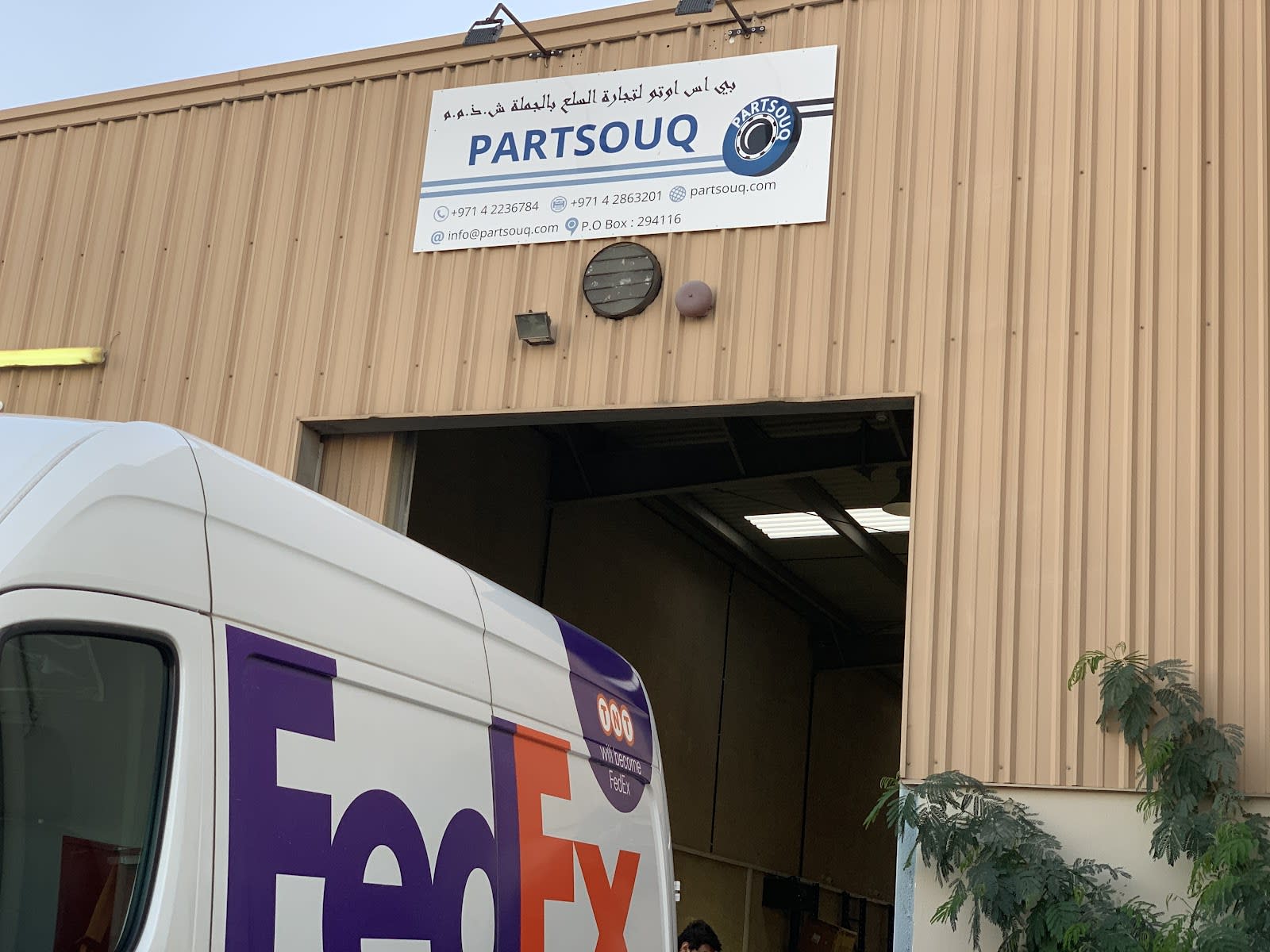
PARTSOUQ - PS AUTO GOODS WHOLESALERS L.L.C
Dubai · RAS AL KHOR 2, ST 7, Building 7, WH-11 - Dubai
 Top-Rated
Noor Din Ditta Auto Spare Parts Trading Branch-3
Sharjah · 8C56+QVF - Shop 1, 56th Street, Industrial Area 3 - Industrial Area 3 - Industrial Area - Sharjah
Where to actually buy this
Shops whose own website lists these parts, or whose stock we have recorded ourselves. Last checked July 2026. Not paid placement.
- Al Faris Auto Spare PartsFujairah
Stocks pistons, gasket kits and timing belts — genuine OEM, new parts. It carries Denso and delivers.
3.9 on Google from 87 reviews
- Public Auto PartsDubai
Stocks pistons, gasket kits and timing belts — aftermarket. It carries Daido, Taiho, NDC and Rocky and 38 more and delivers across all seven emirates.
3.5 on Google from 13 reviews
Stocks engine mounts, pistons and timing belts. It carries GDR, NGK, NPR and Eneos and 3 more and ships outside the UAE.
4.1 on Google from 44 reviews
Stocks pistons and gasket kits — genuine OEM, new parts. It carries Komatsu, Bomag, Genie and Metso and 9 more and fits what it sells.
5.0 on Google from 1 reviews
- Creative Auto Spare Parts TradingAbu Dhabi
Stocks engine mounts and gasket kits — genuine OEM. It carries TAB and sells trade as well as retail.
5.0 on Google from 113 reviews
- Al Yamama Heavy Equipment & Spare PartsRas Al Khaimah
Stocks gasket kits and turbochargers. It carries USG and Yong feng and sells trade as well as retail.
4.7 on Google from 7 reviews
Listings are compiled from each business’s own public information. If you run one of these shops and want the entry corrected or removed, email easycarpartsteam@gmail.com.
Ask a human · free · no account
Rather not ring around?
Tell us the car and the part once — we'll send you the shops that actually stock it.
Free · usually a reply in minutes · no obligation
Still easier on a form? The request goes to the same matched UAE suppliers, free, with only the number of shops you choose able to contact you.
Open the request formKeep reading
Engines — FAQs
- How much does a used engine cost in the UAE?
- Typically AED 2,500 to 7,000 for common Japanese and Korean cars, AED 5,000 to 15,000 for large V8s, and AED 4,500 to 18,000 or more for European premium engines. A reconditioned unit usually costs AED 1,500 to 4,000 more than a good used one, and independent fitting labour adds AED 800 to 2,500. These are indicative trade ranges rather than collected quotes, and the price of a specific engine depends on its code, its mileage and the warranty behind it.
- Do used engines come with a warranty in the UAE?
- From reputable yards, yes. One month written on the block and the head is the common floor, and better Sharjah suppliers go to three to six months. It has to be on the invoice, it is almost always conditional on professional fitting at a workshop, and overheating and labour are the two most common exclusions. A verbal warranty is worth nothing when a claim is made.
- What is a half-cut engine?
- The front section of a donor car, cut behind the front doors and imported with the engine, gearbox, wiring harness, ECU and accessories still installed. Buyers can inspect the engine where it sat and often hear it run before it is pulled, and every bracket and connector comes with it. It typically costs AED 1,000 to 3,000 more than a bare engine, which is why the UAE trade prefers them for anything larger than a straightforward engine-only job.
- What is the difference between a long block and a complete engine?
- A long block is the block, crankshaft, pistons, cylinder head and timing components with no ancillaries attached, so your manifolds, injectors, alternator, starter and compressor all transfer from the old engine. A complete or dressed engine comes with ancillaries already fitted, though exactly which ones varies by yard. Get the included list written on the invoice, because turbochargers, injectors and compressors are all separately saleable and routinely stripped.
- How do I find my engine code?
- It is stamped or cast on the engine block, usually on a machined pad on the side or front, and on many cars it also appears on the vehicle identification plate in the door jamb or under the bonnet. Photograph it rather than relying on memory. If you cannot reach it, the chassis number will get a competent counter most of the way, but only the code on the metal tells you whether a previous owner already swapped the engine.
- Can I fit any engine from the same model?
- No. A single model can be sold with two or three different engines in the same year, and within one engine code manufacturers make running changes to the intake, the throttle, the valve timing and the crank trigger that the ECU is looking for. Match the engine code and the chassis number and confirm the production window. A near-miss engine can bolt in and still refuse to run correctly.
- How much does engine replacement labour cost in the UAE?
- Independent garages typically charge AED 800 to 2,500 to remove and refit an engine, depending on the car and how much has to come off to get it out. Agency labour is a multiple of that. Budget it on top of the engine price, and use professional fitting regardless, because self-fitting usually voids the yard's warranty.
- What does a complete engine swap cost all in?
- On a volume Japanese car, the number the trade describes for a sensible complete job is AED 4,000 to 8,000, covering the engine, the labour, fluids and filters, a thermostat and coolant, and the timing service that is done while the engine is out. That figure comes from the trade rather than from our own invoices. European and V8 cars run considerably higher because both the engine and the labour do.
- Is it worth replacing an engine or should I sell the car?
- On a car otherwise worth keeping, an AED 4,000 to 8,000 swap is usually far cheaper than changing cars in the same year, and you keep a known service and accident history. Selling makes more sense when the engine is one of several large bills, when the car has structural or flood history, or when the body has aged past the point a good engine helps. Get two or three quotes on your actual engine code before deciding, because the arithmetic changes with the engine.
- Why does the UAE have so many used engines for sale?
- Because a lot of cars are written off here with healthy engines. The Unified Motor Vehicle Insurance Policy issued under Insurance Authority Board of Directors Decision No. 25 of 2016 treats repair costs above 50 per cent of the pre-accident value as a total loss, and legal commentary on the same policy describes structural damage requiring cutting or welding as a total loss regardless of cost. Those cars are dismantled, and their engines join imported Japanese half-cuts and American salvage in the Sharjah yards.
- Do I need RTA approval to change my engine?
- If the replacement is the same engine type, it is a repair and nothing changes on the record. If it is a different engine, it is a modification and the vehicle record has to be updated. The route described by registration service providers is an RTA inspection, referral to the RTA Technical Committee with an appointment usually seven to ten days later, a committee decision within 24 to 48 hours by email, then a re-test and registration update. We have not found an official RTA page stating those timings, and other emirates are governed by their own authorities.
- How can I tell whether a used engine is good before I buy it?
- Ask for the engine code on the metal and photograph it. Ask to hear it run if it is in a half-cut, or for a compression or leak-down test if it is not, and look at the spread between cylinders rather than the absolute numbers. Check the oil filler and dipstick for sludge or a milky deposit, and the coolant tank for an oily film. Get the included ancillaries and the warranty written on the invoice. A yard that resists all five is telling you something.
- Does low mileage on a used engine mean it is better?
- Less than buyers assume. Once an engine is off the donor car, the mileage claim is only as good as the yard's ability to show you the cluster, the donor or an auction sheet. Duty cycle matters more than distance anyway: 120,000 gentle highway kilometres with a full oil history beats 60,000 kilometres of short city trips and missed services. Use the compression spread and the state of the oil as your evidence and treat mileage as a consistency check.
- Why do engines fail early in the UAE?
- Heat, acting through the cooling system and the oil rather than on the block directly. High ambient temperature leaves less margin in a partly blocked radiator, sump temperatures oxidise oil faster than a European service interval assumes, air conditioning loads the engine at idle when airflow is lowest, and airborne sand shortens air-filter life. That is the mechanism workshops here describe; we have not found a UAE dataset measuring engine life against a temperate baseline, so treat it as reasoning about causes rather than a measured difference.
- What should I renew when fitting a used engine?
- The timing belt or chain service if the engine uses a belt, because doing it later means taking half the job apart again. Then the thermostat, the coolant, the engine mounts, the rear main seal, the crankshaft position sensor, and the clutch on a manual or the flexplate on an automatic. Treat any cooling components that came with the used engine as untested. Overheating is the near-universal warranty exclusion, so a marginal radiator is the cheapest way to lose a new engine.
- Which engines have known problems to ask about?
- Several families have weak points documented in manufacturers' own service actions and widely reported: oil consumption and head-bolt threads on earlier Toyota 2AZ-FE, oil consumption on earlier Nissan VQ35DE, timing-chain wear on earlier BMW N20, balance-shaft sprocket wear on mid-2000s Mercedes-Benz M272, timing-chain tensioner failure on earlier Volkswagen and Audi EA888, and bearing failures on Hyundai and Kia Theta II. In every case the manufacturer changed the part or the process at a known point, so the useful question is which production window the donor came from, not whether to avoid the family.
- Where is the best place to buy a used engine in the UAE?
- Sharjah, on both price and range. The Industrial Area holds the largest concentration of parts shops in the country and the Sajaa market, Souq Al Haraj, is the auction-fed end of the same trade with the widest choice of donors. Mussafah serves Abu Dhabi and is strongest on American V8s and large SUVs, Ras Al Khor and Al Aweer serve Dubai, and Deira leans toward new and reconditioned units. Inter-emirate delivery is routine, so the sensible first step is a message rather than a drive.
- What should I send when requesting an engine quote?
- Your chassis number, the engine code, the year, and a photograph of the engine bay showing the plate and the front of the engine. Say what failed and how, say whether you want a bare engine, a complete engine or a half-cut, and say what you need included. That single message is enough for a serious yard to check stock, and it removes the two things that waste everyone's time: the wrong engine and a quote that turns out to exclude the alternator.
Ask a human · free · no account
Still not the question you had?
Ask it directly — a person reads every message.
Free · usually a reply in minutes · no obligation