Key facts
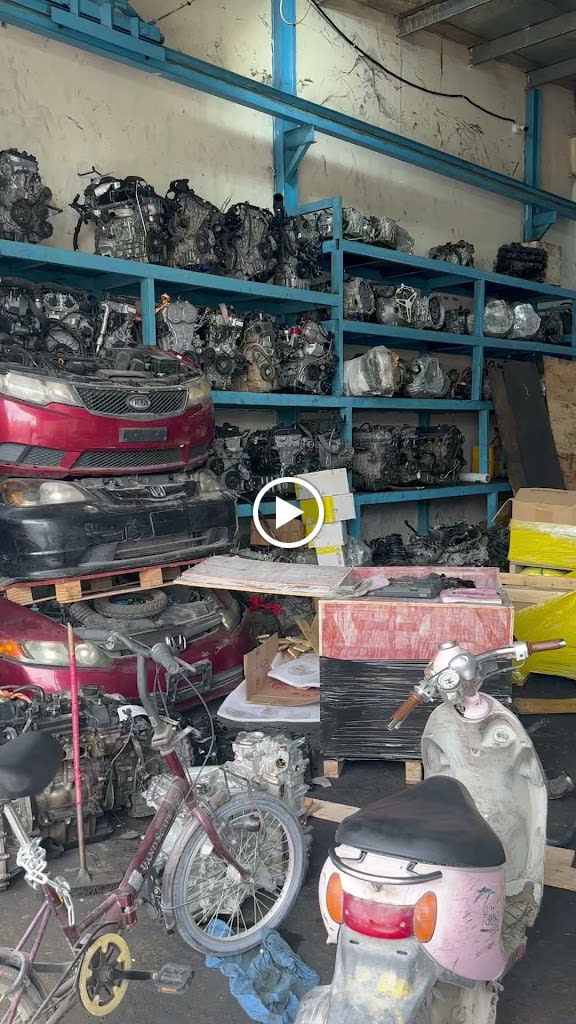
- A half-cut is the front section of a donor car — engine, gearbox, wiring, ECU and accessories intact — imported as one piece.
- Cutting the shell avoids importing a whole used car; the engine travels installed and protected instead of loose in a crate.
- You (or your mechanic) can inspect and often hear the engine run before it's pulled — the biggest advantage over a crated engine.
- A half-cut typically costs AED 1,000–3,000 more than the bare engine alone but includes the gearbox, ECU, harness and accessories.
- Sharjah Industrial Area and Sajaa market are the region's half-cut capitals; stock skews Japanese makes.
What exactly is a half-cut?
When a low-mileage car is written off or auctioned cheaply in Japan, exporters don't ship the whole car — import rules and shipping costs make that pointless. Instead the body is cut behind the front doors and the front section ships as one unit: engine and gearbox still bolted in, complete wiring harness and ECU, radiator and AC condenser, suspension legs, and every bracket, hose and connector exactly where the factory put it.
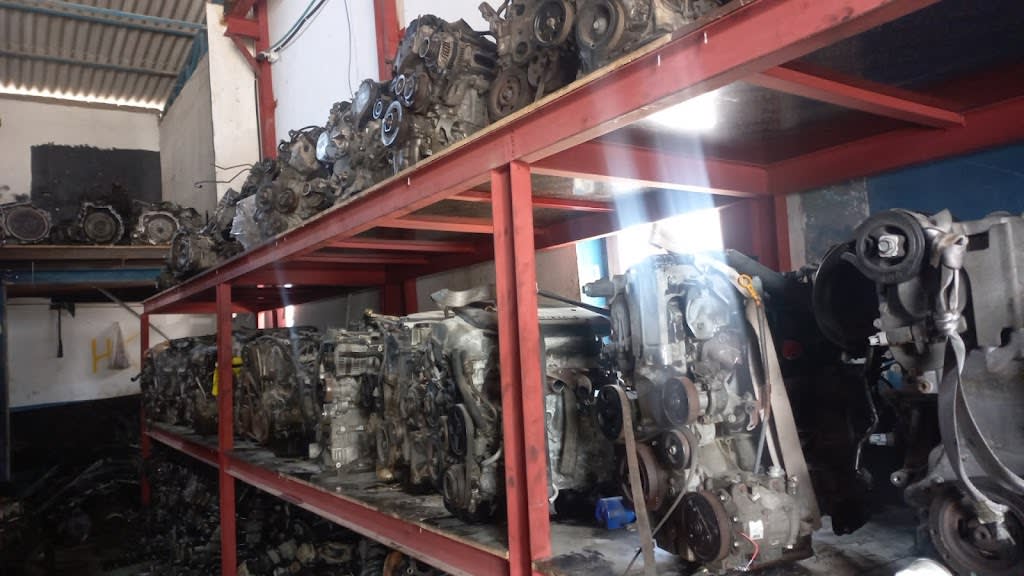
For the parts trade it's the perfect container. Nothing gets lost, nothing gets mixed up between donors, and the buyer sees the engine in its natural habitat rather than steam-cleaned on a shelf. Yards then sell either the intact half-cut or parts pulled from it to order.
Why the trade prefers half-cuts (and when you should too)
Provenance: the half-cut is its own auction sheet — accident damage, mileage and donor identity are visible on the metal. Completeness: engine swaps fail on the small stuff (a missing bracket, an incompatible connector), and a half-cut has all of it, guaranteed to match. Testability: many yards will crank the engine in the half-cut before you commit — no crated engine can offer that.
Buy the half-cut route when your job is bigger than a bare engine: engine plus gearbox, a car with accident damage at the front, or a swap where harness and ECU compatibility is uncertain. Buy a bare engine when yours died cleanly and everything around it is healthy — no point paying for a gearbox you don't need.
| Route | Typical premium over bare engine | Best when |
|---|---|---|
| Bare used engine | — (baseline) | Clean engine failure, healthy accessories and harness |
| Half-cut | + AED 1,000–3,000 | Engine + gearbox jobs, front-accident repairs, ECU/harness doubts |
| Reconditioned engine | + AED 1,500–4,000 | Rare engines, keeper cars, when low-mileage used is scarce |
What a half-cut costs
Pricing follows the engine inside it. For volume Japanese cars, expect roughly AED 3,500–9,000 for a good half-cut — usually AED 1,000–3,000 above the bare engine price, with the gearbox, ECU, harness, starter, alternator and AC compressor effectively thrown in. On that maths, anyone who needs more than just the engine is usually better off with the half-cut even before counting the inspection advantage.
Yards will also quote 'engine pulled from half-cut' — the middle path where you watched it run in the metal, then take only the engine. Expect bare-engine money plus a little for the demonstration value.
Buying from a half-cut yard — the practical rules
Go with your VIN and engine code, or send them on WhatsApp first — the yards know exactly which donor generations match your car. Ask to see the half-cut your engine is coming from (or photos of it), not just the engine. If it can run, hear it run: startup rattle, smoke colour and oil pressure tell you more in thirty seconds than any promise.
Then the paperwork that separates the good yards from the rest: mileage as shown on the donor cluster, what's included in writing (gearbox? ECU? compressor?), and the warranty — 1 month written minimum, more from the better yards. Delivery across the emirates is routine; fitted-price deals with partner garages are increasingly common and worth pricing against your own mechanic.
The catch to respect: half-cut stock is overwhelmingly Japanese-spec. For GCC-spec cooling on cars that tow or cross deserts, check whether the radiator/condenser package differs — your mechanic will know, and local accident-car donors may suit better.
Parts sellers we can name
These shops are here because their recorded stock covers engines or gearboxes and is used or mixed. We do not hold a field that says who cuts and who resells, so ask whether a unit is a half-cut before you agree a price.
Where to actually buy this
Shops whose own website lists these parts, or whose stock we have recorded ourselves. Last checked July 2026. Not paid placement.
Stocks complete engines, manual gearboxes and automatic gearboxes — genuine OEM, both new and used. It delivers to Sharjah.
4.9 on Google from 33 reviews
Stocks complete engines, manual gearboxes and automatic gearboxes — used parts. It fits what it sells.
4.4 on Google from 14 reviews
Stocks complete engines and manual gearboxes — genuine OEM, used parts. It fits what it sells.
4.6 on Google from 13 reviews
Stocks complete engines — genuine and aftermarket, both new and used. It carries Caterpillar, CTP and Cummins and delivers across all seven emirates.
5.0 on Google from 1 reviews
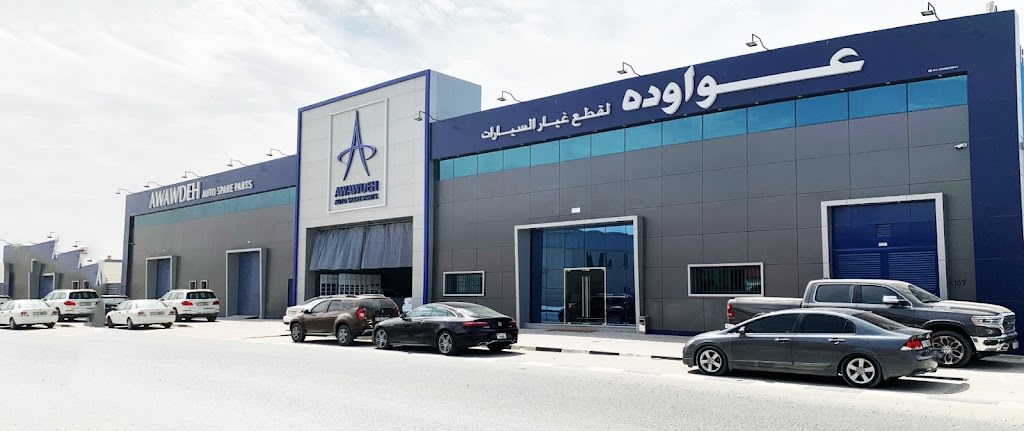
- Awawdeh Auto Spare PartsSharjah
Stocks complete engines — genuine and aftermarket, both new and used. It carries Magneti marelli, Hella, Bosch and Valeo and 1 more and delivers.
4.4 on Google from 305 reviews
Stocks complete engines — used parts. It fits what it sells.
4.6 on Google from 28 reviews

Listings are compiled from each business’s own public information. If you run one of these shops and want the entry corrected or removed, email easycarpartsteam@gmail.com.
FAQs
- What is a half-cut engine?
- The front half of a donor car imported with the engine, gearbox, ECU, wiring and accessories still installed. It's how much of the UAE's used-engine stock arrives — inspectable and complete, unlike a loose crated engine.
- How much does a half-cut cost in the UAE?
- Roughly AED 3,500–9,000 for volume Japanese cars — typically AED 1,000–3,000 more than the bare engine, with the gearbox, ECU, harness and accessories included.
- Is a half-cut better than a crated used engine?
- For inspection, yes: you can see accident history, check completeness and often hear the engine run before it's pulled. If you only need the engine and yours failed cleanly, a bare unit is cheaper.
- Where do I buy half-cuts in the UAE?
- Sharjah's Industrial Area and the Sajaa used-parts market are the regional hubs, with yards in Mussafah and the northern emirates too. Send your VIN and engine code by WhatsApp and matched yards will confirm stock.
- Do half-cut engines come with a warranty?
- From reputable yards, yes — 1 month written is standard, up to 3–6 months from the better suppliers, conditional on professional fitting.
Ask a human · free · no account
Got a question this guide didn't answer?
Send it over.
Free · usually a reply in minutes · no obligation
Prices are indicative AED ranges and vary by vehicle, condition and provider. Where regulations are mentioned, confirm the current rules with the RTA — this guide is general information, not legal or pricing advice.