Car fuel pumps, injectors and fuel system parts in the UAE: how to order the right part
The quick answer
This page is about replacement fuel system parts for your car: the fuel pump and its module, the fuel injectors, the fuel filter, the tank and cap, and the regulator and lines. Two decisions decide whether you order the right part. For a pump, whether you need the whole in-tank module (pump, strainer or filter, level sender and flange) or the pump alone. For an injector, which of three families your engine uses: port-injected petrol, direct-injected petrol or common-rail diesel, which work at pressures from a few bar to over two thousand. A common-rail diesel injector also carries its own correction code that has to be programmed into the engine computer after fitting, so the number on the old part matters as much as the car. Send your chassis number, the engine and a photo of the old part's label, and a supplier can quote the right unit.
Ask a human · free · no account
Not sure which part fits your car?
Tell us the make, model and year — we check fitment and come back with prices from UAE sellers who have it on the shelf.
Free · usually a reply in minutes · no obligation
Key facts
- A fuel supply unit is more than a pump. Hella's product brief names its three most important parts as the fuel pump itself, the fuel filter and the flange with its connections, adds that the unit often has a lever or immersion-tube level sensor, and says it can be fitted with a swirl pot. That is why a quote for a fuel pump can mean three different things.
- Hella gives 3 to 5 bar (300 to 500 kPa) as the system pressure and 60 to 250 litres an hour as the delivery range for its 12 volt in-tank units. Direct-injection petrol engines work at around 200 bar, Delphi describes a 350 bar generation, and Bosch states that its common-rail pump compresses diesel fuel to as much as 2,700 bar. The injector is a different part in each family.
- Over half of all fuel pump replacements are the result of misdiagnosis, according to Hella's own product brief, which also warns that security, drivetrain and oil or fuel pressure switches can render a healthy pump inactive. Rule out what else could be stopping the pump before buying one.
- Hella lists contamination, overheating and wear as the failure causes, and says driving frequently on a low tank can accelerate wear because debris on the bottom of the tank is disturbed and enters the pump. It advises cleaning the tank before fitting a new pump and replacing the gaskets and the filter at the same time.
- Every common-rail diesel injector is unique. Delphi says its correction code, which goes by trim code, compensation code, C2I, IMA, IQA, C3I and C4I, tells the engine computer that injector's individual characteristics, and that the replacement is not complete until the injector has been programmed. A 2012 trade magazine article on Delphi injector service says that without the new codes the vehicle will run and idle poorly and fault codes are likely.
- One injector can have a chain of numbers behind it. An Australian Denso Premium Service Dealer lists the Denso injector 095000-7780 for the Toyota 3.0 litre 1KD-FTV with an alternate number, a previous number, two replaced numbers, three Toyota numbers beginning 23670 and three replaced Toyota numbers. Ask for the number on the old part, not just the model of the car.
- In March 2021 the UAE Ministry of Economy announced a recall of 3,731 Toyota Rush and Avanza vehicles from some 2017, 2018 and 2019 models because a fuel pump impeller could expand and make the pump inoperative, with Al Futtaim Motors contacting owners and repairs free of charge. In October 2018 Al Futtaim Motors confirmed a UAE recall of 430 Toyota Zelas and 190 Lexus CT 200h over a fuel vapour canister assembled to the fuel tank. Ask a dealer whether your chassis number is on an open campaign before paying for a part.
- Remanufactured injectors are tested and coded one by one. A 2018 article on Denso's remanufacturing says each injector is tested after the rebuild and issued an individual code, and Delphi says its repaired injectors are recalibrated on an authorised test bench with a new code, while a non-authorised repairer cannot produce a new one and must reuse the old.
Rather fill in a form? Send the same request here and matched UAE suppliers reply on WhatsApp either way.
Open the request formFuel system — types and specifications
- In-tank fuel pump module
- Pump, filter or strainer, flange and often the level sender, sold as one unit
- Fuel pump only
- The electric pump element; some listings state that it comes without strainer
- Fuel level sender
- The float and sensor behind the gauge; a separate unit on some cars
- Petrol port injectors
- Spray into the intake port at a few bar of system pressure
- Direct injection injectors
- Sit in the cylinder head and work with an engine-driven high-pressure pump
- Diesel common-rail injectors
- Carry an individual correction code that the engine computer must be given
- High-pressure fuel pump
- The engine-driven pump on direct-injection and common-rail engines, not the pump in the tank
- Fuel filter
- Inside the tank unit or in the line, ordered by the number on the old filter
- Fuel tank and filler cap
- Ordered by chassis number
- Fuel pressure regulator and lines
- Ask whether the regulator is a separate part on your car
What the fuel system parts are, and where each one sits
Fuel system parts are ordered by the car and by the number printed on the old unit, not by the words on a job card. Fuel pump can mean a bare electric pump, a complete in-tank module, or the engine-driven high-pressure pump on a direct-injection or common-rail engine. Each is a different part with its own number, and a quote for one is not a quote for another.
On a typical electronically injected petrol car the fuel travels from a pump in the tank, through a filter and the fuel lines, to a rail and then to the injectors. Hella's product brief describes the in-tank unit as three main parts: the fuel pump itself, the fuel filter and the flange with its connections, with a lever sensor or an immersion-tube sensor on many units and a swirl pot on some. The same brief says the pump is located inside the fuel tank or under the chassis, depending on the application. A pump inside the tank is cooled by the fuel around it, which is one reason running a tank very low is a bad habit, covered in the failure section below.
Direct-injection petrol engines and common-rail diesels add a second pump. A low-pressure feed pump still supplies the system, but a separate pump on the engine raises the pressure to what the injectors need. Delphi lists high-pressure pumps for direct-injection engines as a product line of their own, and Bosch describes its common-rail pump as the part that compresses diesel fuel up to 2,700 bar. When someone tells you the fuel pump has gone on one of these engines, the first question is which of the two pumps they mean.
The rest of this page takes the parts in the order buyers ask about them: pump and module, how pumps fail, injectors and their codes, then filters, tanks, regulators and lines, and finally what to send for a quote.
| Part | Where it sits | What it does | How to order it |
|---|---|---|---|
| Fuel pump module | Inside the tank, or under the chassis on some applications | Holds the pump, the filter or strainer and the flange connections, and often the level sensor | Chassis number and the number on the old unit |
| Level sender | Attached to the pump assembly on some cars, a separate unit on others | Reports the fuel level to the gauge | Chassis number; confirm whether it is in the box with the pump |
| Fuel filter | Inside the tank as part of the unit, or in the line outside it | Stops dirt reaching the pump and the injectors | The number on the old filter, or the chassis number |
| High-pressure pump | On the engine, on direct-injection and common-rail engines | Raises the fuel pressure to injection level | Engine code and the number on the pump |
| Rail, regulator and lines | Under the bonnet and under the car | Carry the fuel and hold its pressure | Chassis number; ask whether the regulator is a separate part on your car |
| Injectors | In the intake ports, or in the cylinder head | Meter and spray the fuel into the engine | Engine code, the injector number and, on diesels, the correction code |
| Tank, filler neck and cap | Underbody of the car | Holds the fuel and carries the openings for the filler neck, pickup, drain and level sender | Chassis number |
Fuel pump module, pump only or level sender: what the quote actually covers
Three quotes for the same car can all say fuel pump and still describe different things. The pump alone is the electric pump element. A module, also called a supply unit or an assembly, adds the housing, the flange, the filter or strainer and, on many cars, the level sender. A level sender can also be bought on its own.
Makers describe the split in their own listings. Hella says each of its fuel pump units is delivered together with the gasket, according to OEM requirements. Delphi's guide to fuel sending units says that some sending units are attached to the fuel pump assembly while others are stand-alone, and that your sending unit may come separately from your new fuel pump in the box. A bare pump is a real product too: a UK trade retailer lists Denso's DFP-0103 as an in-tank pump without strainer, cross-referenced to six Toyota numbers: 2322115040, 2322116490, 2322122030, 2322122140, 2322123010 and 2322174020.
Our reasoning, not a manufacturer rule: a pump alone makes sense when the strainer, sender and flange are in good condition and the supplier lists your car against that exact number. The whole module is the safer order when the fuel gauge has been unreliable, when the old strainer is damaged, or when no one can confirm that the bare pump fits your unit, because the parts that were ageing together are replaced together. Hella's advice is that when a pump is replaced it is best to replace both gaskets and the filter at the same time, and to clean the tank first, so the job is rarely just a pump.
| The quote says | What is in the box | Check before you accept |
|---|---|---|
| Fuel pump, pump only | The electric pump element. One retailer listing for a Denso in-tank pump reads without strainer | That your strainer, sender and flange are sound, and that the supplier lists your car against this exact number |
| Fuel pump module, assembly or supply unit | Pump, filter or strainer, flange with connections and often a level sensor, as Hella describes its units | That the level sender is included and whether the flange gasket is in the box |
| Fuel level sender or sending unit | The float and sensor behind the gauge. Attached to the pump assembly on some cars and stand-alone on others, per Delphi | Which of the two your car has, from the chassis number |
| High-pressure fuel pump | The engine-driven pump on a direct-injection or common-rail engine, not the pump in the tank | That you and the workshop mean the same pump, and the engine code |
How fuel pumps fail, and the symptoms that are not the pump
Hella names contamination as one of the top causes of fuel pump failure, meaning dirt and debris that get into the system, and lists overheating and wear alongside it. It adds that driving frequently on a low tank can accelerate wear, because debris on the bottom of the tank is disturbed and enters the pump.
The pump is also cooled by the fuel around it, which is the other reason a very low tank is hard on it. We found no UAE data on how often this happens, and nothing we could read compares pump life here with a cooler climate, so the heat of the UAE is a reason to avoid the habit, not a measured failure rate.
Some pump failures begin in manufacturing. In June 2020 Denso International America filed an equipment recall report with the US regulator for a low-pressure in-tank fuel pump, covering 2,156,057 pumps made between 1 September 2017 and 6 October 2018. It says an impeller made with lower density and lower surface strength, or dried for longer after production, can crack on the surface, absorb too much fuel and deform until it touches the pump body and the pump stops. The remedy pumps use a higher-density impeller. In March 2021 the UAE Ministry of Economy announced a recall that describes a similar defect in its own words, low material density from inappropriate moulding conditions, on Toyota Rush and Avanza vehicles. We are not saying the two cover the same pumps. We are saying that a pump which fails early on a car of those years is worth checking against campaign lists before you pay for a new one.
Hella lists the symptoms that may mean a pump needs replacing: difficult or no starting, a longer start process, the engine stalling again after it starts, increased noise from the pump and poor acceleration. Denso's report adds that an inoperative pump may light the check engine or master warning lamps and cause rough running, no start and stalling.
Hella also says that over half of all fuel pump replacements are the result of misdiagnosis, and explains why: systems not normally associated with the fuel system, including security, drivetrain and oil or fuel pressure switches, can render a healthy pump inactive. A car that cranks and does not start, with a silent pump, is therefore not proof that the pump has failed. Delphi's service article on hard and non-start problems makes the same point from the other side. On the diesel it describes, the cause was either the low-pressure feed to the high-pressure pump or the high-pressure pump itself, and the low-pressure causes it lists include blocked fuel filters, supply pump failure and wiring faults. Our reasoning adds the fuse and the relay to that list, because they are quick and inexpensive to rule out before buying a part.
A wrong fuel gauge is a different fault. Delphi lists a gauge that reads empty when the tank is full, one that is stuck on full and one that fluctuates between empty and full as the signs of a failing sending unit, and gives causes including a float separating from its arm, a faulty resistor, corroded wires and a worn resistive strip. That points to the sender, which may or may not be sold with the pump.
| What you notice | Could be the pump or module | Rule out first |
|---|---|---|
| Cranks but does not start | A pump that is not running or has lost pressure (Hella: difficult or no starting) | Security and other systems that can switch the pump off, which Hella names as security, drivetrain and pressure switches; then fuse, relay and wiring |
| Long cranking before the engine fires | A pump losing pressure (Hella: a longer start process) | A blocked filter or a low-pressure feed fault, confirmed with a pressure test |
| Starts, then stalls again | A pump failing (Hella: stalls again after the start process) | The same switch and signal checks, because Hella says systems outside the fuel system can disable a healthy pump |
| Increased noise from the tank | Pump wear (Hella: increased noise from the pump) | How low the tank is run, since a very low level disturbs debris and leaves less fuel around the pump |
| Poor acceleration | A pump that cannot deliver enough (Hella lists poor acceleration) | A restricted filter, and other engine faults, because poor acceleration has many causes (our reasoning) |
| Gauge wrong while the engine runs normally | Not the pump: the level sender (Delphi: reads empty when full, stuck on full, or fluctuates) | Whether the sender is a separate part on your car |
Not sure what you're looking at? Send a photo and the car — we'll tell you what you're seeing and what the parts cost. Free, no form.
Petrol port injection, direct injection and diesel common rail: three families of injector
An injector is not one part. The same word covers three families that work in different places at very different pressures, and an injector from one family does not fit another.
In a port-injected petrol engine the injector sits in the intake port, and Delphi describes port injection as fuel washing over the intake valves. System pressure is low: Hella gives 3 to 5 bar for the in-tank pump units it lists, and general references give 3 to 4 bar for older injection systems.
A direct-injection petrol engine puts the injector in the cylinder head, spraying straight into the combustion chamber against compression, so it needs the extra engine-driven pump described above. Reference descriptions give typical pressure at around 200 bar, and Delphi describes a 350 bar system that raises it from 200. Delphi sells high-pressure pumps for these engines as a separate line, which is why a direct-injection car can need a pump, a high-pressure pump and injectors, each ordered by its own number.
A diesel common-rail engine keeps fuel at very high pressure in a rail and opens the injectors electrically. Bosch states that its common-rail pump compresses fuel up to 2,700 bar. Delphi describes two kinds of non-hydraulic common-rail injector, the electromechanical solenoid type and the piezo type, with piezo typically found on newer applications, depending on the vehicle. A 2012 Professional Motor Mechanic article on Delphi injector service carries the warning that these systems produce pressures in excess of 1,400 bar and that safety guidelines must be followed before any work. That is part of why diesel injector work belongs with a workshop that has the equipment.
For ordering, the consequence is simple. The engine code picks the injector family, not the badge on the boot. A model sold with a petrol and a diesel engine needs a different injector for each, and so does a model sold with a port-injected and a direct-injected version of the same engine. Within a family the number still has to match.
| Family | Where the injector sits | Pressure we could source | Pumps involved | What to quote by |
|---|---|---|---|---|
| Petrol, port injection | In the intake port | 3 to 5 bar from the in-tank pump (Hella); 3 to 4 bar in general references | The in-tank electric pump | Engine code and the number on the injector |
| Petrol, direct injection | In the cylinder head, spraying into the combustion chamber | Around 200 bar typically; Delphi describes a 350 bar system | The in-tank pump plus an engine-driven high-pressure pump | Engine code and injector number; the high-pressure pump is a separate part |
| Diesel, common rail | In the cylinder head, fed from a high-pressure rail | Up to 2,700 bar (Bosch) | A low-pressure feed plus the engine-driven common-rail pump | Engine code, injector number and the correction code |
Injector numbers, correction codes and why a diesel injector is not just a part
Every common-rail diesel injector is slightly different from the next, and the engine computer has to be told how. Delphi calls this the correction code and lists its other names: trim code, compensation code, C2I, IMA, IQA, C3I and C4I. Its guide explains that each common-rail injector is unique, with individual manufacturing variations, and that programming an injector into the vehicle's computer tells the vehicle what those variations are so it can adjust for the differences.
Delphi's replacement steps ask the technician to check that the injector has the correct part number and to note the correction code before installation, to use a new fuel pipe when refitting to avoid swarf, and then to connect a diagnostic unit, choose the cylinder whose injector was replaced and enter the new code. It states that the replacement is not complete until the injector has been programmed. A 2012 Professional Motor Mechanic article on Delphi injector service describes the consequence: if the new codes are not entered, the vehicle will run and idle poorly and fault codes are likely.
Denso's dealer says the same. Denco Diesel and Turbo, an Australian Denso Premium Service Dealer, states on its listing for a Denso injector that the supplied common-rail injectors require coding to each cylinder by an authorised workshop that hosts the correct diagnostic equipment, and that the Denso calibration code generated for the injector must be accepted by the engine computer. A 2018 article in 4X4 Australia on Denso's remanufacturing says the code holds specific fuelling and timing information that is uploaded to the engine's computer, and warns that one injector can easily be injecting up to 20 per cent more diesel than the rest.
The number problem is the other half. One injector can sit at the end of a chain of numbers. The Denco listing for the Denso injector used on the Toyota 3.0 litre 1KD-FTV in the Hilux and Prado shows a current Denso number, an alternate, a previous number, two replaced numbers, three Toyota numbers and three replaced Toyota numbers, all for the same injector. A counter that searches one number and a supplier that stocks another will not find each other unless somebody holds the chain. That is why the number printed on your old injector, and the chassis number, are worth more than the model name.
A used injector carries the code of the car it came from. Our reasoning, drawn from Delphi's description of the code as belonging to the individual injector: a used diesel injector is a straightforward buy only where the seller can read out its code and the workshop can enter it for that cylinder. Otherwise it adds a variable to a job where, on Delphi's own description, a missing code means poor running, poor idling and fault codes.
| Type of number | Numbers listed | What it tells you |
|---|---|---|
| Denso part number | 095000-7780 | The current Denso number on the listing |
| Alternate Denso number | 095000-7781 | A second Denso number listed for the same injector |
| Previous Denso number | 095000-7540 | An earlier number that this one follows |
| Replaced Denso numbers | 095000-7030, 095000-6760 | Older numbers in the chain |
| Toyota numbers | 23670-30280, 23670-39315, 23670-39316 | Toyota's own numbers for the same injector |
| Replaced Toyota numbers | 23670-30140, 23670-39185, 23670-39186 | Earlier Toyota numbers |
New, remanufactured, repaired and used: the routes for a pump or an injector
The trade words for genuine, OEM and aftermarket are explained once, in the guide linked from this page, and are not repeated here. What follows is what is specific to pumps and injectors, where the choice is wider than for most parts because the same unit can be new, remanufactured, repaired or used.
For diesel common-rail injectors, Delphi describes three routes: new, remanufactured and repaired. In a 2019 announcement it says its remanufactured injectors are calibrated to OE specification with up to 1,000 test plan calibration points, and that its repair route runs through an authorised Delphi Diesel Centre network, where only out-of-spec components are replaced. A 2014 Professional Motor Mechanic article on those centres adds that a non-authorised repairer cannot produce a new code and must reuse the old injector code.
Denso's route is similar. Its remanufacturing article says that after the rebuild each injector is tested and an individual code is issued, making it unique. Bosch's diesel parts page lists an exchange range, which it describes as an alternative for value-based vehicle repairs. In a March 2024 announcement of new diesel parts, Denso describes itself as a significant original equipment parts supplier for common-rail diesel applications. That is a statement about the maker, not a fitment list: for a given car, the part number is what proves a match.
Pumps are simpler. They are bought new, as a module or as a bare pump, or used. A used pump has an unknown share of its life left, and Hella's note that debris and low-fuel running accelerate wear means the previous owner's habits are part of what you would be buying. Our reasoning: a used module can be a sensible choice on an older, lower-value car where a new one is hard to find, provided the number matches, the seller gives a written warranty, and the sender and strainer are checked. The used-parts guide explains how that market works.
| Route | What it means | What to confirm |
|---|---|---|
| Genuine, from the car maker's dealer | The part in the manufacturer's own packaging | That the number matches your chassis number and, for injectors, how the code will be entered |
| Supplied by an OE parts maker, such as Denso | A part sold under the supplying company's own name | The number, and that it is the pump or injector for your engine code |
| Aftermarket | A replacement made to fit; quality depends on the maker | The brand, the cross-referenced number and the warranty in writing |
| Remanufactured | Rebuilt and tested; for common-rail injectors each gets an individual code (Denso, Delphi) | That a code or label is supplied and who will program it |
| Repaired | Your own injector repaired with only out-of-spec parts replaced and recalibrated (Delphi's authorised centres) | Who did the work and whether a new code was generated |
| Used | Taken from another car, with unknown remaining life | The condition, a written warranty, and for diesel injectors the code |
Brands you will be offered for fuel pumps and injectors
Four makers have fuel system ranges that we could document from their own pages. The table lists what we could source for each. It is a description of what the maker publishes, not a ranking and not a claim about which supplies a particular car, because we could not source UAE distributor lists or original equipment fitment for any of them.
Match by part number rather than by brand. A shop that tells you a part is the same as the genuine one is making a claim that only the numbers can prove, and a cross-reference from the maker's own catalogue is better evidence than an assurance at the counter.
| Maker | What we could source | Where it comes from |
|---|---|---|
| Bosch | A common-rail pump stated at up to 2,700 bar, a common-rail injector and an exchange range on its diesel parts page; fuel pump assemblies on its US parts site | Bosch aftermarket diesel page and Bosch auto parts site |
| Denso | In-tank fuel pumps, listed by retailers including a pump without strainer, and a common-rail diesel range of injectors and pumps | Retailer listing and Denso Aftermarket Europe news, March 2024 |
| Delphi | Direct-injection systems up to 350 bar and high-pressure pumps, injector programming guidance, and new, remanufactured and repaired diesel injectors | Delphi Auto Parts product and how-to pages |
| Hella | Fuel pump units and pumps, with a product brief dated January 2026 | Hella product brief and Hella partner pages |
Fuel filters: inside the tank, or on the line
A fuel filter is there to protect the pump and the injectors. Reference descriptions say that unfiltered particles cause rapid wear and failure of the pump and injectors, and name paint chips and dirt entering the tank, and rust from moisture in a steel tank, as typical contaminants.
Filters sit in two places. Hella's product brief counts the filter among the three main parts of the in-tank supply unit, and it also refers to external filters, saying that the external ones are replaced every 20,000 km and the internal one every 90,000 to 100,000 km. Those are Hella's figures for its own guidance, not a rule for every car; your maker's schedule governs. For buying, the difference is practical. An internal filter may arrive as part of the module, while an external filter is a separate part with its own number, found on the old filter.
Intervals, symptoms, the water separator on a diesel and the 2014 change in diesel sulphur are covered on the filters page, and are not repeated here. If you are replacing a pump, Hella's advice applies: fit the filter and the gaskets at the same time.
Fuel tanks, filler necks and caps
Reference descriptions say a metal tank is usually built by welding stamped sheet metal parts together, while a plastic tank is blow-moulded, which allows more intricate shapes. Openings are added for the filler neck, the fuel pickup, a drain and the fuel level sending unit, and the tank connects through a rollover valve to a carbon canister that captures fuel vapour.
That last connection has produced a recall in the UAE. In October 2018 Al Futtaim Motors confirmed a recall of 430 Toyota Zelas, model years 2010, 2011, 2013 and 2014, and 190 Lexus CT 200h, model years 2010 to 2014, because the vehicles have a fuel vapour canister assembled to the fuel tank, where a crack could develop at the edge of a resin channel for the emission gas flow and, over time, expand and eventually cause fuel leakage when the tank is full. The lesson for a buyer is not that tanks fail often. It is that tank-side parts are specific to the build of the car, so they are ordered by chassis number, and a car of that age is worth checking against dealer campaigns first.
Our reasoning: a tank, a filler neck or a cap goes by the car, because shapes, mounting points and fittings are model specific. For a cap, a photo of the old one and the chassis number are enough. For a tank, say whether the sender and pump are being reused or replaced, and remember that Hella advises cleaning the tank before a pump is replaced.
Fuel pressure regulators and fuel lines
A fuel pressure regulator holds the fuel at the pressure the engine management expects. Where it sits depends on the car, and we could not source a general rule for it, so we do not state one. For ordering, ask the supplier to confirm from your chassis number whether the regulator is a separate part on your car or comes with the module or the rail, and do not assume. We have not listed regulator failure symptoms because we could not source them to a manufacturer.
Fuel lines, rails and fittings carry fuel at the pressures in the table above. Delphi's guidance for replacing a common-rail injector specifies a new fuel pipe when the injector is refitted, to avoid swarf, and the 2012 Professional Motor Mechanic article on Delphi injector service warns that these systems run at pressures in excess of 1,400 bar. So on a diesel the lines are ordered with the injectors and fitted by a workshop that has the equipment, not reused out of habit.
A petrol car's lines and fittings are ordered the same way as a tank: by chassis number, with a photo of the damaged section. A supplier cannot judge a fitting from its description alone.
What is different in the UAE
Much of what decides a fuel system purchase is the same here as anywhere: the part number, the engine family and the route. Three things are local, and we have sourced only the first.
The first is recalls. The table below lists the two UAE campaigns involving fuel system parts that we could read in published reports. They are not a complete list. In the 2021 campaign the Ministry said repairs would be free of charge and that Al Futtaim Motors would contact owners. Before paying for a pump or a tank-side part on a car from those years, ask the dealer whether your chassis number is covered.
The second is the mix of cars. Our reasoning, not a measured rate: the UAE parc includes GCC-specification cars alongside US-specification and Japanese-domestic imports of the same model name, and the same model can carry more than one engine in the same year. That is the argument for ordering by chassis number and engine code, and it applies to injectors as much as to engines.
The third is heat. Pumps in the tank are cooled by fuel, and a very low tank removes that cooling. We have no UAE data on how often pumps fail here compared with a cooler climate, so we do not claim a figure. The habit is worth avoiding for the reasons Hella gives, which do not depend on climate.
| When | Vehicles | Fuel system part | Reported by |
|---|---|---|---|
| March 2021 | 3,731 Toyota Rush and Avanza, some 2017, 2018 and 2019 models | Fuel pump impeller: low material density from inappropriate moulding conditions could make the impeller expand, touch the pump case and leave the pump inoperative | UAE Ministry of Economy, in Gulf News |
| October 2018 | 430 Toyota Zelas, model years 2010, 2011, 2013 and 2014, and 190 Lexus CT 200h, model years 2010 to 2014 | Fuel vapour canister assembled to the fuel tank: a crack could expand and cause fuel leakage when the tank is full | Al Futtaim Motors, in Gulf News |
What moves the price of a pump or injector, and what to ask
We do not publish a price range on this page. We do not hold dated, attributed quotes for these parts, and a range without them would be an invention. Suppliers quote against the part number, and the table lists what to compare when two quotes arrive, because quotes that look far apart are often quotes for different things.
The first variable is what is in the box, which the earlier sections cover. The second is the injector family, since a direct-injection or common-rail part is a different technology from a port injector. The third is the route, since new, remanufactured and used are priced on different logic. For diesel injectors there is a fourth: whether the quote includes the coding, which needs a diagnostic tool and a workshop that holds it.
| Variable | Why it moves the price | What to ask |
|---|---|---|
| Module or pump only | A module contains more parts: housing, flange, filter or strainer and often the sender | Exactly what is in the box and whether the gasket and the sender are included |
| Injector family | Port, direct-injection and common-rail parts are different technologies working at different pressures | That the quote is for your engine code, and the injector number |
| Route | New, remanufactured, repaired and used units are priced on different logic | Which one it is, in writing, and who stands behind it |
| Coding | A diesel injector must be programmed to its cylinder using diagnostic equipment | Whether coding is included, who does it, and whether the code or label is supplied |
| Associated parts | Hella advises replacing the gaskets and the filter with a pump, and Delphi specifies a new fuel pipe with an injector | Whether the filter, gaskets and pipes are in the quote or extra |
| Warranty | Longer or clearer cover is part of what the price buys | The length, what it covers, and whether it is written on the invoice |
These are UAE market ranges. The price for your car depends on the model, the year and which brand you fit.
Get the exact priceWhat to send for a fuel pump or injector quote
The details below are what let a supplier quote the right unit the first time. Send them in one message, because the supplier can then check stock and numbers without coming back to you with questions.
Then ask each supplier to repeat the part number they are quoting, to say what is in the box, to say whether it is new, remanufactured or used, to state the warranty, and, for diesel injectors, to say who will code them and whether the code or label comes with the injector. Two quotes that answer all five can be compared. Two that do not cannot.
The guide on finding parts by chassis number explains where to read your number, and the used-parts guide covers buying from the yards. If you are not sure whether the part is the pump, the sender or something else, say what the car does and what has already been checked, and say so plainly: Hella's finding that over half of pump replacements are misdiagnosed is the reason to describe the symptom as well as naming a part.
| Send | Why it helps |
|---|---|
| Chassis number (VIN) | Lets the supplier match the exact build rather than the model name |
| Engine code, and whether it is petrol or diesel | Decides the injector family and which pumps your car has |
| The number on the old part | For an injector, the number on its body; for a pump, the number on the unit or flange. It also lets the supplier follow the chain of older numbers |
| A photo of the old part and the connector | Lets the supplier compare shape, connectors and flange |
| What the car does, and what has been checked | Avoids misdiagnosis, which Hella says is behind over half of pump replacements |
| Module or pump only, and whether the level sender is needed | Decides what the quote must include |
| For diesel injectors, the correction code if it can be read, and who will program it | The code is individual to each injector, and the engine computer must be given it |
| Whether a dealer has been asked about an open campaign | In the 2021 UAE pump campaign the Ministry said repairs would be free of charge, so the answer can save buying a part |
Fuel system in the UAE — what is different
- In March 2021 the UAE Ministry of Economy announced a recall of 3,731 Toyota Rush and Avanza vehicles from some 2017, 2018 and 2019 models for a fuel pump impeller defect, described as low material density from inappropriate moulding conditions; Al Futtaim Motors contacts owners and repairs are free of charge.
- In October 2018 Al Futtaim Motors confirmed a UAE recall of 430 Toyota Zelas, model years 2010, 2011, 2013 and 2014, and 190 Lexus CT 200h, model years 2010 to 2014, over a fuel vapour canister assembled to the fuel tank, where a crack could cause fuel leakage when the tank is full.
- The UAE parc includes GCC-specification cars alongside US-specification and Japanese-domestic imports of the same model name, and one model can carry more than one engine in the same year. That is our reasoning, not a measured rate, and it is why fuel pumps and injectors are ordered by chassis number and engine code rather than by model name.
- Diesel common-rail injectors need coding to each cylinder by an authorised workshop with the correct diagnostic equipment, according to Denso's Australian dealer and Delphi, so a UAE buyer should ask who will program the injectors before ordering them.
- An in-tank pump is cooled by the fuel around it and Hella says driving frequently on a low tank accelerates wear. We found no UAE data measuring pump failure against a cooler climate, so the heat is a reason to avoid running the tank very low, not a measured failure rate.
Fuel system suppliers across the UAE
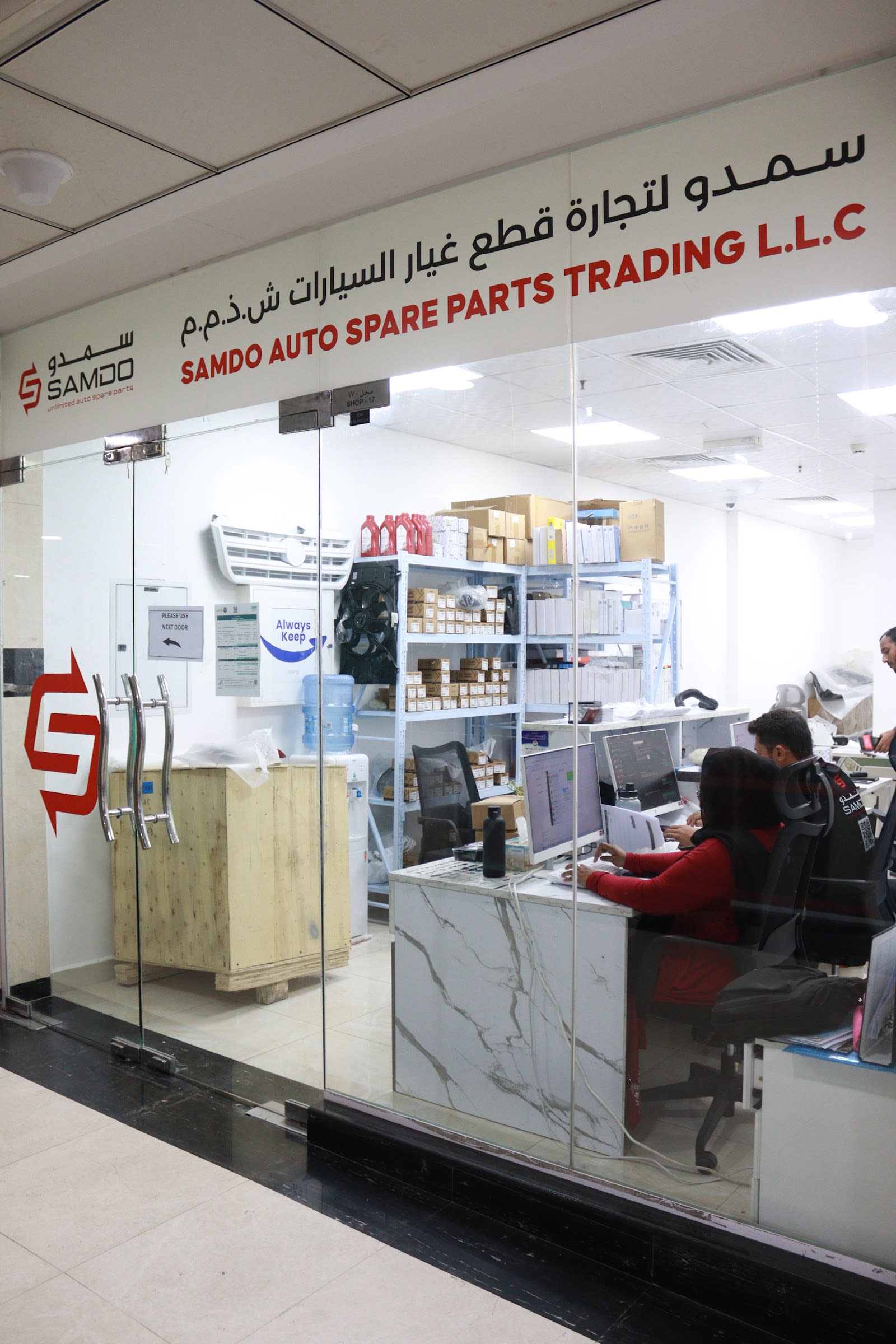 Top-Rated
Samdo Auto Spare Parts Trading LLC
Dubai · AL Asmawi Commercial Building 1 El - Shop 17 - Al Manama St - Ras Al Khor Industrial Area 2 - Dubai
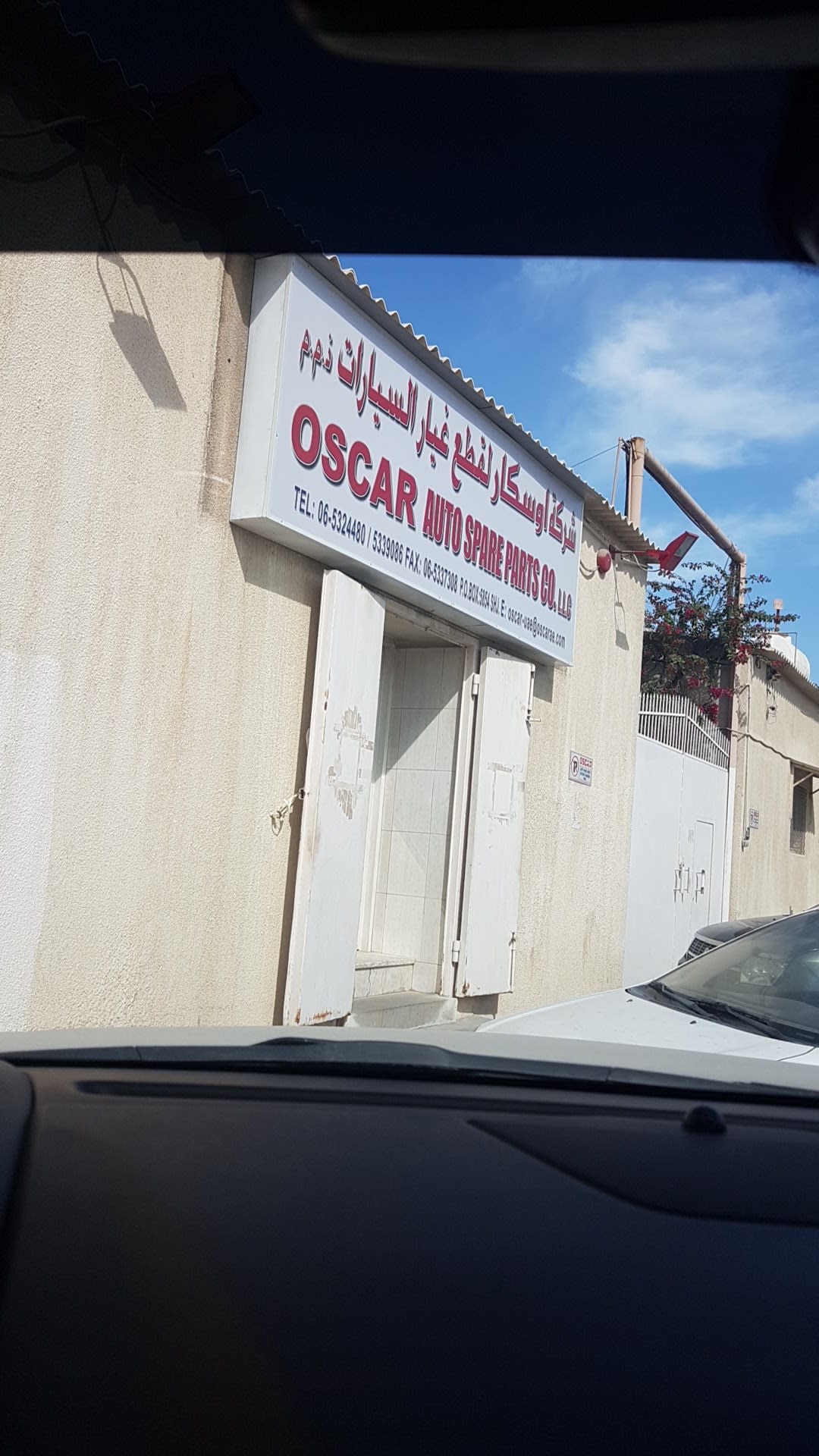 Top-Rated
Oscar Auto Spare Parts Co LLC SP
Sharjah · Building 20 - First Industrial St - beside Em-post Office - Industrial Area 2 - Industrial Area - Sharjah
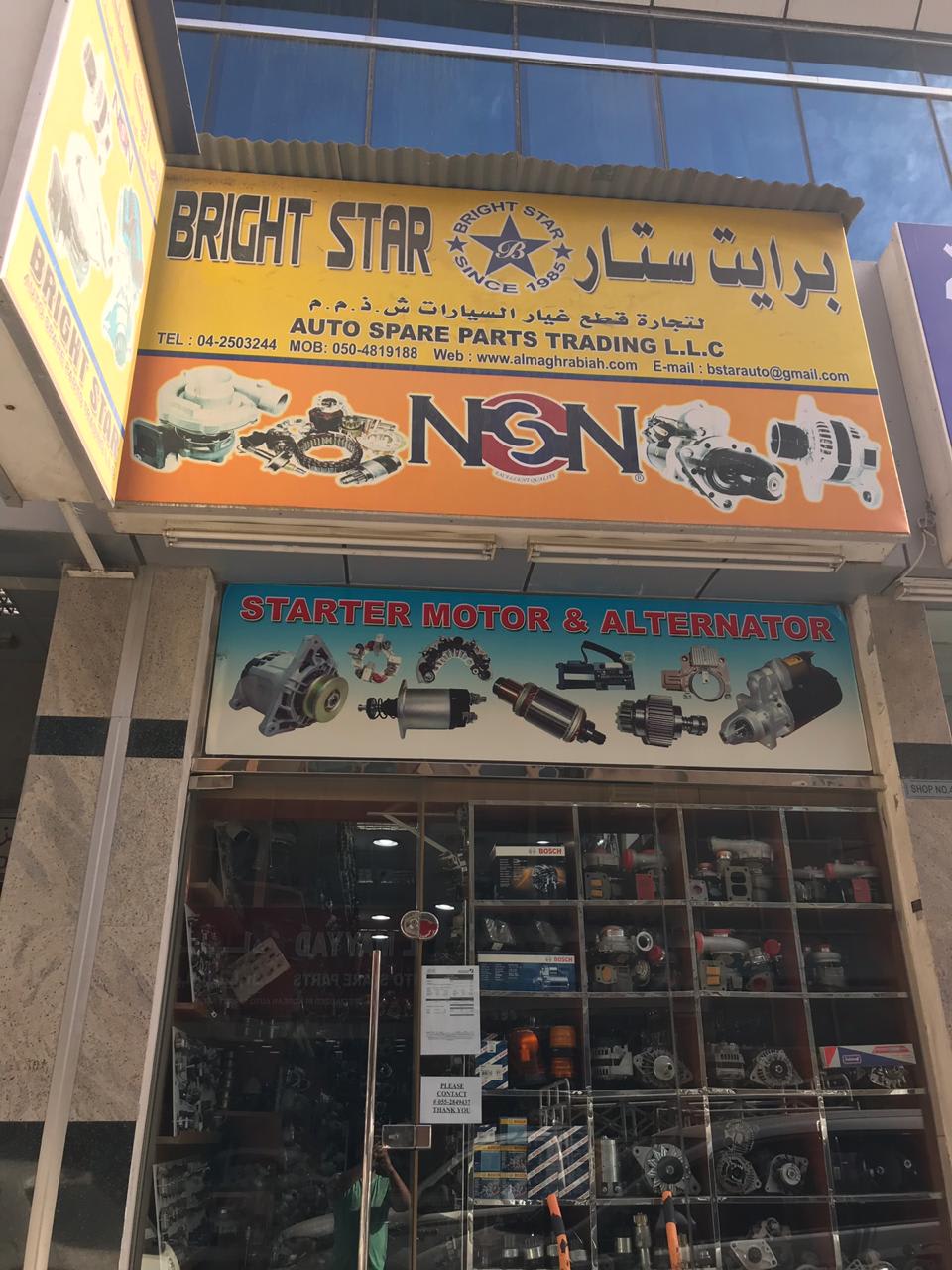 Top-Rated
BRIGHT STAR AUTO SPARE PARTS TRADING LLC
Shop # 4, Silver Island Building, 38 C Street, Near Fish Roundabout
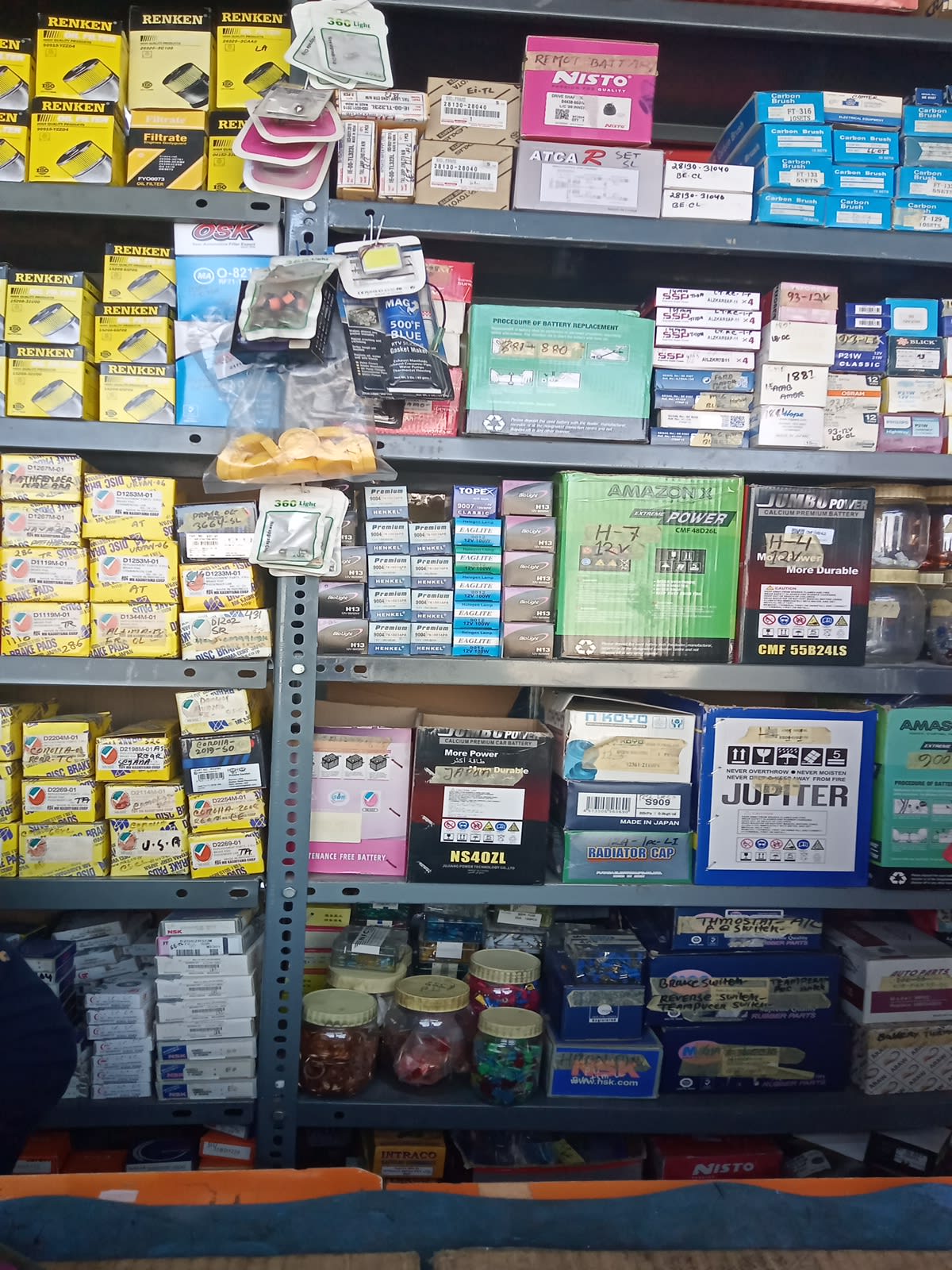 Top-Rated
Al Amani TVR Group
Dubai · Business Bay - Dubai
 Top-Rated
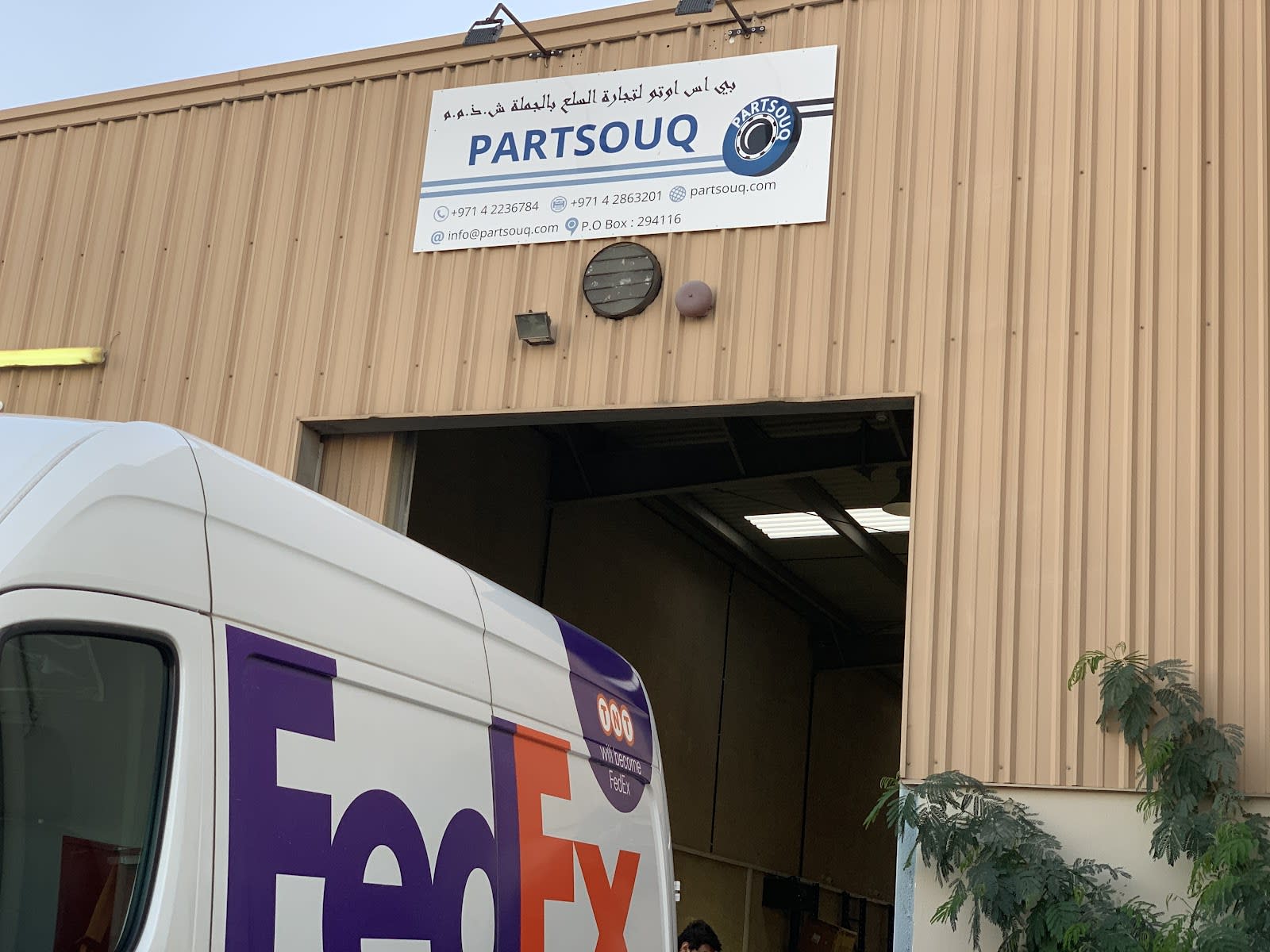
PARTSOUQ - PS AUTO GOODS WHOLESALERS L.L.C
Dubai · RAS AL KHOR 2, ST 7, Building 7, WH-11 - Dubai
 Top-Rated
Noor Din Ditta Auto Spare Parts Trading Branch-3
Sharjah · 8C56+QVF - Shop 1, 56th Street, Industrial Area 3 - Industrial Area 3 - Industrial Area - Sharjah
Where to actually buy this
Shops whose own website lists these parts, or whose stock we have recorded ourselves. Last checked July 2026. Not paid placement.
- Deep Performance Auto Spare Parts TradingRas Al Khaimah
Stocks fuel pumps, fuel injectors and fuel filters — aftermarket, new parts. It carries Accel ignition, Acl performance, Aem electronics and Afe power and 9 more.
4.4 on Google from 159 reviews
Stocks fuel pumps and fuel filters — genuine and aftermarket, new parts. It delivers across all seven emirates.
4.1 on Google from 8 reviews
- Popular Auto PartsSharjah
Stocks fuel pumps — genuine and aftermarket, new parts. It carries Mopar and Popular tyre and matches parts to your VIN.
5.0 on Google from 7 reviews
- Motofork Auto PartsDubai
Stocks fuel filters — genuine OEM, new parts. It carries Toyota, Komatsu, Caterpillar and Cummins and 13 more and delivers.
4.4 on Google from 13 reviews
- Queen Filter Trading LLC RAKRas Al Khaimah
Stocks fuel filters — aftermarket, new parts. It carries Mann filter, Donaldson, WIX and Ecoguard and 10 more and sells trade as well as retail.
5.0 on Google from 9 reviews
Stocks fuel filters — new parts. It carries Ac delco, Adnoc, Bosch and BP and 15 more and sells trade as well as retail.
4.4 on Google from 13 reviews
Listings are compiled from each business’s own public information. If you run one of these shops and want the entry corrected or removed, email easycarpartsteam@gmail.com.
Ask a human · free · no account
Rather not ring around?
Tell us the car and the part once — we'll send you the shops that actually stock it.
Free · usually a reply in minutes · no obligation
Still easier on a form? The request goes to the same matched UAE suppliers, free, with only the number of shops you choose able to contact you.
Open the request formKeep reading
Fuel system — FAQs
- What is the difference between a fuel pump and a fuel pump module?
- The pump is the electric pump element. A module, also called a fuel supply unit or assembly, wraps it with the other parts that sit in the tank. Hella names the fuel pump, the fuel filter and the flange with its connections as the three most important parts of a supply unit, and says it often has a lever or immersion-tube sensor and can be fitted with a swirl pot. A quote that says only fuel pump can mean either, so ask what is in the box.
- Where is the fuel pump on my car?
- Hella says the pump is located inside the fuel tank or under the chassis, depending on the application. Engines with direct injection or common-rail diesel injection also have a high-pressure pump on the engine, which is a different part. The chassis number tells a supplier which layout your car has.
- How do I know if my fuel pump has failed?
- Hella lists difficult or no starting, a longer start process, the engine stalling again after it starts, increased noise from the pump and poor acceleration as symptoms that may mean the pump needs replacing. Hella also says over half of all pump replacements are the result of misdiagnosis, because security, drivetrain and oil or fuel pressure switches can render a healthy pump inactive, so have the pressure and the other causes checked before ordering a part.
- Can I replace only the fuel pump and not the whole module?
- Sometimes. Bare in-tank pumps are sold for many applications, and one retailer lists a Denso in-tank pump as being without strainer. Whether it suits your car depends on the strainer, sender and flange being sound, which is a workshop's call. Our reasoning is that the module is the safer order when the fuel gauge has been unreliable or the old strainer is damaged. Hella advises replacing the gaskets and the filter at the same time as the pump, and cleaning the tank first.
- Does driving on a low tank damage the fuel pump?
- Hella says driving frequently on a low tank can accelerate wear on the pump, because debris on the bottom of the tank is disturbed and enters the pump. An in-tank pump is also cooled by the fuel around it. We found no UAE data measuring how often this causes failures here, so treat heat as a reason to avoid the habit rather than as a measured failure rate.
- What causes a fuel pump to fail?
- Hella names contamination as one of the top causes, with overheating and wear also on its list. Some failures begin in manufacturing: Denso's June 2020 US equipment recall report describes an impeller made with lower density that can absorb fuel and deform until the pump stops, and in March 2021 the UAE Ministry of Economy announced a recall of 3,731 Toyota Rush and Avanza vehicles for a fuel pump impeller defect described as low material density from inappropriate moulding conditions.
- Is the fuel level sender part of the fuel pump?
- On some cars it is attached to the pump assembly and on others it is a stand-alone unit, according to Delphi, which also notes that your sending unit may come separately from your new pump in the box. A gauge that reads empty when the tank is full, sticks on full or fluctuates points to the sender rather than the pump. Ask the supplier whether the sender is included.
- What is injector coding and why does it matter?
- Each common-rail diesel injector has individual manufacturing variations, and its correction code tells the engine computer what they are. Delphi says the replacement is not complete until the injector has been programmed, and a 2012 Professional Motor Mechanic article on Delphi injector service says that without the new codes the vehicle will run and idle poorly and fault codes are likely. Denso's Australian dealer says injectors require coding to each cylinder by an authorised workshop with the correct diagnostic equipment.
- What do C2I, IMA, IQA, C3I and C4I mean?
- They are names for the injector correction code. Delphi says the codes have many names: trim code, compensation code, C2I, IMA, IQA, C3I and C4I. All of them relate to the individual characteristics of each injector, and the code has to be entered into the vehicle's computer for the cylinder that the injector serves.
- Can I fit a used diesel injector?
- Only if the code can be read and entered. A used injector carries the code of the car it came from, and Delphi describes the code as belonging to the individual injector. A seller who cannot give you the code, and a workshop that cannot program it, turn the purchase into a gamble on the engine running and idling correctly. That is our reasoning from Delphi's description, not a published rule.
- What is the difference between a port injector and a direct-injection injector?
- A port injector sits in the intake port and works at a few bar. A direct-injection injector sits in the cylinder head and sprays into the combustion chamber, with an engine-driven high-pressure pump behind it. Reference descriptions give typical direct-injection pressure at around 200 bar, and Delphi describes a 350 bar system. They are not interchangeable, and the engine code tells a supplier which one you have.
- Are remanufactured injectors as good as new?
- We cannot rank them, and the quality of any rebuild is the quality of whoever did it. What the makers say: Delphi says its remanufactured injectors are calibrated to OE specification with up to 1,000 test plan calibration points, and Denso's remanufacturing article says each injector is tested after the rebuild and given an individual code. Ask who tested and coded the injector, and get the warranty in writing.
- Do I have to replace all the injectors together?
- We could not find a manufacturer source that states a rule, so we do not give one. What the sources do say is that each injector has its own code, and a 2018 article on Denso's remanufacturing warns that one injector can easily be injecting up to 20 per cent more diesel than the rest. Ask your workshop and your supplier what they recommend for your engine.
- Which brands make fuel pumps and injectors?
- Bosch, Denso, Delphi and Hella all publish fuel system ranges, and we have brand pages for each. Bosch states that its common-rail pump compresses fuel up to 2,700 bar, Denso lists in-tank pumps and a common-rail diesel range, Delphi describes direct-injection systems up to 350 bar and diesel injectors through authorised centres, and Hella publishes a product brief on its fuel pump units. Match by part number rather than by brand.
- How much does a fuel pump or injector cost in the UAE?
- We do not publish a range because we do not hold dated, attributed quotes, and an unsourced range would be an invention. The price depends on whether you are quoted a module or a pump only, the injector family, whether the unit is new, remanufactured or used, whether coding is included, and the warranty. Send your chassis number, engine code and the number on the old part, and ask each supplier to state what is in the box.
- Is my car on a fuel pump or fuel tank recall in the UAE?
- We cannot check chassis numbers, so ask the dealer. Two campaigns we could read about: in March 2021 the UAE Ministry of Economy announced a recall of 3,731 Toyota Rush and Avanza vehicles from some 2017 to 2019 models for a fuel pump impeller defect, and in October 2018 Al Futtaim Motors confirmed a recall of 430 Toyota Zelas and 190 Lexus CT 200h over a fuel vapour canister assembled to the fuel tank. For the 2021 campaign the Ministry said repairs would be free of charge. They are not a complete list.
- Should I replace the fuel filter when I replace the fuel pump?
- Hella says that when replacing the fuel pump it is best to replace both gaskets and the filter at the same time, and to clean the fuel tank before replacing the pump. Where the filter is inside the module it may come in the box; an external filter is a separate part with its own number. Your maker's schedule governs the intervals, and the filters page covers them.
- Do I need a different pump for a diesel and a petrol engine?
- Order by engine code and chassis number, not by model name. A model sold with both a petrol and a diesel engine needs the injectors for the engine you have, and a diesel common-rail engine also has an engine-driven high-pressure pump, which Bosch states compresses fuel up to 2,700 bar and which is a different part from the pump in the tank. Which pump numbers differ between versions varies by model, so ask the supplier to quote against your chassis number.
- What should I send on WhatsApp to get a fuel pump or injector quote?
- Your chassis number, the engine code and whether it is petrol or diesel, the number on the old part, a photo of the old part and its connector, whether you want a module or a pump only, and what the car does and what has already been checked. For diesel injectors add the correction code if it can be read and say who will program it. Then ask each supplier to repeat the part number, say what is in the box, state whether it is new, remanufactured or used, and give the warranty.
Ask a human · free · no account
Still not the question you had?
Ask it directly — a person reads every message.
Free · usually a reply in minutes · no obligation