Engine oil in the UAE: grades, specs and what the heat really changes
The quick answer
Engine oil is the one part almost every driver in the UAE buys several times a year, and the one where the local advice is most confidently wrong. Walk into ten workshops in Al Quoz or Industrial Area 13 with a 2019 Corolla and you will be offered 20W-50 in at least three of them, on the grounds that "this is a hot country". Your owner's manual says 0W-20.
Ask a human · free · no account
Not sure which part fits your car?
Tell us the make, model and year — we check fitment and come back with prices from UAE sellers who have it on the shelf.
Free · usually a reply in minutes · no obligation
Key facts
- Thicker oil does not protect better in this heat. Your engine's oil temperature is driven far more by load than by the weather, and what buys heat resistance is the quality of the base oil, not a bigger number on the bottle.
- Walk into ten workshops with a 2019 Corolla and at least three will offer you 20W-50 because "this is a hot country". Your manual says 0W-20. Fitting the thicker oil slows the variable valve timing, can set P0011/P0014 fault codes, and costs roughly 1-3% in fuel.
- The first number is meaningless here. The 5 in 5W-30 is a cold-start rating tested at -30C. Dubai's coldest January nights sit around 12-15C, so every W grade behaves identically on your car — the choice is really about the second number.
- Your normal driving is what the manufacturer calls severe service: trips under 8 km, long idling, stop-start traffic, dust and extreme heat. Most UAE drivers tick several of those at once, which is the schedule you should be following.
- Idling with the AC on maximum wears the engine while the odometer stands still — and the service reminder counts distance only. An hour parked with the engine running is an hour of oil life the car will never tell you about.
- Counterfeit oil is a real and repeatedly prosecuted problem here. One coordinated set of 26 raids across Dubai, Sharjah, Ajman and Umm Al Quwain seized over 220,000 items worth about AED 31.3 million.
- Manufacturer-branded oil is not the expensive option in this market. On one Dubai retailer's published catalogue, genuine Toyota, Lexus, Nissan and Mitsubishi oils ran AED 65.00 to AED 120.00 for 4 litres across every grade listed, while premium independent brands at the same grades ran AED 130.00 to AED 177.50. Observed at bestautoparts.ae on 2 September 2026. One retailer on one day, not a market survey, and not a quote.
Rather fill in a form? Send the same request here and matched UAE suppliers reply on WhatsApp either way.
Open the request formEngine oil — types and specifications
- 5W-30
- The default for most modern Japanese, Korean and European petrol engines; balanced HTHS of at least 2.9 mPa.s and the widest OEM approval coverage.
- 5W-40
- Higher film strength (HTHS at least 3.5) for European engines, turbos, towing and sustained high load in UAE summer — the correct way to step up a grade.
- 10W-40
- Usually semi-synthetic; the mainstream choice for mid-age, higher-mileage Japanese and Korean engines specified for a 40-grade.
- 20W-50
- Genuinely specified in many pre-2005 ambient charts above 30C; wrong for any modern VVT or turbo engine, and usually sold on an obsolete API category.
- 0W-20
- Factory grade for recent Toyota, Lexus, Honda and Mazda petrol engines; fuel-economy oriented, requires API SP/SQ or ILSAC GF-6/GF-7.
- 15W-40
- The workhorse diesel and light-commercial grade; HTHS at least 3.7, common in pickups, vans and older heavy-duty applications.
- 0W-16
- Ultra-low viscosity for the newest hybrid and Atkinson-cycle petrol engines; only where the manual explicitly specifies it.
- 5W-20
- Common on Ford, Honda and some Hyundai engines, and the sanctioned substitute when 0W-20 is unavailable.
- 0W-30
- Low-SAPS European long-life grade; frequent under ACEA C2/C3 and Volvo, Porsche and VW approvals.
- 0W-40
- High-performance full synthetic — Mercedes AMG, Porsche and BMW M applications, and a defensible heavy-duty step-up in extreme heat.
- 10W-30
- Older American and Japanese petrol engines and some small commercial units; largely superseded by 5W-30.
- 5W-50
- Track and high-output V8 use where the manufacturer publishes a separate performance-driving grade.
- Toyota 5W-30
- Corolla, Camry, Fortuner, Hilux and Land Cruiser applications specified for a 30-grade rather than 0W-20.
- Toyota 0W-20
- Current Corolla, Camry, RAV4 and hybrid engines — the grade printed in the GCC manual, API SP or newer.
- Nissan 5W-30
- Altima, X-Trail, Patrol and Sunny applications; check whether your VQ or QR engine calls for 5W-30 or 0W-20.
- Honda 0W-20
- Civic, Accord and CR-V earth dreams engines; requires ILSAC GF-6 or GF-7 certification.
- Mitsubishi 5W-30
- Pajero, Montero Sport and L200 applications, including the older 4-cylinder units common in fleets here.
- Hyundai 5W-30
- Elantra, Tucson, Santa Fe and Sonata; GDI and turbo GDI variants need API SP for LSPI protection.
- Kia 5W-30
- Sportage, Sorento, Cerato and Seltos; same Smartstream and Theta engine family requirements as Hyundai.
- Mercedes 5W-40
- Must carry MB 229.5 or 229.51/229.52 — the approval matters more than the grade on these engines.
- BMW 5W-30
- Only with BMW Longlife-01 or LL-04 named on the label; the two are not interchangeable.
- Land Cruiser engine oil
- Grade differs sharply by generation — a 1FZ-FE may specify 20W-50, a current V6 twin-turbo 0W-20.
- Nissan Patrol engine oil
- VK56 V8 and current V6 applications, 6-8 litres per service; check the year before buying volume.
- Full synthetic engine oil
- Group III, IV or V base oils — the change that actually buys heat resistance in this climate.
- API SP engine oil
- Current petrol service category with LSPI protection; backwards compatible with SN and earlier.
- ACEA C3 engine oil
- Mid-SAPS with HTHS at least 3.5 — required for most European diesels with a DPF and many petrol GPF cars.
- Diesel engine oil
- API CK-4/FA-4 and ACEA E-series for light commercial and heavy-duty use; higher detergency and soot handling.
- Oil filters
- Spin-on and cartridge, matched by chassis number — never a separate decision from the oil itself.
How to read a viscosity grade: what 5W-30 actually means
A grade like 5W-30 is two separate test results printed as one label, defined by SAE J300. It is not a range and neither number is a temperature.
The first number and the W. The W stands for winter. The 5 in 5W-30 is a cold-performance class, certified by two low-temperature tests: cold-cranking viscosity (ASTM D5293), which models whether the starter can turn the engine, and pumping viscosity (ASTM D4684), which models whether the pump can draw oil before the bearings run dry. A 5W oil must measure no more than 6,600 cP cranking at -30C and no more than 60,000 cP pumping at -35C. A 0W has to pass the same tests 5C colder. Crucially, this number tells you nothing about the oil's behaviour at operating temperature.
The second number. The 30 is a hot-viscosity class: kinematic viscosity at 100C, measured in mm2/s (cSt), plus a minimum HTHS (high-temperature high-shear) viscosity at 150C under a shear rate of 10^6 per second, which simulates a loaded bearing. HTHS is the number that matters for wear protection. A 30-grade must hold at least 2.9 mPa.s; a 5W-40 at least 3.5.
Why this matters here. A UAE driver almost never uses the W rating. Dubai's coldest January nights sit around 12-15C, thousands of degrees of margin above where a 5W is even tested. So the choice between 0W-30, 5W-30 and 10W-30 changes very little in daily UAE use — they are all the same oil once the engine is warm. What genuinely differs is the second number and the base oil behind it.
One consequence people get wrong: a 20W-50 is not "stronger in heat" than a 5W-40 because 50 is bigger than 40. It is thicker at 100C, which is a different claim, and it is also dramatically thicker at start-up and typically built on a cheaper base oil that oxidises sooner. More on that below.
| Grade | Max cranking viscosity (ASTM D5293) | Max pumping viscosity (ASTM D4684) | KV at 100C (mm2/s) | Min HTHS at 150C (mPa.s) |
|---|---|---|---|---|
| 0W | 6,200 cP at -35C | 60,000 cP at -40C | 3.8 min | - |
| 5W | 6,600 cP at -30C | 60,000 cP at -35C | 3.8 min | - |
| 10W | 7,000 cP at -25C | 60,000 cP at -30C | 4.1 min | - |
| 15W | 7,000 cP at -20C | 60,000 cP at -25C | 5.6 min | - |
| 20W | 9,500 cP at -15C | 60,000 cP at -20C | 5.6 min | - |
| 20 | - | - | 6.9 to 9.3 | 2.6 |
| 30 | - | - | 9.3 to 12.5 | 2.9 |
| 40 (as 0W-40, 5W-40, 10W-40) | - | - | 12.5 to 16.3 | 3.5 |
| 40 (as 15W-40, 20W-40) | - | - | 12.5 to 16.3 | 3.7 |
| 50 | - | - | 16.3 to 21.9 | 3.7 |
| 60 | - | - | 21.9 to 26.1 | 3.7 |
Mineral, semi-synthetic and full synthetic: what you are actually paying for
Roughly 75-85% of any engine oil is base oil; the rest is an additive package of detergents, dispersants, anti-wear compounds (typically ZDDP), anti-oxidants, friction modifiers and viscosity index improvers. The mineral/synthetic argument is an argument about the base oil, and the API groups it into five classes.
Group I and II (mineral) are refined crude. They contain a mix of molecule shapes and sizes, which is why they thin more across the temperature range and oxidise sooner. Group III is severely hydrocracked mineral oil, so uniform that it is legally sold as "synthetic" in most markets including the UAE, and it is what the overwhelming majority of "full synthetic" 5W-30 on a UAE shelf actually is. Group IV is PAO, a genuinely built molecule. Group V covers esters and other chemistries, usually blended in rather than used alone.
The practical difference that matters in this climate is oxidation stability — how long the oil resists reacting with oxygen at high temperature and turning into acid, varnish and sludge. That property tracks base-oil group far more closely than it tracks the SAE grade on the front of the bottle.
The disadvantages, stated. Full synthetic is not free of drawbacks. It costs two to four times mineral per litre. In a genuinely worn high-mileage engine with hardened seals, switching to a strong-detergent synthetic can clean deposits that were doing the sealing and produce a leak that was not there before — real, though usually overstated. And a synthetic oil run to a long interval in severe conditions is worse than a cheap oil changed often. Base-oil quality buys margin, not immunity.
Where mineral still makes sense: older, simple, low-output engines with no VVT and no turbo, driven hard on short intervals — an early-2000s pickup or a workshop truck on a 5,000 km cycle. Where it does not: anything turbocharged, anything with variable valve timing, anything with a factory interval past 10,000 km, and any car whose manual specifies a 0W-20 or 5W-30.
| Type | Typical base | Oxidation life in UAE heat | Realistic drain interval | Cost per 4L (AED band) | Best for | Against it |
|---|---|---|---|---|---|---|
| Mineral | API Group I/II | Shortest — thickens and darkens fastest | 4,000-5,000 km | 55-110 | Older simple engines, tight budgets, short cycles | Poor high-temp stability; volatile, so it burns off; usually older API level |
| Semi-synthetic | Group II + III/IV blend | Middle | 5,000-7,500 km | 90-180 | Mid-age Japanese and Korean engines specified for 10W-40 | Marketing term with no fixed definition — blend ratio is not disclosed |
| Full synthetic | Group III, III+, IV, or blends with V | Longest — holds viscosity and TBN much longer | 7,500-15,000 km per OEM schedule | 150-400 | Turbo, GDI, VVT, long intervals, extreme heat and load | Highest cost; can expose existing leaks in worn engines; no benefit if drained too early anyway |
API, ACEA and OEM approvals: the codes that decide what is legal for your engine
Viscosity tells you how the oil flows. The approval codes tell you what it is made of and what it has been tested to survive. Getting the viscosity right and the approval wrong is the more expensive mistake of the two.
API (American Petroleum Institute). A two-letter service category, S for spark-ignition. The current top petrol category is API SP, joined by API SQ, first licensed 31 March 2025 alongside ILSAC GF-7. SP and later add low-speed pre-ignition (LSPI) protection, which matters enormously for the turbocharged direct-injection engines now common across the range here — LSPI can destroy a piston in a single event. API categories are backwards compatible: an SP oil is valid where SN was specified. Anything older than SN on a modern engine is a red flag, and old API levels are exactly what cheap bulk 20W-50 tends to carry. The "donut" on the back label carries the category, the SAE grade and any resource-conserving claim; the "starburst" on the front indicates ILSAC certification.
ACEA (European manufacturers). Letters plus numbers, and the letter is the important half. A/B categories are full-SAPS oils for engines without particulate filters. C categories are mid- or low-SAPS: sulphated ash capped at 0.8% for mid-SAPS and 0.5% for low-SAPS, with sulphur and phosphorus limited too, because those compounds poison catalysts and clog DPFs and GPFs. Putting a full-SAPS A3/B4 oil into a car that requires C3 will not seize the engine, but it shortens the life of an aftertreatment component that costs thousands of dirhams. ACEA also fixes HTHS: A3/B4 and C3 require at least 3.5 mPa.s; A5/B5, A7/B7 and C2 sit in the 2.9-3.5 window; C6 requires at least 2.6 and C7 at least 2.3, which is how ultra-thin 0W-16 grades are covered.
OEM approvals — these override everything. MB 229.5, MB 229.51 and 229.52; VW 504 00 and 507 00; BMW Longlife-01 and LL-04; GM dexos1 Gen 3; Porsche C20/C30/C40; Jaguar Land Rover STJLR specs. These are not marketing. An approval means that specific finished formulation passed that manufacturer's own engine tests and appears on their published approved list — not that it "meets or exceeds", which is a self-declaration anyone can print. If your car requires VW 504 00 or BMW LL-04, buy an oil that names the approval on the label and nothing else, regardless of what grade a workshop recommends.
| If your car is | Look for | Typical grades | Watch out for |
|---|---|---|---|
| Japanese or Korean petrol (Toyota, Nissan, Honda, Hyundai, Kia, Mitsubishi) | API SP / SQ, ILSAC GF-6 or GF-7 | 0W-16, 0W-20, 5W-20, 5W-30 | Old API SL/SM stock still sold cheaply in bulk |
| American (GM, Chevrolet, Cadillac) | GM dexos1 Gen 3 | 0W-20, 5W-30 | dexos2/dexosD are diesel and gen-specific, not interchangeable |
| Mercedes-Benz | MB 229.5 (full SAPS) or 229.51/229.52 (low SAPS) | 5W-30, 5W-40, 0W-30 | 229.5 and 229.51 are not interchangeable — check the sheet |
| BMW | BMW Longlife-01, LL-04, or LL-17 FE+ | 0W-20, 0W-30, 5W-30, 5W-40 | LL-04 in a car specified LL-01 is not automatically approved |
| VW, Audi, Skoda, Seat | VW 502 00/505 00, or 504 00/507 00 | 5W-30, 5W-40 | 504 00/507 00 is required for long-life servicing |
| European diesel with DPF | ACEA C2, C3, C4 (low/mid SAPS) | 5W-30, 0W-30 | A full-SAPS A3/B4 oil will shorten DPF life |
| Older non-catalyst or pre-2005 engine | API SL/SM or ACEA A3/B4 | 10W-40, 15W-40, 20W-50 | Modern low-SAPS oils may have less ZDDP than a flat-tappet engine wants |
The UAE heat question, in depth: does 45C actually justify a heavier oil?
This is the most argued question in UAE car ownership and it deserves a real answer rather than a slogan. The local practice is entrenched: a large share of independent workshops here will put 20W-50 or 10W-40 into an engine whose manual specifies 0W-20 or 5W-30, and they will justify it with the ambient temperature. Some of that reasoning is sound. Most of the conclusion is not. Here is the evidence on both sides.
The case for a heavier grade. Oil is not thermostatically controlled the way coolant is. A coolant thermostat holds the water jacket near 90-105C almost regardless of ambient, but the sump sheds heat by conduction and airflow, and the hotter the air, the smaller the temperature differential it has to reject heat into. So sump temperatures genuinely do run higher on a 45C day than on a 20C day. Viscosity falls as temperature rises, and the oil film separating a bearing from its journal is thinner as a result. A grade with more HTHS margin — 3.5 mPa.s for a 5W-40 versus 2.9 for a 5W-30 — restores some of that film. That is real physics, and anyone who tells you heat is irrelevant to oil is wrong.
The case against, which is stronger for most cars. Three points.
First, load dominates ambient. Sump temperature is driven far more by engine output than by air temperature. Sitting in Sheikh Zayed Road traffic at 45C loads the oil less than a fast run up Jebel Hafeet at 25C. Modern engines are also designed with the oil in the thermal-management loop — many have oil-to-coolant heat exchangers, which means the coolant thermostat is partly regulating oil temperature too, and those cars see less ambient sensitivity than a 1990s engine with a bare steel sump did.
Second, and this is the decisive point: what protects oil against heat is base-oil quality and the additive package, not the SAE number. A mineral 20W-50 and a full-synthetic 5W-30 put into the same engine on the same August afternoon are not a thick oil versus a thin oil. They are an oil that will oxidise, shear and thicken into deposits within a few thousand kilometres versus one that will hold its viscosity and its TBN for three times as long. The oils being sold locally as the hot-weather answer are very often Group I mineral products carrying obsolete API categories. Choosing them in the name of heat protection is choosing the least heat-stable product in the shop.
Third, thick oil has costs in a modern engine that did not exist in an older one. Variable valve timing phasers are hydraulically actuated and sized around a viscosity; too thick and cam response slows, which shows up as P0011/P0014-family timing codes and rough cold running. Oil takes measurably longer to reach the top end on start-up. Pumping losses rise and fuel consumption typically increases by around 1-3%. And an engine designed for 0W-20 has narrow bearing clearances and narrow oil galleries chosen for that oil.
What manufacturers actually say — and they do not agree. This is where the debate earns its status as contested, because both camps can cite a manufacturer.
On one side: Toyota's Saudi distributor, Abdul Latif Jameel Oils, publishes plainly that "for areas with a temperature above 40C as in Saudi Arabia, the following grades are preferred: 20W-50, 15W-40, 10W-40, 5W-40." That is a regional arm of a major manufacturer's network stating a hot-climate preference for heavier oil, and it is why the local practice exists — it is not invented by workshops.
On the other: the owner's manual delivered with a current GCC-spec Toyota specifies 0W-20 for the engine, shows an ambient-temperature chart on which 0W-20 covers the entire range a UAE car will ever see, and instructs that if 0W-20 is unavailable a 5W-20 may be used and should be replaced with 0W-20 at the next change. Same manufacturer. The manual is engine-specific and current; the distributor guidance is general and covers a fleet that includes twenty-year-old vehicles.
How to reconcile them. The distributor advice is good advice for the vehicles it was originally written around — older, larger-clearance engines, many of which genuinely list 20W-50 in their own ambient charts. It is poor advice for a 2020 GDI turbo four. The honest rule is that the ambient chart in your manual, for your engine, already accounts for the UAE. Manufacturers sell these cars here, test them here, and warrant them here. A 45C ambient is not a condition they overlooked.
The bottom line. For a car under roughly ten years old with the manufacturer's grade in the manual: use that grade, in a full synthetic carrying the current API/ACEA/OEM approval, and shorten the interval rather than thicken the oil. For an older, higher-mileage or heavily loaded vehicle, a heavier grade may genuinely be right — the next section sets out when.
| Claim | Evidence for | Evidence against | Verdict |
|---|---|---|---|
| Oil runs hotter in UAE summer | Oil has no thermostat; a smaller temperature differential means slower heat rejection | Modern engines use oil-to-coolant heat exchangers, tying oil temperature to a regulated coolant loop | True, but the increase is smaller than most people assume and load matters more |
| Therefore a thicker grade is needed | Higher HTHS restores film thickness lost to heat | Manufacturers set the grade knowing the market's climate; the manual's ambient chart already covers 45C+ | Not supported for modern engines running their specified grade |
| 20W-50 is the hot-country oil | Genuinely listed in many pre-2005 ambient charts above 30C | Most 20W-50 sold locally is Group I mineral on an obsolete API category — the least heat-stable option available | Right for some old engines, wrong as a general rule |
| Thicker oil is harmless if in doubt | A small viscosity step rarely causes immediate damage | Slower VVT response and timing codes, ~1-3% worse fuel consumption, slower cold-start oil delivery to the head | Not harmless in a VVT or turbo engine |
| Full synthetic is the real heat answer | Oxidation stability, viscosity retention and volatility all track base-oil group | Costs more; no benefit if the drain interval is stretched to compensate | Supported — this is the change worth paying for |
When a heavier grade genuinely is the right call
Being even-handed cuts both ways. There are real UAE cases where stepping up a grade is correct, and refusing on principle is as wrong as thickening on principle.
1. Your manual says so. Many pre-2005 Japanese and American engines print an ambient-temperature chart in which 20W-50 or 15W-40 is the specified choice above about 30C. A 1998 Land Cruiser 1FZ-FE or a mid-1990s V8 pickup in Sharjah is not being abused by 20W-50 — it is being run to spec. Check the chart, not the internet.
2. Your manual gives a range and you are at the hard end of it. Plenty of European engines are approved for both 0W-30 and 5W-40 under the same OEM approval. If your driving is Dubai-to-Abu Dhabi at speed in August, or towing a boat, or long desert runs at high rpm and low airflow, the 40-grade within the approval is a defensible pick. This is choosing inside the manufacturer's envelope, not outside it.
3. High mileage with measurable consumption. An engine past roughly 200,000 km with worn bore and valve-guide clearances that is consuming oil may lose less on a heavier grade, and the oil-control benefit can outweigh the VVT penalty. This is management of a worn engine, not prevention in a healthy one, and it does not fix the wear.
4. Sustained extreme duty. Track days at Dubai Autodrome, dune driving in low range with long periods of high load and poor airflow, or heavy commercial loads in July. Some manufacturers publish a track-use grade that differs from the road grade.
And the critical caveat. If any of these apply to you, step up inside the same quality tier. The right move is a full-synthetic 5W-40 or 0W-40 carrying a current API SP/SQ or ACEA A3/B4 rating and, where relevant, the OEM approval. The wrong move — and the common one — is a mineral 20W-50 with an API category from the 1990s. You would be trading a small, uncertain film-thickness gain for a large, certain loss in oxidation stability, detergency and LSPI protection.
What it costs to get this wrong in the other direction. Running an oil thinner than specified is also a real failure mode, not a theoretical one: putting 0W-20 into an engine that requires a 5W-40 with HTHS 3.5 removes bearing film margin the designer counted on. Thin is not automatically modern and thick is not automatically safe. The specification is the answer in both directions.
Oil change intervals here versus what the manual says
Most manuals sold in the GCC quote something between 10,000 and 15,000 km, or 12 months, whichever comes first. Nearly every manual also contains a second, shorter schedule for severe operating conditions — and the ordinary UAE driving pattern satisfies several of its conditions simultaneously.
The manufacturer's own severe-service list typically includes: repeated short trips of under about 8 km, extended idling, stop-and-go traffic, driving in dusty conditions, and sustained operation in extreme ambient temperatures. A resident who drives Mirdif to Business Bay, sits in queues, parks in an underground car park, and idles with the AC while waiting at school pickup is hitting four of five. The severe schedule is not an exotic case here. It is the default.
Why short trips hurt. Combustion produces water vapour and unburned fuel that reach the sump as blow-by past the rings. If the oil never reaches full temperature for long enough, they do not evaporate off. Water plus acidic combustion by-products consumes the oil's TBN reserve, and fuel dilution physically thins the oil — a 5W-30 diluted a few percent by petrol may no longer meet a 30-grade at all. Direct-injection engines dilute faster than port-injected ones.
Why idling hurts specifically. Idling accumulates engine running hours with zero odometer distance, and the odometer is what your service reminder counts. An hour of idling is commonly reckoned as roughly the engine wear of 40-50 km of driving. At idle, oil pressure and flow are at their lowest while the AC compressor loads the engine and airflow through the radiator relies on the fans alone — the worst combination of low cooling and continuous heat generation. Two hours a week of AC idling adds the equivalent of several thousand kilometres a year that your service interval never sees.
A workable UAE approach. Use the severe-service schedule from your own manual as the baseline. If your manual does not print one, halving the normal interval is the conventional substitute. Cap it by time as well as distance for low-mileage cars — oil oxidises on the calendar even parked, and a car that covers 4,000 km a year still needs changing annually. And do not stretch a cheap oil to a long-drain schedule: interval and oil quality are one decision, not two.
| Oil type | Manufacturer normal schedule | Typical UAE mixed use | Heavy severe use (short trips, long idling, dust, towing) | Time cap |
|---|---|---|---|---|
| Mineral 20W-50 / 15W-40 | Rarely specified on modern cars | 4,000-5,000 km | 3,000-4,000 km | 6 months |
| Semi-synthetic 10W-40 | 7,500-10,000 km | 5,000-7,500 km | 4,000-5,000 km | 6-12 months |
| Full synthetic 5W-30 / 5W-40 with OEM approval | 10,000-15,000 km | 7,500-10,000 km | 5,000-7,500 km | 12 months |
| Full synthetic 0W-20 with API SP / GF-6 or GF-7 | 10,000-16,000 km | 8,000-10,000 km | 5,000-8,000 km | 12 months |
| Long-life schedule (VW 504 00, BMW LL-01, variable service) | Up to 30,000 km / 2 years in Europe | Treat as a fixed interval, not variable | Not appropriate | 12 months |
The oil filter: not a separate job and not the place to save AED 15
An oil change without a filter change is not an oil change. The filter holds a measured quantity of dirty oil and the contaminants it captured over the last interval, and leaving it in place reintroduces both into fresh oil within seconds of start-up.
What it does and how it fails. A full-flow filter passes the entire output of the oil pump, typically capturing particles down to around 20-30 microns at a stated efficiency. As it loads, the pressure drop across the media rises. Every filter therefore contains a bypass valve that opens at a set differential — commonly in the region of 1-1.5 bar — and sends unfiltered oil straight to the bearings. That is deliberate: unfiltered oil is far better than no oil. But it means a clogged filter does not announce itself. Your oil pressure stays normal while your engine quietly runs unfiltered.
Two types, two failure modes.
Spin-on filters have the media, both valves and the housing in one steel canister. The failure to watch for is the old rubber gasket sticking to the block while the new filter is fitted over it — a double gasket, which blows out under pressure and empties the sump in under a minute. Always check the old seal came away with the old filter, and always oil the new gasket before fitting.
Cartridge filters are a paper element in a permanent housing, standard on most modern European engines and increasingly common elsewhere. They are more environmentally sensible and cheaper to make, and they come with a set of O-rings that must be replaced with the element. A reused, hardened O-ring is the most common oil leak after a service. Housings are usually plastic and are easy to crack by overtightening — most specify a torque of around 20-25 Nm.
The anti-drain-back valve is a rubber flap that stops oil draining out of the filter and its galleries when the engine is off. A cheap filter with a poor valve gives you a longer dry period at every start-up. Start-up is where the majority of engine wear happens, so this is not a trivial component. It is one of the concrete differences between a AED 15 filter and a AED 60 one.
Practical rules. Change it every time. Match it to the engine by part number or chassis number, not by "it looks the same". Filters are the single most counterfeited automotive part in this market after oil itself — a fake with pleated cardboard instead of resin-bonded media collapses under hot flow. And do not neglect the drain plug washer: a crush washer is a one-use item and reusing it is the second most common cause of a post-service drip on your parking spot.
How to check your oil level properly
Half of the level readings taken in this country are wrong, because they are taken in the wrong conditions. The procedure matters more than most people think.
On a car with a dipstick. Park on genuinely level ground — a sloped villa driveway or a ramped car park floor can move the reading by several millimetres, which on some engines is most of a litre. Bring the engine to operating temperature, then switch off and wait 5-10 minutes for oil to drain back to the sump. Checking immediately after shutdown reads low; checking stone cold reads high, because oil that was in the head and galleries has drained down overnight. Pull the dipstick, wipe it fully clean, reinsert it all the way to its seat, and pull it again. The first pull is almost always unreliable because oil splashes up the tube.
The gap between the MIN and MAX marks is typically 1.0-1.5 litres on a passenger car — never assume it is a small amount. Aim for the upper third, not the MAX line exactly.
On a car without a dipstick. Many recent BMW, Mercedes and some VW group models have deleted the dipstick and use an electronic level sensor read through the instrument cluster or infotainment. These have their own protocol and it is usually the opposite of the dipstick one: the engine typically needs to be running at idle, at full operating temperature, on level ground, and the measurement takes a minute or two to settle. Follow the on-screen instruction rather than assuming.
Why overfilling is a real problem, not a harmless excess. If the level rises far enough for the crankshaft counterweights to strike the oil surface, the oil is whipped into foam. Aerated oil is compressible, so it will not maintain a hydrodynamic bearing film, and it will not actuate hydraulic lifters or VVT phasers correctly. Overfilling also raises crankcase pressure, which can push oil past seals and into the PCV system, and from there into the intake and eventually the catalytic converter — an expensive failure that started as a quick top-up.
What to look at, not just where the level sits. Fresh oil is amber; darkening is normal and by itself means the detergents are working. What is not normal: a gritty feel between fingers, a milky or cream-coloured emulsion (coolant ingress, worth taking seriously), a strong smell of petrol (fuel dilution), or a level that has risen since the last check without anyone topping up — that usually means fuel or coolant is getting in.
How often. Monthly for a car in normal use, before any long drive to Abu Dhabi or Oman, and weekly for any engine known to consume oil.
Oil consumption: what is normal and what is a warning
Every engine consumes some oil. The question is how much, and the manufacturers' published tolerances are far higher than most owners expect — which is a source of genuine and often justified frustration.
Published tolerances. BMW has historically stated that around one quart per 750 miles is within specification for some engines, which is roughly 1.0-1.3 litres per 1,000 km. VW has quoted up to about 0.5 litres per 1,000 km as normal on a range of engines. Toyota has cited figures in the region of one quart per 1,200 miles for some units, around 0.8 litres per 1,000 km. Around 1 litre per 1,000 km appears repeatedly across the industry as an acceptable upper bound, particularly for turbocharged and performance engines. Whether that is a reasonable engineering position or a warranty shield is a fair argument, but it is what a dealer will quote you.
How to measure it properly. Fill to a known point, note the odometer, drive normally, and check again after a measured 1,000 km — with the engine at temperature and on level ground both times. One top-up between services tells you almost nothing. A rate does.
What drives consumption up in the UAE specifically. High sump temperature increases the volatility loss of the oil — the light fractions of the base oil literally evaporate and leave through the PCV system, which is why NOACK volatility is a meaningful spec and why cheap Group I base oils burn off faster in this climate than Group III or IV do. Long AC idling in traffic means many hours at operating temperature with low airflow. And GDI turbo engines run hot turbo bearing housings that cook oil at shutdown.
Causes, in rough order of likelihood. Valve stem seals hardening with age — the classic sign is a puff of blue smoke at start-up or after a long idle at a light, then nothing. Worn or stuck piston rings, which give steadier smoke under load and a fouled plug. A blocked or failed PCV valve, which raises crankcase pressure and forces oil past seals — a cheap part and always worth checking first. Turbocharger shaft seals. And plain external leaks: rear main seal, cam cover gasket, oil cooler seals, or a filter housing O-ring from the last service.
When to act. Above roughly 1 litre per 1,000 km, or on any sudden change in the rate, investigate rather than keep topping up. Running low is the most direct route to bearing damage there is, and in a car with a catalytic converter, high consumption also progressively poisons the cat with phosphorus, which is an emissions failure waiting to happen.
Sludge: why it forms differently in a dry, hot climate
Sludge is what oil becomes when it has been oxidised past its additive package's ability to keep the products of oxidation in suspension. In cooler, wetter climates it is often condensation-driven and appears as a pale, mayonnaise-like emulsion under the oil cap. In the UAE it usually takes a different form: hard, black, tar-like deposits and a brown varnish on cam covers, pickup screens and inside the rings.
The mechanism. Oxidation is a chemical reaction, so it follows a temperature rule of thumb: rate roughly doubles for every 10C rise. Oil that would last comfortably at 90C sump temperature ages appreciably faster at 120C. As it oxidises it forms acids, which the oil's TBN reserve neutralises until the reserve runs out, and polymerised heavy compounds, which the dispersants hold in suspension until they are saturated. Past that point the material drops out onto surfaces. Once it lands somewhere hot, it bakes into varnish and stops being removable by an oil change.
The three UAE contributors.
Heat plus time. Sustained high sump temperature is the accelerator. Long idles with the AC on and slow crawling traffic are the worst pattern, because they combine engine hours with poor airflow.
Stretched intervals on the wrong oil. This is the largest single cause. A mineral or low-grade semi-synthetic run to 10,000 km in July has exhausted its detergent and anti-oxidant chemistry thousands of kilometres earlier and spends the rest of the interval depositing.
Short trips and fuel dilution. Petrol in the sump dissolves the oil film and accelerates additive depletion. In a GDI engine this is significant within a single interval.
Where it does damage. The oil pickup screen is the critical one — a partly blocked pickup starves the pump, and the resulting failure is a bearing, not a cleanable deposit. Piston ring lands seize with deposits, which turns into oil consumption. VVT phasers and the fine oil control valve screens that feed them clog, which produces timing faults and drivability complaints. Turbo oil feed lines coke closed, killing the turbo.
Prevention, and the honest limits of cures. Prevention is entirely about drain interval and oil quality; there is no third lever. As for cures, engine flush additives are genuinely contested: on a lightly varnished engine a reputable flush before draining can help, but on a heavily sludged one there is a real risk of dislodging a large deposit and delivering it straight to the pickup screen. The safer approach on a badly sludged engine is a series of short intervals on a good full synthetic — perhaps 1,500-2,000 km each for two or three changes — which cleans gradually, or, for severe cases, dropping the sump and cleaning the pickup mechanically. Any workshop that proposes a solvent flush on an engine with 250,000 km of unknown history is taking a risk with someone else's engine.
What an oil service should cost in the UAE
Price is where this market is at its least transparent, and where the same job varies by a factor of ten across the same city. The variables are real: how many litres your engine takes (a Yaris takes about 3.7, a Land Cruiser V8 around 8-9, some AMG and V8 applications 9-10), what base oil and approval the product carries, and whether the filter is a AED 15 spin-on or a AED 90 genuine cartridge with a full O-ring kit.
How to read a quote. The single most common trick in this market is quoting a headline price for a fixed volume — "oil change AED 99" — and then charging per additional litre when your engine turns out to take seven. Always ask for the total for your specific car: oil grade and brand, number of litres, filter, drain plug washer, labour and VAT included. A quote that does not name the oil brand and grade is not a quote.
Where the money goes. In a AED 250 full-synthetic service at an independent workshop, the oil is typically AED 130-180 of it, the filter AED 25-60, and labour AED 40-80. Labour on this job is genuinely low — it is 20-30 minutes on most cars — which is why the price is nearly all product, and why a suspiciously cheap service almost always means a suspiciously cheap product rather than generous labour.
Main dealer versus independent. An authorised dealer typically runs 1.5 to 2 times an independent for the same specification, and for a car in warranty that premium can be worth paying for the stamped record. If your car is in warranty, read your warranty booklet before servicing outside the dealer network — terms vary between distributors here, and we are not going to tell you what yours says. Whatever you decide, keep the invoice naming the oil brand, grade and approval, and the filter part number: if a claim is ever questioned, that document is what you have.
Mobile oil change services have become common here and typically sit at or slightly above independent workshop pricing, with the convenience premium offset by lower overheads. Check they take the used oil away — used oil disposal is regulated and pouring it into a storm drain or a skip is both an offence and a genuine environmental problem in a country with no natural drainage.
| Service pack | Typical vehicle | Oil volume | Independent workshop (AED) | Main dealer (AED) |
|---|---|---|---|---|
| Mineral 20W-50 + basic filter | Older small Japanese saloon | 3.5-4 L | 90-160 | Not usually offered |
| Semi-synthetic 10W-40 + filter | Corolla, Sunny, Elantra, Accent | 3.5-4.5 L | 150-250 | 280-400 |
| Full synthetic 5W-30 or 0W-20 + filter | Camry, Altima, Civic, Sonata, Tucson | 4-5 L | 220-400 | 400-650 |
| Full synthetic 5W-30/5W-40 with OEM approval + cartridge filter | Mercedes, BMW, Audi, VW | 5-7 L | 450-750 | 800-1,400 |
| Full synthetic, large petrol V6/V8 SUV | Land Cruiser, Patrol, Tahoe, Range Rover | 7-10 L | 500-950 | 900-1,800 |
| Add-ons often quoted separately | - | - | Drain washer 5-15; extra litre 35-70; sump plug thread repair 150-400 | - |
These are UAE market ranges. The price for your car depends on the model, the year and which brand you fit.
Get the exact priceEngine oil prices by grade, read off a UAE shelf
Every figure in this section was read off a named UAE retailer's own published page on the date shown beside it. It is what one shop asked for one part on one day. It is not an average, it is not a survey, and it is not what you will be quoted. Use it to sanity-check a quote, then get the quote.
There are two sources here and both were read on 2 September 2026. The over-the-counter jug and bottle prices come from bestautoparts.ae, a Dubai parts retailer that publishes a priced engine oil catalogue of 50 products. The fitted package prices come from autofix.ae, a workshop chain operating in Dubai, Sharjah and Ajman that publishes a fixed package price list. Neither is a market survey and neither covers every brand sold in this country. What they give you is a floor and a shape: the number below which a quote is probably not what it claims to be, and the number above which you are paying for the workshop rather than for the oil.
The first thing the shelf shows is that the viscosity grade is not what sets the price. On the same catalogue on the same day, a genuine Toyota 20W-50 in a 4-litre jug was AED 65.00 and a genuine Toyota 0W-20 in the same size was AED 120.00 — a real gap, but far smaller than the gap between brands at the same grade. A 5W-30 in 4 litres ran from AED 76.00 for Mitsubishi genuine to AED 140.00 for Castrol Magnatec, and a 5W-40 in 4 litres from AED 80.00 for Lexus genuine fully synthetic to AED 175.00 for Castrol EDGE. You are paying for the brand and the base oil behind it, not for the number on the front of the bottle.
The second thing it shows surprises most owners: manufacturer-branded oil is not the expensive option here. Toyota, Lexus, Nissan and Mitsubishi genuine oils are packaged for their own distributor networks in this region, and on that catalogue they sat between AED 65.00 and AED 120.00 for 4 litres across every grade listed, while premium independent brands at the same grades sat between AED 130.00 and AED 177.50. A Lexus-branded fully synthetic SN 5W-40 was AED 80.00 for 4 litres on the day we looked. If your car is Japanese and a workshop presents genuine oil to you as a costly upgrade, that is a sales position rather than a price.
The third thing is the top-up penalty, and it is the one that quietly costs people money. Bought as a 4-litre jug, genuine Toyota 5W-30 was AED 84.00, which works out at AED 21.00 a litre. The same oil in a 1-litre bottle was AED 30.00. Genuine Nissan 5W-30 ran the same way: AED 90.00 for 4 litres against AED 30.00 for one. Buying a service's worth of oil one bottle at a time costs roughly half as much again, and that is precisely the arithmetic a workshop is using when it quotes a headline price covering four litres and then charges per additional litre for an engine that takes seven.
On the fitted side, a chain publishing fixed prices is a useful anchor even when it is not your workshop. What matters more than its number is what its number does not say. Both oil change packages below cover Japanese, Korean and Chinese vehicles only, and neither names the oil brand, the grade or the number of litres included, which by this page's own test means neither is yet a quote. Ask which of the jug prices above is going into your engine, and how many litres of it, before you compare that package price to anything.
One thing we are deliberately not quietly fixing. The base oil table earlier on this page carries a full synthetic band of AED 150-400 for 4 litres, compiled from published UAE workshop pricing in August 2026 and not attributed to any named retailer. Every manufacturer-branded full synthetic we read on 2 September 2026 sat below that band. One shop on one day is not evidence that a wider band is wrong, so the older figure stays exactly where it is rather than being adjusted to match a single observation. Read the older band as what a workshop charges when it supplies the oil, and the figures in this section as what a jug costs over a counter. When our own supplier quote data is large enough to replace both, we will say so and date it.
| Grade | Product as listed | Pack | Price observed 2 September 2026 (AED) |
|---|---|---|---|
| 0W-20 | Idemitsu 0W-20 | 4 L | 96.00 |
| 0W-20 | Toyota genuine 0W-20 | 4 L | 120.00 |
| 0W-20 | Castrol Magnatec 0W-20 | 4 L | 165.00 |
| 5W-30 | Mitsubishi genuine 5W-30 SP / GF-6A | 4 L | 76.00 |
| 5W-30 | Idemitsu 5W-30 | 4 L | 80.00 |
| 5W-30 | Total Quartz 7000 5W-30 | 4 L gallon | 82.00 |
| 5W-30 | Toyota genuine 5W-30 | 4 L | 84.00 |
| 5W-30 | Nissan genuine 5W-30 | 4 L | 90.00 |
| 5W-30 | Castrol Magnatec 5W-30 | 4 L | 140.00 |
| 5W-40 | Lexus genuine fully synthetic SN 5W-40 | 4 L | 80.00 |
| 5W-40 | Castrol EDGE 5W-40 | 4 L | 175.00 |
| 5W-40 | BP 5000 5W-40 | 4 L gallon | 177.50 |
| 10W-40 | Gulf 10W-40 | 4 L gallon | 59.00 |
| 10W-40 | Castrol 10W-40 | 4 L | 130.00 |
| 20W-50 | Gulf 20W-50 | 4 L gallon | 55.00 |
| 20W-50 | Toyota genuine 20W-50 SJ (red) | 4 L | 60.00 |
| 20W-50 | Toyota genuine 20W-50 SL (black) | 4 L | 65.00 |
| 20W-50 | Total Quartz 5000 20W-50 | 4 L | 65.00 |
| 20W-50 | Nissan genuine 20W-50 SL | 4 L | 70.00 |
| 15W-40 (diesel) | Fuso diesel 15W-40 | 5 L | 86.00 |
| Unstated on the listing | ADNOC Pearl (Silver) | 4 L | 83.00 |
| Unstated on the listing | Castrol GTX | 4 L | 80.00 |
| Unstated on the listing | ADNOC Gold | 4 L | 108.50 |
These are UAE market ranges. The price for your car depends on the model, the year and which brand you fit.
Get the exact priceThe same oil, bought two ways: why 1-litre bottles cost you more
This table is one retailer's own catalogue compared against itself, which is the only fair way to isolate pack size from brand. The per-litre column is arithmetic on the observed jug price, not a separate observation, and it is labelled as such.
The pattern is consistent across every product where the same oil appeared in both sizes: the 4-litre pack costs between a third and a half less per litre than the 1-litre bottle. That is normal retail packaging economics and there is nothing dishonest about it in a shop. It becomes a problem when it turns up inside a service invoice. A workshop that quotes an attractive fixed price covering four litres and then adds a per-litre charge for the remaining three on a car that takes seven is applying bottle-rate pricing to jug-rate stock, and the gap between the two is where the margin sits.
Two defences, both simple. Ask for the total including every litre your engine actually takes before any work starts, with the brand and grade named. And for a car that consumes oil between services, buy the 4-litre jug of the exact grade your manual specifies and keep it in the boot rather than paying bottle rate at a petrol station forecourt at the moment you need it.
| Product as listed | 1 litre (AED) | 4 litres (AED) | Per litre inside the 4 L pack (AED, calculated) |
|---|---|---|---|
| Toyota genuine 20W-50 SL (black) | 20.00 | 65.00 | 16.25 |
| Toyota genuine 5W-30 | 30.00 | 84.00 | 21.00 |
| Nissan genuine 5W-30 | 30.00 | 90.00 | 22.50 |
| Castrol Magnatec 5W-30 | 50.00 | 140.00 | 35.00 |
| Castrol Magnatec 0W-20 | 50.00 | 165.00 | 41.25 |
| Castrol EDGE 5W-40 | 70.00 | 175.00 | 43.75 |
A published fitted-price list, and what it does not tell you
Fixed-price service packages are the easiest prices to find in this market and the hardest to compare, because the thing that determines whether the price is good — which oil, how much of it — is usually the thing the package does not state. The list below is published openly, which is more than most workshops do, and it is reproduced here exactly as listed rather than interpreted.
Read it with the jug prices from two sections above in your hand. If a sedan package is AED 199 and the oil going in is a AED 84.00 jug of genuine 5W-30 plus a filter, the arithmetic is coherent and the workshop is earning very little on the product. If the same package price is being met with a bulk oil of unknown grade out of an unlabelled drum, the arithmetic is also coherent, and that is the version you need to rule out. The question that separates them is the same one this page keeps returning to: name the brand, name the grade, name the number of litres.
Note also what the listing excludes. These packages are stated to cover Japanese, Korean and Chinese vehicles. A European car needing an OEM-approved oil and a cartridge filter is not in this price list at all, and that exclusion is itself informative about where the cost sits.
| Package as listed | Vehicle | Inclusions as listed | Price observed 2 September 2026 (AED) |
|---|---|---|---|
| Oil Change Package | Sedan | Oil and filter replacement, air filter cleaning, wash, inspection. Japanese, Korean and Chinese brands. | 199 |
| Oil Change Package | SUV | Oil and filter replacement, air filter cleaning, wash, inspection. Japanese, Korean and Chinese brands. | 299 |
| Periodic Maintenance | Sedan | Oil and filter replacement, wash, vacuum, brake inspection, health check. | 299 |
| Periodic Maintenance | SUV | Oil and filter replacement, wash, vacuum, brake inspection, health check. | 499 |
Counterfeit oil, grey stock and how to buy safely in the UAE
This is the UAE-specific risk that matters most, and it is not a theoretical one. Counterfeit lubricant is a documented, repeatedly prosecuted problem in this market.
The scale, from enforcement records. Authorities in Ajman confiscated around 100,000 packs of fake engine oil in a single sweep of an industrial area, with the trademarked goods valued at approximately AED 20 million. A coordinated set of 26 raids across Dubai, Sharjah, Ajman and Umm Al Quwain, run by Departments of Economic Development with rights-holders including Al-Futtaim Motors, seized more than 220,000 items worth about AED 31.3 million — motor oil and lubricants alongside filters, brake pads and discs. In 2024, more than 2.5 million counterfeit spare parts valued at nearly AED 7.46 million were taken in 20 raids across Sharjah, the Northern Emirates and Al Ain. Two men were arrested in Dubai in December 2022 over the sale of fake motor oil. Separately, a raid on a manufacturing facility recovered over 44,000 counterfeit motor oil items including stickers, caps, empty boxes and branded bottles — which tells you the operation was refilling genuine-looking packaging.
Why it is worse than buying a cheap oil. A cheap but honest oil is a known quantity: a mineral base with a modest additive package. Counterfeit oil in a bottle claiming API SP and an OEM approval is an unknown quantity that you will run to a 10,000 km interval because the label told you it was safe to. Recovered or unadditised base stock with dye added is common. Nothing about it protects at UAE sump temperatures, and by the time symptoms appear the varnish is already on the cam covers.
Practical checks before you pour.
Buy the channel, not the bottle. An authorised distributor, a manufacturer-run service centre, or a workshop that will show you the sealed container being opened. If the oil comes out of an unlabelled drum, you are trusting the workshop entirely.
Inspect the packaging. Genuine products carry laser-etched or inkjet batch codes and production dates that are crisp and not printed on the label; misaligned labels, weak or blurred printing, colour that is slightly off, and a cap seal that turns freely are all signals. Many major brands now carry QR or scratch-off authentication codes that verify against the manufacturer's database — use them.
Be suspicious of price. A genuine 4-litre full synthetic from a major brand has a floor price set by base-oil and additive cost. If a branded 4L jug is being offered at a fraction of what the same product costs at a distributor, the arithmetic does not work honestly.
Ask for the used oil back, or at least the empty container. A workshop that put in what it charged for has no reason to refuse.
On regulation. The UAE operates conformity requirements on imported goods, and lubricants are understood to fall within them — but that framework works at import level and is not something you can check on a shelf, so it is no help to you standing in a shop. What protects you in practice is the channel: buy branded product from an authorised distributor or a service centre that will open a sealed container in front of you.
Engine oil in the UAE — what is different
- Oil temperature is not thermostatically controlled the way coolant is, so a 45C afternoon genuinely does raise the temperature in your sump. Load raises it far more — a fully loaded car climbing a flyover at 3pm is doing more to the oil than the ambient air is.
- The two sides of the local argument both have real sources behind them, which is why it will not die: Toyota's Saudi distributor publishes a preference for 20W-50, 15W-40, 10W-40 and 5W-40 above 40C, while the current GCC owner's manual for the same brand's modern engines specifies 0W-20. Follow the manual for YOUR engine.
- If a workshop puts 20W-50 in an engine designed for 0W-20, three things follow: the variable valve timing phasers respond more slowly and can throw P0011 or P0014, fuel consumption rises by roughly 1-3%, and you are usually getting an older API category with weaker oxidation stability.
- Sludge here does not look like the mayonnaise emulsion you see in cold, damp climates. In a dry climate it is hard black oxidation deposit and varnish, baked onto cam covers and piston rings — which is why an oil's resistance to oxidation matters more here than its cold-flow rating.
- UAE enforcement records give a sense of the counterfeit scale: around 100,000 packs of fake engine oil seized in a single Ajman sweep with the trademarked goods valued near AED 20 million, and more than 2.5 million counterfeit spare parts taken across 20 raids in Sharjah, the Northern Emirates and Al Ain in 2024.
- The commonest local quoting trick is a headline price for a fixed volume — "oil change AED 99" — followed by a per-litre charge once your engine turns out to take seven. Ask for the total for your specific car: oil brand and grade, number of litres, filter, drain plug washer, labour and VAT.
- In a AED 250 full-synthetic service at an independent, the oil is typically AED 130-180 of it, the filter AED 25-60 and labour AED 40-80. Labour on this job is genuinely low, which is why a suspiciously cheap service almost always means a suspiciously cheap product rather than generous labour.
- Buy the channel, not the bottle. Use an authorised distributor, a manufacturer service centre, or a workshop that will open a sealed container in front of you. If the oil comes out of an unlabelled drum you are trusting the workshop entirely.
- Check the packaging before it goes in. Genuine products carry crisp laser-etched or inkjet batch codes and production dates that are not printed on the label; misaligned labels, blurred printing, slightly-off colour and a cap seal that turns freely are all warning signs. Many brands now carry QR or scratch-off codes you can verify.
- Ask for the used oil back, or at least the empty container. A workshop that put in what it charged for has no reason to refuse.
- Used oil disposal is regulated, and it matters more here than most places: a country with no natural drainage has nowhere for oil tipped into a storm drain to go. Check the workshop takes it away.
- Lubricants fall within the UAE's conformity requirements on imported goods, but that framework operates at import level and is not something you can verify standing in a shop. The channel you buy through is what actually protects you.
- Genuine manufacturer oil is cheap here relative to premium independent brands, which is the opposite of what most owners assume. On one Dubai retailer's catalogue, genuine Toyota 5W-30 was AED 84.00 for 4 litres and genuine Lexus fully synthetic SN 5W-40 was AED 80.00, while Castrol EDGE 5W-40 was AED 175.00 and Castrol Magnatec 0W-20 was AED 165.00. Observed at bestautoparts.ae on 2 September 2026. One retailer on one day, not a market survey, and not a quote.
- The 1-litre bottle is where the money leaks. Genuine Toyota 5W-30 was AED 84.00 for a 4-litre jug and AED 30.00 for a single litre on the same catalogue, and genuine Nissan 5W-30 was AED 90.00 against AED 30.00. Observed at bestautoparts.ae on 2 September 2026. One retailer on one day, not a market survey, and not a quote. A workshop quoting a fixed price covering four litres and then charging per additional litre is applying bottle-rate pricing to jug-rate stock.
Engine oil suppliers across the UAE
 Top-Rated
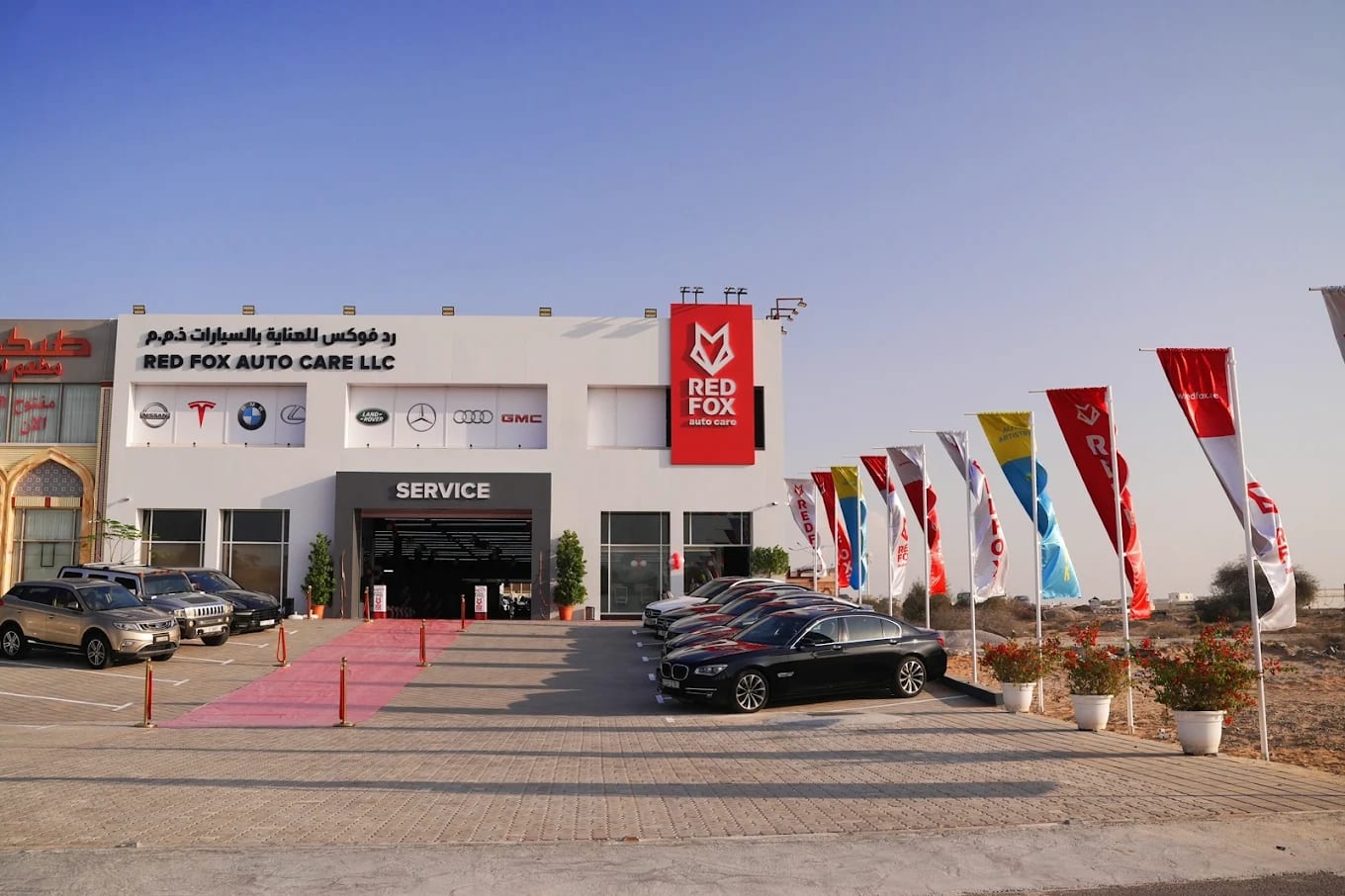
Red Fox Auto Care - Al Dhait South
Ras Al Khaimah · near Al Futtaim Honda - Al Dhait - Al Dhait South - Ras Al Khaimah
 Top-Rated
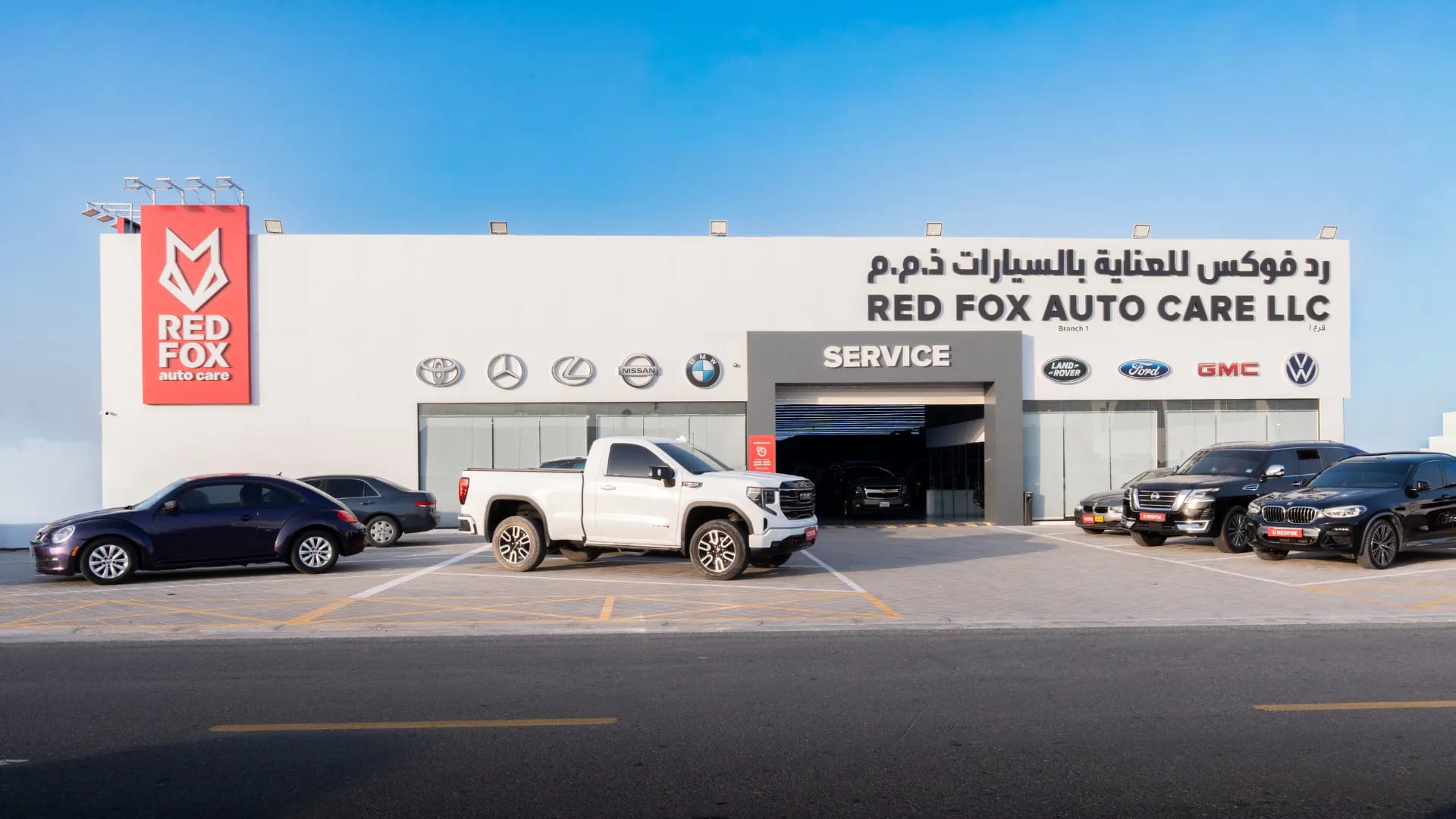
Red Fox Auto Care — Sheikh Khalifa City
Ras Al Khaimah · Red Fox Auto Care, Behind Gargash Mercedes — Sheikh Khalifa City — Ras Al Khaimah
 Top-Rated
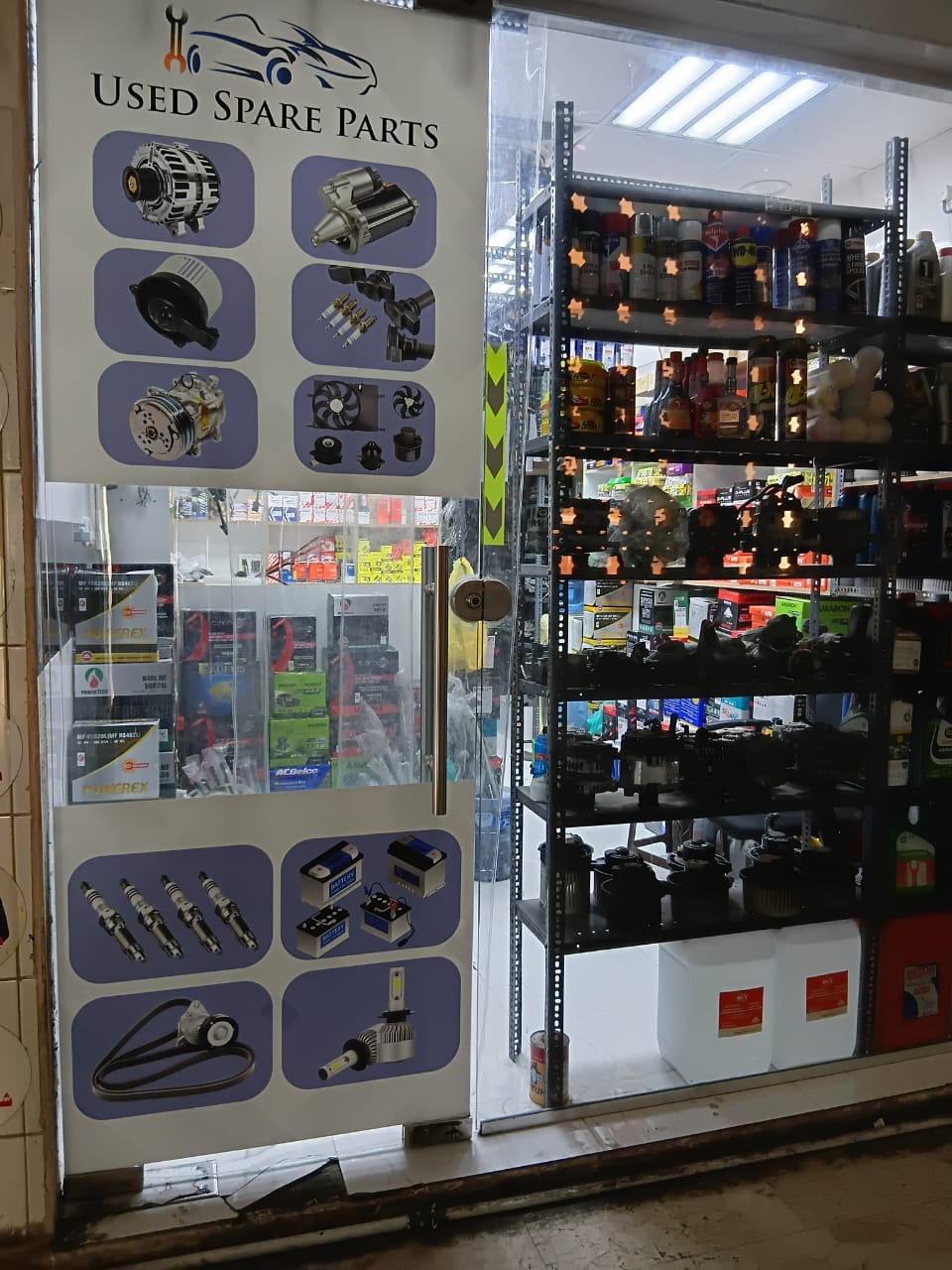
Dubai Car Repair Online Service
Dubai · Al Satwa Rd - near Big Mosque - Al Bada' - Dubai
 Top-Rated
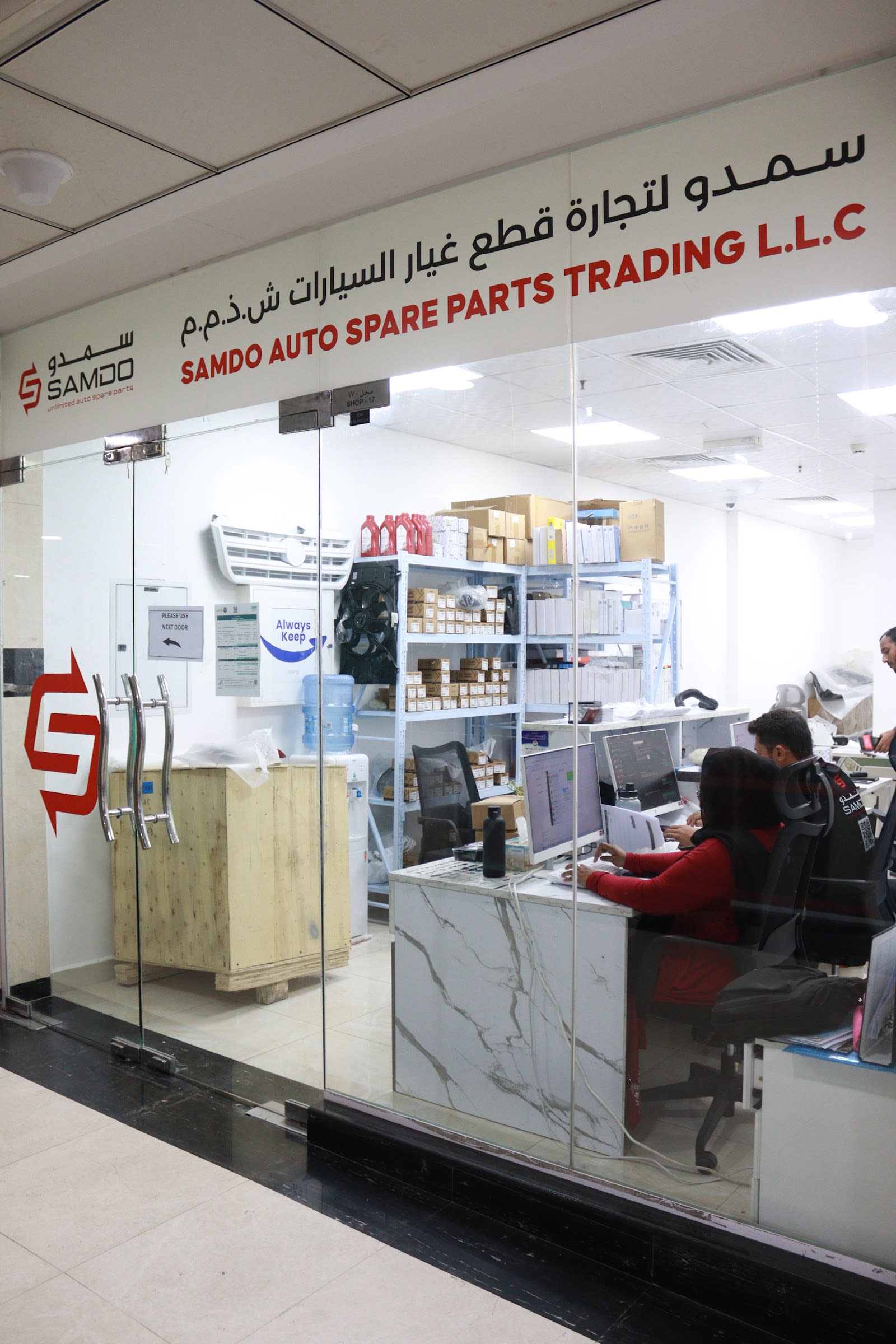
Samdo Auto Spare Parts Trading LLC
Dubai · AL Asmawi Commercial Building 1 El - Shop 17 - Al Manama St - Ras Al Khor Industrial Area 2 - Dubai
 Top-Rated
Fasttrack Emarat - Battery Mobile Service
Dubai · Emarat Atrium Building - Office No. 239 - Sheikh Zayed Rd - Dubai
 Top-Rated
Carzilla Auto Service - Luxury Car Garage in Dubai
Dubai · 41 20C St - Al Quoz - Al Quoz Industrial Area 2 - Dubai - United Arab Emirates
Where to actually buy this
Shops whose own website lists these parts, or whose stock we have recorded ourselves. Last checked July 2026. Not paid placement.
Stocks engine oil, gear oil and transmission fluid — new parts. It carries Toyota, Honda, Nissan and Hyundai and 16 more and delivers.
4.1 on Google from 325 reviews
Stocks engine oil and ATF — genuine OEM, new parts. It carries Toyota, Lexus, Nissan and Mitsubishi and 5 more and delivers across all seven emirates.
3.7 on Google from 541 reviews
Stocks engine oil and ATF — genuine and aftermarket, both new and used. It carries Varta, Ac delco, Bosch and Optima and 19 more and sells trade as well as retail.
4.6 on Google from 34 reviews
Stocks engine oil and ATF — genuine and aftermarket, new parts. It carries Acdelco, Toyota, Nissan and Honda and 2 more and delivers.
4.0 on Google from 40 reviews
- Emerald Spare PartsDubai
Stocks engine oil and oil pumps — aftermarket, new parts. It carries YSK and NGK and sells trade as well as retail.
4.5 on Google from 13 reviews
Stocks engine oil and ATF — genuine and aftermarket, new parts. It carries Amaron, Chloride, Ac delco and Castrol and 4 more and delivers.
4.3 on Google from 3 reviews
Listings are compiled from each business’s own public information. If you run one of these shops and want the entry corrected or removed, email easycarpartsteam@gmail.com.
Ask a human · free · no account
Rather not ring around?
Tell us the car and the part once — we'll send you the shops that actually stock it.
Free · usually a reply in minutes · no obligation
Still easier on a form? The request goes to the same matched UAE suppliers, free, with only the number of shops you choose able to contact you.
Open the request formKeep reading
Engine oil — FAQs
- What does the W in 5W-30 actually stand for?
- Winter, not weight. The 5W is a cold-performance class certified by two low-temperature tests: a maximum cold-cranking viscosity of 6,600 cP at -30C and a maximum pumping viscosity of 60,000 cP at -35C. The 30 is a separate hot rating — kinematic viscosity between 9.3 and 12.5 mm2/s at 100C, with a minimum HTHS of 2.9 mPa.s at 150C. The two numbers are independent measurements, not the ends of a range. In the UAE the W rating almost never comes into play, because no winter night here comes close to the temperatures at which it is tested.
- Should I use thicker oil in the UAE because of the heat?
- For a modern car running the grade in its manual, no. Manufacturers sell, test and warrant these vehicles here, and the ambient chart in your manual already covers 45C and above. What actually protects oil against heat is base-oil quality and the additive package, not a bigger second number — and most of the heavy 20W-50 sold locally as the hot-climate answer is Group I mineral oil on an obsolete API category, which is the least heat-stable product in the shop. Thicker oil in a VVT or turbo engine also slows cam phaser response and costs around 1-3% in fuel. The exceptions are real but specific: pre-2005 engines whose own charts specify 20W-50, high-mileage engines already consuming oil, and sustained heavy load such as towing or dune driving.
- Why do so many UAE workshops recommend 20W-50 then?
- Partly because it was correct for the vehicle fleet they learned on — 1990s Japanese and American engines genuinely list 20W-50 above 30C — and partly because a regional distributor position exists to back it. Toyota's Saudi arm, Abdul Latif Jameel Oils, publishes that for areas above 40C the preferred grades are 20W-50, 15W-40, 10W-40 and 5W-40. That advice suits an older fleet. The same manufacturer's current owner's manual for a modern GCC-spec engine specifies 0W-20 and says to return to 0W-20 at the next change if a substitute was used. Both statements are real; the engine-specific one wins for your car. Margin on cheaper oil is a third, less flattering explanation.
- Can I put 5W-30 in a car that says 0W-20?
- For one interval, in an emergency, in most engines it will not cause damage — but it is not what the engine was designed for. Modern 0W-20 engines have narrow bearing clearances, oil galleries and VVT actuation sized around that viscosity, and there is often a fuel-economy and emissions certification behind it. Toyota's own guidance when 0W-20 is unavailable is to use 5W-20 and switch back at the next change, which tells you how the manufacturer views the substitution. Making it a permanent choice is a decision to run outside spec, and in warranty it gives the dealer an argument.
- How often should I change my oil in Dubai?
- Start from the severe-service schedule in your own manual, not the normal one, because ordinary UAE driving meets several of the severe conditions at once: short trips, extended idling, stop-and-go traffic, dust and extreme ambient temperature. As a practical guide, roughly 5,000 km for mineral, 5,000-7,500 for semi-synthetic, and 7,500-10,000 for a full synthetic that carries your car's OEM approval — shorter at the bottom of each range if your driving is mostly short hops and idling. Add a time cap of 12 months regardless of distance, since oil oxidises on the calendar too.
- Does idling with the AC on really shorten oil life?
- Yes, and it is invisible to your service reminder because it adds engine hours with no odometer distance. At idle you have the lowest oil flow and pressure of any running condition, the AC compressor loading the engine, and airflow through the radiator depending entirely on the fans. A commonly used rule of thumb equates an hour of idling to roughly 40-50 km of driving in wear terms. Two hours a week of waiting with the engine running adds several thousand kilometres a year that no service interval accounts for.
- Do I have to change the oil filter every time?
- Yes. The filter retains a measured amount of dirty oil plus everything it captured over the last interval, so leaving it in place contaminates fresh oil within seconds of start-up. A loading filter also does not announce itself — every filter has a bypass valve that opens at roughly 1-1.5 bar differential and passes unfiltered oil to the bearings, so oil pressure reads normal while filtration has effectively stopped. Change the drain plug crush washer at the same time, and on cartridge filters replace every O-ring in the kit rather than reusing hardened ones.
- What is the difference between API, ACEA and an OEM approval?
- API is an American performance category — currently API SP and API SQ, the latter first licensed in March 2025 alongside ILSAC GF-7 — and it certifies things like LSPI protection for turbo direct-injection engines. ACEA is the European system, where the letter matters most: A/B categories are full-SAPS, C categories are mid- or low-SAPS with sulphated ash capped at 0.8% and 0.5% respectively to protect catalysts and particulate filters. An OEM approval such as MB 229.51, VW 504 00, BMW LL-04 or GM dexos1 Gen 3 means that exact formulation passed that manufacturer's own engine tests and appears on their published list. Where an OEM approval applies, it overrides the other two, and a label reading 'meets or exceeds' is a self-declaration, not an approval.
- Is full synthetic worth the extra money in the UAE?
- For most cars here, yes — but for the oxidation stability, not the label. Full synthetic base oils hold their viscosity and their acid-neutralising reserve far longer at high sump temperature and evaporate less, which is exactly the failure mode this climate accelerates. The honest caveats: it costs two to four times mineral per litre, it delivers nothing if you stretch the interval to compensate, and in a genuinely worn high-mileage engine its stronger detergency can expose a leak that deposits were masking.
- What is the right way to check my oil level?
- On level ground, with the engine warmed up and then switched off for 5-10 minutes so oil drains back to the sump. Pull the dipstick, wipe it fully, reinsert it all the way, and read the second pull — the first is unreliable because of splash in the tube. The MIN to MAX gap is typically 1.0-1.5 litres, so aim for the upper third rather than treating the marks as a narrow band. Cars without a dipstick, common on recent BMW and Mercedes models, usually reverse the procedure: engine running at idle, at full temperature, reading taken through the cluster or infotainment. Follow the on-screen prompt.
- What happens if I overfill the oil?
- If the level rises far enough for the crankshaft to strike the oil surface, the oil is churned into foam. Aerated oil is compressible, so it cannot maintain a bearing film or actuate hydraulic lifters and VVT phasers properly. Overfilling also raises crankcase pressure, pushing oil past seals and into the PCV system, from where it reaches the intake and eventually the catalytic converter — an expensive failure that started as a top-up. If you are more than about half a litre over, have it drained down rather than driving on it.
- How much oil consumption is normal?
- Higher than most owners expect. BMW has stated figures around one quart per 750 miles as within specification for some engines, roughly 1.0-1.3 litres per 1,000 km; VW has quoted up to about 0.5 litres per 1,000 km; Toyota has cited around one quart per 1,200 miles for certain engines. Around 1 litre per 1,000 km recurs across the industry as an acceptable ceiling, particularly for turbocharged units. Measure a rate rather than counting top-ups: fill to a mark, note the odometer, and re-check after a measured 1,000 km. Above roughly 1 litre per 1,000 km, or on any sudden change, investigate — valve stem seals, rings, a blocked PCV valve or turbo seals are the usual causes, and a PCV valve is the cheapest to rule out first.
- How can I tell whether the engine oil I am buying is genuine?
- Counterfeit lubricant is a documented problem in this market — one Ajman sweep alone recovered around 100,000 packs of fake engine oil worth about AED 20 million, and a separate raid on a filling operation recovered over 44,000 counterfeit items including caps, stickers and branded bottles. Buy through an authorised distributor or a workshop that opens a sealed container in front of you. Check that the batch code and production date are laser-etched or inkjet-printed directly onto the bottle rather than on the label, that the cap seal does not turn freely, and that the label alignment and print quality are crisp. Use the brand's QR or scratch-code authentication where it exists, and treat a price well below distributor level as the strongest warning sign there is.
- What should an oil change cost in the UAE?
- For a mid-size Japanese or Korean saloon on full synthetic with a filter, expect roughly AED 220-400 at an independent workshop and AED 400-650 at a main dealer. A European car needing an OEM-approved oil and a cartridge filter runs about AED 450-750 independent. A large petrol V6 or V8 SUV taking 7-10 litres runs about AED 500-950. Always get the total for your specific vehicle including the number of litres, the named oil brand and grade, the filter, the drain washer, labour and VAT — the standard trap here is a low headline price for a fixed volume plus AED 35-70 for every additional litre your engine actually takes.
- What does a 4-litre jug of engine oil cost in the UAE?
- It depends far more on the brand than on the grade. On one Dubai retailer's published engine oil catalogue, 4-litre packs ran from AED 55.00 for a Gulf 20W-50 to AED 177.50 for a BP 5000 5W-40, with Mitsubishi genuine 5W-30 at AED 76.00, Idemitsu 5W-30 at AED 80.00, Lexus genuine fully synthetic SN 5W-40 at AED 80.00, Toyota genuine 5W-30 at AED 84.00, Toyota genuine 0W-20 at AED 120.00 and Castrol EDGE 5W-40 at AED 175.00. Observed at bestautoparts.ae on 2 September 2026. One retailer on one day, not a market survey, and not a quote. Buying the same oil one litre at a time costs substantially more per litre: genuine Toyota 5W-30 was AED 84.00 for the 4-litre jug and AED 30.00 for a single litre on that same catalogue.
- Is genuine manufacturer oil more expensive than a big independent brand here?
- Generally not, and this is the most useful thing the shelf prices show. On one Dubai retailer's catalogue, genuine Toyota, Lexus, Nissan and Mitsubishi oils sat between AED 65.00 and AED 120.00 for 4 litres across every grade listed, while premium independent brands at the same grades sat between AED 130.00 and AED 177.50 — genuine Lexus fully synthetic SN 5W-40 was AED 80.00 for 4 litres against AED 175.00 for Castrol EDGE 5W-40. Observed at bestautoparts.ae on 2 September 2026. One retailer on one day, not a market survey, and not a quote. Manufacturer-branded oil is blended to that manufacturer's own specification and packaged for its regional distributor network, so for a Japanese or Korean car it is usually the simplest way to be certain the approval is right, and it is rarely the costly choice a workshop presents it as.
- Why does this page give two different price ranges for the same thing?
- Because they were gathered differently and we would rather show you that than hide it. The base oil table on this page carries a full synthetic band of AED 150-400 for 4 litres, compiled from published UAE workshop pricing in August 2026 and not attributed to any named retailer. The shelf section carries figures read directly off one named Dubai retailer's catalogue on 2 September 2026, where every manufacturer-branded full synthetic in a 4-litre pack sat between AED 76.00 and AED 120.00. One shop on one day does not prove a wider band wrong, so the older figure has been left in place rather than quietly rewritten to match a single observation. Use the shelf figures for what a jug costs over a counter, and the wider band for what a workshop charges when it supplies the oil itself.
Ask a human · free · no account
Still not the question you had?
Ask it directly — a person reads every message.
Free · usually a reply in minutes · no obligation