Key facts
- Express carriers bill the larger of actual and volumetric weight. DHL's UAE guide, valid from 1 January 2026, works volumetric weight out as length times width times height in centimetres divided by 5,000.
- Dubai Customs lists an invoice, a packing list, a certificate of origin and, for restricted goods, a permit from the controlling authority as the documents for an export declaration.
- Under the ICC's Incoterms 2020 an ex-works price leaves export clearance to the buyer, and the ICC itself encourages FCA instead, where the seller completes the export formalities.
- Kenya inspects used spare parts from the UAE before shipment through its contractor QISJ, at 0.6% of FOB value with a USD 265 minimum, and adds a radiation check.
- Zimbabwe's conformity programme for used vehicle spare parts has been fully enforced since 1 March 2024, with a published penalty of 12% of CIF value for goods exported without a certificate.
- The Tanzania Bureau of Standards posted a notice on 29 May 2026 that used motor vehicle spare parts from the UAE are inspected in the UAE from 21 June 2026.
- Nigeria's customs service says every importer of physical goods first processes an electronic Form M through an authorised dealer bank, whatever the value.
What importing car parts from Dubai actually involves
A part imported from Dubai passes through four sets of hands. A supplier in the UAE sells it to you. A cargo agent or freight forwarder collects it in Dubai, prepares the export paperwork and books space on an aircraft or ship. A clearing agent in your country presents it to customs when it arrives. And you, as the buyer, pay for all of it and answer for the goods meeting your country's import rules.
Easy Auto sits at the first of those steps. We run a UAE car-parts directory and a WhatsApp parts desk: you send the part, a person checks UAE stock and the Sharjah and Dubai parts markets and yards, and you receive a quote. Your own agent collects the parts in Dubai. We do not ship abroad, clear customs, promise delivery times or name a forwarder, so the second and third jobs are yours to arrange.
Read the steps in order. The costly mistakes tend to be a wrong part ordered at the start and a certificate nobody mentioned until the goods were sitting at your port, and both are cheap to prevent before you pay.
Step 1: Identify the exact part before you ask for a price
Start with the number printed or stamped on the old part, because it names the exact item. If you cannot read it, use the VIN. A VIN has 17 characters under US federal rules, and it ties the part to your exact build, which matters because engine, trim and production date change which part fits. For an engine or gearbox add the engine or gearbox code, and photograph the old part from several sides. Our guide to finding car parts by VIN explains how to read the number.
Then settle which way your car steers, because the country you are in decides it. Countries that drive on the left have mostly right-hand-drive cars, and the UAE, which drives on the right, sells left-hand-drive cars. An engine or gearbox may carry over, but dashboards, steering parts, mirrors and headlamp units often do not. Ask the supplier whether the donor car was right- or left-hand drive and where it was sold new.
| Side of the road | Countries in this guide | What it usually means for the parts you buy |
|---|---|---|
| Left | Kenya, Uganda, Tanzania, Zimbabwe, South Africa, Zambia and Malawi | Most cars are right-hand drive, so a part from a left-hand-drive donor car may be the wrong hand |
| Right | Nigeria and Ghana | Left-hand-drive cars are the norm, so UAE-market parts are closer in hand, though specification can still differ |
| Right | The United Arab Emirates | Cars sold new here are left-hand drive, but yards can dismantle cars that came from other markets |
Step 2: Decide between new, used, rebuilt and aftermarket
A used part comes off a donor car, a rebuilt part has been reconditioned, an aftermarket part is made by a company other than the carmaker, and a new genuine part comes in the carmaker's packaging. Our lane is used, rebuilt, aftermarket and GCC-specification parts, so a new genuine part by catalogue number is better bought from a specialist catalogue seller. Our guides on genuine against aftermarket parts and on used parts in the UAE explain the trade-offs.
For export, the choice matters beyond price, because countries treat used and new parts differently. Kenya, Tanzania and Zimbabwe each ask for an inspection certificate on used parts from the UAE, South Africa controls second-hand goods with an import permit, and Uganda forbids used tyres. Whatever you choose, the invoice must say used for anything second-hand, because destination customs and inspectors work from that word.
Step 3: Get a written quote and know what it covers
A useful quote names the part and its number, the condition, the quantity, the price per unit and the currency, the packed weight and dimensions, and the date it will be ready for collection. The packed weight and dimensions matter more than they seem, because freight is billed on them. Ask for the quote in writing on WhatsApp, and keep the conversation.
Ask what kind of price it is. Under the International Chamber of Commerce's Incoterms 2020, ex works means the seller makes the goods available at its own premises and the buyer handles export clearance and everything after. The ICC itself says parties should consider FCA instead, under which the seller completes the export formalities. If your agent collects in Dubai, agree with the supplier and the agent who files the export declaration before you pay.
Do not let a low price stand in for a check. A quote is a statement of what is on offer, not proof that the part exists, and step 8 covers how to test it. Whoever quotes you, our parts desk included, should state the condition of each part, and you should ask for it in writing if they do not.
Step 4: Choose how the parts travel
Your agent chooses the route with you, and the main options differ in how they are charged. Express couriers bill by chargeable weight, which is the larger of actual and volumetric weight; DHL divides length times width times height in centimetres by 5,000, so a 60 by 50 by 40 centimetre box of light plastic body parts is billed as 24 kg. Consolidated cargo through a Dubai forwarder is cheaper per kilo but sold in weight bands, and sea freight is priced by volume or by container.
Published figures show how steeply small parcels cost. DHL's UAE guide, valid from 1 January 2026, lists a 12 kg express parcel at AED 3,146.71 to Kenya, Nigeria, Tanzania or South Africa and AED 3,792.16 to Ghana, Uganda, Zambia, Zimbabwe or Malawi, before fuel surcharge, duty and tax. A Dubai air-cargo consolidator's Nairobi card, dated 17 July 2025, starts at AED 38 a kilo for 30 kg and above. Ask your forwarder for the whole route in writing, with weights, not only a per-kilo rate.
Some parts cannot go by air in a courier box. We do not quote batteries, airbags and pretensioners, gas shocks, fluids, aerosols or undrained engines for export, because air carriers regulate many of them as dangerous goods; DHL's guide says fully regulated dangerous goods need a contractual agreement. A used engine is drained of fuel, oil and coolant and moves through an agent who knows the rules.
| Route | How it is charged | When it tends to fit |
|---|---|---|
| Express courier | By chargeable weight per piece, plus a fuel surcharge that changes | One urgent, light, valuable part |
| Consolidated air cargo through a Dubai forwarder | Per kilo in weight bands; the Nairobi card we read starts at 30 kg | Several parts bought together |
| Sea freight, shared container | By volume, with minimums that your forwarder states | Heavy or bulky parts when time is not tight |
| Sea freight, full container | Per container, with port and clearing charges added | Trade quantities and engines in numbers |
Step 5: Prepare the documents
Dubai Customs lists an invoice, a packing list, a certificate of origin and, for restricted goods, a permit from the controlling authority as the documents for an export declaration. Your forwarder or customs broker usually prepares the declaration, but they work from your invoice. It should show the exporter and the buyer, a description of each part, the quantity, the unit price, the total, the currency and the agreed price terms, and the packing list must match it line for line.
Each part is also classified under a Harmonised System code. A customs broker's guide dated 2020 gives petrol engines as 8407.34, diesel engines as 8408.20, engine parts as 8409.91, alternators as 8511.50, starting equipment as 8511.40 and general parts and accessories of motor vehicles as heading 8708. The code decides the duty rate at your end, so ask your clearing agent to confirm it before the invoice is issued.
A certificate of origin is requested by some destination customs and not others, and a certificate from the inspection body is a separate thing, covered in step 6. When the carrier takes the goods it issues an air waybill or a bill of lading, which names the shipper and the consignee. Keep every document together, because your clearing agent needs the set.
Step 6: Check your country's rules before you pay
Several African countries now treat used spare parts differently from new ones, and the difference can mean an inspection in the UAE before the goods ship. The table gives one first check for each country, taken from an official or programme document read on 7 October 2026. Rules change, so ask your clearing agent to confirm the current position, and use the country page for the duty, tax and port details.
| Country | Who is involved | The first thing to check before you pay |
|---|---|---|
| Kenya | Kenya Revenue Authority and the Kenya Bureau of Standards | Used spare parts from the UAE are inspected before shipment by the contractor QISJ, at 0.6% of FOB value with a USD 265 minimum, plus a radiation check; without the certificate they are inspected at the port |
| Uganda | Uganda Revenue Authority and the Uganda National Bureau of Standards | Used products and automotive products are in the pre-export programme. A July 2024 datasheet says consignments under USD 2,000 FOB may ship without a certificate but are inspected on arrival, and used tyres are forbidden |
| Tanzania | Tanzania Revenue Authority and the Tanzania Bureau of Standards | A notice posted on 29 May 2026 says used motor vehicle spare parts from the UAE must be inspected in the UAE under its pre-shipment procedure from 21 June 2026 |
| Nigeria | Nigeria Customs Service | Process an electronic Form M through an authorised dealer bank before importing; the customs service says this applies whatever the value |
| Ghana | Ghana Revenue Authority customs division | The 2022 used-vehicle standard covers vehicles, not parts, so ask your clearing agent whether your parts need an inspection certificate |
| Zimbabwe | Zimbabwe Revenue Authority and the appointed conformity assessment bodies | Used vehicle spare parts need a certificate of conformity; goods exported without one carry a published 12% of CIF penalty since 1 March 2024 |
| South Africa | South African Revenue Service and the International Trade Administration Commission | Used and second-hand goods are import-controlled: register with SARS and apply to ITAC for a permit before you order, and have the invoice marked second-hand |
| Zambia | Zambia Revenue Authority | We found no published rule specific to used spare parts, so ask your clearing agent for the current requirement before you pay |
| Malawi | Malawi Revenue Authority | We found no published rule specific to used spare parts, so ask your clearing agent for the current requirement before you pay |
Step 7: Clearance, duty and the bill at your end
Your clearing agent lodges the declaration with your customs authority, which assesses duty and tax from your invoice and the tariff code and may inspect the goods. When the amount is paid and any required certificate is shown, the goods are released and collected. Ask the agent to calculate duty and tax on your supplier's invoice before you pay the supplier, so the landed cost is known in advance.
Taxes stack on each other. As one worked example, PwC's Kenya tax summary, reviewed on 17 July 2026, gives the import declaration fee as 2.5% and the railway development levy as 2% of the customs value, with VAT at 16% on a base that includes duties and levies. Duty itself depends on the tariff line, so ask your agent which rate applies to your part and whether freight and insurance are counted in the value.
Do not ask a supplier to understate the value on an invoice to save duty. It is a risk to your goods and to you, not a saving, because customs authorities can challenge a declared value, and the real price will show in your payment.
Step 8: How to avoid being scammed at each stage
Before you ask for a quote, be careful where the supplier found you. A business that messages you first, or appears in a group comment with a new number, deserves more checking than one you found yourself. Gulf News reported on 19 November 2024 that UAE authorities advise checking a shop's website with the UAE Cybersecurity Council's Stay Safe tool before buying from a low-price social media advert.
Before you pay, check the company. For a Dubai business the Department of Economy and Tourism's licence search shows the licence status, expiry date, activities and address from a licence number or company name, according to Khaleej Times on 15 March 2025. A company in a free zone is licensed by that free zone, so ask for the licence number and the issuing authority and check it there. Make sure the company name on the invoice and on the receiving bank account is the same, and treat a deadline as a warning, because the US Federal Trade Commission says honest businesses give you time to decide.
Before dispatch, ask for a photo or short video of the exact part with its number and the invoice number in view. After dispatch, ask for the air waybill or bill of lading number and check it on the carrier's own site; Gulf News also noted that legitimate couriers write from corporate email domains, not free webmail addresses. When the goods arrive, check them against the invoice before your clearing agent signs for them.
A sensible first import
Start with one consignment of parts you are not in a hurry for, rather than an urgent single item. Several parts bought together share one inspection fee, one set of documents and one freight bill, and the fixed costs described above weigh less per part. If you buy for a workshop, ask for a quote for the whole basket and for a pro-forma duty calculation from your clearing agent before you commit.
Line up both agents before you accept the quote, keep every message and document, and write down what the supplier promised about condition. Then use the country page for your destination, and message the parts desk with your part, your VIN and your country.
Country pages for first-time importers
Each country page sets out one destination's duty, tax and inspection rules with the source and date of every figure, the words buyers there use for the same parts, and what usually makes sense to ship.
East Africa
Southern Africa
Parts sellers we can name
These shops are here because our record of them says they export. It is a record of what they publish about themselves, not a check we have made, so ask each one for a written quote and use your own forwarder.
Where to actually buy this
Shops whose stock we have recorded ourselves. Last checked July 2026. Not paid placement.
Listed for brake parts and engine parts — genuine and aftermarket, new parts. It carries Textar, Hella and Delphi, matches parts to your VIN and delivers across all seven emirates.
4.6 on Google from 33 reviews
- BEST AUTO PARTS STOREAbu Dhabi
Listed for oils and filters and batteries — genuine and aftermarket, new parts. It carries Amaron, Chloride, Atlas BX and Max Flash and 12 more and delivers to Abu Dhabi and Dubai.
4.6 on Google from 20 reviews
Listed for brake parts and engine parts — genuine and aftermarket, new parts. It carries Mopar, ACDelco, Motorcraft and Renault and 8 more and delivers across all seven emirates.
3.8 on Google from 120 reviews
Listed for tyres and wheels and batteries — genuine and aftermarket, new parts. It carries Firestone, Neoterra, Kunlun and Sailun and 4 more and delivers to Dubai, Abu Dhabi and Sharjah.
4.8 on Google from 19 reviews
Listed for engine parts and brake parts — genuine OEM, new parts. It carries KIA, Hyundai, GMC and Chevrolet and 4 more, matches parts to your VIN and delivers to Dubai, Sharjah and Abu Dhabi.
4.7 on Google from 7 reviews
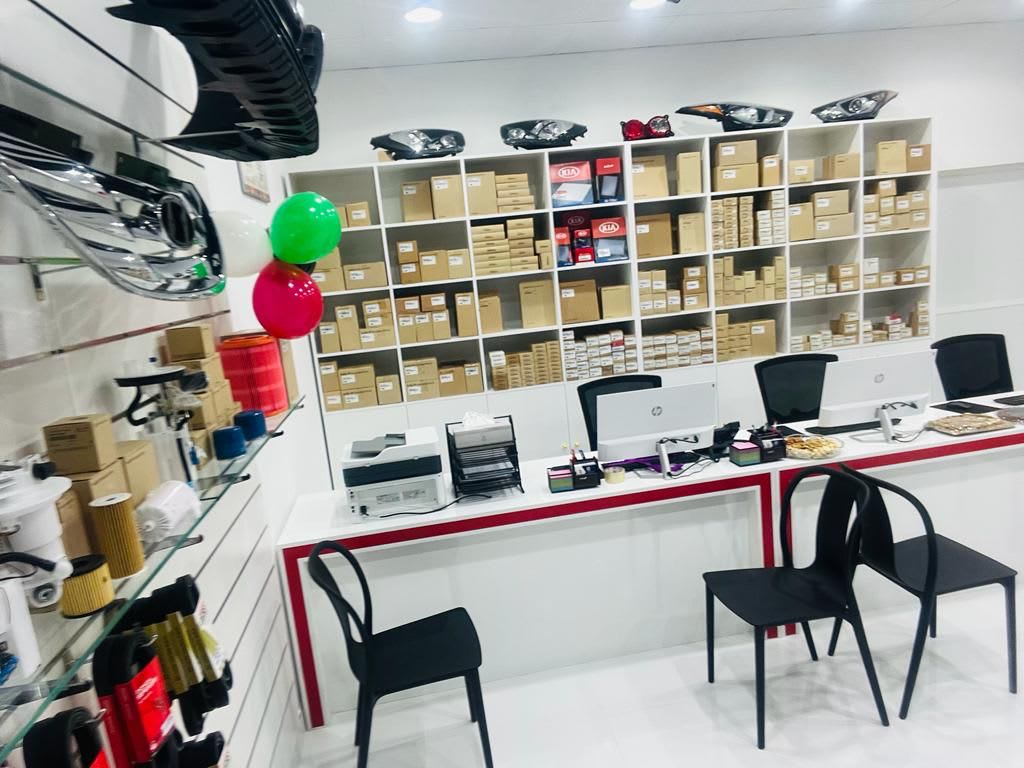
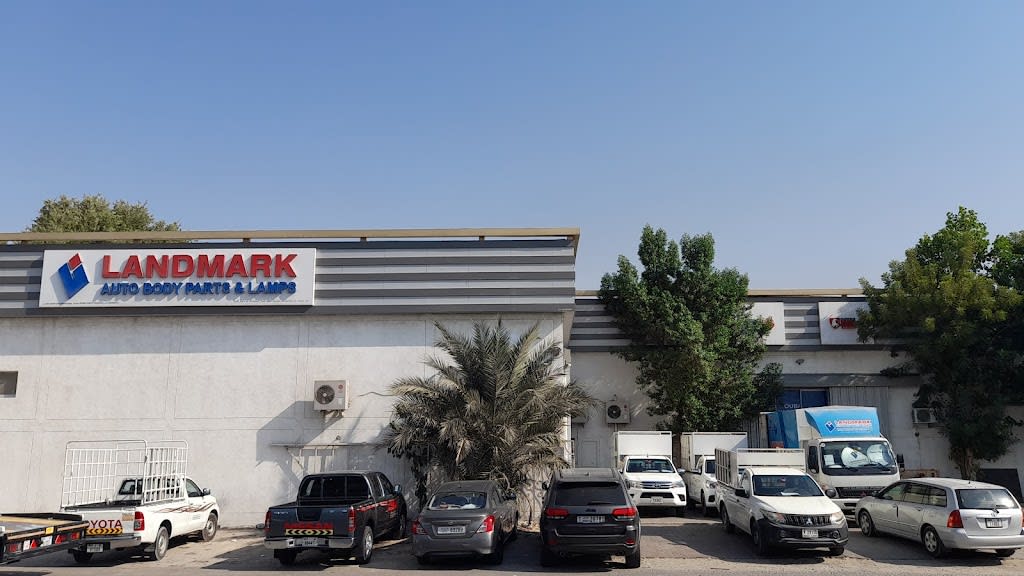
Listed for body panels and lights and A/C and cooling parts — aftermarket, new parts. It carries Depo, TYG, Double Horse and Viewmark and 4 more and delivers to Dubai, Sharjah and Abu Dhabi.
4.4 on Google from 85 reviews
Listings are compiled from each business’s own public information. If you run one of these shops and want the entry corrected or removed, email easycarpartsteam@gmail.com.
FAQs
- How do I import spare parts from Dubai to Kenya?
- Identify the part by number or VIN, get a written quote from a UAE supplier, and have your cargo agent collect it in Dubai and ship it. Kenya checks used spare parts from the UAE before shipment: the Kenya Bureau of Standards names QISJ as its contractor, with a fee of 0.6% of FOB value, a USD 265 minimum and a radiation check. Our Kenya page covers the rest.
- How do I import car parts from Dubai to Ghana?
- The steps are the same: the exact part, a written quote, your own cargo agent in Dubai, the documents, and a customs agent in Ghana. DHL's 2026 UAE guide puts Ghana in its Zone 8, with AED 3,792.16 for a 12 kg express parcel before surcharges and tax. The 2022 used-vehicle standard covers vehicles, not parts, so ask your clearing agent whether a certificate is needed.
- How do I import car parts from Dubai to Tanzania?
- Follow the same steps, and check the used-parts rule before you pay. The Tanzania Bureau of Standards posted a notice on 29 May 2026 saying that from 21 June 2026 used motor vehicle spare parts from the UAE must be inspected in the UAE under its pre-shipment verification procedure. Confirm the current position with your clearing agent.
- How do I import car parts from Dubai to Uganda?
- Uganda's pre-export verification programme lists used products and automotive products. A Bureau Veritas datasheet dated July 2024 says consignments with a FOB value under USD 2,000 may ship without a certificate but are inspected on arrival, and that used tyres are forbidden. Confirm the current rule with your clearing agent.
- How do I import car parts from Dubai to Zimbabwe?
- Zimbabwe runs a conformity programme for used vehicles and used vehicle spare parts, fully enforced from 1 March 2024. A Bureau Veritas datasheet says goods exported without a certificate of conformity are liable to a 12% penalty on CIF value and destination assessment. Get the certificate through an appointed body before the parts ship.
- How do I import used car parts from Dubai to South Africa?
- Used and second-hand goods are import-controlled in South Africa: the importer registers with SARS and applies to ITAC for a permit, which government pages say is usually issued within five working days. Have the supplier mark the goods second-hand on the invoice. The government page we read dates from 2014, so confirm the current process with your agent.
- How do I import car parts from Dubai to Nigeria?
- Nigeria Customs Service says anyone importing physical goods must first process an electronic Form M through an authorised dealer bank, whatever the value. Do that before the parts ship, then follow the usual steps: exact part, written quote, your own agent in Dubai and a clearing agent in Nigeria. Our Nigeria page uses the words buyers there use, such as tokunbo.
- What documents do I need to import car parts from Dubai?
- Dubai Customs lists an invoice, a packing list, a certificate of origin and, for restricted goods, a permit for an export declaration. You also receive an air waybill or bill of lading from the carrier, and your country may add an inspection certificate, an import permit or a Form M. Your two agents will tell you which apply.
- Do I need both a cargo agent and a clearing agent?
- Usually, and they do different jobs. A cargo agent or forwarder in Dubai collects the goods, prepares the export paperwork and books the freight. A clearing agent in your country presents the goods to customs and pays duty and tax on your behalf. Some firms do both, and we do not recommend a particular one.
- What does ex works mean on a quote?
- Under the ICC's Incoterms 2020, ex works means the seller makes the goods available at its own premises and the buyer handles export clearance and all transport from there. The ICC itself says parties should consider FCA, where the seller completes the export formalities. Ask which one your quote means and who files the export declaration.
- How do I avoid scams when importing car parts from Dubai?
- Check the company's licence on its issuing authority's register, make sure the name on the invoice and the receiving bank account match, ask for a video of the exact part with its number, and treat any deadline as a warning. UAE authorities also advise checking shop websites with the UAE Cybersecurity Council's Stay Safe tool, according to Gulf News on 19 November 2024.
- Can I import a used engine from Dubai?
- Yes. The engine should be drained of fuel, oil and coolant, its code checked against your VIN, and the shipment consolidated or sent by sea through your own agent. Used engines fall under your country's used-parts rules, so check step 6 and our half-cut engines guide before you pay.
Ask a human · free · no account
Got a question this guide didn't answer?
Send it over.
Free · usually a reply in minutes · no obligation
Prices are indicative AED ranges and vary by vehicle, condition and provider. Where regulations are mentioned, confirm the current rules with the RTA — this guide is general information, not legal or pricing advice.