Steering parts in the UAE: tie rods, steering racks and power steering pumps
The quick answer
Steering parts are ordered by which part of the steering system is worn and by how your car steers, never by model name alone. A tie rod has two joints, an outer tie rod end at the wheel and an inner tie rod at the steering gear. The gear itself is a rack or, on some older and heavier vehicles, a recirculating-ball steering box. A car with hydraulic power steering also has a pump, hoses and fluid, but a car with electric power steering has none of those, and Toyota says its new Land Cruiser 250 series is the first Land Cruiser fitted with the electric kind. Any of these parts can be offered new, remanufactured or used, so ask which. We publish no steering part prices because we hold no dated quotes. Send your chassis number, a photo of the old part and which wheel it came from on WhatsApp, and matched suppliers quote against them.
Ask a human · free · no account
Not sure which part fits your car?
Tell us the make, model and year — we check fitment and come back with prices from UAE sellers who have it on the shelf.
Free · usually a reply in minutes · no obligation
Key facts
- febi describes a tie rod as an inner tie rod plus a tie rod end, connecting the steering gear to the front wheels so that both wheels turn together and keep a set angle to each other. The outer tie rod end passes the movement to the wheel, and febi says a worn one can show up as abnormal tyre wear and erratic steering feel.
- febi says the length of a tie rod must match the vehicle maker's specification, because a different length causes problems during wheel alignment. MOOG's own tech tip shows one truck line taking two different tie rod end thread diameters, 1-3/8 inch or 1-9/16 inch depending on the front axle, and says they are not interchangeable.
- A steering gear is either a rack and pinion or, on larger and heavier vehicles, often a recirculating-ball box. Wikipedia says recirculating ball is found on older cars, off-road vehicles and some trucks, and that most newer cars use the more economical rack and pinion. The two have different linkage parts, so a rack part does not translate to a box vehicle.
- Power steering comes in three families. Hydraulic uses a belt-driven pump, a reservoir, hoses and fluid. Electro-hydraulic uses an electric motor to drive the pump. Electric has a motor, a control unit and a torque sensor and no hydraulic fluid, so there is no pump or fluid to buy for it.
- Toyota calls the new Land Cruiser 250 series the first Land Cruiser model fitted with electric power steering, comparing it with a hydraulic system, and its announcement lists the Middle East among the destinations for that series. The same nameplate can therefore carry different steering systems in different generations.
- Power steering fluid is not one product. Liqui Moly lists a central hydraulic oil for specifications such as VW G 002 000 and G 004 000 and Mercedes-Benz 345.0, and separate ATF products for Dexron III and Ford Mercon requirements. Its pages say the vehicle maker's requirements must be followed and that the product works best unmixed.
- ZF says its TRW business remanufactures steering racks, pumps and column drives and tests them in-house. One US remanufacturer's rack listing shows what such a unit may or may not include: it supplies inner tie rods and a sealing kit and says outer tie rods are not included.
- A steering angle sensor may need calibrating after an electric steering unit is replaced. A Stellantis service record, case S2219000003 of August 2022, says that after an EPS replacement its wiTECH tool must be used to align the proxi and calibrate the steering angle sensor. Ask a supplier whether an electric unit needs coding on your car.
Rather fill in a form? Send the same request here and matched UAE suppliers reply on WhatsApp either way.
Open the request formSteering — types and specifications
- Outer tie rod end
- The ball joint at the wheel end of the tie rod, joined to the steering knuckle
- Inner tie rod (rack end)
- The inner rod and joint that connects to the steering gear
- Steering rack
- Rack and pinion: a pinion gear moves a rack back and forth to steer the wheels
- Steering box
- Recirculating ball, on older cars, off-road vehicles and some trucks
- Power steering pump
- Hydraulic systems only; an electric system has no pump
- Power steering fluid
- Only the specification your vehicle maker names
- Electric power steering unit
- Motor, control unit and torque sensor; ask whether it needs coding
- Steering column and intermediate shaft
- Connects the steering wheel to the steering gear
- Steering rack boot (bellows)
- The rubber cover over the inner joints; febi sells ProKits with steering boots
- Pitman arm, idler arm and centre link
- The linkage of a steering-box system, not of a rack
- Hoses and reservoir
- Listed by JTEKT as separate products from the pump
What the steering system is made of, and which part you are actually ordering
Steering is a chain, and a request for a steering part can mean any link in it. The driver turns the steering wheel, a column carries that turn down to a steering gear, the gear turns it into sideways movement, and tie rods pass the movement out to the wheels. Wikipedia's account of steering lists the same chain: the wheel and column, the gear (rack and pinion, recirculating ball, or the older worm and sector), and the linkage of tie rods, steering knuckle and ball joints, with a pitman arm and idler arm on systems built around a steering box. Power steering sits on top of that chain and adds assistance, either hydraulic or electric.
This site has so far filed steering parts under suspension, because the parts catalogue groups axle mounting, steering and wheels into one system and that system is mapped to the suspension page. That is why steering needs a page of its own. It covers tie rods and tie rod ends, steering racks and boxes, power steering pumps and fluid, and columns and shafts. It does not cover steering wheel covers or aftermarket steering wheels, which are accessories, and it does not cover wheel alignment or workshop repair, because this is a parts page. The springs, dampers, arms and bushes of the suspension are on the suspension page.
The table below sets out the parts a buyer may mean, where each one sits and who describes it that way. The rest of the page takes them in turn: the tie rods first, because tie rod is the most-searched of the steering-system parts this page covers in our keyword data, then the gear, then the power assist, the fluid, the column and the routes by which a replacement can be supplied.
| Part | Where it sits | What the source says it does | Source |
|---|---|---|---|
| Steering column and intermediate shaft | Between the steering wheel and the steering gear | Connects the steering wheel to the steering mechanism, and houses the multi-function switch, column lock and wiring | Wikipedia on steering columns; JTEKT lists columns and intermediate shafts among its aftermarket products |
| Steering rack (rack and pinion) | The steering gear on most newer cars | A pinion gear moves a rack back and forth to steer the wheels | Wikipedia on steering |
| Steering box (recirculating ball) | The steering gear on older cars, off-road vehicles and some trucks | A worm gear turns inside a nut with ball bearings between them and moves a pitman arm | Wikipedia on steering and on recirculating ball |
| Inner tie rod (rack end) | Between the steering gear and the outer tie rod end | Conveys the steering motion to the wheels | febi; the CTR brand record for the name rack end |
| Outer tie rod end | At the wheel, joined to the steering knuckle | Transfers the movement from the steering to the wheels | febi; Delphi |
| Pitman arm, idler arm and centre link | The linkage of a steering-box system | Listed by ZF among its steering linkage parts; 555 associates idler and pitman arms with systems that do not use a rack | ZF Aftermarket; the 555 brand record |
| Steering rack boot (bellows) | Over the inner joints of a rack | Listed by ZF as bellows; febi sells tie rods and tie rod ends as ProKits with steering boots | ZF Aftermarket; febi |
| Power steering pump | On a hydraulic system, driven by the engine | Creates the hydraulic pressure; Wikipedia says it is typically a gerotor or rotary vane pump driven by the engine | Wikipedia on power steering |
| Power steering hoses and reservoir | On hydraulic systems | JTEKT lists hydraulic hoses and reservoir tanks as unit components of its steering range | JTEKT |
| Electric assist unit (motor, control unit, torque sensor) | On the column, pinion or rack of an electric system | Replaces the hydraulics entirely: sensors detect position and torque and a computer module applies assistive torque through the motor | Wikipedia on power steering; JTEKT |
Inner and outer tie rods: the two joints a buyer calls a tie rod
febi, the German parts maker, describes a tie rod as two parts: an inner tie rod and a tie rod end. The inner tie rod is connected to the steering, and its main function is to convey the steering motion to the wheels. The outer tie rod end transfers that movement from the steering to the wheel and lets the wheel move relative to the vertical axis. Delphi describes the tie rod end as the part that connects the steering knuckle of the wheel to the steering rack. In the UK the same part is generally called a track rod, and Wikipedia notes that automotive tie rods differ from structural ones by both pushing and pulling.
That leaves several names to untangle when a seller quotes. Tie rod can mean the outer end on its own, the inner rod on its own, or the two together as an assembly. Track rod is the British name for the same family. Rack end is a name CTR uses for the inner joint that threads into the rack, and 555 lists rack ends alongside tie rod ends. febi's own note on replacement is worth reading closely: changing the tie rod is needed when the tie rod end or the inner tie rod end is worn, if those two components are not available separately. Whether you can buy one joint or must buy the pair depends on how the maker catalogues it, so ask the seller exactly what the number covers.
What wears is the ball joint inside each end. febi says a typical sign of wear in an inner tie rod is play in the ball joint, which can come from a worn plastic shell in the socket, and that one frequent cause is repeated and excessively hard mounting of kerbs. For the outer end, febi says a worn one can lead to abnormal tyre wear patterns and erratic steering feel, and Delphi says a loose tie rod end affects steering and handling, especially in cornering. The rubber boot over the joint is what keeps moisture and dirt out, and febi calls it vitally important for service life.
A tie rod is not a link rod. In our keyword data, the pages that rank for searches such as link rod, front link rod and stabilizer rod are stabiliser link pages, not tie rod pages. febi describes the stabiliser link, also called a sway bar link, as the part that connects the stabiliser bar to the body and, as part of the suspension, reduces roll in corners. febi says a knocking noise from the front axle on uneven road can be a sign of a defective stabiliser link, and that it can usually be replaced without much effort and normally needs no wheel alignment afterwards. It is a suspension part and is covered on the suspension page. If a seller says link rod, ask them to name the part, so a tie rod is not quoted when a stabiliser link is meant, or the other way round.
| Name you may hear | What it refers to | Where it is | Who describes it this way |
|---|---|---|---|
| Tie rod end, outer tie rod end | The ball joint at the wheel end of the tie rod | At the steering knuckle | febi; Delphi |
| Inner tie rod, rack end | The inner rod and joint that connects to the steering gear | At the steering gear | febi; the CTR brand record |
| Tie rod, tie rod assembly | The two joined together, or whichever joint the seller's number covers; ask | Inner joint to outer joint | febi |
| Track rod | The British name for the tie rod | As above | Wikipedia |
| Stabiliser link, sway bar link, link rod | A different, suspension part: febi says it connects the stabiliser bar to the body and reduces roll in corners | Between the stabiliser bar and the body, as febi describes it | febi; our keyword data for the link rod and stabilizer rod searches |
| Steering rack boot, bellows | The rubber cover over the inner joints | At each end of the rack | ZF Aftermarket; febi |
Before you order tie rods: length, thread, boots and what comes in the box
febi says the functional dimension of a tie rod, meaning its required length, has to correspond precisely to the original, and that if the length differs from the vehicle maker's specification, problems could arise during wheel alignment. For a buyer that means a tie rod is matched to a specification, not to a look. Two tie rods that look alike on a counter are not necessarily the same part.
MOOG's own tech tip on Ford Super Duty trucks shows how narrow the match can be. It says trucks with the Wide Track front axle use a tie rod end with a larger thread diameter than trucks without it, 1-9/16 inch against 1-3/8 inch, and that the two are not interchangeable. Same truck line, same model name, two parts. The example is American, but the lesson carries: a model name does not settle a tie rod end, and the old part or the chassis number does.
What arrives in the box also differs. febi sells tie rods and tie rod ends as ProKits with steering boots, and says the nuts and bolts a repair needs are often not included with the single replacement part, while its ProKits add them. Whether a quote includes the boot and its clamps is the first thing to settle.
MOOG makes a different point about the joint itself. Its tech tip says most original-equipment chassis parts are non-serviceable, while its own parts have a grease fitting and a boot with a relief valve, so that new grease flushes old grease and contamination out when the joint is greased. Greaseable or sealed is therefore a real difference between two tie rod ends that fit the same car, and it belongs on the quote.
None of this needs you to measure anything. The old part, its boot and any number on it, photographed, together with the chassis number, let a supplier check the number against the right position. Say which wheel it came off, and whether it was on the left or the right.
| Settle this | Why it matters | Source |
|---|---|---|
| Which joint: the outer end, the inner rod or the pair | febi notes a tie rod may be replaced as a unit if the two ends are not sold separately | febi brochure |
| Length and thread | febi says the length must match the vehicle maker's specification; MOOG shows one truck line with two thread diameters | febi; MOOG tech tip |
| Boot and clamps | The boot keeps moisture and debris out of the joint; febi sells ProKits with steering boots | febi; MOOG |
| Greaseable or sealed | MOOG says most original-equipment chassis parts are non-serviceable and its own have a grease fitting and a relief valve | MOOG tech tip |
| Which wheel the old part came from | Lets the supplier check the number against the right position | Our guidance |
| Brand and number on the box | Written on the invoice, so a warranty claim can name the part | Our guidance |
Why the model name is not enough for steering parts
The steering system on one nameplate is not fixed. It changes by generation, by variant and sometimes by axle, and each change can change which pump, rack or tie rod end is the right one. The table gives sourced examples. None of them is a list of what your car has. They are here to show which questions a supplier needs answered.
The wider market problem, that GCC-specification, US-specification and Japanese-import cars can share a model name and carry different parts, is set out on the suspension page, and the same logic applies here. The chassis number is what settles it, and the guide on finding parts by VIN explains how to read one.
| Example | What the maker or source says | What it means when you order |
|---|---|---|
| Toyota Land Cruiser 250 series | Toyota's announcement calls the new Land Cruiser the first Land Cruiser model fitted with electric power steering and compares it with a hydraulic system. The same announcement lists the Middle East among the destinations for the 250 series. | On an electric system there is no pump, hose or fluid to buy for the assist, and a pump number from an earlier Land Cruiser should not be assumed to apply |
| Nissan Patrol NISMO | Nissan's announcement for the Patrol NISMO describes an electronic power steering system tuned for that variant. Its announcement for the new Patrol itself says nothing about steering, so we cannot say what the other variants have. | A variant's steering can be specified separately from the rest of the range, so give the chassis number, not just the model name |
| Ford Super Duty trucks (MOOG tech tip) | Trucks with the Wide Track front axle use a tie rod end with a 1-9/16 inch thread; others use 1-3/8 inch; the two are not interchangeable | The same model can need different tie rod ends depending on the axle |
| Jeep Wrangler | Wikipedia lists it among modern vehicles that still use a recirculating-ball steering box | A box vehicle uses different linkage parts from a rack car; 555's brand record says rack-based parts do not translate to a box system |
Steering rack or steering box: which gear does your car have
Wikipedia's account of steering gives the two designs in plain terms. In a rack and pinion, the steering wheel turns a pinion gear that moves a rack back and forth to steer the wheels. In a recirculating-ball gear, large ball bearings sit between a screw and a nut, which Wikipedia says gives a greater mechanical advantage and has led to its use on larger, heavier vehicles.
Wikipedia's separate article on the recirculating-ball gear says it is commonly found in older automobiles, off-road vehicles and some trucks, that some upmarket makers such as BMW and Mercedes-Benz used it into the 1990s, and that most newer cars use the more economical rack and pinion. It names the Jeep Wrangler, the Ineos Grenadier Quartermaster and the Lada Niva as modern vehicles that still do.
The two gears do not share linkage. A rack passes the movement out through the inner tie rods. A steering box moves a pitman arm, and ZF Aftermarket's steering linkage range lists centre links, idler arms and pitman arms alongside tie rod ends and bellows. 555's brand record on this site makes the same point from the buyer's side: idler and pitman arms belong to older and heavier systems that do not use a rack, and rack-based parts do not translate to them. So the first question about a steering part is which gear the car has, and the second is which linkage parts hang from it.
Buyers and sellers do not always use the words box and rack the same way, so name the gear and send a photograph of it as well. Where a vehicle uses a steering box, a quote for a rack is a quote for the wrong gear.
| Rack and pinion | Recirculating-ball steering box | |
|---|---|---|
| How it steers | A pinion gear moves a rack from side to side | A worm screw turns inside a nut with ball bearings between them and moves a sector shaft and a pitman arm |
| Where it is found | Most newer cars | Older cars, off-road vehicles and some trucks |
| Linkage parts that follow | Inner tie rods (rack ends), outer tie rod ends and rack boots | Pitman arm, idler arm, centre link and tie rods, as ZF's linkage range lists them |
| What to send | A photo of the rack and of its two ends | A photo of the box and of the arm it moves |
How many details a steering rack has: one remanufacturer's listing
A steering rack is not one measurement. Cardone, a US remanufacturer, publishes a specification list for each of its remanufactured racks, and one of them, part 22-340, shows how many separate details a unit is matched on. We use it as an example of the kind of detail a rack has. It is a US part, we are not using it as a fitment, and nothing here says it fits any car sold in the UAE.
Three lines in that listing matter to any buyer. It is listed as hydraulic, which is a different unit from an electric rack. It includes inner tie rods and a sealing kit, and it says outer tie rods are not included, so the outer ends are a separate purchase. And its package contents are the rack and pinion, a mounting bushing, a sealing kit and an instruction sheet, while mounting brackets are listed as not included.
The rest of the list is dimensional: a grooved input shaft, the shaft diameter and spline count, the end-to-end length, the total turns lock to lock, and the diameter and gender of the inlet and outlet line fittings that connect the rack to the hoses. A rack for an electric system would not have those hose fittings, because there is no hydraulic circuit for them to connect to. Every one of those details has to match for the rack to go on the car, which is why a supplier asks for the chassis number and a photograph, not the model.
| Line in the listing | What it says | Why it matters when you order |
|---|---|---|
| Part type and condition | Rack and pinion assembly, remanufactured | The route: new, remanufactured or used, covered below |
| Steering type | Hydraulic | An electric system uses a different unit |
| Inner tie rods included | Yes | The inner joints may come with the rack |
| Outer tie rods included | No | The outer ends are a separate order |
| Gasket or seal included | Yes, as a sealing kit | Ask what seals are in the box |
| Steering input shaft | Grooved, 0.6 inch diameter, 36 splines | Must match the shaft it connects to |
| End to end length | 47 inches | A dimension the unit is matched on |
| Total turns lock to lock | 2.8125 | A design figure of the rack |
| Inlet and outlet line fittings | Inlet 0.702 inch and outlet 0.459 inch, both male | Must match the hoses on a hydraulic system |
| Mounting hardware and brackets | Hardware included, brackets not included | Ask what you must reuse from the old unit |
Hydraulic, electro-hydraulic and electric power steering: what it means for the pump and the fluid
Wikipedia describes three families. A hydraulic system uses a belt-driven pump to create pressure in hydraulic fluid, which flows through hoses to a cylinder that assists the steering. An electro-hydraulic system uses the same hydraulic assistance but replaces the engine-driven pump with an electric motor, which avoids running hydraulic lines from the engine to the steering rack. An electric system, which Wikipedia calls EPS, replaces the hydraulics entirely with an electric motor and an electronic control unit, with sensors detecting position and torque in the steering column.
That decides what you can buy. Pump, belt, reservoir, hoses and fluid belong to the hydraulic system. An electro-hydraulic system has the motor, pump, fluid and hoses. An electric system has the motor, the control unit and the torque sensor. A car with an electric system has no power steering pump and no power steering fluid, so a request for either on such a car is a mistake to catch before the order is placed.
JTEKT, a steering maker, lists several electric layouts, and they are different units. In the column type the assist sits at the column. In the pinion type it sits at the pinion shaft in the engine room, and a dual-pinion type separates the assist function from the steering wheel shaft. The rack-parallel type and the rack direct drive type assist the rack itself. JTEKT also lists an electric-pump hydraulic type, in which the hydraulic pump is driven under computer control. Where the motor sits decides whether the part you are ordering is a column unit, a pinion unit or a rack.
If the assist fails, Wikipedia says the steering is arranged to keep working, although the wheel will feel heavier, because hydraulic and electric systems both keep a mechanical link between the steering wheel and the wheels.
How do you tell which system a car has? The owner's manual states it. As a rough check, a fluid reservoir under the bonnet belongs to a hydraulic or electro-hydraulic system, going by the component lists above, but the manual or the chassis number is the reliable answer, because makers have changed systems within one model line, as the examples earlier show.
| Type | What provides the assist | Pump | Hydraulic fluid | Other parts the source names |
|---|---|---|---|---|
| Hydraulic | A belt-driven pump pressurising fluid, which flows through hoses to a cylinder | Yes, driven by the engine | Yes | Belt, reservoir, hoses |
| Electro-hydraulic | The same hydraulic assistance, with an electric motor in place of the engine-driven pump | Yes, driven electrically | Yes | Electric motor, hoses |
| Electric (EPS) | An electric motor controlled by an electronic control unit, with sensors | No | No | Motor, control unit, torque sensor, steering column |
Power steering pumps: what is being replaced and what to ask
On a hydraulic system the pump is the part that makes the pressure. Wikipedia says it is typically a gerotor or rotary vane pump driven by the engine, and that an electro-hydraulic system replaces the engine drive with an electric motor. JTEKT lists power steering pumps, hydraulic hoses and reservoir tanks as separate products in its steering range, which is a useful reminder that a quote for a pump is a quote for a pump, not for the circuit around it.
ZF Aftermarket says its TRW business can remanufacture steering racks, pumps and column drives and offer them from stock, and that its in-house testing processes are what make its remanufactured steering systems perform. So a pump can arrive new, remanufactured or used, and the route matters more here than for a simple part. The routes are covered further down.
The pump is only one reason a car loses assist, and we are a parts seller, not a diagnostician. The point for buyers is narrower: do not order a pump for a car that has an electric system, and do not order one until a workshop has said the pump is the part.
| Ask | Why |
|---|---|
| Is the system hydraulic, electro-hydraulic or electric? | An electric system has no pump (Wikipedia, JTEKT) |
| Is the pump driven by a belt or by an electric motor? | The two are different parts (Wikipedia) |
| Is it new, remanufactured or used, and does an old unit have to go back? | Remanufacturing starts from an old unit; Cardone's page says it buys cores back from customers, so ask what condition yours must be in |
| Does the quote include the reservoir, hoses and seals, or the pump alone? | JTEKT lists pumps, hoses and reservoir tanks as separate products |
| Which fluid does the car take? | The fluid is set by the vehicle maker, as the next section explains |
Power steering fluid: the specification is your maker's, not a colour or a name
Wikipedia says the common working liquids in hydraulic power steering are mineral-oil based and are similar to, and in some cases the same as, automatic transmission fluid. That is where the confusion starts: some systems take a fluid sold as power steering fluid, some take an ATF, and some take a hydraulic oil that carries its own maker's approval number.
The fluid makers' own pages show the spread. Liqui Moly's central hydraulic system oil is described as ideally suited for steering systems and lists approvals including BMW 81 22 9 407 758, Ford WSS-M2C 204-A, MB 345.0 and 345.1, VW G 002 000 and G 004 000, and ZF TE-ML 02K. Its ATF III is described as suitable for steering systems among other uses and is recommended for requirements including Dexron III G and Ford Mercon, and its Top Tec ATF 1100 lists Dexron III G and III H, Ford Mercon and MB 236.1 among its approvals and recommendations. Those are three different bottles for three different families of requirement.
Every one of those pages carries the same kind of instruction. For the central hydraulic oil it reads that the specifications and instructions from the assembly or vehicle manufacturer must be followed, and that the optimum effect is only reached when the product is used unmixed. The ATF pages say that the operating requirements of the vehicle, transmission and hydraulic system manufacturers must be followed, and the Top Tec page says the product works best when used on its own, without mixing.
So the fluid is ordered by specification. The owner's manual names the requirement, and the supplier needs that wording, not just the words power steering fluid. We do not name a fluid for your car on this page, because we have not read your maker's specification for it; we are showing what the fluid makers themselves say about how the specifications work.
In the UAE search data we hold, the same category of product is searched as power steering fluid, steering oil and power steering oil, so a seller may use any of those words. They are names for the category, not specifications.
| Product | What the page says it is for | Specifications and approvals listed | Instruction on the page |
|---|---|---|---|
| Central Hydraulic System Oil | Ideally suited for steering systems, electro-hydraulic convertible tops, level controls, hydropneumatic suspensions, damping systems and cab tilting devices | BMW 81 22 9 407 758, DTFR 31B120, Fiat 9.55550-AG3, Ford WSS-M2C 204-A, MAN M 3289, MB 345.0 and 345.1, Opel 1940 766, VW G 002 000 and G 004 000, ZF TE-ML 02K | The specifications and instructions from the assembly or vehicle manufacturer must be followed; optimum effect only when used unmixed |
| ATF III | Automatic and manual transmissions, steering systems, hydraulic systems and auxiliary drives in cars and commercial vehicles | Voith H55.6335.XX (G 607), ZF TE-ML 03D, 04D, 14A and 17C, ZF approval ZF004928; recommended also for Dexron III G, Ford Mercon, MB 236.1, Allison C4, Caterpillar TO-2 and MAN 339 types | The operating requirements of the vehicle, transmission and hydraulic system manufacturers must be followed |
| Top Tec ATF 1100 | Automatic and manual transmissions, steering systems, hydraulic systems and auxiliary drives in cars and commercial vehicles | DTFR 13C100 H, MB 236.1, Voith H55.6335.XX (G 607), ZF TE-ML 03D, 04D, 14A and 17C and MAN 339 types; recommended also for Dexron III G and III H, Ford Mercon, MB 236.6, Allison C4 and Caterpillar TO-2 | Optimum effectiveness only when the product is used on its own, without mixing |
Steering columns, intermediate shafts and the steering wheel
Wikipedia describes the steering column as the device that connects the steering wheel to the steering mechanism, and says it houses the multi-function switch, the column lock, the column wiring and shrouds. It describes the collapsible column, built so that it collapses in a heavy frontal impact, notes that columns can offer height or length adjustment, and says modern steering locks are engaged either by a mechanical ignition key or electronically from the vehicle's control unit. JTEKT lists steering columns and intermediate shafts among its aftermarket products, describing the shafts as designed for torsional rigidity.
A Stellantis US service record for one steering-wheel-position fault, case S2219000004 of September 2022, shows how closely the pieces are tied together. Its procedure reaches the steering wheel by removing the air bag assembly, and it tells the technician to replace either the column or the steering wheel depending on whether tick marks line up, then to run a steering alignment and a steering angle calibration routine. The record is for Stellantis vehicles and does not name a model in what we read, so it is an example of the pattern, not a rule for every car. The pattern is that the column, the wheel, the sensors and the air bag are one system, which is why parts in this area are quoted by chassis number and by symptom, not by name.
The part you need may be the column assembly, the intermediate shaft with its joints, the column switch or lock, or the steering wheel itself. Say which, and send a photograph. We do not cover steering wheel covers or aftermarket steering wheels on this page.
Electric steering units: what changes when the car has no pump
On an electric system the unit carries the motor, the control unit and the torque sensor. Wikipedia says the sensors detect the position and the torque in the steering column and a computer module applies assistive torque through the motor. Toyota says the electric system is also what lets the new Land Cruiser offer Lane Tracing Assist, a driver-assistance feature, so on a car like that the steering unit is part of the safety systems as well as the steering.
That is why a replacement unit can need more than bolting on. A Stellantis US service record, case S2219000003 of August 2022, titled calibrating steering angle sensor after electric power steering replacement, says that after replacement of an EPS the wiTECH tool must be used to align the proxi and calibrate the steering angle sensor. The record is for Stellantis vehicles, so it is an example of the principle, not a rule for every car. But it gives the question to put to a supplier: does the unit need coding or calibration on my car, and does the workshop have the tool?
We have not found a published source that tells a UAE buyer whether a given replacement unit arrives coded, so ask, and get the answer in writing before the order.
New, genuine, OEM-supplier, aftermarket, remanufactured or used: what each route means for steering parts
The UAE vocabulary of genuine, OEM, commercial and copy is explained in the guide on OEM against aftermarket parts, and the guide on buying used parts explains the used trade, so this section covers only what is particular to steering. The routes matter most on racks and pumps, which ZF says it remanufactures and which Cardone's listing shows for racks.
Remanufactured means different things to different makers, so ask what was done. Cardone's listing says its remanufactured rack has 100 per cent new O.E.-style o-rings and seals, new spool valve seals and rack donut seals, and is tested for hydraulic flow, leakage and performance. ZF says the same specifications apply as with original equipment in its remanufacturing, and that hardware and software improvements are incorporated. Both are the remanufacturer's own statements about its own units. Neither tells you what a seller's unbranded unit has had done.
A remanufactured unit starts from an old one. Cardone's page says it buys cores back from customers, which is why a supplier may ask for yours. Ask before ordering whether the old unit must be returned and in what condition.
A used rack, pump or column is a different thing. It has not been remanufactured, and its internal condition cannot be judged from a photograph. That is our reasoning rather than a manufacturer's statement, and we found no maker that describes a used steering unit as restored. A used part can still be the sensible choice for a bracket or a casting, and the used-parts guide covers where that trade happens, but for a unit with seals and bearings, ask for the donor car, the number and written return terms.
| Route | What it means | What a maker or remanufacturer says | Ask for |
|---|---|---|---|
| Genuine, from the vehicle maker or its agent | The vehicle maker's own box and number | See the guide on OEM against aftermarket parts for the local vocabulary | The part number on the invoice and the warranty terms |
| Independent brand | A parts brand selling its own range, such as TRW, Lemförder, MOOG, 555, CTR or febi | The brand pages on this site record what each maker publishes, and several of the makers describe themselves as aftermarket | The brand and number on the box and on the invoice |
| Remanufactured | An old unit rebuilt with new wear parts and tested | ZF says TRW remanufactures racks, pumps and column drives and tests them in-house; Cardone lists new seals and 100 per cent performance testing | What was replaced, what testing was done, whether your old unit must go back, and the warranty |
| Used | An unremanufactured part taken from another vehicle | We found no maker that describes a used steering unit as restored; its condition cannot be judged from a photograph (our reasoning) | The donor car, the number and written return terms |
Brands you will meet on steering parts, and what their pages here say
These are brands whose own pages we have read for the brand pages on this site. They are not a ranking and not an availability list: the pages record what each maker publishes, and they do not say which UAE shop holds which brand. Ask the supplier for the brand and the number on the box.
| Brand | What the page records about its steering range | Position the maker takes |
|---|---|---|
| TRW | A ZF Aftermarket brand covering steering and suspension components such as tie rods, control arms and ball joints, besides brakes; ZF says TRW remanufactures racks, pumps and column drives | Part of ZF Friedrichshafen, which acquired TRW Automotive in 2015 |
| Lemförder | A steering and chassis brand of ZF: tie rods, ball joints, control arms and wishbones, stabilisers | Part of ZF since 1984 |
| MOOG | Ball joints, tie rod ends, control arms, bushings and other chassis linkage, in greaseable designs | An aftermarket brand by its own account, now part of Tenneco's DRiV business |
| 555 | Tie rod ends, rack ends, ball joints, arms and links from Sankei Industry of Japan | Sankei describes itself as an aftermarket manufacturer specialising in suspension and steering parts |
| CTR | Ball joints, tie rod ends, rack ends and links from CTR Co., Ltd. of Changwon, South Korea | A separate company in Guangzhou, China also sells suspension and steering parts under a CTR brand |
| GSP | CV joints, driveshafts, wheel hubs and steering and suspension parts; its global product list includes steering racks and its European list does not | A Chinese manufacturer listed on the Shanghai Stock Exchange |
| febi bilstein | Tie rods, tie rod ends and inner tie rods, many of them as ProKits | The house brand of Ferdinand Bilstein GmbH of Ennepetal, Germany; not the maker of BILSTEIN dampers |
| Febest | Rubber-to-metal parts, arms, ball joints, tie rod ends and rack ends for Japanese and Korean cars | An aftermarket brand whose registered company is in Berlin |
| SWAG | Steering, suspension and noise and vibration parts as one of five product groups | Owned by Ferdinand Bilstein since 2000 |
| Meyle | Steering, suspension, braking and engine wear parts for cars and vans | Based in Hamburg; its Turkish subsidiary SIO Automotive makes steering and suspension components |
Heat, dust and kerbs: what is known about steering parts and what is reasoning
We found no UAE data on how long steering parts last, how often they fail, or what share of failures dust or heat cause, so this page states none. What exists is what the makers say about the parts themselves, and what follows from it for a hot, dusty country, which we label as reasoning.
What the makers say. febi says tie rods can be deformed by shocks such as driving over potholes, excessive kerb contact or an accident, and that repeated, excessively hard mounting of kerbs is a frequent reason an inner tie rod's ball joint wears. febi says the rubber boot on its ball joints protects the assembly against moisture and road debris and resists heat, oil and weathering, and that the boot on a tie rod end is vitally important for service life, to avoid corrosion and play. MOOG says the relief valve in its boots shuts out moisture and debris while releasing excess grease, and in a separate tech tip on one Ford and Lincoln model says the original design trapped debris and moisture in the bearing, which caused ball stud corrosion and wear.
What follows, as reasoning. Our roads are hot and dusty, and kerbs and speed bumps are part of daily driving, so the points the makers stress, an intact boot and a joint that is sealed or greased, are likely to matter here. That is an inference from the makers' statements, not a measurement. It is a reason to look at the boots when a tie rod or a rack is being inspected, and to ask for a boot and clamps on the quote.
| Statement | Who says it | Status |
|---|---|---|
| Potholes, kerb contact and accidents can deform a tie rod, and hard kerb mounting is a frequent reason an inner tie rod joint wears | febi | Manufacturer statement |
| The boot protects the joint from moisture and road debris and is vital for service life | febi; MOOG | Manufacturer statements about its own parts |
| A greaseable design with a relief valve flushes contaminants out when it is greased | MOOG | Manufacturer claim for its own product |
| Heat and dust shorten the life of steering parts in the UAE | No source we found | Our reasoning only; there is no UAE data |
Symptoms that point at a steering part, and what to name when you ask
A symptom is a reason to have the car inspected, not a reason to buy a part, and nothing here is a diagnosis. What the table does is link a symptom described by a maker to the part a supplier will need named, so the right part is quoted once a workshop has done the diagnosing.
| What is described | Who describes it | Part to name to a supplier |
|---|---|---|
| Abnormal wear patterns on the tyres and erratic steering feel | febi, on a worn outer tie rod end | Outer tie rod end |
| Play in the ball joint | febi, as a typical sign of wear in an inner tie rod | Inner tie rod |
| Looser steering and poorer handling, especially when cornering | Delphi, on a loose tie rod end | Tie rod end |
| A split boot found at inspection | febi and MOOG, on what the boot protects | The boot, or a ProKit that includes it |
| A knock from the front axle on uneven road | febi, which says it can be a defective stabiliser link | Stabiliser link, which is on the suspension page and is not a tie rod |
| Steering that feels heavier | Wikipedia, on what happens if the assist fails | Depends on the system: pump, rack or electric unit, after a workshop diagnosis |
| A service electric power steering message with steering angle codes | Stellantis service record S2219000004, which treats angle calibration first and says mechanical alignment should be inspected if the codes persist, noting that the condition may follow service work or a minor kerb knock | The electric unit, the column or the steering wheel, after a scan-tool check |
Not sure what you're looking at? Send a photo and the car — we'll tell you what you're seeing and what the parts cost. Free, no form.
What to send on WhatsApp for a steering part quote
A good request lets a supplier quote the right unit the first time. Send your chassis number; the part you think you need and where it is; photographs of the old part from two angles, showing any number or label, its boot and its fittings; which wheel the part came from, front or rear and left or right, and which side the steering wheel is on; whether the car has hydraulic or electric power steering, if you know; the engine; and what you want, new, remanufactured or used.
Then check what the quote names: whether it is the outer end, the inner rod or the pair; whether the boot and clamps are included; for a rack, whether the inner tie rods and seals are included and whether the outer ends are; for a pump, whether the reservoir and hoses are included; for fluid, the specification and not just the name; whether an old unit must be returned; whether an electric unit needs coding; and the brand, number and warranty written on the invoice. Ask for the answer to each in writing.
We publish no steering part prices because we hold no dated quotes, and the figure depends on the route, the brand and the car. Suppliers matched to your chassis number quote against the details above.
Steering in the UAE — what is different
- Toyota's announcement for the Land Cruiser 250 series lists the Middle East among its destinations and says the series is the first Land Cruiser fitted with electric power steering. For an owner of that generation there is no power steering pump or fluid to buy, and Toyota says the electric system is what allows Lane Tracing Assist.
- Nissan's announcement for the Patrol NISMO describes an electronic power steering system tuned for that variant, while its announcement for the new Patrol says nothing about steering, so a model name alone does not tell a supplier which system a Patrol has.
- In the SEMrush keyword data we hold for the UAE, dated July 2026, tie rod is searched about 1,900 times a month, steering box about 590, power steering fluid about 320, power steering pump about 260 and steering oil about 260. They are searched as separate parts, which is why this page treats them separately and treats steering wheel accessories as out of scope.
- Some vehicles use a recirculating-ball steering box rather than a rack. Wikipedia names the Jeep Wrangler among modern examples, and Jeep has a parts page on this site. For a box vehicle the linkage is different, with pitman and idler arms, and rack parts do not apply.
- We found no UAE data on steering part life, failure rates or counterfeit prevalence, so this page states none. The points about boots, dust and heat are the makers' statements about the parts, applied by reasoning to a hot, dusty country, and are labelled as reasoning.
- The used-parts guide on this site explains where the used trade happens in Sharjah. For a steering rack, pump or column, a used unit has had no remanufacturing done, so ask for the donor car, the number and written return terms.
Steering suppliers across the UAE
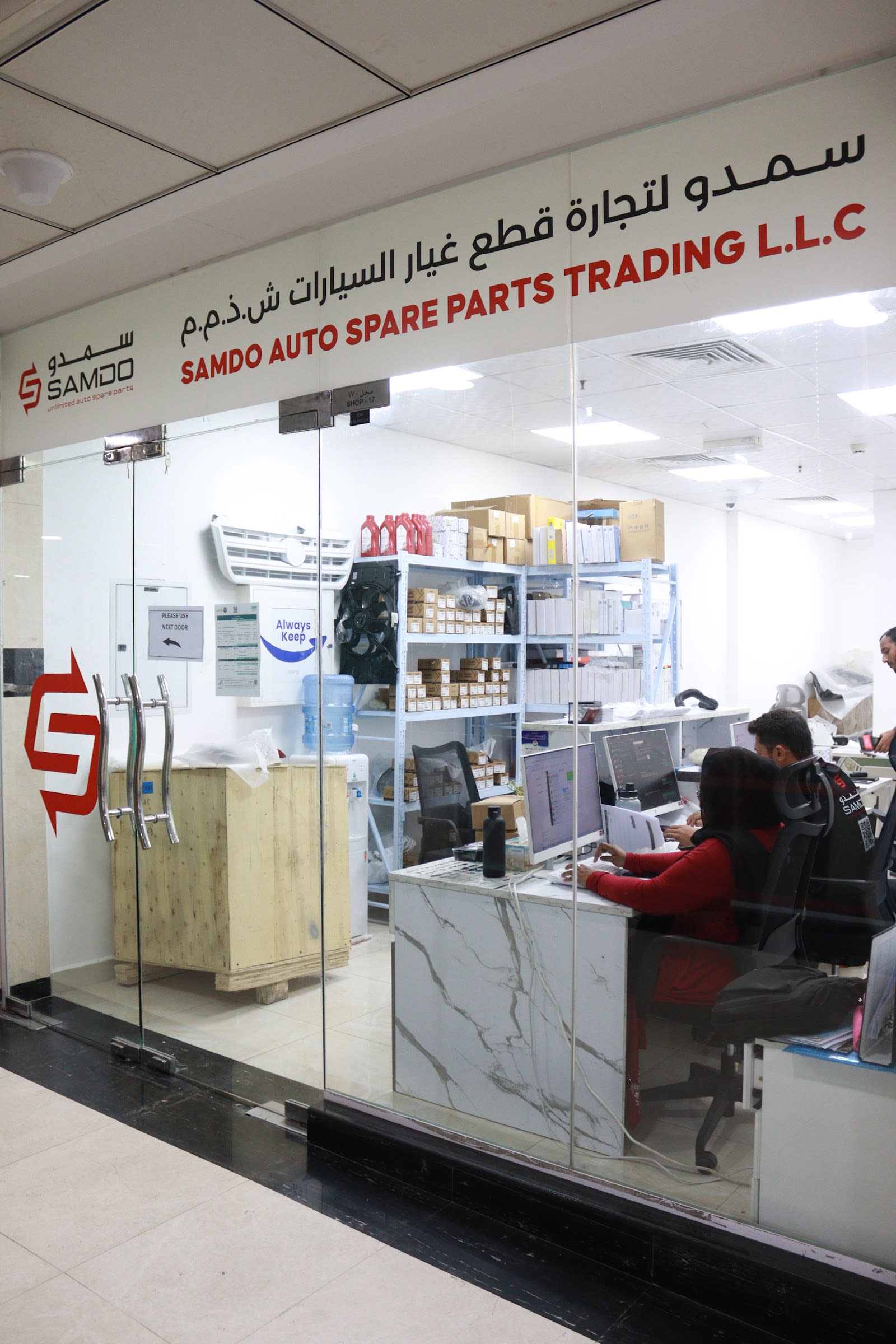 Top-Rated
Samdo Auto Spare Parts Trading LLC
Dubai · AL Asmawi Commercial Building 1 El - Shop 17 - Al Manama St - Ras Al Khor Industrial Area 2 - Dubai
 Top-Rated
Oscar Auto Spare Parts Co LLC SP
Sharjah · Building 20 - First Industrial St - beside Em-post Office - Industrial Area 2 - Industrial Area - Sharjah
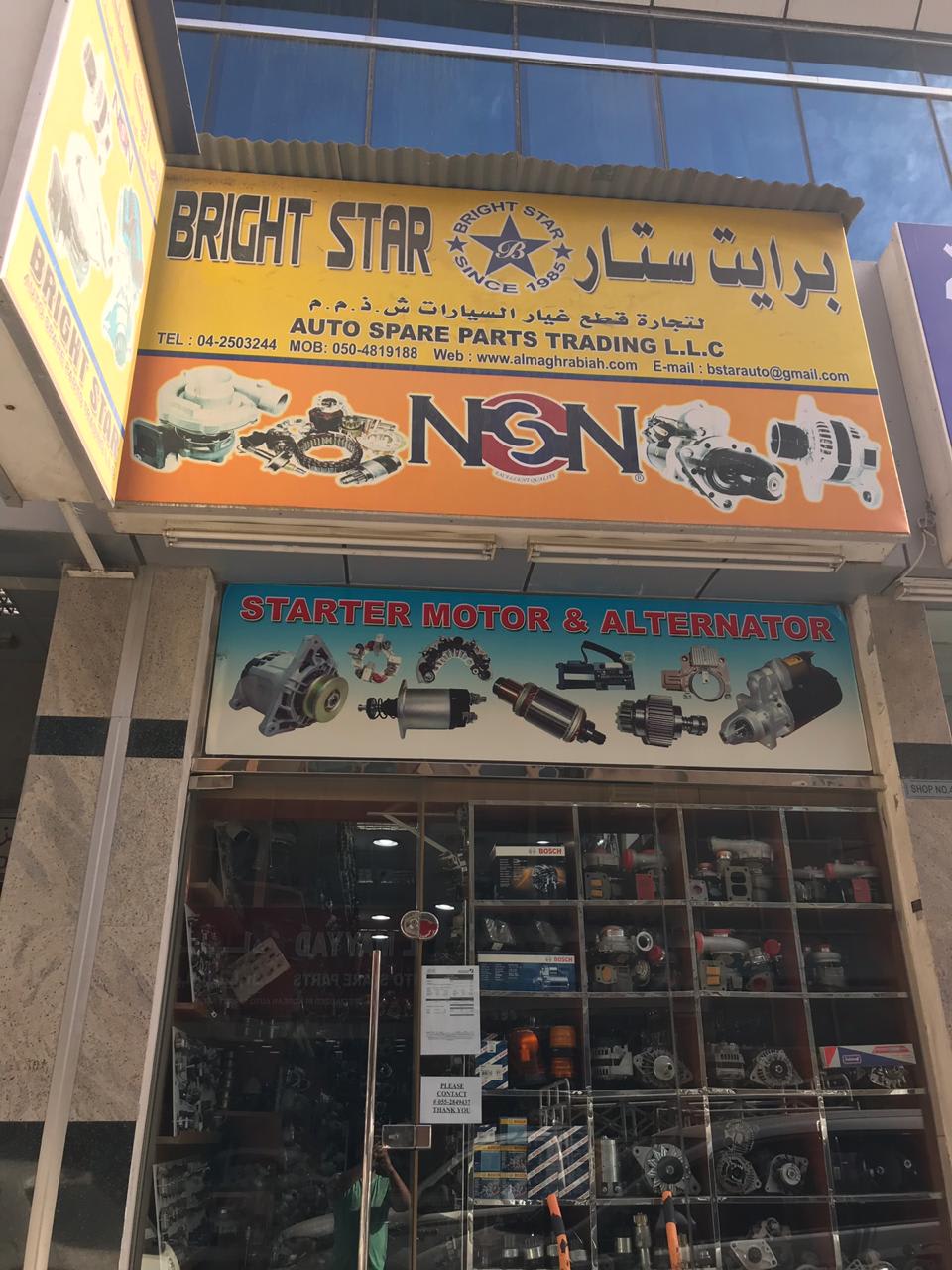 Top-Rated
BRIGHT STAR AUTO SPARE PARTS TRADING LLC
Shop # 4, Silver Island Building, 38 C Street, Near Fish Roundabout
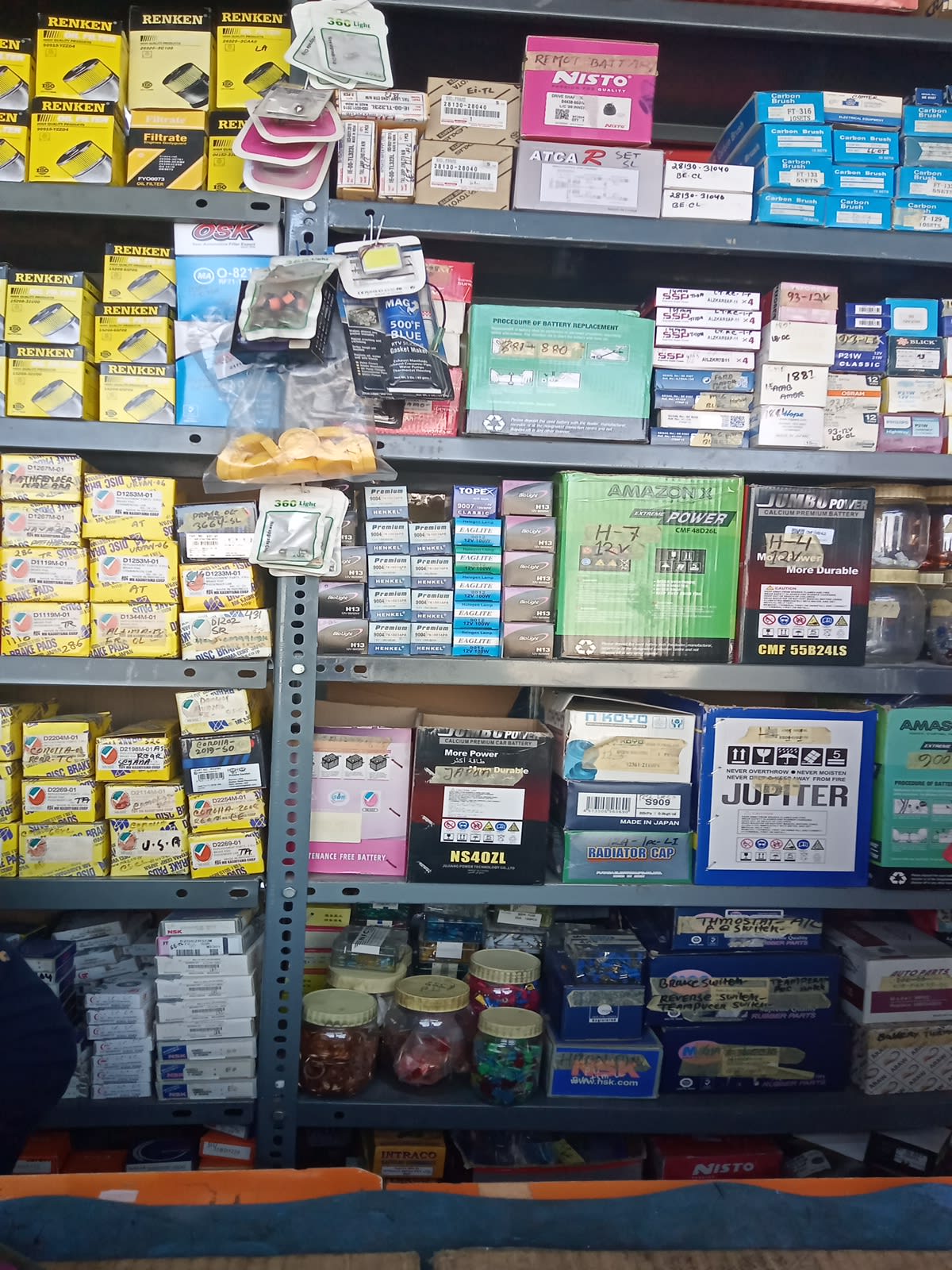 Top-Rated
Al Amani TVR Group
Dubai · Business Bay - Dubai
 Top-Rated
PARTSOUQ - PS AUTO GOODS WHOLESALERS L.L.C
Dubai · RAS AL KHOR 2, ST 7, Building 7, WH-11 - Dubai
 Top-Rated
Noor Din Ditta Auto Spare Parts Trading Branch-3
Sharjah · 8C56+QVF - Shop 1, 56th Street, Industrial Area 3 - Industrial Area 3 - Industrial Area - Sharjah
Where to actually buy this
Shops whose own website lists these parts, or whose stock we have recorded ourselves. Last checked July 2026. Not paid placement.
- Naser Mohsin Auto Spare PartsAbu Dhabi
Stocks power steering pumps and tie rods — genuine OEM, new parts. It carries Bosch, Febi Bilstein, Lemforder and Textar, matches parts to your VIN and delivers to Dubai, Abu Dhabi and Sharjah.
4.3 on Google from 151 reviews
- QUALITY MOTOR PARTSAbu Dhabi
Stocks steering racks and tie rods — genuine and aftermarket, new parts. It carries Kixx, QMP and QPC and sells trade as well as retail.
4.3 on Google from 194 reviews
Stocks tie rods — genuine and aftermarket, new parts. It carries Firestone, Neoterra, Kunlun and Sailun and 4 more and delivers to Dubai, Abu Dhabi and Sharjah.
4.8 on Google from 19 reviews
Stocks tie rods — genuine OEM, new parts. It carries Energizer, matches parts to your VIN and delivers to Dubai, Abu Dhabi and Sharjah.
4.5 on Google from 10 reviews
Stocks tie rods — genuine OEM, new parts. It carries KIA, Hyundai, GMC and Chevrolet and 4 more, matches parts to your VIN and delivers to Dubai, Sharjah and Abu Dhabi.
4.7 on Google from 7 reviews
Stocks tie rods — genuine OEM, new parts. It carries Acdelco, Mopar and Amaron, matches parts to your VIN and delivers to Dubai, Abu Dhabi and Sharjah.
3.8 on Google from 4 reviews
Listings are compiled from each business’s own public information. If you run one of these shops and want the entry corrected or removed, email easycarpartsteam@gmail.com.
Ask a human · free · no account
Rather not ring around?
Tell us the car and the part once — we'll send you the shops that actually stock it.
Free · usually a reply in minutes · no obligation
Still easier on a form? The request goes to the same matched UAE suppliers, free, with only the number of shops you choose able to contact you.
Open the request formKeep reading
Steering — FAQs
- What is the difference between an inner and an outer tie rod end?
- febi describes the inner tie rod as the part connected to the steering, whose main function is to convey the steering motion to the wheels, and the outer tie rod end as the part that transfers that movement from the steering to the wheel and lets the wheel move relative to the vertical axis. Delphi describes the tie rod end as connecting the steering knuckle to the steering rack. Ask which joint a number covers, because sellers use tie rod for either or for both.
- Is a tie rod the same as a track rod or a link rod?
- A track rod is the British name for a tie rod, according to Wikipedia. A link rod is a different part: in our keyword data, the pages that rank for link rod and stabilizer rod searches are stabiliser link pages. febi describes the stabiliser link, also called a sway bar link, as the part that connects the stabiliser bar to the body and reduces roll in corners, and it is covered on the suspension page.
- What does a steering rack do?
- In a rack and pinion system, Wikipedia says the steering wheel turns a pinion gear that moves a rack back and forth to steer the wheels. The inner tie rods connect to the rack and carry the movement out to the outer tie rod ends at the wheels.
- Is a steering box the same as a steering rack?
- No. A steering box is the recirculating-ball gear, in which a worm screw turns inside a nut with ball bearings between them and moves a pitman arm. Wikipedia says it is found on older cars, off-road vehicles and some trucks, while most newer cars use a rack and pinion. Because buyers and sellers do not always use the two words the same way, name the gear and send a photograph of it.
- How do I know whether my car has hydraulic or electric power steering?
- The owner's manual states it. A hydraulic system has a pump, hoses and fluid, an electro-hydraulic system has an electrically driven pump, and an electric system has a motor, a control unit and a torque sensor and no hydraulic fluid. Makers change systems within a model line, and Toyota calls its new Land Cruiser 250 series the first Land Cruiser fitted with electric power steering, so confirm by chassis number and do not rely on the model name.
- Does every car have a power steering pump?
- No. A hydraulic system has a pump driven by the engine, an electro-hydraulic system has a pump driven by an electric motor, and an electric system has no pump and no hydraulic fluid. Do not order a pump or fluid for a car with an electric system.
- What power steering fluid does my car take?
- Whatever your vehicle maker specifies, and the owner's manual names it. The fluid makers show why: Liqui Moly lists a central hydraulic oil for specifications such as VW G 002 000 and G 004 000 and MB 345.0, and separate ATF products for Dexron III and Ford Mercon requirements. We do not name a fluid for your car because we have not read your maker's specification for it.
- Can I use ATF as power steering fluid?
- Only where your maker's specification allows it. Wikipedia says power steering fluids are similar to, and in some cases the same as, automatic transmission fluid, and some Liqui Moly ATF pages list steering systems among their uses. Those pages also say the vehicle maker's requirements must be followed, so do not assume that any ATF is right for a given car.
- Can power steering fluids be mixed?
- Liqui Moly's pages say the best effect is only reached when the product is used unmixed, and that the vehicle maker's instructions must be followed. We found no vehicle maker statement on mixing specific fluids, so ask your supplier or workshop what your maker says before topping up with a different fluid.
- What happens if the power steering stops working?
- Wikipedia says that hydraulic and electric systems keep a mechanical link between the steering wheel and the wheels, and that the steering is arranged to keep working if the assist fails, although the wheel will feel heavier. That is a general description, not a reason to keep driving: have a workshop inspect it.
- Do new tie rods need a wheel alignment?
- This is a parts page and we do not cover alignment. What can be said is that the two are linked: febi says a tie rod's length must match the vehicle maker's specification, because a different length causes problems during wheel alignment. Ask your workshop whether alignment is part of its job.
- What is a ProKit?
- ProKit is febi's name for a kit that adds the mounting parts a repair needs to the main part. febi says the nuts and bolts a repair needs are often not included with the single replacement part and that its ProKits supply them, and it sells tie rods and tie rod ends as ProKits with steering boots. Ask any seller what is in the box.
- Does the length or thread of a tie rod matter?
- Yes. febi says the required length must correspond precisely to the original, and MOOG's tech tip on Ford Super Duty trucks shows one truck line using tie rod ends with a 1-3/8 inch thread or a 1-9/16 inch thread depending on the front axle, with the two not interchangeable. Send the old part and the chassis number, not just the model.
- What does a remanufactured steering rack or pump mean?
- ZF says its TRW business remanufactures steering racks, pumps and column drives and tests them in-house, and Cardone says its remanufactured rack has new seals and is tested for hydraulic flow, leakage and performance. Those are the remanufacturers' own statements. Ask your seller what was replaced, what testing was done, whether your old unit must go back, and for the warranty in writing.
- What comes with a replacement steering rack?
- It varies, so ask. In the one listing we read, Cardone 22-340, the remanufactured rack includes inner tie rods and a sealing kit, outer tie rods are not included, and mounting brackets are not included. That is a US example and not a UAE fitment, but it shows why the quote should say what is in the box.
- Is a used steering rack or pump worth buying?
- Only on terms. A used unit has not been remanufactured, and its internal condition cannot be judged from a photograph, which is our reasoning rather than a manufacturer's statement. We found no maker that describes a used steering unit as restored. If you buy one, ask for the donor car, the number and written return terms.
- Does an electric steering rack need programming after it is fitted?
- It can. A Stellantis service record, case S2219000003 of August 2022, says that after replacement of an EPS the wiTECH tool must be used to align the proxi and calibrate the steering angle sensor. That record is for Stellantis vehicles and is not a rule for every car, and we found no UAE source on the point, so ask the supplier whether the unit needs coding and get the answer in writing.
- Why do tie rod ends wear out?
- febi says tie rods can be deformed by potholes, excessive kerb contact or an accident, and that hard kerb mounting is a frequent reason an inner tie rod's ball joint wears. MOOG says that on one Ford and Lincoln model the original design trapped debris and moisture in the bearing, causing corrosion and wear. We found no UAE data on how heat and dust affect them.
- Which brands make steering parts?
- Brands whose pages we have read include TRW and Lemförder, both part of ZF, MOOG, 555, CTR, GSP, febi bilstein, Febest, SWAG and Meyle, and each has a page on this site recording what the maker publishes. Which of them a UAE shop holds is not recorded, so ask the supplier for the brand and number on the box.
- How much do steering parts cost in the UAE?
- We do not publish a figure, because we hold no dated quotes and would rather leave a number out than invent one. The price depends on the part, the route, meaning new, remanufactured or used, the brand and the car. Send your chassis number and a photo of the old part on WhatsApp and suppliers quote against them.
- What should I send to get a steering part quote?
- Your chassis number, the part you think you need, photographs of the old part from two angles showing any number or label, which wheel it came from and which side the steering wheel is on, whether the car has hydraulic or electric power steering if you know, and whether you want new, remanufactured or used. Ask the quote to name the joint, the boot and clamps, what is included with a rack or pump, the fluid specification, any old-unit return and the warranty.
- Does this page cover steering wheels?
- Not as accessories. Steering wheel covers and aftermarket steering wheels are accessories and are not covered here. Steering columns, intermediate shafts and the parts that connect the steering wheel to the steering gear are covered. If you need a replacement steering wheel because of a fault rather than for looks, send the chassis number and a photograph.
Ask a human · free · no account
Still not the question you had?
Ask it directly — a person reads every message.
Free · usually a reply in minutes · no obligation