MOOG steering and suspension parts in the UAE
Ball joints, tie rod ends, control arms, bushings and wheel hub assemblies
MOOG is a trademark of its owner. We are not an authorised MOOG dealer or distributor, and nothing here is endorsed by them. The name and mark are shown to say which parts we quote and source.
The quick answer
MOOG is a steering and suspension parts brand that began in St. Louis in 1919, when the Moog brothers bought the St. Louis branch of the Jenkins-Vulcan Spring Company and carried on making leaf springs, mostly for Ford Model T cars and trucks. It makes chassis linkage rather than dampers: ball joints, tie rod ends, control arms, bushings, sway bar links, strut mounts and sealed wheel hub assemblies. It is an aftermarket brand and says so — its own pitch is Problem Solver, a replacement part engineered to improve on the original, which is a different claim from being the original. It is not connected to Moog Inc., the aerospace company, and it belongs today to Tenneco's DRiV aftermarket business.
Ask a human · free · no account
Looking for genuine MOOG?
We'll only send you shops that actually stock it.
Free · usually a reply in minutes · no obligation
Key facts
- MOOG dates itself to 1919, when the Moog brothers bought the St. Louis branch of the Jenkins-Vulcan Spring Company, a maker and distributor of automotive leaf springs mostly for Ford Model T cars and trucks.
- MOOG the chassis brand and Moog Inc. of East Aurora, the aerospace and defence company founded in 1951 by Bill Moog, are unrelated. Neither company's website mentions the other's business.
- MOOG's own positioning is Problem Solver, which it traces to the 1930s. It is a claim to improve on the original part, not a claim to be the part the car was built with.
- MOOG names no vehicle manufacturer as a factory-fitment customer anywhere we could read, and this page names none.
- MOOG publishes three product categories rather than price tiers: Wheel End, Suspension and Steering. There is no good, better, best ladder here to buy up.
- Federal-Mogul bought MOOG Automotive from Cooper Industries in the 1990s. Tenneco closed its acquisition of Federal-Mogul on 1 October 2018, and the MOOG parts site carries a DRiV footer today.
- Tenneco has not been a listed company since 17 November 2022, when funds managed by Apollo completed its acquisition at twenty US dollars a share and the stock stopped trading on the New York Stock Exchange.
- MOOG's site says the NASCAR organisation mandates MOOG ball joints and tie rod ends in its top series. A race series specifying a control part is not a carmaker fitting one at the factory.
Rather fill in a form? Send the same request here and matched UAE suppliers reply on WhatsApp either way.
Open the request formMOOG — the range
| Range | How it is built | What it is for |
|---|---|---|
| Wheel hub assemblies | Bearing, hub, seal and mounting flange supplied as one sealed unit | Cars built with a sealed hub rather than a bearing that can be pressed out on its own |
| Ball joints | The loaded pivot between a control arm and the steering knuckle | The joint a knock over bumps most often traces back to |
| Control arms | The arm itself, commonly supplied with its bushings and ball joint already fitted | Cars where the bush or joint has failed and the arm is not serviceable on its own |
| Bushings | Rubber or polymer isolators between a chassis arm and the body or subframe | Vague steering and clunks where the arm and the joint are still sound |
| Sway bar links | Short links tying the anti-roll bar to the suspension at each side | Rattles over small bumps, and the cheapest thing on this table |
| Strut mounts | The rubber mount and bearing that carry the top of a strut in the body | Fitting alongside new struts, and cars that make a notchy noise from the top of the tower on lock |
| Inner tie rods | The socket at the rack end of the steering linkage, inside the bellows | Play felt through the wheel that replacing the outer ends did not cure |
| Tie rod ends | The outer joint between the steering linkage and the knuckle | Play in the steering and tyres wearing unevenly across the tread |
| Steering rack bellows | The concertina boot sealing the rack against dust and water | Any car with a split boot, where the boot is cheap and the rack behind it is not |
| Alignment parts | Cams, bolts and shims that let camber and caster be adjusted | Cars that will not come back to specification on the alignment rig after chassis work |
Source: MOOG — about the brand, company history and product categories, read 2026-09-03
Which one fits your car
| If this is your car | Use | Why |
|---|---|---|
| A knock from the front over speed bumps, loudest at low speed | Ball joints | Check the joint before condemning the damper. The two produce different noises and only one of them is a safety item. |
| Steering wanders and needs constant correction on a straight road | Tie rod ends | Worn outer ends also eat tyres. The tyre bill usually arrives before the steering complaint does. |
| Play still felt at the wheel after new outer joints were fitted | Inner tie rods | The inner socket sits inside the bellows and is missed on a quick inspection because nobody takes the boot off. |
| A hum or growl that rises with speed and changes as the car is cornered | Wheel hub assemblies | On a sealed hub the bearing is not a separate purchase. The unit is the part. |
| A rattle over small bumps with no play found anywhere else | Sway bar links | The cheapest item in the catalogue and the most common answer to this specific noise. |
| A split concertina boot visible on the steering rack | Steering rack bellows | Once grit is inside the rack the boot is no longer the repair. Fit it while it still is. |
| The car will not hold a wheel alignment after new arms went on | Alignment parts | Some cars simply do not have enough adjustment from the factory. That is what this family is for. |
The range descriptions are the manufacturer’s. Matching them to a car is our guidance, and it is a starting point rather than a fitment check — the part number is what actually decides. Send us the make, model and year and we will confirm it.
Original equipment
This page names no carmaker as a MOOG factory-fitment customer, and the interesting part is that MOOG is not asking us to. Where most chassis brands lean on an unnamed original-equipment relationship, MOOG's own history page sells the opposite story: parts engineered to solve a problem the original part had, branded MOOG, which is where it says the Problem Solver name comes from. That is a claim about the repair rather than about the assembly line, and it is a better claim to be able to check. The one place a named organisation appears on MOOG's own pages is motorsport, where it says NASCAR mandates MOOG ball joints and tie rod ends in its top series. That is a sanctioning body specifying a control part for a race series. It is not factory fitment and this page does not present it as any.
Where it is made
MOOG publishes no manufacturing location for any part on its own site, and we are not going to supply one. The brand's registered history is American and its founding story is a St. Louis spring shop, but a company's birthplace in 1919 says nothing about where a ball joint sold in 2026 was pressed. Its parent has plants on several continents and maps none of them to a part number. For a buyer here the consequence is narrow and worth stating plainly: with this brand, country of origin is not a specification you can order against, so the thing to match is the part number and the vehicle, not the flag on the carton.
MOOG in the UAE
Neither MOOG nor Tenneco names a UAE office, entity or appointed distributor on the pages we could read, so this table is empty rather than filled with a trading house that describes itself that way. That silence is not evidence that the brand is hard to get here — MOOG travels through the normal independent chassis trade and turns up on plenty of counters — it is only evidence that nobody at the manufacturer has published who is authorised to sell it. If a shop tells you it holds a MOOG appointment, the appointment is a document and it can be shown to you. Ask for it from the manufacturer's letterhead rather than the seller's.
Two companies called Moog, and only one of them makes car parts
Search the name and you will land on two entirely different businesses, both large, both real, and neither one a division of the other. It is worth clearing up first because it changes what you find when you go looking for technical information.
MOOG the chassis brand dates itself to 1919, when the Moog brothers bought the St. Louis branch of the Jenkins-Vulcan Spring Company, a business making and distributing automotive leaf springs mostly for Ford Model T cars and trucks. Everything the brand sells today descends from that: parts that hold the wheels in the right place and let them steer.
Moog Inc. is a different company. It was founded in 1951 by Bill Moog, it is headquartered in East Aurora, and it builds aerospace, defence, industrial automation and medical technology — actuators, motors, servo valves, slip rings, satellite components. Its website makes no mention of automotive steering or suspension parts, and the car-parts site makes no mention of it.
Different founders, different decades, different industries, and no relationship stated by either company. If you are reading a datasheet about servo valves while trying to buy a ball joint, that is why.
Problem Solver is a claim about the repair, not about the factory
Most chassis brands sell themselves on an implied relationship with the car makers. MOOG sells itself on the opposite idea, and once you notice it the whole catalogue reads differently.
The brand's own history dates the pitch to the 1930s and says the name came from parts good enough that the trade started asking for them by the maker rather than by the application. The claim in it is that the replacement part addresses something the original design did not, which is why the phrase is Problem Solver and not Original Equipment.
For a buyer that is a genuinely useful distinction, and it cuts both ways. On the helpful side, it means MOOG is not asking you to believe a factory story it has not published, and a brand that says out loud it is an aftermarket brand is easier to evaluate than one that hints. On the cautious side, it means the badge is not a shortcut to knowing your car left the plant with this part in it. It did not, or at least nothing MOOG publishes says it did.
So the question to put to a counter is not whether MOOG is the original. It is whether the MOOG number they are quoting is the right number for your car, and whether the design in the box actually differs from the one that just failed — because if it does, that difference is the entire reason to pay for the badge.
Who owns MOOG now, and why half the internet gets it wrong
This is the paragraph a trade reader will check, and the commonly repeated answer is wrong. Here is the chain with dates.
MOOG's own timeline places the Federal-Mogul purchase of MOOG Automotive from Cooper Industries in the 1990s; it gives no year, so neither do we. Tenneco then closed its acquisition of Federal-Mogul on 1 October 2018 and named MOOG among the brands it took on. The MOOG parts site today carries a DRiV footer, and Tenneco's own about page lists DRiV as one of its solution areas alongside Clean Air, Powertrain, Champion Ignition, Industrial and Performance Solutions. Meanwhile Tenneco itself stopped being a public company on 17 November 2022, when funds managed by Apollo completed its acquisition at twenty US dollars a share and the stock ceased trading on the New York Stock Exchange.
The wrong answer in wide circulation is that DRiV is an independent company that separated from Tenneco in 2019. It is not. Tenneco's own 2019 wording described DRiV as something that would exist following an expected separation into two independent companies — an intention, written in the future tense — and three years later Apollo bought the whole of Tenneco as one entity. What we could not find is a Tenneco statement calling the separation off, so we are not going to give you a date for that either. What is sourced is the position today: DRiV is Tenneco's aftermarket business, Tenneco is privately held by Apollo funds, and MOOG sits inside it.
None of that changes the part in your hand. It changes what you should make of a sentence that begins with the words this brand is owned by, because on this brand that sentence has been rewritten four times in thirty years and will be rewritten again.
There is no ladder here, only categories
A lot of parts shopping is really tier shopping: you find the good, better and best versions of a thing and decide how far up to go. That exercise does not exist with this brand and it saves time to know it before you start.
MOOG organises what it sells into three groups. Wheel End is the sealed hub assemblies. Suspension covers ball joints, control arms, alignment parts, sway bar links, bushings and strut mounts. Steering covers inner tie rods, steering rack bellows and tie rod ends. Those are categories of component, not grades of the same component, and the table above breaks them out into the individual families so you can see which one your symptom belongs to.
The practical consequence is that a shop offering you a cheaper MOOG option for the same part number is not offering you a lower tier of MOOG, because there is not one. They are offering you a different brand, a different part, or something they have not looked up properly. Any of those may be fine. It is just worth knowing which conversation you are in.
The cheapest part on the car is usually the noise
Chassis linkage has an awkward economics problem: the symptoms are alarming and expensive-sounding, and the parts that cause them are frequently the least expensive things on the vehicle. That mismatch is where money gets wasted, in both directions.
A rattle over broken tarmac is very often a sway bar link, which is a small rod with a joint at each end. A clunk over a speed hump is very often a ball joint or a control arm bush. Play that you can feel through the steering wheel is a tie rod end, or the inner socket hiding under the bellows that nobody removed to look. A growl that changes pitch when you lean the car into a corner is a wheel bearing, and on most modern cars that means the whole sealed hub.
The diagnostic order matters more than the brand does. Every one of those symptoms is regularly quoted as a full suspension overhaul, and sometimes that is honest, because on a car with a hundred and something thousand kilometres several of them are true at once. But the correct sequence is to have somebody put the car on a lift, take hold of each component and find the movement, rather than to replace assemblies until the noise stops. A worn joint reveals itself in about ninety seconds to a person willing to look for it.
There is one thing this page will not do, which is tell you how long any of these parts lasts in this country. Rubber bushings and rubber boots do not enjoy heat, sand finds its way through anything that has split, and everyone in the trade will tell you so. Nobody, including us, has a measurement worth printing on a page that people read while deciding what to spend, so you get the diagnosis order instead, which is free and actually works.
The NASCAR line, read carefully
MOOG's own site carries a sentence that gets quoted a great deal: that as the brand marks fifty years in NASCAR, the racing organisation mandates the use of MOOG ball joints and tie rod ends on every car in its top series. We are quoting that as MOOG's copy rather than restating it as a current fact, partly because the series name inside it is one the championship no longer uses, which tells you the sentence has been sitting there a while.
It is still an interesting fact, and it is worth being precise about what kind of fact it is. A sanctioning body mandating a spec part does something a carmaker's parts list does not: it removes the choice from every competitor, which means the part has to be consistent across an entire grid and available in volume for years. That is a real endorsement of a component's repeatability.
What it is not is factory fitment. Nobody's road car left an assembly line because of a NASCAR rule, the loads on a stock car have very little to do with the loads on a family SUV in traffic, and any shop that offers the racing line as proof that this is the original part for your vehicle has changed the subject. If original fitment is what you are trying to establish, the only thing that settles it is the part number against the vehicle manufacturer's own catalogue.
The part number is the only thing that survives four owners
Put the last few sections together and a buying method falls out of them by itself. This is a brand that has been through Cooper Industries, Federal-Mogul, Tenneco and a private equity acquisition, that publishes no factory-fitment list, no country of manufacture and no UAE appointment, and whose own strongest claim is about engineering rather than provenance. Almost nothing on the box is checkable. The number is.
So the order to work in is unglamorous. Establish which component has actually failed, ideally with the car in the air and somebody's hands on it, because the wrong part fitted well is still the wrong part. Get the number, either off the component coming out or from the vehicle rather than from a description. Check the number on the carton against what you were quoted before you pay, not after. If the counter cannot produce a number and wants to sell you a category, that is the moment to slow down.
We name no authorised UAE distributor for this brand, on this page, because neither MOOG nor Tenneco names one. That is worth saying out loud rather than leaving as an absence: several shops here sell MOOG perfectly legitimately, and none of them has been confirmed by the manufacturer to us as appointed. Our suspension hub, linked below, carries the shops in our directory whose recorded stock covers this kind of part, and it says on what basis they were chosen.
Shops for suspension in the UAE
These shops are here because their recorded stock covers at least one of ball joints, tie rods, control arms, bushes, wheel bearings and stabilizer link — not because we have confirmed that each one carries MOOG. We hold no reliable shop-by-shop record of which brands are on which shelf, so ring or message before you travel.
Where to actually buy this
Shops whose own website lists these parts, or whose stock we have recorded ourselves. Last checked July 2026. Not paid placement.
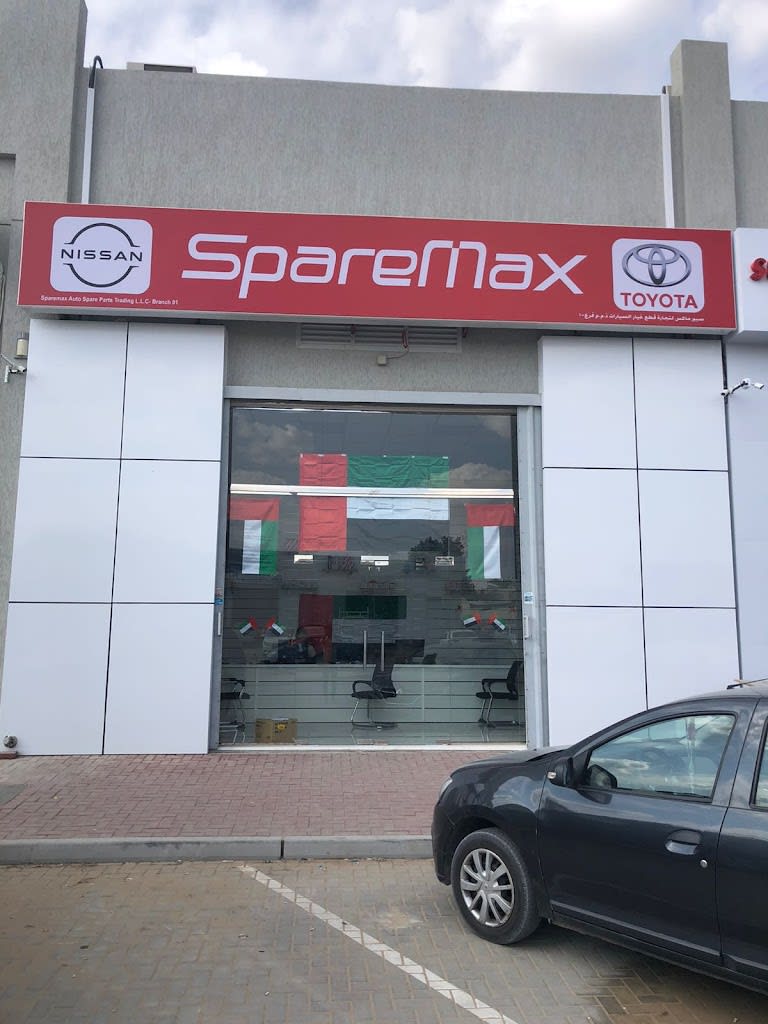
- Creative Auto Spare Parts TradingAbu Dhabi
Stocks ball joints, tie rods and bushes — genuine OEM. It carries TAB and sells trade as well as retail.
5.0 on Google from 113 reviews
Stocks ball joints, tie rods and bushes — genuine OEM, new parts. It carries Energizer, matches parts to your VIN and delivers across all seven emirates.
4.1 on Google from 8 reviews
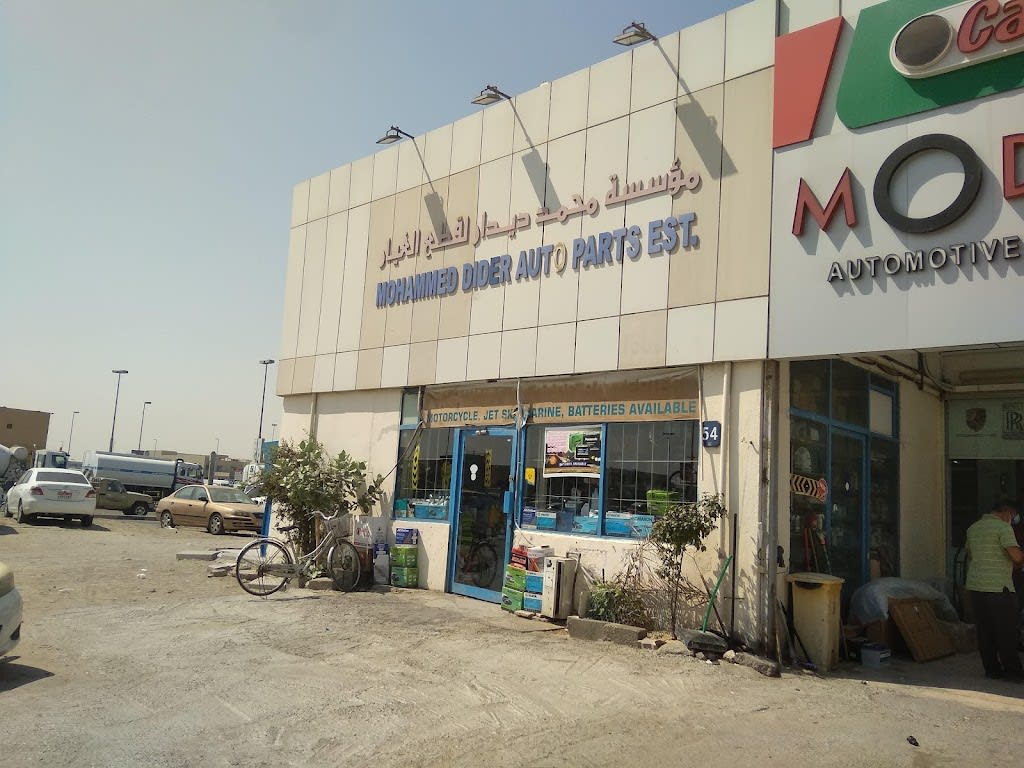
- Model Automotive Parts EstAbu Dhabi
Stocks tie rods, control arms and bushes — genuine and aftermarket, new parts. It carries FEBI, Lemforder, Mahle and Behr and 10 more and matches parts to your VIN.
4.0 on Google from 412 reviews
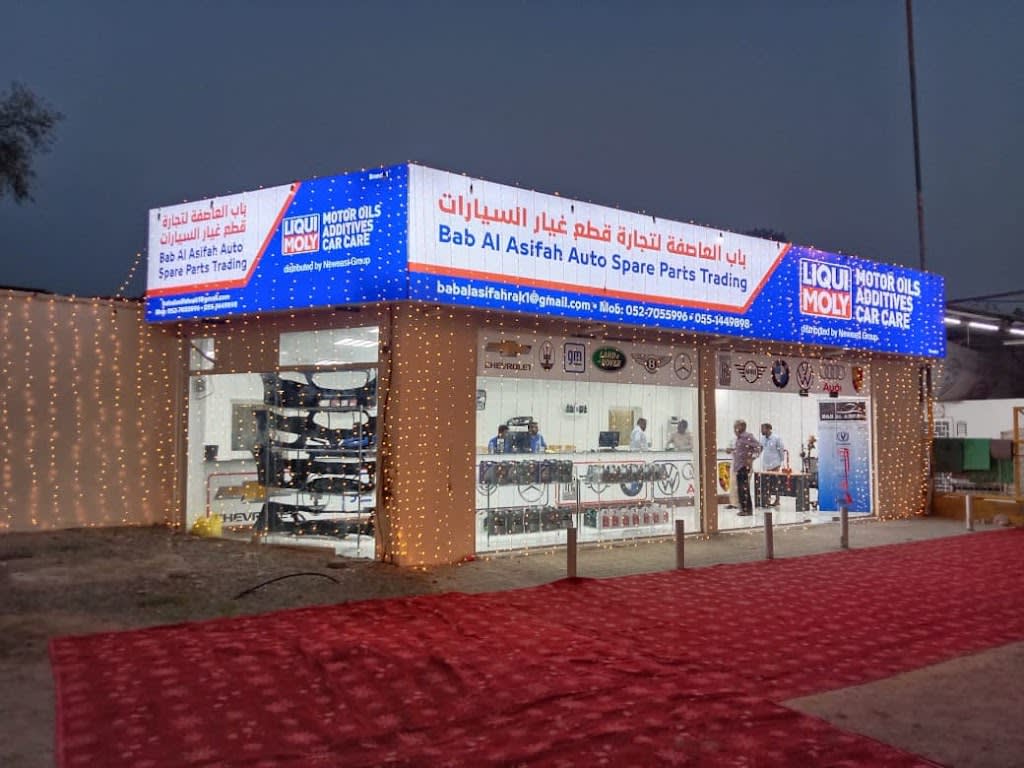
- Bab Al Asifah Auto Spare Parts Tr bb laaSf@Ras Al Khaimah
Stocks control arms and bushes — genuine and aftermarket, new parts. It sells trade as well as retail.
5.0 on Google from 6 reviews
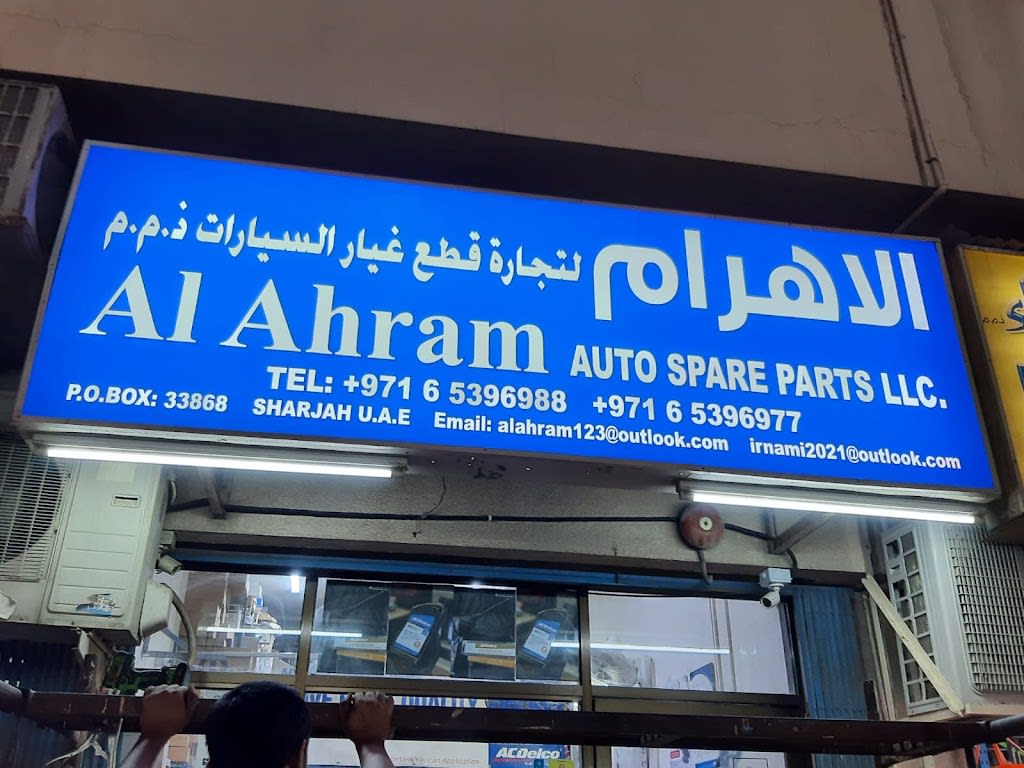
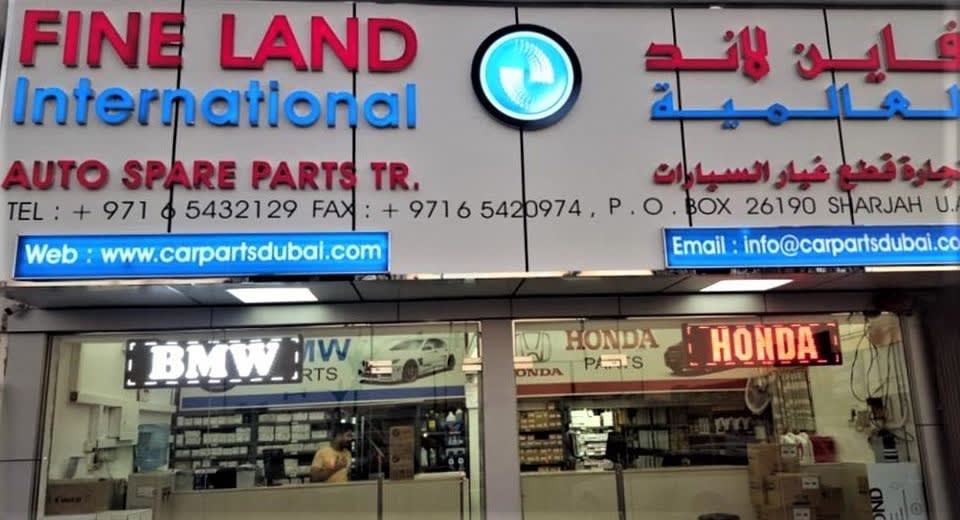
- Al Ahram Auto Spare PartsSharjah
Stocks control arms and wheel bearings — genuine and aftermarket. It delivers.
4.1 on Google from 64 reviews
Stocks wheel bearings — genuine and aftermarket, both new and used. It carries Textar, Bosch, Lemforder and Febi and 7 more and ships outside the UAE.
4.4 on Google from 79 reviews

Listings are compiled from each business’s own public information. If you run one of these shops and want the entry corrected or removed, email easycarpartsteam@gmail.com.
Still easier on a form? The request goes to the same matched UAE suppliers, free, with only the number of shops you choose able to contact you.
Open the request formKeep reading
MOOG — common questions
- Is MOOG the same company as Moog the aerospace manufacturer?
- No. MOOG the steering and suspension brand traces itself to a St. Louis spring business bought by the Moog brothers in 1919. Moog Inc. of East Aurora was founded in 1951 by Bill Moog and builds aerospace, defence, industrial automation and medical technology. Neither company's site mentions the other's business and neither states any relationship.
- Is MOOG an original equipment brand?
- Not as far as anything MOOG publishes says. It names no vehicle manufacturer as a factory-fitment customer, and its own positioning is Problem Solver — a replacement part engineered to improve on the original design, which is a claim about the repair rather than about the assembly line. If a shop tells you your car was built with MOOG parts, ask to see the part number against the vehicle manufacturer's own catalogue.
- Who owns MOOG now?
- It sits inside DRiV, which is Tenneco's aftermarket business. Federal-Mogul bought MOOG Automotive from Cooper Industries in the 1990s, Tenneco closed its acquisition of Federal-Mogul on 1 October 2018, and Tenneco itself has been privately held since 17 November 2022, when funds managed by Apollo completed its acquisition and the stock stopped trading on the New York Stock Exchange.
- Did DRiV become an independent company in 2019?
- No, and this is the most commonly repeated wrong answer about the brand. Tenneco's own 2019 wording described DRiV as something that would exist following an expected separation, which was an intention rather than an event. Apollo funds then acquired the whole of Tenneco in 2022, and Tenneco's own about page lists DRiV today as one of its solution areas.
- What does MOOG actually make?
- Chassis linkage and wheel ends: ball joints, control arms, bushings, sway bar links, strut mounts, alignment parts, inner tie rods, tie rod ends, steering rack bellows and sealed wheel hub assemblies. It does not make shock absorbers, springs or brake parts, so a MOOG box is never the answer to a damper problem.
- Which MOOG tier should I buy?
- There is not one. MOOG publishes three product categories — Wheel End, Suspension and Steering — and those are groups of different components rather than grades of the same component. If a counter offers you a cheaper MOOG option for the same part number, they are offering a different brand or a different part, not a lower grade of this one.
- Where are MOOG parts made?
- MOOG does not publish it. Its own site names no manufacturing country for any part, and its parent maps no plant to a part number. The brand's founding story is American, from 1919, which tells you nothing about where a component sold today was produced. Match the part number and the vehicle instead.
- Does MOOG have an authorised distributor in the UAE?
- None that MOOG or Tenneco names on the pages we could read, so we name none. The brand does reach this market through the normal independent chassis trade. If a shop claims a MOOG appointment, that appointment is a document — ask to see it from the manufacturer rather than from the shop's own website.
- Does the NASCAR mandate mean MOOG parts are stronger?
- It means a sanctioning body specifies MOOG ball joints and tie rod ends for its top series, which is a real statement about consistency and supply across a whole grid. It is not a statement about your road car, it is not factory fitment, and the sentence MOOG publishes about it still carries a series name the championship no longer uses.
- My car knocks over bumps. Is that a MOOG part or a shock absorber?
- It is more often linkage than damping. A knock over a bump usually traces to a ball joint, a control arm bush or a sway bar link; a damper problem more often shows as the car continuing to move after the bump rather than as a distinct knock. The way to settle it is to have the car lifted and each component checked by hand, not to replace parts until the noise stops.
- Do I have to replace a whole control arm, or just the bush?
- It depends on the car. Some arms are built so the bushings and the ball joint can be pressed out and replaced on their own; on many, MOOG and everyone else supply the arm complete with them already fitted, because the arm is not designed to be serviced separately. Ask which your vehicle is before comparing two quotes, because one may include parts the other cannot.
- How much do MOOG parts cost in the UAE?
- There is no price on this page and that is deliberate. Manufacturers do not publish installed UAE prices, the number swings on which component has failed, how many of them the car needs and which counter you use, and a stale figure on a brand page is worse than none at all. Send us the car and the symptom and we will come back with what the shops that stock it are actually asking.
Ask a human · free · no account
Not sure the MOOG part you found is the real one?
Send us the number on the box and the car — we'll tell you.
Free · usually a reply in minutes · no obligation
Where these facts came from
Checked against the manufacturer’s own published material on the dates below. Anything we could not source is named as unsourced on this page rather than left out.
- MOOG — about the brand, company history and product categories — read 2026-09-03
- Moog Inc. — corporate site of the East Aurora aerospace and defence company — read 2026-09-03
- Tenneco — close of the Federal-Mogul acquisition, 1 October 2018 — read 2026-09-03
- Tenneco — about us, listing DRiV among its solution areas — read 2026-09-03
- Tenneco — 2019 release describing DRiV as following an expected separation — read 2026-09-03
- Tenneco Inc. — Form 8-K on completion of the Apollo acquisition, November 2022 — read 2026-09-03