Wheel bearings, hubs, drive shafts, axles, CV joints and differentials in the UAE
The quick answer
Wheel bearings, hub units, axle shafts, drive shafts, CV joints and differentials are the parts that carry power from the gearbox to the tyre, and most of them are ordered by more than the model name: which wheel, which side of the car, whether it has ABS, and whether the car drives its front wheels, its rear wheels or all four. The words are also used loosely, so a drive shaft, a half-shaft, a CV axle and an axle shaft can be one part or four depending on who is talking. Send the chassis number, the end of the car, the side as driver or passenger, the ABS question and the symptom, and a supplier can quote the right unit. This page sets out which name means which part, what each maker says a failing one looks like, and what a complete order contains. It carries no prices, because we found no UAE quote we could date and attribute.
Ask a human · free · no account
Not sure which part fits your car?
Tell us the make, model and year — we check fitment and come back with prices from UAE sellers who have it on the shelf.
Free · usually a reply in minutes · no obligation
Key facts
- In British usage a drive shaft is the transverse shaft that carries power to the wheels, and the shaft from the gearbox back to a rear differential is the propeller shaft or prop shaft. A shaft from a rear differential to a wheel is a half-shaft, because two of them make one rear axle. The term drive shaft is used more loosely elsewhere, so say front CV axle or rear propshaft rather than relying on the word.
- MOOG describes a wheel hub assembly as a pre-assembled unit of precision bearings, seals and sensors, and SKF groups hub bearing units into three generations. The third generation builds the flange for the wheel and brake rotor and a second flange that fixes the unit to the suspension into one unit, so the part you are quoted may contain far more than a bearing.
- On an ABS car the wheel speed signal comes from a magnetic encoder in the seal of some wheel bearings, from the sensor inside a hub assembly, or from a toothed ring on some CV axles, and each has to match the car. One GSP front-left axle is catalogued with an ABS tone ring of 48 teeth, and NSK warns that a bearing encoder must not be damaged and must face the sensor once fitted.
- MOOG lists a ruptured boot first among the causes of CV axle failure, because the joint then loses its grease and is no longer lubricated. The symptoms MOOG lists are a click or pop when turning, a clunk when accelerating or decelerating, and vibration at speed, and it notes that many technicians recommend replacing the left and right axles together.
- Timken says that if a wheel bearing is the cause, the noise or vibration is present when driving straight and intensifies when you steer slightly left or right, and that typically the side opposite the rumbling is the defective side. Humming, rumbling and growling are also noises associated with tyres and other drivetrain parts, so the sound alone does not prove a bearing.
- Counterfeit bearings exist. Timken says a fake can look like the original and its packaging is often an exact copy, and JTEKT has put holograms on its bearing packaging since 2016 and QR codes on its labels since June 2019, so a bearing's brand and part number should be in writing before you pay.
Rather fill in a form? Send the same request here and matched UAE suppliers reply on WhatsApp either way.
Open the request formDrivetrain — types and specifications
- Wheel bearing
- Often sold inside a hub assembly rather than on its own
- Hub assembly
- Bearings, seals and, on ABS cars, the wheel speed sensor in one unit
- CV axle
- Inner joint, shaft, outer joint and two boots, ordered by side
- CV joint
- Keeps the shafts turning at one speed through an angle
- Boot kit
- Boot, clamps and grease, without the joint
- Propshaft
- From the gearbox or transfer case to a differential on rear-drive and four-wheel-drive cars
- Universal joint
- The joint at each end of a propshaft; some types need greasing
- Carrier bearing
- Supports a propshaft and isolates its vibration
- Axle shaft
- The shaft that turns with the wheel inside an axle casing
- Intermediate shaft
- On some front-drive cars, so both driveshafts are of equal length
- Differential
- Quoted by front or rear, ratio and type
Which part is which: from the gearbox to the tyre
The parts between the gearbox and the road fall into six families that are sold, ordered and diagnosed separately. On a rear-drive car power meets the propshaft first, then the differential, then the axle shafts, and finally the hub unit and its bearing at the wheel. On a front-drive car it meets the differential inside the transaxle, then a CV axle with its joints and boots, then the hub unit. This page treats them together because a noise or a vibration at the wheel could come from any of them, and because the same word is used for different parts, which is how a wrong word turns into a wrong quote.
How they are arranged depends on which wheels the car drives. On a front-wheel-drive car the transmission and the front axle are normally combined into one unit called a transaxle, and constant velocity joints take the place of a long shaft; MOOG describes a front-drive car as using CV joints instead of a traditional long driveshaft. On a rear-wheel-drive car a long driveshaft joins the transmission to the differential through universal joints. On a four-wheel-drive or all-wheel-drive car there is a second driveshaft, running to the front differential from the transfer case, again through universal joints.
The vocabulary is where orders go wrong. In British usage drive shaft means the transverse shaft that carries power to the wheels, and the shaft from the gearbox to a rear differential is the propeller shaft, or prop shaft. A shaft from a rear differential to a wheel is a half-shaft, because two of them are needed to make one rear axle. Elsewhere the term drive shaft is used more loosely. A shaft that turns with the wheel is called an axle or an axle shaft, so a request for a rear drive shaft can mean a long propshaft on one car and a half-shaft on another.
The word axle does three jobs. It can mean the shaft that rotates with the wheel, the axle shaft. It can mean the whole assembly across the car, which Wikipedia describes as a split axle with a differential and universal joints between its two half axles. And on a front-wheel-drive car the shafts that take power from the transmission to the wheels are what MOOG calls CV axles, so a request for a front axle can mean one of those. Describe the car as front-, rear- or four-wheel drive and say where on the car the part sits, and the counter can tell which one you mean.
| Part | Where it sits | What it does | What decides the order |
|---|---|---|---|
| Wheel bearing and hub unit | At each wheel | Lets the wheel turn; a hub assembly adds seals and, on ABS cars, the wheel speed sensor | Front or rear, side, ABS or not, driven or non-driven wheel, and whether the part is a bearing alone or a complete unit |
| CV axle (front half-shaft) | Between the transaxle and a driven front wheel | Carries drive to a wheel that also steers and moves with the suspension | Side, ABS ring and its tooth count, spline count, compressed length, and the model and years the catalogue names |
| CV joint and boot | At each end of a CV axle, with the boot over the joint | Joint: keeps the shafts turning at one speed through an angle. Boot: keeps the grease in and dirt out | Inner or outer end, and whether you need a joint, a boot kit or the whole axle |
| Propshaft | On rear-drive and four-wheel-drive cars, from the gearbox or transfer case to a differential | Carries drive along the car through a slip joint and universal joints | Front or rear shaft and the part number; the universal joints and the support bearing are sold separately |
| Axle shaft | Inside the casing of a driven axle | Turns with the wheel and carries drive from the differential to the hub | Side, spline count, length, whether the axle is semi-floating or full-floating, and the bearing and seal at its end |
| Differential | In the transaxle, or in a front or rear axle housing | Lets the two driven wheels turn at different speeds in a corner | Front or rear, the ratio, and whether it is open, limited-slip or locking |
Wheel bearing, hub unit or hub assembly: what the counter hands over
A wheel bearing is the ring of balls or rollers that lets the wheel turn. A wheel hub assembly, in MOOG's description, is a pre-assembled unit that features precision bearings, seals and sensors. The difference matters at the counter because on older designs a workshop could replace the bearing on its own, and on newer ones the usual repair is to replace the whole assembly. MOOG, writing for the US market, dates that shift to the late 1990s. A quote for a wheel bearing may therefore be a quote for a bearing, a flanged unit or a complete hub with its sensor, and the three are different parts.
SKF publishes a description of the generations. The first, HBU1, is a pre-adjusted bearing unit using double-row angular contact ball bearings, which SKF says was developed in the late 1960s for small and medium vehicles. The second, HBU2, adds a flange to the bearing's outer ring and is typically found on non-driven front or rear wheels. The third, HBU3, adds a flange for the wheel and the brake rotor plus a second flange that fixes the unit to the suspension, and is used on driven and non-driven wheels.
In practice that has three consequences for an order. A driven wheel and a non-driven wheel can call for different designs, so ask about the front and the rear separately. A unit that carries the wheel flange is a more complete part than a bearing without one. And what comes in the box matters as much as the unit: SKF says its kits include any nuts, bolts or screws needed for a complete repair, and for CV axles MOOG says never to reuse prevailing-torque axle nuts. Ask whether the axle nut, any snap ring or circlip, the seals and the mounting bolts are included, because a unit that arrives without them stops the job.
Two further details change the order. The first is whether the unit includes the ABS sensor and ring. SKF lists units available with an OE-quality ABS impulse ring and sensors, and Timken's guidance for a hub unit describes a new sensor that comes already attached to the new bearing, to be reconnected at its connector. The second is how the unit is fitted. Timken says never to force a hub assembly onto the shaft or hit it with a hammer, and that the knuckle-bearing mounting bolts and the axle nut should be tightened to the vehicle manufacturer's specification with a torque wrench, not an impact wrench; MOOG gives the same advice for the spindle nut. That is a question for the workshop rather than the counter, but it is a fair one to ask before the job.
| Generation | Construction | Where SKF says it is used | What it means for the order |
|---|---|---|---|
| First, HBU1 | Pre-adjusted bearing unit with double-row angular contact ball bearings | Small and medium vehicles; SKF names the Renault Laguna, Honda Accord, BMW X3, Citroen C3 and Peugeot 207 | The bearing unit without the wheel flange, so the hub is a separate part |
| Second, HBU2 and HBU 2.1 | HBU1 with a flange on the bearing's outer ring, for fast installation | Typically non-driven front or rear wheels; SKF names the Audi A3 and Volkswagen Golf V | A flanged unit that bolts in, with the wheel hub still separate |
| Third, HBU3 | Flange for the wheel and brake rotor plus a second flange that fixes the unit to the suspension | Driven and non-driven wheels | A complete hub unit; ask whether the ABS ring and sensor are included |
How a failing wheel bearing behaves, and what it gets mistaken for
Timken's published guidance on a worn hub bearing is explicit about the limits of a noise. Humming, rumbling or growling are noises it says are normally associated with tyres, electrical faults and other drivetrain components, so none of them proves a bearing. What points to a bearing is how the noise behaves: it is present when driving in a straight line and intensifies when you turn the steering slightly left or right. Timken adds that, typically, the side opposite the rumbling is the defective side. Grinding while the car moves typically means mechanical damage in a wheel-end system, and wheel vibration or wobble normally indicates a loss of bearing clamp or a bearing with extreme mechanical damage.
MOOG's description of a failing hub assembly adds growling, humming, squeaking, chirping or squealing at roughly 30 to 45 miles per hour, which is about 48 to 72 kilometres per hour, a steering wheel that may shake, and an ABS light that comes on if the sensor is not reading properly or the signal is lost. Timken says that in extreme cases the sensors can be damaged by the excessive movement that comes with end-play. That is the link between a worn bearing and a warning light, and it is why an ABS warning on a car with a noise at one wheel is worth reporting when you ask for a quote.
What a bearing is mistaken for matters because the parts overlap. The table sets the symptoms the makers publish against the part each one points at first. It is a guide to what to say when you ask for a part and not a diagnosis, and none of it replaces a workshop looking at the car on a lift. For the transmission end of the same noises, and for noises that come from the suspension, see our gearboxes and suspension pages.
| What you notice | Points first at | Who publishes it |
|---|---|---|
| Hum or growl from a wheel that gets louder as you steer slightly one way | Wheel bearing | Timken |
| ABS light together with a noise from one wheel | Wheel bearing sensor or encoder, or a bearing with end-play that has damaged it | MOOG and Timken |
| Steering wheel shake with a squeal or chirp at moderate speed | Hub assembly | MOOG |
| Click or pop when turning | CV axle | MOOG |
| Clunk when accelerating or decelerating | CV axle | MOOG |
| Grease thrown on the inside of the wheel | Ruptured CV boot | MOOG |
| Clunk when putting the car into drive or reverse | Universal joint | MOOG |
| Squeak while driving | Universal joint that is not lubricated | MOOG |
| Shuddering when pulling away from a stop | Loose universal joint or bad carrier bearing | MOOG |
| Intense shaking from underneath that builds with speed | Driveshaft: universal joints, couplers, carrier bearing or CV joints | MOOG |
Not sure what you're looking at? Send a photo and the car — we'll tell you what you're seeing and what the parts cost. Free, no form.
ABS rings and sensors: the detail missing from most orders
Anti-lock braking needs to know how fast each wheel is turning, and several parts on this page are where that signal is made. MOOG says hub assemblies contain the wheel speed sensor that tells the ABS control system how fast each wheel is turning. Some wheel bearings instead carry a magnetic encoder in the seal: NSK describes many north and south poles inside the seal that the speed sensor reads, and warns that the encoder surface must not be damaged, pressed on or exposed to magnets or dirt, that the bearing should come out of its packaging only immediately before fitting, and that the encoder side must sit next to the sensor after assembly.
A CV axle can carry the signal too. One GSP front-left axle, listed by a reseller, is catalogued as including an ABS tone ring of 48 teeth, for the Toyota Matrix in 2009 to 2013 with all engines, with neoprene boots, stainless band clamps, moly grease and the axle nut included. That single listing shows what a catalogue entry for a CV axle contains: the side, whether there is a ring and how many teeth, the model years and what is in the box. MOOG's advice for replacing an axle is to compare the old unit with the new one for spline count, compressed length and the inner and outer seal diameters, and to handle units with ABS sensor rings carefully because the rings can be damaged easily.
The practical rule is short. Tell the supplier whether the car has ABS, photograph the old part including any ring or encoder, and ask for the new part to be compared with the old one before it leaves the shop. The ring is how the sensor reads the wheel, and MOOG notes the ABS light comes on when the sensor is not reading properly, so a ring that is damaged or does not match is an easy way to end up with a warning light after the job.
Checking a bearing is genuine before you pay
Bearings are one of the few parts on this page that the makers themselves warn about being counterfeited. Timken says it is not always easy to detect a fake bearing, that fakes can look like original products and that their packaging is often an exact copy. It recommends two things: scanning the QR code on the packaging label with the World Bearing Association's Bearing Authenticator app, and buying through an authorised Timken distributor or from Timken directly.
JTEKT, the company behind the Koyo brand, describes the same approach from its side. It has put holograms on its bearing boxes and labels since 2016 and has printed QR codes on its packaging labels since June 2019, which a customer can scan with a free app to verify authenticity. If the hologram looks blurred or unclear, JTEKT says the product may be counterfeit and to contact an authorised distributor, and if the app reports that the scan limit has been exceeded it says the product may be counterfeit and the hologram should be checked.
For a WhatsApp order that translates into three requests. Ask for the brand and part number of the bearing in writing. Ask for a photograph of the box and its label. And scan the code yourself if the maker uses one. This page does not list authorised UAE distributors for any brand named on it, so the shop selling you the part is not a source for its own authorisation: the maker's own app and label are.
CV axles: the joint, the boot and the shaft
A constant velocity joint keeps two rotating shafts turning at the same speed while allowing them to sit at an angle to each other. That is what lets a front wheel receive drive while it steers and rides over bumps. MOOG describes a CV axle as having an inner joint that connects the half shaft to the transmission and an outer joint that connects the shaft to the front wheel, each with a boot filled with grease. Wikipedia names Birfield joints as widely used for the outboard joints on modern cars and tripod joints as used at the inboard end.
The boot is the part to look at first. A flexible cover is fitted over each joint to keep foreign particles out and the grease in, and Wikipedia notes that cracks and splits in it let contaminants in, which makes the joint wear quickly or fail completely. MOOG lists a ruptured boot first among the causes of CV axle failure, with normal wear and tear and a lifted vehicle as the others. Its reason for the lift is that installing a lift kit increases the distance between the differential and the wheel hub. Grease thrown onto the inside of the wheel is the visible sign.
That gives three things to buy, and SKF's catalogue shows how they differ. A boot kit comes, in SKF's words, complete with the correct clamps, grease and extra safety components such as circlips and washers. A driveshaft kit includes a pre-assembled driveshaft with inner and outer CV joints, boots, clamps, nuts and grease. A joint can also be bought as a part in its own right. Which one you need depends on how far the damage has gone, and that is a judgement for someone who can see the joint. A torn boot on a joint that is still quiet is the case where a boot kit is realistic, and a joint that clicks or a shaft that vibrates is the case where a joint or a whole axle is. That rule is workshop practice rather than a published specification, so ask the workshop to show you the joint before you choose.
MOOG's note that many technicians recommend replacing the left and right axles at the same time is worth knowing before you ask for one side. It is a recommendation rather than a rule, and whether it applies to your car is something to settle with the workshop. Two fitting details belong on the order as well: MOOG says never to reuse prevailing-torque axle nuts, so a new nut should be in the quote, and it says to tighten the spindle nut to the manufacturer's specification with a calibrated torque wrench, because power tools can damage the threads and the outer CV joint. The old and new axle should also be compared on the points listed in the section on ABS rings above.
| You buy | What the maker says is in it | When it is the realistic choice |
|---|---|---|
| Boot kit | The boot, the correct clamps, grease and extra safety components such as circlips and washers (SKF) | A boot has split and the joint has not yet been run dry; this is workshop practice, not a published rule |
| Complete driveshaft kit | A pre-assembled driveshaft with inner and outer CV joints, boots, clamps, nuts and grease (SKF) | A joint clicks, the shaft vibrates, or both ends are worn |
| Complete CV axle | On the GSP listing described above: neoprene boots, band clamps, moly grease and the axle nut, with the ABS ring where fitted | As above, where the catalogue lists a whole axle for your side of your model |
Left, right, and why two axles for one car are not the same part
A catalogue lists a front axle by side, and a car's two shafts are not always the same length. Wikipedia's account of torque steer says the problems of unequal-length driveshafts are endemic to the transverse engine layout combined with an end-mounted transmission, that the longer half shaft flexes more under heavy torque, and that manufacturers answer it with an intermediate shaft on one side so that both driveshafts are of equal length, which it says is already done on most modern cars. For an order that means the left and right axles of one car can be different parts, and that a car with an intermediate shaft has a further part to order, the intermediate shaft itself.
Side has to be unambiguous. Left and right change meaning with the side the steering wheel is on, so give the side as driver side or passenger side as well, and say which end of the car. Then the other matching details from the catalogue example above: the ABS ring and its tooth count, the spline count, the length and the seal diameters. Most of these are settled once the supplier decodes the chassis number, which is why it comes first in the list at the end of this page.
Propshafts, universal joints and centre bearings
Wikipedia describes a prop-shaft assembly as a propeller shaft, a slip joint and one or more universal joints. MOOG puts the same layout in terms of the car: on a rear-drive car a long driveshaft is connected to the transmission at one end and the differential at the other by universal joints, and on a four-wheel-drive or all-wheel-drive car there is an additional front driveshaft connected to the front differential and the transfer case by universal joints.
The parts that wear are small ones. MOOG lists worn universal joints, couplers, carrier bearings and CV joints among the primary causes of driveshaft trouble, and describes its symptoms as intense shaking from underneath the car, a loud clunk when the car is put into drive or reverse, and shuddering when pulling away from a stop, for which it says a loose universal joint or a bad carrier bearing could be to blame. A squeak while driving can be a universal joint that is not properly lubricated, and MOOG says some universal joints need grease and bind if they do not get it. SKF's driveshaft support bearings are described as delivering precise driveshaft alignment and support, with rubber cushions that isolate vibration, and are engineered for specific applications.
Because those parts are listed separately, a failing joint does not always mean a new shaft. Koyo lists propeller shafts and spider kits as separate products, MOOG writes about universal joints as a part in their own right, and SKF lists support bearings as another, so ask for the joint or the kit as well as the complete shaft where the shaft design allows it to be repaired, and ask the supplier which of the three the quote is for.
| Part | Symptom the makers publish | What is sold |
|---|---|---|
| Universal joint | Clunk into drive or reverse, vibration, squeak when dry | Universal joints (MOOG) and spider kits (Koyo) |
| Carrier or support bearing | Shuddering from a stop, vibration | A support bearing, with brackets and slingers included as necessary (SKF) |
| Complete propeller shaft | Intense shaking from underneath | A complete shaft (Koyo lists propeller shafts) |
Axle shafts and the axle: semi-floating, full-floating and what to ask for
Wikipedia says a shaft that rotates with the wheel is called an axle or an axle shaft. It describes two ways of mounting it. A full-floating axle carries the vehicle's weight on the axle casing, not the half-shafts, which only transmit torque, and the hubs have two bearings riding on a fixed spindle. A semi-floating design carries the weight of the vehicle on the axle shaft itself, with a single bearing at the end, and needle bearings and separate lip seals are used. Wikipedia adds that to remove a semi-floating axle the wheel must be removed first, and that if such an axle breaks the wheel is most likely to come off.
That changes what you are ordering. The same request for an axle shaft covers a semi-floating shaft, which is a load-bearing part with a bearing and a seal at its end, and a full-floating half-shaft, which only carries torque. Say which design the vehicle has if you know it, and ask whether the bearing and the seal at the end of the housing are included, because on a semi-floating design they are part of the same repair. We do not list which UAE vehicles use which design, because we have no source that establishes it; the chassis number is how a supplier finds out.
Differentials: the ratio, the type and the oil
In a corner the outer wheels travel farther than the inner ones, and the differential is what lets both driven wheels turn at different speeds. It also gives a gearing reduction, by having fewer teeth on the pinion than on the ring gear, so the final drive ratio is the ring gear's tooth count divided by the pinion's: a ring gear of 41 teeth on a pinion of 11 is a ratio of 3.73 to 1. The ratio is one of the basic identifiers of a differential, so quote it if you have it and let the supplier confirm it against the chassis number.
Wikipedia describes the weakness of an ordinary open differential as sending most of the power to the wheel with the least grip, and describes locking differentials as able to lock both wheels on an axle together as if on a common shaft; limited-slip differentials, of which the Torsen is one, are another family it describes. They are different assemblies, which is why you say which one the car has. For what the transmission end of a four-wheel-drive car needs, including front and rear differentials and transfer cases, our gearboxes page carries the longer treatment.
Differential oil is classified separately from engine oil. API GL-5 is described as the service category for gears, particularly hypoids in automotive axles, under high-speed or low-speed, high-torque conditions, and GL-4 as the category for spiral-bevel and hypoid gears in axles at moderate speeds and loads that may be used in selected manual transmissions. Wikipedia warns that GL-5 is not necessarily backward-compatible in synchromesh transmissions designed for GL-4. Lubricant makers also sell GL-5 oils with special friction modifiers for limited-slip differentials; Eurol, for one, says its friction modifiers make one such oil suitable for limited-slip differentials with or without clutch plates and prevent squeaking and vibration. This page recommends no grade: use the specification in the owner's manual, and see our engine oil page for the fluids themselves.
New, aftermarket, genuine or used: how the choice lands on each part
The words genuine, OEM and aftermarket are explained once, in our guide to them, and are not repeated here. This section only says how the choice lands on these parts, and the paragraph after this one is our view rather than a published rule.
Wheel bearings, hub units, CV joints, boots and universal joints are wear parts, and the remaining life of a used one cannot be seen from outside. New is the sensible default for them, and for the axle nut, seals and clamps that go with them. Housings, differential carriers and whole axle assemblies are castings and gear sets whose condition can be inspected before purchase, so used is a reasonable option there, and the questions to ask are in our guide to buying used parts.
SKF, for example, quotes its coverage against the European car parc: it says its wheel bearing range covers 98 per cent of it and that its driveline kits cover up to 73 per cent. Neither figure says anything about the cars on UAE roads, which is the reason fitment is confirmed against the chassis number and not against a model name.
Which makers publish what, and the pages we have on them
The table lists what each maker's own pages say about the parts on this page, as read on 7 October 2026. It names no UAE distributor and makes no claim about availability: which of these a UAE counter can supply is not something this page establishes, and the way to find out is to ask for the brand and part number in writing. All of these makers except MOOG have their own page on this site, linked under Keep reading below, and those pages are the place for company detail.
| Maker | What its own pages list or say |
|---|---|
| SKF | Hub bearing units in three generations, driveshaft kits, boot kits and CV joints, and driveshaft support bearings; says its wheel bearing range covers 98 per cent of the European car parc and its driveline kits up to 73 per cent |
| NSK | Fitting guidance for wheel bearings with and without a magnetic encoder for ABS cars |
| NTN | Constant velocity joints, in production in Japan since 1963, with American-made CV joints from Columbus, Indiana since 1991 |
| Koyo (JTEKT) | Hub units for passenger vehicles, wheel bearings for commercial vehicles, bearings for transmissions and differential gears, CV joint and driveshaft boot kits, propeller shafts and spider kits |
| Timken | Technical tips on diagnosing and fitting hub units, republished by trade magazines, and guidance on authentic bearings |
| GSP | CV joints, driveshafts and hub assemblies among its products, with plants it names in Nanjing, Wenzhou and Jiaxing in China |
| GKN | GKN's own website refused our requests when we read it for its brand page, so this row rests on the acquirer's notice: Dauch Corporation acquired Dowlais Group plc and its subsidiaries, including GKN Automotive, on 3 February 2026, and says no subsidiary will change name |
| MOOG | Technical articles on hub assemblies, CV axles, universal joints and driveshafts, used throughout this page |
What to send on WhatsApp for a fast quote
A quote for any of these parts comes back fastest, and most accurate, with seven things in the first message. The chassis number, as a photograph of the plate or the registration card, because a supplier can match parts against it instead of against a model name. Which part and which end of the car: front or rear, driver side or passenger side. Whether the car has ABS. Whether it is front-, rear- or four-wheel drive. The symptom in your own words, including when it happens: in a straight line or turning, accelerating or coasting, at a particular speed. A photograph of the old part, with the part number if one is stamped on it. And whether you want new, aftermarket, genuine or used.
Then ask four things of every quote: the brand and part number in writing, what is in the box, whether the price is for one part or a pair, and the warranty in writing. What is in the box means the axle nut, the snap ring or circlip, the seals, the ABS ring or sensor, the boot clamps and the grease. Those answers are what separate two quotes that look the same.
If anything has been fitted since the car was built that changes the drivetrain, say so. A lift kit is the one MOOG names, because it increases the distance between the differential and the wheel hub, and MOOG lists it as a cause of CV axle failure.
Who stocks these parts, and what we can and cannot say about price
We keep records of what UAE parts businesses told us they stock, gathered in late July 2026. A few dozen of them list at least one of the parts on this page, and the spread is uneven: wheel bearings are listed by the most shops, differentials, axles and propshafts by fewer, and CV joints and drive shafts by only a handful. These are shops describing their own stock, not live inventory, but the pattern is a reason to send a specific request with a chassis number instead of browsing for a shelf.
We publish no price for these parts. The rule we apply to every figure on this site is that a number is only worth printing if it can be dated and attributed to a named UAE seller's own listing, and we hold no such quote for a wheel bearing, a CV axle, a propshaft or a differential. What moves a quote is not a mystery: whether it is a bearing or a complete hub unit, the side and the ABS fit, a boot kit or a whole axle, the brand, whether the kit includes the nut and the seals, and whether the figure is for one part or a pair. Ask for each of those to be written on the quote and two quotes can be compared. A single number cannot.
Drivetrain in the UAE — what is different
- In the records we hold of what UAE parts businesses told us they stock, gathered in late July 2026, a few dozen list at least one of these parts. Wheel bearings are listed by the most, differentials, axles and propshafts by fewer, and CV joints and drive shafts by only a handful. They describe their own stock rather than live inventory.
- We found no published UAE data on how long any of these parts last, how often they fail, how common counterfeit bearings are, or which UAE vehicles use which axle design, and no UAE price we could date and attribute. The page states none of them.
Drivetrain suppliers across the UAE
 Top-Rated
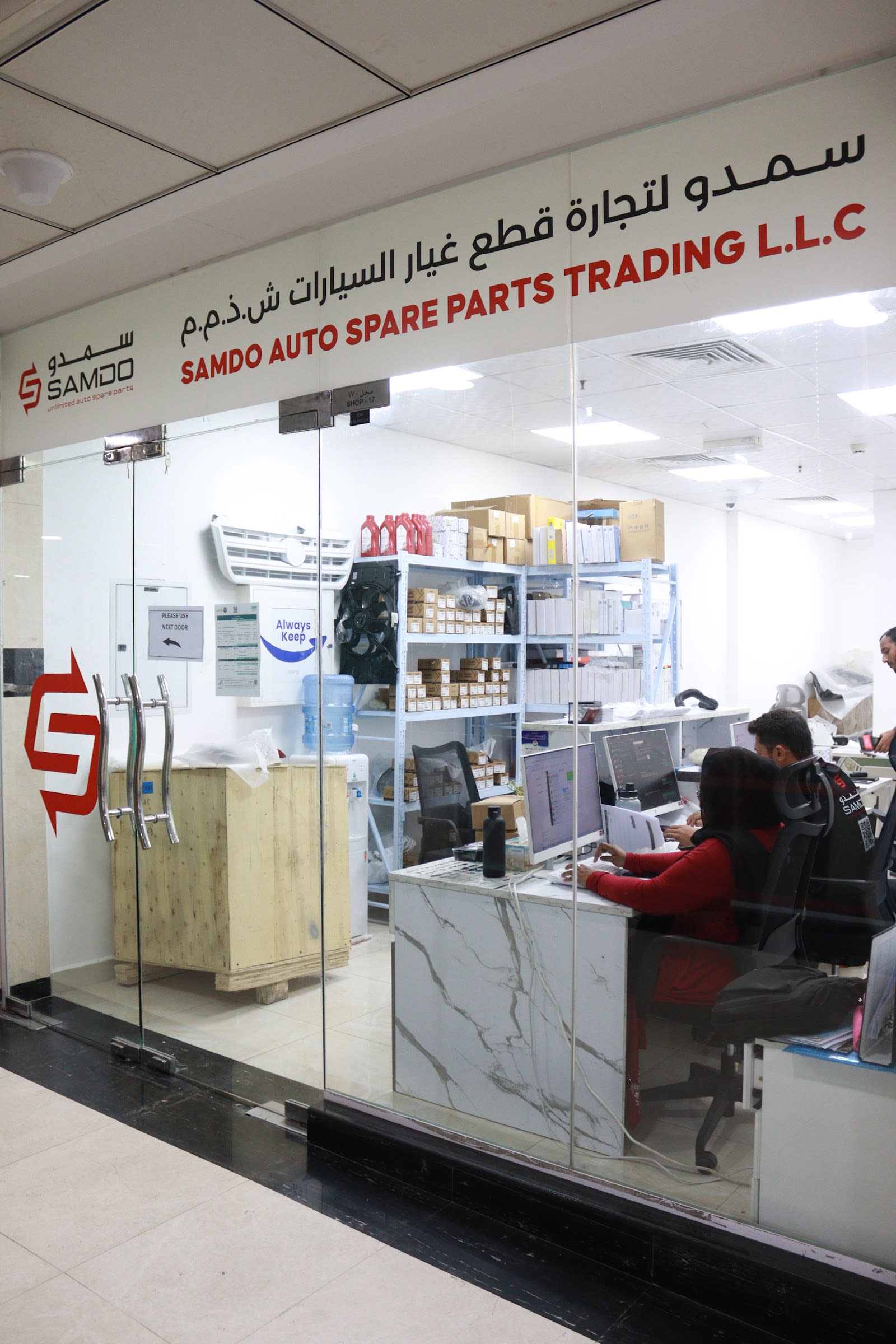
Samdo Auto Spare Parts Trading LLC
Dubai · AL Asmawi Commercial Building 1 El - Shop 17 - Al Manama St - Ras Al Khor Industrial Area 2 - Dubai
 Top-Rated
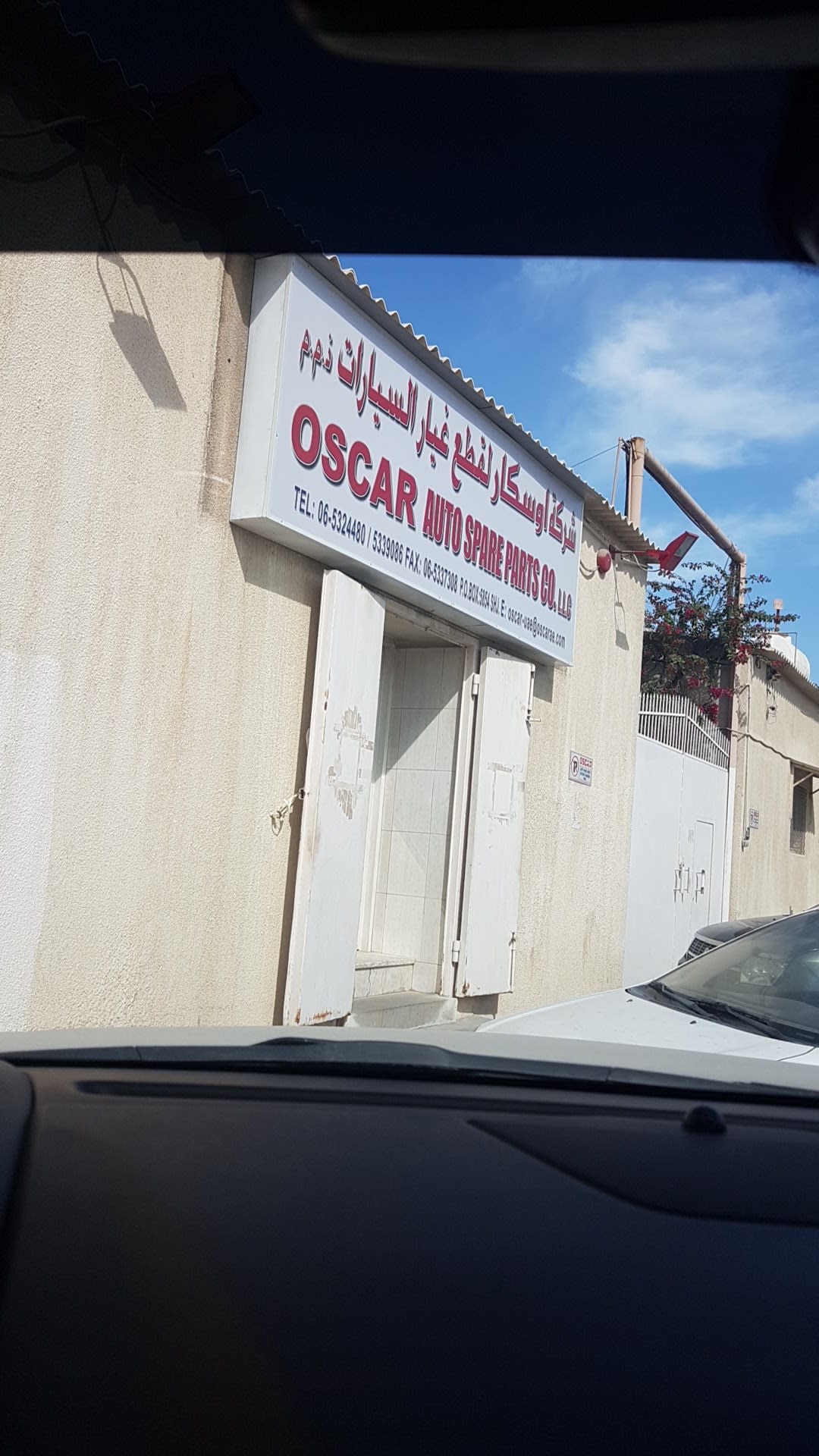
Oscar Auto Spare Parts Co LLC SP
Sharjah · Building 20 - First Industrial St - beside Em-post Office - Industrial Area 2 - Industrial Area - Sharjah
 Top-Rated
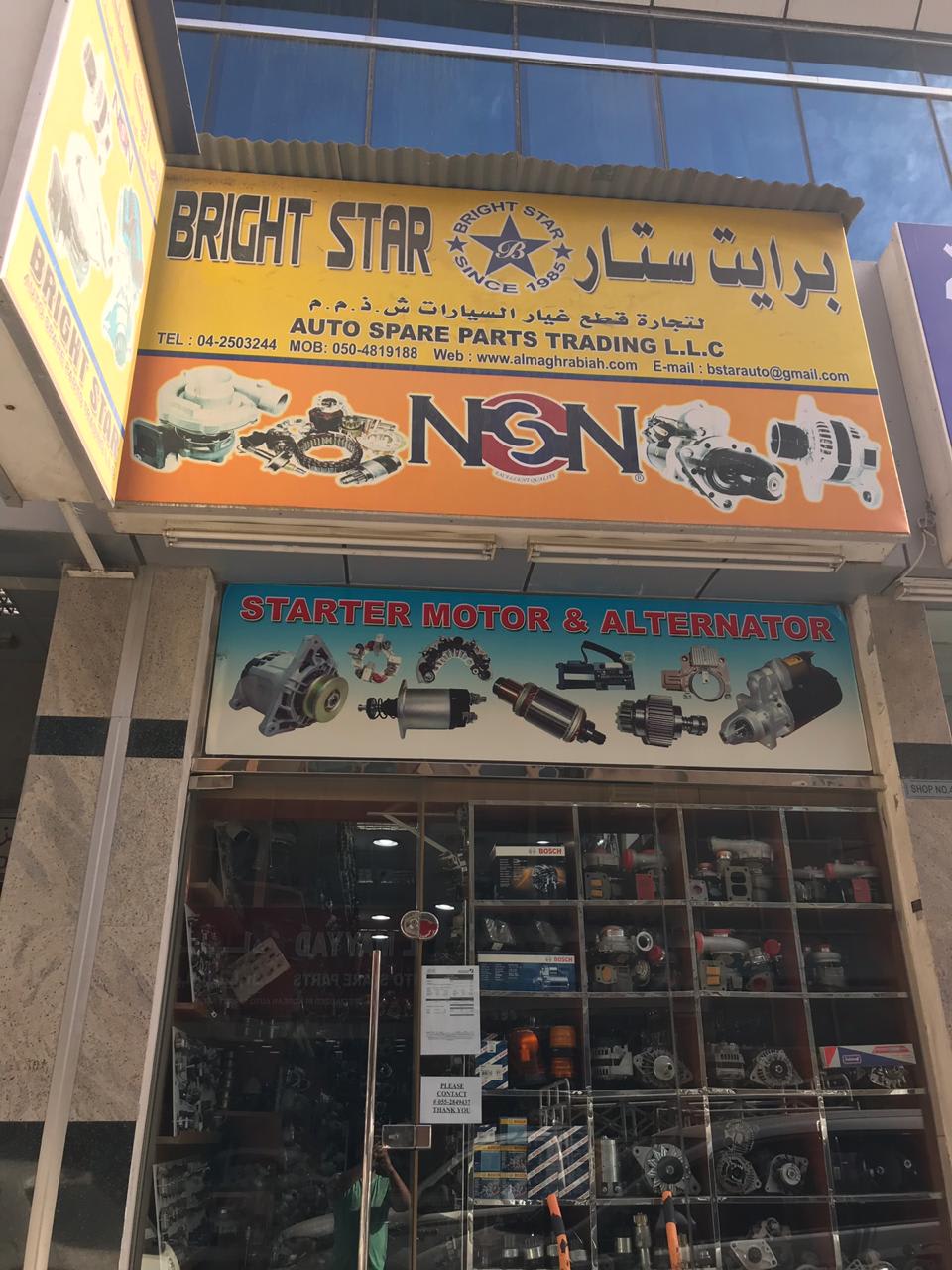
BRIGHT STAR AUTO SPARE PARTS TRADING LLC
Shop # 4, Silver Island Building, 38 C Street, Near Fish Roundabout
 Top-Rated
Al Amani TVR Group
Dubai · Business Bay - Dubai
 Top-Rated
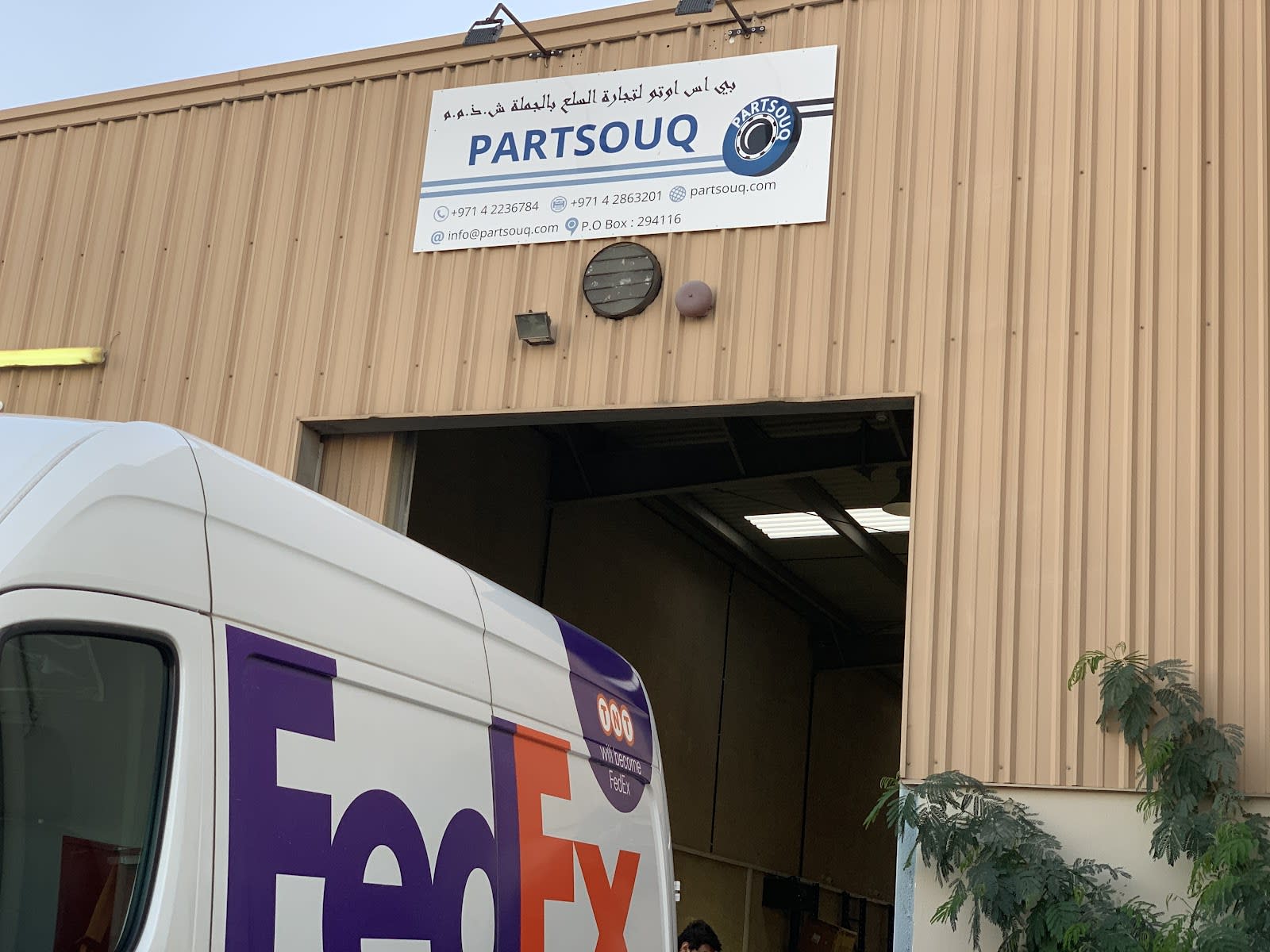
PARTSOUQ - PS AUTO GOODS WHOLESALERS L.L.C
Dubai · RAS AL KHOR 2, ST 7, Building 7, WH-11 - Dubai
 Top-Rated
Noor Din Ditta Auto Spare Parts Trading Branch-3
Sharjah · 8C56+QVF - Shop 1, 56th Street, Industrial Area 3 - Industrial Area 3 - Industrial Area - Sharjah
Where to actually buy this
Shops whose own website lists these parts, or whose stock we have recorded ourselves. Last checked July 2026. Not paid placement.
Stocks wheel bearings, drive shafts and CV joints — genuine and aftermarket, new parts. It carries Firestone, Neoterra, Kunlun and Sailun and 4 more and delivers to Dubai, Abu Dhabi and Sharjah.
4.8 on Google from 19 reviews
Stocks axles, propshafts and differentials — genuine and aftermarket, new parts. It delivers across all seven emirates.
4.1 on Google from 8 reviews
- Naser Mohsin Auto Spare PartsAbu Dhabi
Stocks wheel bearings and propshafts — genuine OEM, new parts. It carries Bosch, Febi Bilstein, Lemforder and Textar, matches parts to your VIN and delivers to Dubai, Abu Dhabi and Sharjah.
4.3 on Google from 151 reviews
- BEST AUTO PARTS STOREAbu Dhabi
Stocks drive shafts and differentials — genuine and aftermarket, new parts. It carries Amaron, Chloride, Atlas BX and Max Flash and 12 more and delivers to Abu Dhabi and Dubai.
4.6 on Google from 20 reviews
- PREMIER AUTO SPARE PARTS LLC RAK BRANCHRas Al Khaimah
Stocks wheel bearings and differentials — genuine OEM. It carries Amaron and Threebond and sells trade as well as retail.
4.2 on Google from 69 reviews
- Awawdeh Auto Spare PartsSharjah
Stocks differentials — genuine and aftermarket, both new and used. It carries Magneti marelli, Hella, Bosch and Valeo and 1 more and delivers.
4.4 on Google from 305 reviews
Listings are compiled from each business’s own public information. If you run one of these shops and want the entry corrected or removed, email easycarpartsteam@gmail.com.
Ask a human · free · no account
Rather not ring around?
Tell us the car and the part once — we'll send you the shops that actually stock it.
Free · usually a reply in minutes · no obligation
Still easier on a form? The request goes to the same matched UAE suppliers, free, with only the number of shops you choose able to contact you.
Open the request formKeep reading
Drivetrain — FAQs
- What is the difference between a drive shaft and an axle?
- In British usage a drive shaft is the transverse shaft that carries power to the wheels, and the shaft from the gearbox to a rear differential is the propeller shaft or prop shaft. A shaft that turns with the wheel is called an axle or an axle shaft, and the word axle can also mean the whole assembly across the car, with its differential. The words are used loosely, so describe where the part sits and whether the car drives its front, rear or all four wheels.
- What is the difference between a wheel hub and a wheel bearing?
- The bearing is the ring of balls or rollers that lets the wheel turn. MOOG describes a wheel hub assembly as a pre-assembled unit that features precision bearings, seals and sensors, and SKF's third-generation unit builds the flange for the wheel and the brake rotor into the unit as well. On many newer cars the usual repair is to replace the whole assembly, so ask whether a quote is for a bearing, a flanged unit or a complete hub.
- How do I know if a wheel bearing is bad?
- Timken says humming, rumbling and growling are also noises associated with tyres and other drivetrain components, so what matters is how the noise behaves. If it is the bearing, the noise or vibration is present in a straight line and intensifies when you steer slightly left or right, and typically the side opposite the rumbling is the defective side. Grinding while moving typically means mechanical damage, and wheel vibration or wobble normally indicates a loss of bearing clamp. A workshop inspection settles it.
- Can a bad wheel bearing turn on the ABS light?
- Yes. MOOG says the ABS light comes on if the wheel speed sensor in a hub assembly is not reading properly or the signal is lost, and Timken says that in extreme cases the sensors can be damaged by the excessive movement that comes with end-play. If you have a noise at one wheel and an ABS light together, say so when you ask for a quote.
- What does a CV joint do?
- It keeps two rotating shafts turning at the same speed while allowing them to sit at an angle to each other. That is what lets a front wheel receive drive while it steers and moves with the suspension. A CV axle has an inner joint at the transmission end and an outer joint at the wheel end, each covered by a boot filled with grease.
- Why does my car click when I turn?
- MOOG lists a clicking or popping noise when turning among the signs of a failing CV axle, together with grease thrown on the inside of the wheel, a clunk when accelerating or decelerating, and vibration at higher speeds. It is a pointer, not a diagnosis, and a workshop should look at the boots and the joints before a part is ordered.
- My CV boot is torn. Do I need a boot kit or a new axle?
- That depends on how far the damage has gone. A boot kit contains the boot, the correct clamps, grease and extra safety components such as circlips and washers, according to SKF. A common workshop view is that a boot kit is realistic when the boot has split but the joint is still quiet, and that a joint that clicks or a shaft that vibrates needs a joint or a whole axle. That is workshop practice, not a published specification, so ask the workshop to show you the joint before you choose.
- Should CV axles be replaced in pairs?
- MOOG says many technicians recommend replacing both the left and right CV axles at the same time rather than one component. It is a recommendation and not a rule. Whether it makes sense on your car is something to settle with the workshop, and you can ask for a quote for one side and for a pair so the two can be compared.
- Do I have to say whether my car has ABS when I order?
- Yes. Some wheel bearings carry a magnetic encoder in the seal, hub assemblies contain the wheel speed sensor, and some CV axles include an ABS tone ring whose tooth count is part of the catalogue entry; one GSP front-left axle is listed with a 48-tooth ring. Tell the supplier whether the car has ABS and send a photograph of the old part, including any ring or encoder.
- Why are the left and right driveshafts on my car different lengths?
- Wikipedia says the problems of unequal-length driveshafts are endemic to the transverse engine layout combined with an end-mounted transmission, and that manufacturers answer it by using an intermediate shaft on one side so that both driveshafts are of equal length, which it says is already done on most modern cars. Either way the left and right parts can differ, so always give the side when you order.
- What are the signs of a failing propshaft or universal joint?
- MOOG lists intense shaking from underneath the car, a loud clunk when putting the car into drive or reverse, shuddering when accelerating from a stop, for which a loose universal joint or a bad carrier bearing could be to blame, and a squeak that can be an unlubricated universal joint. Wikipedia lists worn couplings, universal joints or bearings as causes of excessive driveshaft vibration. A workshop should confirm which part it is before one is ordered.
- What is a carrier bearing or centre support bearing?
- It is the bearing that supports a propshaft. SKF describes its driveshaft support bearings as delivering precise driveshaft alignment and support, with rubber cushions that isolate vibration, and MOOG lists a bad carrier bearing among the causes of shuddering when pulling away from a stop. SKF lists it as a product in its own right, separate from the shaft and from the universal joints.
- What is the difference between a semi-floating and a full-floating axle?
- Wikipedia says a full-floating axle carries the vehicle's weight on the axle casing, not the half-shafts, which only transmit torque, while a semi-floating design carries the weight on the axle shaft itself with a single bearing at the end. The wheel has to be removed before a semi-floating axle can be removed, and if such an axle breaks the wheel is most likely to come off. Tell the supplier which design you have if you know, and the chassis number will settle it if you do not.
- What does the differential ratio mean and why am I asked for it?
- The differential gives a gearing reduction by having fewer teeth on the pinion than on the ring gear, so the final drive ratio is the ring gear's tooth count divided by the pinion's: 41 teeth on 11 is 3.73 to 1. It is one of the basic identifiers of a differential, and the supplier will confirm it against the chassis number, together with whether the unit is open, limited-slip or locking and whether it is the front or the rear.
- What oil does a differential take?
- Use the specification in the owner's manual. Differential oil is classified by API service category: GL-5 is the category for gears, particularly hypoids in automotive axles, and GL-4 is the category for spiral-bevel and hypoid gears at moderate speeds and loads. Wikipedia warns that GL-5 is not necessarily backward-compatible in synchromesh transmissions designed for GL-4, and lubricant makers sell GL-5 oils with special friction modifiers for limited-slip differentials. See our engine oil page for the fluids.
- How can I tell if a wheel bearing is genuine?
- Timken says it is not always easy to detect a fake bearing because fakes can look like the original and their packaging is often an exact copy. It recommends scanning the QR code on the packaging label with the World Bearing Association's Bearing Authenticator app and buying from an authorised distributor. JTEKT has used holograms on its packaging since 2016 and QR codes on its labels since June 2019. Ask for the brand and part number in writing and a photograph of the box and label.
- Should I buy a used wheel bearing or CV axle?
- Our view, and not a published rule, is that new is the sensible default for wear parts whose remaining life cannot be seen from outside, which means wheel bearings, hub units, CV joints, boots and universal joints. Housings, differential carriers and whole axle assemblies can be inspected before you buy, so used is a reasonable option there. Whichever you choose, get the part number and the warranty in writing.
- Can I reuse the axle nut?
- MOOG says never to reuse prevailing-torque axle nuts and always to use new ones, and says the spindle nut should be torqued to the manufacturer's specification with a calibrated torque wrench, not power tools, which can damage the threads and the outer CV joint. Timken gives the same advice about an impact wrench for a hub unit. Ask the workshop whether a new nut is in the quote.
- How much does a wheel bearing or drive shaft cost in the UAE?
- We publish no figure, because we hold no UAE quote that we can date and attribute to a named seller, and an average of unsourced numbers would mislead. What moves the price is whether it is a bearing or a complete hub unit, the side and the ABS fit, a boot kit or a whole axle, the brand, what the kit includes, and whether the quote is for one part or a pair. Send the chassis number and ask for those to be itemised.
- What should I send on WhatsApp to get a quote?
- The chassis number as a photograph of the plate or registration card, which part and which end of the car, the side as driver or passenger, whether the car has ABS, whether it is front-, rear- or four-wheel drive, the symptom and when it happens, a photograph of the old part with its part number, and whether you want new, aftermarket, genuine or used. Then ask for the brand, the part number, what is in the box and the warranty in writing.
Ask a human · free · no account
Still not the question you had?
Ask it directly — a person reads every message.
Free · usually a reply in minutes · no obligation