Wiper blades for your car in the UAE
The quick answer
Almost nobody in this country buys wiper blades because of rain. They buy them the morning after the first proper downpour, or on a December fog morning on the E11, when they switch the wipers on for the first time in seven months and find the rubber has hardened into a cracked strip that smears the glass into white glare exactly when they need to see.
Ask a human · free · no account
Not sure which part fits your car?
Tell us the make, model and year — we check fitment and come back with prices from UAE sellers who have it on the shelf.
Free · usually a reply in minutes · no obligation
Key facts
- UV and heat, not use, are the dominant failure mode here: blades age continuously between April and October whether or not they are ever switched on, giving a realistic 6–9 month life outdoors against 12–18 months in a temperate climate.
- Heat-set: rubber left pressed against hot glass by the arm spring takes a permanent curve, which is why blades that look intact still skip. This is a specifically hot-climate failure and it is the reason mileage is a poor guide here.
- Fog, not rain, is the moment of truth. Abu Dhabi International averages just under 24 fog days a year (range 8–51) and around 88 hours below 1 km visibility; Dubai International around 43 hours. Fog season is September to March, peaking December and January.
- Dubai receives roughly 95–130 mm of rain across about 22 rain days a year, all concentrated December to March — so blades sit unused for seven months and are then asked to work perfectly on the one morning that matters.
- Dry wiping a dusty screen is the most expensive local habit: quartz-bearing dust (Mohs ~7) cuts automotive glass (Mohs ~5.5–6), machining permanent arcs into the windscreen that glare under headlights at night.
- After a sandstorm the screen must be hosed or jet-washed before the blades touch it — washer jets cannot lift that quantity of grit and wiping it will scratch.
Rather fill in a form? Send the same request here and matched UAE suppliers reply on WhatsApp either way.
Open the request formWiper blades — types and specifications
- 12 in / 300 mm
- Rear screens and small hatchbacks
- 14 in / 350 mm
- Passenger side, small cars
- 16 in / 400 mm
- Very common passenger side
- 17 in / 425 mm
- Passenger side, mid-size
- 18 in / 450 mm
- Saloons and crossovers
- 19 in / 475 mm
- Passenger side, mid-size
- 20 in / 500 mm
- Either side, very common
- 21 in / 525 mm
- Driver side, saloons
- 22 in / 550 mm
- Driver side, saloons and SUVs
- 24 in / 600 mm
- Driver side, large SUVs and pickups
- 26 in / 650 mm
- Driver side, large vehicles
- 28 in / 700 mm
- Vans and some large SUVs
- 10 in / 250 mm
- Rear screens, compact cars
- 11 in / 280 mm
- Rear screens, hatchbacks and SUVs
Why blades die faster here than almost anywhere
A wiper blade is a strip of rubber held at a precise angle by a spring. Everything about it is a rubber problem, and rubber has three enemies — all three unusually strong in the UAE.
Ultraviolet light. UV breaks the polymer chains in the wiping edge. The edge hardens, stops flexing cleanly from one lay-back angle to the other at each stroke, then splits. A blade parked in the open through a summer of UV-index-11 days is being aged continuously from April to October whether it is ever switched on or not.
Heat. Rubber left pressed against hot glass takes a set — a permanent curve moulded into the edge by the arm's own spring pressure. A set blade no longer meets the glass squarely and skips across it. This is why blades that look intact still fail.
Dust. Fine airborne dust settles on the glass and on the blade's parked edge. Every sweep drags that grit along the rubber, abrading the wiping lip like very fine sandpaper. A single sweep across a dusty screen does more edge damage than a hundred sweeps in clean rain.
The cruel part is the low duty cycle. Because you never use them, you never notice. Dubai sees roughly 95–130 mm of rain a year across about 22 rain days, concentrated December to March. Fog is the bigger risk: Abu Dhabi International Airport averages just under 24 fog days a year (range 8–51) and around 88 hours a year below 1 km visibility, with Dubai International around 43 hours. Fog season runs September to March and peaks in December and January — the same months as the rain, and the only months your blades are asked to do anything.
| Factor | What it does to the blade | When it happens | Visible result |
|---|---|---|---|
| UV radiation | Breaks down the rubber compound, hardens and cracks the wiping edge | All year, worst April–September | Chalky, split or crazed edge |
| Surface heat | Moulds a permanent curve ("set") into the rubber under arm pressure | Parked outdoors, any summer day | Skipping, missed strips of glass |
| Airborne dust and sand | Abrades the wiping lip; grit embeds in the rubber | Every dusty day, worst after a sandstorm | Streaking, fine scratch arcs on glass |
| Dry operation | Tears the edge in one or two sweeps | Every time wipers run on a dry screen | Immediate streaking, glass scratching |
| Non-use | Rubber sets, hinges and joints seize, springs weaken | April–October, seven months idle | First rain reveals total failure |
The failure signs, and what each one actually means
The four symptoms drivers describe — streaking, chattering, smearing, skipping — are not interchangeable. Each points at a different fault, and one of them is not the blade at all.
Streaking is thin ribbons of water left behind on an otherwise cleared screen. It means the wiping edge has a nick, a hardened section, or embedded grit. The blade is finished; nothing restores a torn edge.
Chattering or juddering is the blade stuttering across the glass with an audible knock. Usually the rubber has hardened and can no longer flip its lay-back angle at the reversal point, so it grabs and releases. Sometimes it is the arm: if the arm has been bent or twisted (very common after someone lifts it wrongly, or after a car wash), the blade no longer meets the glass at 90° and will chatter with brand-new rubber fitted.
Smearing is a translucent film smeared right across the swept area, usually worst against low sun or oncoming headlights. That is contamination, not wear — road film, wax overspray, silicone dressing from a car wash, or the breakdown residue of a coated blade. Clean the glass properly first; if it smears with clean glass and clean rubber, replace.
Skipping is the blade jumping over dry patches, leaving arcs. That is the heat-set problem described above, and it is the most UAE-specific failure of the four.
One symptom is a trap: water not cleared at the very top or edge of the sweep, with the middle of the screen clean. That is a tired arm spring, not a tired blade. New blades will not fix it — the arm needs replacing.
| Symptom | Most likely cause | What to do | Blade or arm? |
|---|---|---|---|
| Thin streaks of water left behind | Nicked or hardened wiping edge | Replace the blade | Blade |
| Chatter, judder, knocking noise | Hardened rubber, or bent/twisted arm | Replace blade; if it persists, check arm angle | Either |
| Smeared film across the whole screen | Contamination: wax, silicone, road film, coating residue | Deep-clean glass, then replace if unchanged | Neither, then blade |
| Blade skips, leaves dry arcs | Heat-set permanent curve in the rubber | Replace the blade | Blade |
| Squealing on a wet screen | Rubber hardened, or wrong lay-back angle | Replace the blade | Blade |
| Top or outer edge never cleared | Weak arm spring, insufficient down-force | Replace the wiper arm | Arm |
| Blade lifts off at high speed | Wind lift on a frame blade, or weak spring | Fit a beam blade or replace arm | Both |
Not sure what you're looking at? Send a photo and the car — we'll tell you what you're seeing and what the parts cost. Free, no form.
Conventional, beam and hybrid — the honest trade-offs
There are three constructions, and the marketing exaggerates the difference. What matters more than which type you choose is how old the rubber is when you fit it.
Conventional (frame or bracketed) blades use a metal yoke that splits into 4, 6 or 8 pressure points along a rubber refill. They are cheap, universally available, and easy to fit. In this market they have two real drawbacks: the open frame collects dust and the pivots seize, and above roughly 110 km/h the frame catches air and lifts the blade away from the glass — you notice it on the Sheikh Zayed Road in rain, at exactly the wrong moment.
Beam (flat) blades replace the frame with a single pre-tensioned spring-steel strip inside a rubber body, with a moulded aerodynamic spoiler. Pressure is spread evenly along the whole length rather than at six points, there are no joints to seize with dust, and the spoiler converts airflow into downforce instead of lift. This is the better design for here — but it is not free of problems. A cheap beam blade has a weak, poorly heat-treated spring strip, and in UAE heat it takes a permanent set faster than a good conventional blade. Many beam blades also need a vehicle-specific adapter, and some are shaped for a particular windscreen curvature — a generic flat blade on a strongly curved screen will not contact the outer 50 mm.
Hybrid blades put a frame inside an aerodynamic plastic shell. They wipe like a conventional blade and resist lift like a beam. They are the heaviest of the three, the most expensive per millimetre, and the plastic shell chalks and whitens under sustained UV, which looks scruffy long before the rubber fails.
| Type | How it works | Advantages | Disadvantages | Typical AED per blade |
|---|---|---|---|---|
| Conventional (frame) | Metal yoke, 4–8 pressure points on a refill rubber | Cheapest; refills often available; fits almost anything with a hook arm | Frame collects dust and seizes; wind lift above ~110 km/h; uneven pressure as it ages | 15–60 |
| Beam (flat) | Single tensioned steel strip, integrated spoiler | Even pressure end to end; no joints to seize; downforce instead of lift; low profile | Costs more; cheap ones take a heat-set quickly; may need a specific adapter; curvature must suit the screen | 45–120 |
| Hybrid | Frame enclosed in an aero shell | Frame's wiping action plus beam-like aerodynamics; often quiet | Heaviest; priciest per mm; plastic shell chalks under UV; more to go wrong | 55–150 |
| OE dealer blade | Usually a beam or hybrid made by Bosch, Valeo or Denso for the carmaker | Guaranteed fit and curvature; correct proprietary connector | Frequently 2–3× the price of the identical aftermarket part | 90–250+ |
Getting the length right
Wiper blades are sized by the length of the rubber, not by the arm. They are made in one-inch increments and sold in the UAE under both inch and millimetre labels, often on the same shelf — which causes confusion, because the millimetre figures are rounded industry nominals, not exact conversions. A blade sold as 16 in is labelled 400 mm even though 16 in is 406.4 mm. Nobody in the trade means anything by the difference.
The two front blades are almost never the same size. The driver's side is typically 2 to 6 inches longer than the passenger's, because it sweeps the larger area. Buying two blades of the same length because "they look the same" is one of the two commonest mistakes on this page.
Getting it wrong in either direction has consequences. Too long and the driver and passenger blades collide mid-sweep, or the blade overruns onto the A-pillar trim and slaps it on every stroke; 25 mm of excess is enough. Too short and you leave an uncleared band at the top or side of the sweep, which is precisely the part of the screen you look through on a wet night.
To measure: lift the arm, lay a tape along the rubber from one end to the other, and round to the nearest inch. Do the driver's and passenger's separately, and write both down. Do not trust a generic online lookup alone if your car is a US, Japanese or GCC import of the same model name — trim and market variations do change wiper lengths, and this is one of the reasons a chassis number is a better identifier than a model name in this country.
| Inches | Nominal mm | Exact conversion | Typically used for |
|---|---|---|---|
| 12 in | 300 mm | 304.8 mm | Rear screens, small hatchbacks |
| 14 in | 350 mm | 355.6 mm | Passenger side, small cars |
| 16 in | 400 mm | 406.4 mm | Passenger side, very common |
| 18 in | 450 mm | 457.2 mm | Passenger side, saloons and crossovers |
| 19 in | 475 mm | 482.6 mm | Passenger side, mid-size |
| 20 in | 500 mm | 508.0 mm | Driver or passenger side, very common |
| 22 in | 550 mm | 558.8 mm | Driver side, saloons and SUVs |
| 24 in | 600 mm | 609.6 mm | Driver side, large SUVs and pickups |
| 26 in | 650 mm | 660.4 mm | Driver side, large vehicles |
| 28 in | 700 mm | 711.2 mm | Driver side, vans and some large SUVs |
The fitting type — where most people buy the wrong part
This is the single biggest source of returns in the category. Length is easy to establish; the connector is not, and a 22-inch blade with the wrong connector is a 22-inch blade you cannot fit.
There are six common families, plus a growing number of proprietary ones. The old U-hook (J-hook) is still the most widespread worldwide and has its own sub-variants — 9×3, 9×4, short hook, 7 mm pin hook — that look nearly identical and are not interchangeable. Push-button connectors, with a release button on the side of the housing, are standard on much of the modern European fleet. Pinch-tab, bayonet (push and twist), side-pin and top-lock/claw cover most of the rest. Some Mercedes, BMW and Tesla models use connectors that only the maker's own blade family fits, and no adapter pack will help.
The practical answer is not to guess. Lift the arm, photograph the joint from the side and from above before you go shopping. Thirty seconds with a phone eliminates the problem entirely.
Multi-fit blades ship with an adapter tree — usually U-hook, side-pin and bayonet in one bag — and they genuinely solve most cases. But be honest about what you are buying: an adapter adds a plastic joint between the arm and the blade, which is one more thing to develop play, rattle and eventually crack under UV. Where a direct-fit blade for your exact connector is available at a similar price, buy that instead.
A note on the arm rather than the blade: never force a connector. If it does not release with light pressure on the correct tab, you have the wrong release mechanism, and levering will snap the housing off a blade you have already paid for.
| Connector | How to recognise it | How it releases | Commonly found on |
|---|---|---|---|
| U-hook / J-hook | Arm ends in a hook curled over the blade housing | Squeeze the tab, slide the blade down and off the hook | The largest share of the global fleet; many older Japanese, Korean and American cars |
| Push button | A visible button on the side of the blade housing | Press the button, slide the blade out along the arm | Much of the modern VW, Audi, Skoda, SEAT and wider European fleet |
| Pinch tab | Two small tabs either side of the joint | Pinch both tabs together and pull the blade off | Numerous European and American models |
| Bayonet | Flat arm end that enters a slot, with a spring catch beneath | Push in slightly, rotate, withdraw | Some French and European models |
| Side pin | A small pin protruding from the side of the arm | Release the clip, lift the blade off the pin | Some European and Asian models |
| Top lock / claw | Arm clips over the top of the blade housing | Lift the locking flap, unclip upward | Various, often Asian models |
| Proprietary | Does not resemble any of the above | Per the maker's instructions only | Some Mercedes-Benz, BMW and Tesla models |
The rear wiper everybody forgets
On hatchbacks, estates, SUVs and 4x4s there is a third blade, and in this market it is routinely years past its useful life. It gets forgotten for a specific reason: the rear screen is not in your eyeline, so a failed rear blade produces no daily annoyance — until you reverse out of a parking space in fog or rain and find the camera view and the mirror view are both useless at once.
The rear blade actually has the harder life of the three. On most SUVs it sits on a near-horizontal or steeply raked tailgate, taking sun almost straight down through the summer, with no A-pillar or bonnet shadow at any hour. It also spends longer completely still, since the rear washer is used even less than the front.
Rear blades are usually shorter — 250 to 400 mm is the normal range — and they are usually arm-and-blade specific, not a universal fitting. Many are a moulded assembly designed only for that model, which is why a generic "rear wiper" from a shelf display often will not fit. Photograph the joint, as with the front.
Two local details worth knowing. First, if the rear glass carries an interior tint film, all the wiping happens on the outside surface, so scratches there are in the glass and not the film — the same permanent damage described in the dry-wiping section below. Second, on cars where the rear wiper is triggered automatically in reverse, a seized blade or arm can put load on the small rear wiper motor, which is a far more expensive failure than the blade it started as.
Never wipe a dusty screen dry
This is the most expensive habit in this market, and it is nearly universal.
You come out to a car with a layer of fine dust across the glass. You pull the wiper stalk to sweep it off. The blade drags that dust across the windscreen under the full pressure of the arm spring.
The problem is what the dust is made of. Desert and construction dust here contains quartz. Quartz sits at about 7 on the Mohs hardness scale; automotive soda-lime glass sits at about 5.5 to 6. The harder mineral cuts the softer one, reliably. What you get is a set of fine arcs following the exact path of the blade, permanently machined into the glass. You will not see them at noon. You will see every one of them at night when a car's headlights hit them, and in low winter sun, as a bright fan of glare directly in your line of sight.
The damage does not polish out easily. Light scratching can sometimes be reduced by a professional cerium-oxide polish, but polishing removes glass and can introduce optical distortion, so on a windscreen it is often refused. The real fix is a new windscreen, which costs an order of magnitude more than a set of blades.
The same sweep also destroys the blade. Grit embeds in the wiping lip and tears it, so one dry dusty sweep can end the life of a new blade.
The rule is simple. Never run the wipers on a dry screen. Spray the washer first, let the fluid sit for two or three seconds, then wipe. After a sandstorm, rinse the glass with a hose or at a jet wash before the blades touch it — there is more grit on the screen than the washer jets can lift, and wiping it will scratch. If a bird strike or splash has dried on, wet it and wait rather than scrubbing at it with the blade.
Washer fluid: why plain water is a bad idea here
Most washer bottles in the UAE are filled from a tap. There are three reasons not to do that, and one of them is a health issue rather than a car issue.
Bacteria. A case-control study of community-acquired sporadic Legionnaires' disease in England and Wales (75 cases, 67 controls, published in the European Journal of Epidemiology in 2010) found that driving or riding in a vehicle whose washer bottle contained water without added screenwash carried an odds ratio of 47.2 (95% CI 3.7–603.6), and the authors estimated around 20% of those sporadic cases were attributable to the exposure. A 2012 follow-up letter reported Legionella pneumophila recovered from washer bottles filled without screenwash. The mechanism is straightforward: the washer jet aerosolises the bottle contents directly in front of the car's air intake. Legionella multiplies in roughly the 20–45 °C band, and a plastic bottle of standing water in a UAE engine bay sits in that band for most of the year — arguably a worse case than the UK study it comes from. Screenwash concentrates contain a biocide; that is a large part of what you are paying for.
Deposits. Washer jet orifices are around half a millimetre across. Anything that precipitates out of standing water — dissolved minerals, tank sediment, algae — narrows or blocks them, and a blocked jet is exactly what you discover on the fog morning.
Cleaning. Plain water does not lift the oily road film that builds up on a windscreen, so it smears rather than clears. Screenwash contains surfactants that do.
What not to use: household dish soap or shampoo. They foam badly, leave a residue that smears in sunlight, strip wax, and can attack rubber trim and paint over time. Buy an automotive screenwash concentrate and dilute per the label. You do not need an antifreeze-rated product in this country — a summer-grade concentrate is the correct choice, and it is cheaper.
| Filled with | Cleans road film | Blocks jets | Microbial risk | Verdict |
|---|---|---|---|---|
| Tap water | Poorly | Over time, from minerals and sediment | Documented Legionella risk without biocide | Avoid |
| Distilled water | Poorly | Low | Still no biocide; risk remains | Better, but not sufficient |
| Screenwash concentrate, diluted | Yes, surfactants lift oil film | Low | Biocide suppresses growth | Correct choice |
| Dish soap or shampoo in water | Some, but leaves residue | Yes, foam and residue | No biocide | Do not use |
| Neat screenwash, undiluted | Yes | Low | Low | Wasteful; no benefit over correct dilution |
How long they actually last in this climate
Manufacturers generally recommend replacing wiper blades every 6 to 12 months. Guidance written for the hot, high-UV states of the American southwest — Arizona and Nevada — tightens that to roughly 6 to 8 months. UAE conditions are at least as harsh, with the added factor of near-continuous fine dust, so 6 to 9 months is a realistic working figure for a car parked outdoors, and it can be shorter.
What moves the number is almost entirely where the car sleeps. A car in a basement or shaded car park is out of the UV and off the heat-set clock for most of the day, and its blades can genuinely reach 12 to 18 months. The same car parked in an open lot in Al Quoz or on a sand plot in Sharjah will not.
Mileage is close to irrelevant, which is the point that surprises people. A blade with 30,000 km on it that has only ever wiped clean rain is in better shape than a blade with 3,000 km that has spent two summers baking on a tailgate.
The practical rule. Stop tracking months and pick an anchor date instead: replace the front pair every October, before the fog and rain season starts. It is one purchase a year, at a predictable time, and it puts fresh rubber on the glass in the only months of the year that actually need it. Add the rear blade to the same date on a longer cycle if it is genuinely unused.
And check them in September rather than discovering the answer in December — lift each blade, run a fingertip along the edge, and look for a hard, chalky, split or visibly wavy lip.
| Situation | Realistic blade life | Why | Suggested action |
|---|---|---|---|
| Parked in basement or covered parking, light use | 12–18 months | Out of direct UV and heat for most of the day | Inspect annually, replace on condition |
| Parked outdoors, typical Dubai commuter | 6–9 months | Full UV and heat-set exposure April–October | Replace every October |
| Parked outdoors, heavy dust or sand plot area | 4–6 months | Abrasion adds to UV and heat damage | Replace twice a year |
| Taxi, rideshare or fleet vehicle outdoors | 4–6 months | Constant exposure plus far more sweeps | Fold into scheduled servicing |
| Rear blade on an SUV, outdoors, rarely used | 9–12 months | Extreme UV angle but almost no mechanical wear | Replace by calendar, not by symptom |
| Car used mainly at night, garaged by day | 12–18 months | Minimal UV exposure | Inspect annually |
What wiper blades cost in the UAE
Wipers are a cheap part with a wide price spread, and the spread is not all quality. The same blade sold at a dealer parts counter and at an accessory shop can differ by a factor of three, because OE wiper blades are commonly manufactured by Bosch, Valeo or Denso and then boxed in the carmaker's packaging. Wipers are one of the few categories where a good aftermarket part is genuinely equivalent to the OE part, and often the identical product.
The figures below are observed UAE online and shelf retail as at August 2026 across general retailers, marketplaces and parts sellers. They are indicative bands for budgeting, not a quotation — shop pricing varies by emirate, by fitment and by stock.
Where the money actually goes. Above roughly AED 60 per blade you are paying for spring-strip quality, the rubber compound and any edge coating (graphite or PTFE, which reduce friction and squeal). Above roughly AED 120 you are usually paying for the badge or for a proprietary connector, not for better wiping.
Fitting is normally free. Accessory shops, petrol-station service bays and parts sellers across the UAE will typically fit blades at no charge when you buy them, because it takes a technician about five minutes. Always ask before you pay, and always have them fit it while you watch — if the connector turns out to be wrong, you find out at the counter rather than in a car park.
Set against those numbers: a windscreen scratched by dry wiping is a replacement, not a repair, and that is a far larger bill than a lifetime of blades.
| Item | Typical AED range | Notes |
|---|---|---|
| Unbranded / universal conventional blade | 15–40 per blade | Rubber compound unknown; short life in this climate |
| Branded conventional blade | 30–60 per blade | Bosch AeroEco, Trico, Champion and similar |
| Branded beam / flat blade | 45–120 per blade | Bosch Aerotwin, Valeo Silencio, Michelin, Rain-X and similar |
| Hybrid blade | 55–150 per blade | Frame in an aero shell |
| Dealer OE blade | 90–250+ per blade | Often the same manufacturer as the aftermarket equivalent |
| Rear blade | 25–90 | Frequently model-specific |
| Front pair, mid-range, fitted | 90–200 | Fitting usually included with purchase |
| Screenwash concentrate, 1 L | 10–30 | Dilutes to several bottle fills |
| Fitting labour | Usually AED 0 with purchase | About five minutes' work; confirm before paying |
These are UAE market ranges. The price for your car depends on the model, the year and which brand you fit.
Get the exact priceFitting them yourself in five minutes
This is a genuinely simple job, with one step where people damage an expensive thing.
1. Buy right first. Correct length for each side, correct connector. Keep the old blade in the car until the new one is confirmed on.
2. Clean the glass wet. Wash and dry the windscreen properly before you start. New rubber dragged over old grit is new rubber ruined.
3. Get the arm to service position. On many modern cars — much of the VW group, BMW and others — the arms park under the bonnet lip and cannot be lifted from rest. There is a service position: typically switch the ignition on, flick the wipers, then switch off mid-sweep so the arms stand upright. Check your handbook. Levering an arm off its park stop bends it, and a bent arm chatters forever.
4. Protect the glass. This is the step that matters. Lay a folded towel on the windscreen under the raised arm. A spring-loaded bare wiper arm snapping down onto glass is a common cause of a chipped or cracked windscreen, and a windscreen costs vastly more than a blade.
5. Look before you remove. Note which way round the old blade sits and how the connector engages, then release it — button, tab, twist or clip according to type. Light pressure only.
6. Fit the new blade until it clicks. The click is the lock engaging. Tug the blade firmly along the arm afterwards; if it moves, it is not locked. A blade that detaches at 100 km/h leaves a bare metal arm scoring the glass.
7. Lower the arm by hand. Never let it fall.
8. Test wet. Run the washer, then the wipers. Watch for chatter, missed strips and edge contact. If a brand-new blade chatters, suspect the arm angle rather than the blade — the rubber should meet the glass at about 90° at rest.
9. Do the rear too, while the tools are out.
Buying in the UAE: genuine, aftermarket and copies
The local vocabulary matters. In the Sharjah parts market and across the trade you will hear "original" or "genuine" (the carmaker's own boxed part), "aftermarket" or "branded" (Bosch, Valeo, Denso, Trico, Champion, Michelin), and "commercial" or "copy" (unbranded production, often with no traceable maker).
For most parts that hierarchy is a genuine quality ladder. For wiper blades it is flatter at the top and steeper at the bottom. The top two tiers are frequently the same factory, so paying dealer prices for a wiper blade rarely buys anything. The bottom tier is the real risk, because a wiper blade is its rubber compound — there is no other component doing the work — and compound quality is exactly what you cannot inspect at the counter. A copy blade fitted in October may be hard by January. That is why the roadside and traffic-light blades sold cheap are false economy here specifically: in a mild climate a poor compound is merely mediocre; in this one it is finished before the season it was bought for.
On inspection. The UAE's periodic vehicle test covers windscreen and wiper condition among its safety items, and inspection guidance published by UAE testing and garage sources lists worn or damaged wipers and low washer fluid as things to correct before you go. Treat that as good practice rather than a quoted regulation — we have not verified a published RTA clause naming wiper blades specifically, and we make no claim about fines. Separately and more importantly, UAE traffic law addresses driving with obstructed or impaired vision as a safety matter, and a screen that smears into glare at night is a real hazard regardless of what any test sheet says.
Before you buy, have three things: the two front lengths, a photograph of the connector, and your chassis number if the car is an import — GCC, US and Japanese versions of the same model name do not always take the same blades.
Wiper blades in the UAE — what is different
- Warm standing water in a washer bottle under a UAE bonnet sits in the Legionella growth range (~20–45 °C) for most of the year, which makes the UK screenwash findings more relevant here, not less.
- Antifreeze-rated screenwash is unnecessary in this country; a summer-grade concentrate with a biocide and surfactant is the correct and cheaper choice.
- Parking determines blade life more than driving does: basement or covered parking roughly doubles it against an open lot in Al Quoz or a sand plot in Sharjah.
- GCC, US and Japanese imports of the same model name do not always take the same blade lengths or connectors — a reason to identify by chassis number rather than model name, as with other parts in this market.
- Recommended local anchor date: replace the front pair every October, before fog and rain season, rather than tracking months.
- Sharjah market vocabulary — 'original', 'aftermarket'/'branded' and 'commercial copy' — applies here with a twist: OE blades are commonly made by Bosch, Valeo or Denso anyway, so the top two tiers are near-equivalent while the copy tier is the real risk, because compound quality is the entire product and cannot be inspected at the counter.
- Rear blades on SUVs bake on a raked tailgate with no shadow at any hour, which is why they are usually the worst blade on the car despite being the least used.
Wiper blades suppliers across the UAE
 Top-Rated
Car Fusion Auto Accessories
Dubai · Warehouse 5, Near Aiko Hypermarket, DIP 1 - Dubai
 Top-Rated
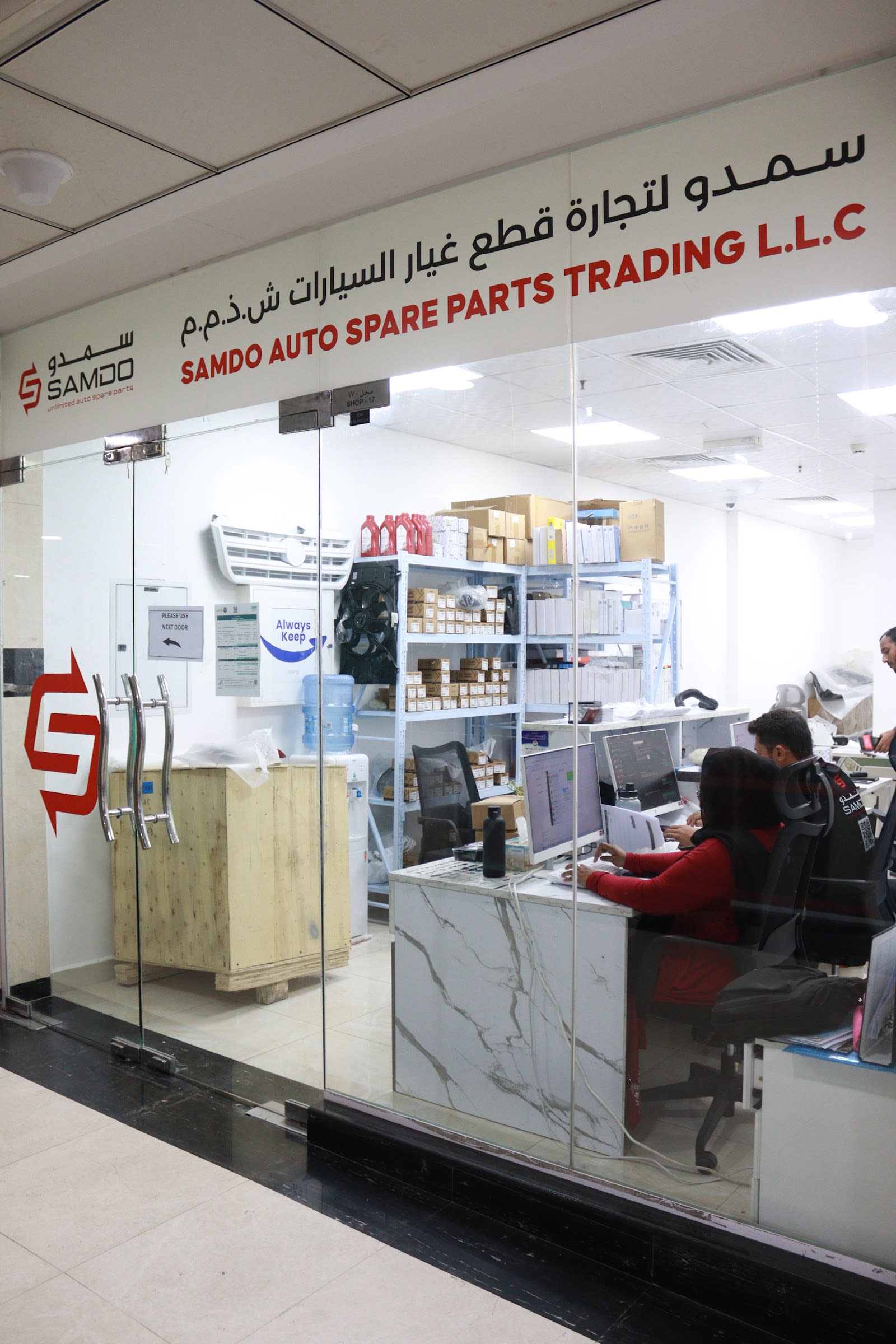
Samdo Auto Spare Parts Trading LLC
Dubai · AL Asmawi Commercial Building 1 El - Shop 17 - Al Manama St - Ras Al Khor Industrial Area 2 - Dubai
 Top-Rated
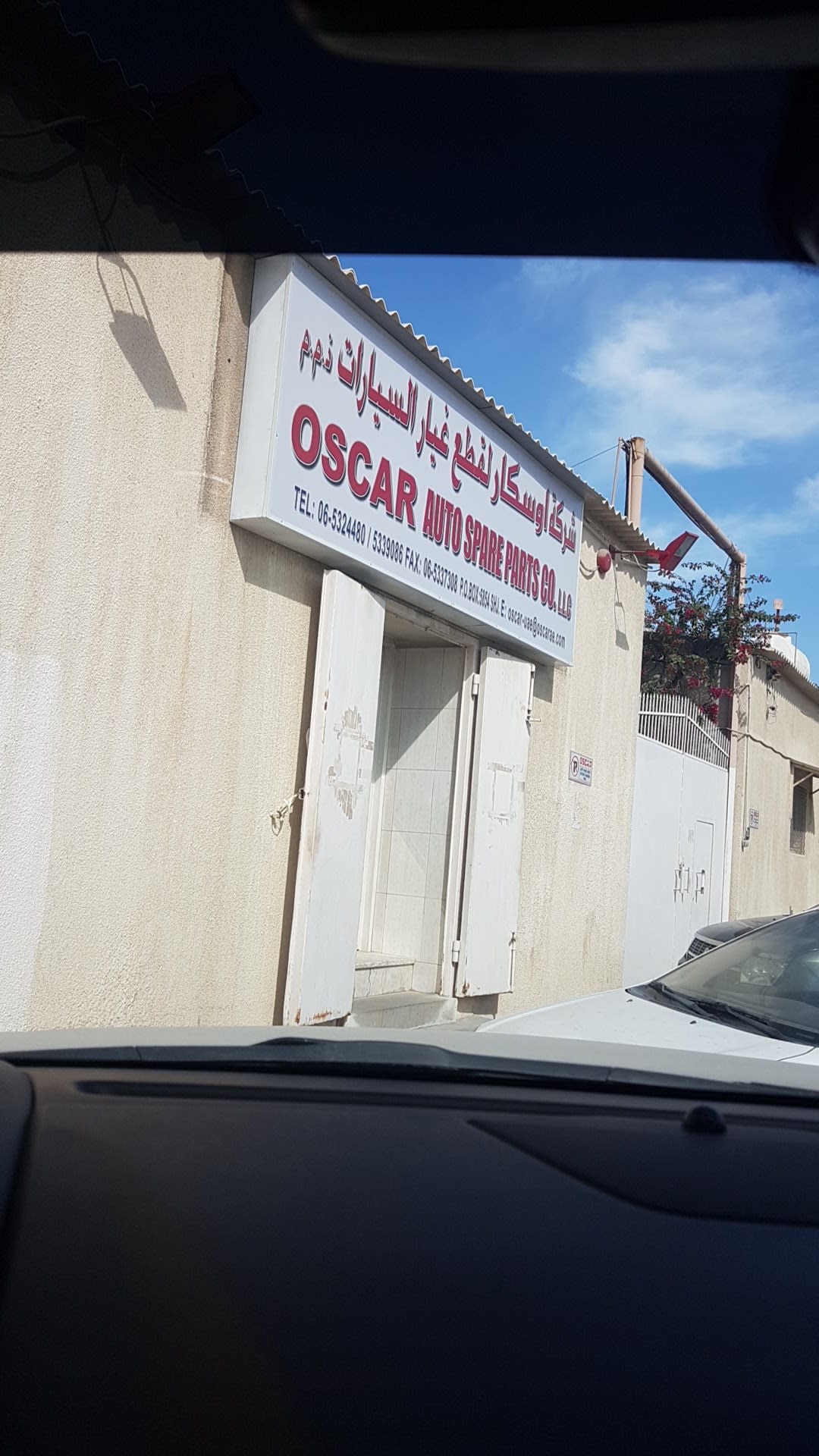
Oscar Auto Spare Parts Co LLC SP
Sharjah · Building 20 - First Industrial St - beside Em-post Office - Industrial Area 2 - Industrial Area - Sharjah
 Top-Rated
Al Hadeeqa Auto Seat Upholstery
Ajman · Unnamed Road - Al Rashidiya 1 - Ajman
 Top-Rated
Al Muteena Star Car Accessories LLC
Dubai · 62 - 64 Abu Baker Al Siddique St - Al Muteena - Deira - Dubai
 Top-Rated
Car Plaza Auto Accessories Al Ain | kr blz 'wtw 'ksswryz laayn
Abu Dhabi · Al Marami 9 St - Industrial Area - Al Naglah - Abu Dhabi
Where to actually buy this
Shops whose own website lists these parts, or whose stock we have recorded ourselves. Last checked July 2026. Not paid placement.
Stocks wiper blades — new parts. It carries Toyota, Honda, Nissan and Hyundai and 16 more and delivers.
4.1 on Google from 325 reviews
Stocks wiper blades — new parts. It delivers.
4.8 on Google from 18 reviews
Stocks wiper blades — new parts. It fits what it sells.
4.8 on Google from 367 reviews
Listed for brake parts and engine parts — genuine and aftermarket, new parts. It carries Mopar, ACDelco, Motorcraft and Renault and 8 more and delivers across all seven emirates.
3.8 on Google from 120 reviews
Listed for engine parts and suspension and steering parts — genuine OEM, new parts. It carries Energizer, matches parts to your VIN and delivers to Dubai, Abu Dhabi and Sharjah.
5.0 on Google from 1 reviews
Listed for oils and filters and body panels and lights — aftermarket, new parts. It carries Just1, SMK and Oneal and delivers across all seven emirates.
4.7 on Google from 12 reviews
Listings are compiled from each business’s own public information. If you run one of these shops and want the entry corrected or removed, email easycarpartsteam@gmail.com.
Ask a human · free · no account
Rather not ring around?
Tell us the car and the part once — we'll send you the shops that actually stock it.
Free · usually a reply in minutes · no obligation
Still easier on a form? The request goes to the same matched UAE suppliers, free, with only the number of shops you choose able to contact you.
Open the request formKeep reading
Wiper blades — FAQs
- How often should I replace my wiper blades in the UAE?
- For a car parked outdoors, plan on every 6 to 9 months. Manufacturers generally say 6 to 12 months, and guidance for hot high-UV regions such as Arizona and Nevada tightens that to 6 to 8 months; UAE conditions are at least as harsh with added dust. A car kept in covered parking can reach 12 to 18 months. The simplest habit is to replace the front pair every October, before fog and rain season.
- My wipers are almost never used. Do I still need to change them?
- Yes, and this is the central point. Wiper rubber here is destroyed by UV light, heat and dust while the car is parked, not by wiping. A blade with very low mileage that has spent two summers in the sun is in worse condition than a high-mileage blade that has only ever wiped clean rain. Age and exposure matter; use barely does.
- How do I find the right wiper blade size for my car?
- Lift each arm and measure the rubber with a tape, then round to the nearest inch. Measure the driver's and passenger's blades separately — the driver's side is normally 2 to 6 inches longer. Blades are sold in both inches and rounded nominal millimetres (16 in is labelled 400 mm, not 406 mm). If your car is a US, Japanese or GCC import, confirm against the chassis number rather than the model name.
- What are the different wiper fitting types, and why does it matter?
- The common families are U-hook (J-hook), push button, pinch tab, bayonet, side pin and top lock, plus proprietary connectors on some Mercedes, BMW and Tesla models. A blade of the correct length with the wrong connector simply will not attach. Before buying, lift the arm and photograph the joint from the side and from above — thirty seconds that eliminates the most common wrong purchase in this category.
- Are beam blades better than conventional ones?
- Generally yes for this market. A beam blade spreads pressure evenly along its length, has no exposed joints to seize with dust, and its spoiler creates downforce instead of lift at speed. But a cheap beam blade with a poor spring strip takes a permanent heat-set faster than a decent conventional blade, some need vehicle-specific adapters, and a generic flat blade may not match a strongly curved windscreen.
- Why do my wipers chatter even though the blades are new?
- Almost always the arm rather than the blade. If the arm has been bent or twisted — often by someone lifting it wrongly, or by a car wash — the blade no longer meets the glass at roughly 90°, so it grabs and releases instead of gliding. Contamination on the glass, such as silicone dressing or wax overspray, produces the same effect. Clean the glass first, then check the arm angle.
- Can I use plain water in my washer bottle?
- It is a bad idea. A study of sporadic Legionnaires' cases in England and Wales found an odds ratio of 47.2 for vehicles whose washer fluid contained no added screenwash, with roughly 20% of those cases attributed to the exposure; a follow-up recovered Legionella from bottles filled without screenwash. A warm bottle in a UAE engine bay sits in the bacterium's growth range most of the year. Screenwash contains a biocide, lifts oily road film, and helps keep the half-millimetre jets clear.
- Why does using the wipers on a dusty screen scratch the glass?
- Because desert and construction dust contains quartz, which sits around 7 on the Mohs scale, while automotive glass sits at about 5.5 to 6. The harder mineral cuts the softer one. Dragging a blade across dry dust machines fine arcs into the windscreen along the blade's exact path — invisible at noon, glaring at night. Always wet the screen with washer fluid first, and hose the glass after a sandstorm before the blades touch it.
- Can scratches from dry wiping be polished out?
- Sometimes, partly, and not reliably on a windscreen. Light scratching can be reduced with a professional cerium-oxide glass polish, but polishing removes glass and can introduce optical distortion in your line of sight, which is why many workshops decline to do it on a front screen. Deeper scoring means a windscreen replacement. Prevention costs nothing; the cure is the most expensive outcome on this page.
- Do I need to change the rear wiper too?
- Yes, and it is usually the most neglected blade on the car. On SUVs and hatchbacks it sits on a steeply raked or near-horizontal tailgate, taking sun almost vertically all summer with no shadow at any hour, and it is used even less than the front. Rear blades are typically 250 to 400 mm and are often model-specific rather than universal, so photograph the fitting before buying.
- Do wiper blades affect the UAE vehicle inspection?
- Windscreen and wiper condition are part of the safety items covered by the periodic vehicle test, and UAE inspection guidance commonly lists worn wipers and low washer fluid among things to fix beforehand. Treat that as sound preparation rather than a quoted regulation — we have not verified a published RTA clause naming blades specifically, and we make no claim about penalties. Separately, driving with impaired vision is a genuine safety matter regardless of any test sheet.
- Are silicone wiper blades worth paying more for in this heat?
- The evidence is contradictory and we will not pretend otherwise. Some manufacturers claim silicone lasts three to five years against one to two for rubber; other trade sources report silicone smearing, leaving a chemical residue as its coating breaks down, and degrading quickly in heat. We have found no independent test. A well-made rubber blade with a graphite or PTFE edge coating, replaced annually, is a safer bet than paying a premium on a contested claim.
- How much should I pay for wiper blades in Dubai?
- Observed UAE retail in August 2026 runs roughly AED 15–40 for unbranded, AED 30–60 for a branded conventional blade, and AED 45–120 for a branded beam blade; dealer OE blades run AED 90–250 or more. Above about AED 120 per blade you are usually paying for a badge or a proprietary connector rather than better wiping. Fitting is normally free when you buy the blade.
- Do I have to pay to have wiper blades fitted?
- Usually not. Accessory shops, petrol-station service bays and parts sellers across the UAE typically fit blades free when you buy them, since it is about five minutes of work. Confirm before you pay. It is also worth having it done at the counter rather than at home, because if the connector turns out to be wrong you find out immediately and can swap it there.
Ask a human · free · no account
Still not the question you had?
Ask it directly — a person reads every message.
Free · usually a reply in minutes · no obligation