Car body parts in the UAE: bumpers, lamps, panels, mirrors and what your insurer will accept
The quick answer
Body parts are the most-requested used parts in the UAE, and a used panel or lamp typically costs 40 to 70 per cent less than the agency part while quality aftermarket sits 30 to 60 per cent below it. A used panel that already carries your factory colour code can skip AED 300 to 800 of paint per panel. Two things decide whether the cheap route is the right one. The first is your insurance position: the UAE's Unified Motor Vehicle Insurance Policy mandates agency repair only during the first year after initial registration, and legal commentary on the same policy describes non-original parts of equivalent grade as permitted beyond that. The second is whether the part carries or sits in front of a sensor or a camera, because a bumper on a modern car is frequently a calibration job rather than a bolt-on. Airbags, seatbelt pretensioners and crash sensors are never bought used.
Ask a human · free · no account
Not sure which part fits your car?
Tell us the make, model and year — we check fitment and come back with prices from UAE sellers who have it on the shelf.
Free · usually a reply in minutes · no obligation
Key facts
- Used body parts typically run 40 to 70 per cent below agency prices and quality aftermarket 30 to 60 per cent below. These are indicative trade ranges carried forward from this site's earlier body-parts page rather than a survey of dated quotes, and they are labelled as estimates wherever they appear.
- A used panel already in your factory colour code can skip AED 300 to 800 of painting per panel, which is frequently a larger saving than the difference between a used panel and an aftermarket one.
- The Unified Motor Vehicle Insurance Policy Against Loss and Damage, issued under Insurance Authority Board of Directors Decision No. 25 of 2016, mandates repair at the authorised dealer only during the first year following initial registration. Legal commentary on the same policy describes non-original spare parts of equivalent grade as permitted beyond that first year. The two to three years of agency cover most UAE policies advertise is a market benefit, not the regulatory minimum.
- Vehicle spare parts sold in the UAE fall under the Emirates Conformity Assessment Scheme, and mandatory certification, registration and marking for motor vehicle spare parts has applied since 1 April 2019. The scheme was run by ESMA, which was merged into the Ministry of Industry and Advanced Technology in 2020.
- Airbags, seatbelt pretensioners and crash sensors are single-use restraint components and must be bought new. A yard willing to sell a used airbag is telling you what kind of yard it is.
- On a car with forward-facing radar or a camera, replacing a bumper, a grille, a windscreen or a mirror can require recalibration of the driver-assistance system. That is workshop equipment and time, and it is the item most often missing from a cheap body quote.
Rather fill in a form? Send the same request here and matched UAE suppliers reply on WhatsApp either way.
Open the request formBody parts — types and specifications
- Front bumper cover
- Trim decides sensor, fog and washer apertures
- Bumper reinforcement bar
- The actual impact structure behind the cover
- Crash box
- Single-use by design, replaced not straightened
- Bonnet
- Check clearcoat condition, not only dents
- Door shell
- Rarely made aftermarket, so used genuine is the route
- Wing or fender
- Marker-lamp aperture varies by build market
- Tailgate
- Camera and handle apertures vary by trim
- Headlamp, halogen
- Beam pattern must match right-hand traffic
- Headlamp, LED or adaptive
- May need coding to the vehicle
- Tail lamp
- Body-mounted and tailgate-mounted are different parts
- Wing mirror
- Blind spot, camera, heating and dimming all change the part
- Grille
- Often houses the forward radar on modern cars
- Radiator support
- Front structural panel carrying the cooling pack
- Arch liner
- Cheap, frequently broken, and chalks in the sun
- Door glass and quarter glass
- Safe used, unlike a camera-equipped windscreen
What body parts cost in the UAE
Minor accident damage is where an agency bill stings most, because the parts are large, the paint is expensive and the labour is visible. A bumper, a lamp and a mirror can quote at several thousand dirhams new from a dealer parts counter. The UAE parts markets exist for exactly this job, and almost every panel and lamp is available at three price tiers.
The ranges below are indicative bands carried forward from this site's earlier body-parts page. They describe common cars and they are wide on purpose. They are not a dated quote survey and they should be treated as the shape of the market rather than the price of your part.
| Part | Agency new (AED) | Aftermarket (AED) | Used (AED) |
|---|---|---|---|
| Front bumper, unpainted | 800 to 3,000 | 300 to 1,200 | 250 to 900 |
| Headlamp, halogen | 600 to 2,500 | 250 to 900 | 200 to 800 |
| Headlamp, LED or adaptive | 2,500 to 9,000 or more | 900 to 3,000 | 700 to 3,000 |
| Wing mirror, powered | 500 to 2,500 | 200 to 900 | 150 to 700 |
| Door shell | 1,500 to 4,500 | Rarely available | 500 to 1,500 |
| Bonnet | 1,200 to 4,000 | 500 to 1,500 | 400 to 1,200 |
These are UAE market ranges. The price for your car depends on the model, the year and which brand you fit.
Get the exact priceWhy the UAE has so much used body stock, and where it comes from
The depth of used body stock here is not an accident of the market. It is a direct consequence of how vehicles are written off.
The Unified Motor Vehicle Insurance Policy Against Loss and Damage, issued under Insurance Authority Board of Directors Decision No. 25 of 2016, treats a vehicle as a total loss once the cost of repair exceeds 50 per cent of its value before the accident. Legal commentary on the same policy describes a second trigger that matters even more for body parts: damage to the chassis or the structural pillars requiring cutting or welding makes the vehicle a total loss in its own right, regardless of what the repair would cost.
Consider what that produces. A car hit hard enough at one corner to buckle a pillar is written off, and the three corners that were not hit are perfect. A car with severe front damage and deployed airbags is written off, and every panel behind the B-pillar is undamaged. A flood-damaged car is written off and its doors, glass, lamps and trim are fine. Every one of those cars becomes stock, and the stock is disproportionately body panels because that is what survives an accident that kills a car.
On top of the local write-off supply sit imports. Japanese auction cars arrive as half-cuts and as whole dismantled donors, and American salvage arrives as complete written-off vehicles. Sharjah is where nearly all of it lands: the auction-fed Souq Al Haraj market at Al Sajaa, and the Industrial Area around it, commonly described as holding over 1,500 parts shops with informal specialisation by make.
The consequence for a buyer is a genuinely unusual proposition. A used bumper or door is not a worn part. A five-year-old door that has never been hit is functionally identical to a new one, because a door does not wear out; it either gets damaged or it does not. That is why body parts are the one category where used is the smart default rather than the budget option, and it is why used body parts are the single most requested category of parts on this site.
Genuine, OES, aftermarket and used: the grades sold at a UAE counter
Five different things are on offer for most panels and lamps, and the vocabulary at the counter is not always precise. Getting the grade written on the invoice is the difference between a good decision and a surprise.
Genuine, or agency, is the part in the manufacturer's box bought through the vehicle's authorised dealer. It is the reference standard for fit and for finish, and it is the most expensive by a wide margin.
Original equipment supplier parts, often called OES, are made by the company that manufactures the part for the vehicle manufacturer, sold in that supplier's own box rather than the carmaker's. For body panels this route is narrower than it is for mechanical parts, because most body panels are pressed by the manufacturer itself, but for lamps, mirrors and radiators it is common and it is usually the best value at the top of the range.
Certified aftermarket is a new part made by an independent manufacturer to fit the vehicle. For lighting and for bumpers this is a mature, high-volume industry, and the established Taiwanese makers — Depo and TYC are the ones a UAE counter will offer you — are the trade standard in this market. Quality is genuinely variable between makers, which is why the trade names the brand rather than saying aftermarket.
Used genuine is a factory part removed from a donor vehicle. For anything that does not wear, this is the highest quality per dirham available anywhere, and it is the only route that can deliver a panel already in your exact colour.
Then there is the category the trade calls a copy or a commercial part: an unbranded part in a familiar-looking box, with no traceable manufacturer and no certification. We should be straight that copy and commercial are spoken trade shorthand rather than formal grades, and the documented UAE vocabulary is genuine, original equipment and aftermarket. The distinction underneath is what matters: whether the manufacturer is identifiable and whether the part is certified. For a bumper the risk of an uncertified copy is a poor fit and a short life. For a lamp it is a light that does not put the beam where it should. For a structural part it is a safety question.
| Grade | What it is | Best for | The trade-off |
|---|---|---|---|
| Genuine, agency | Manufacturer's box, dealer counter | Cars under warranty, panels where fit tolerance shows | Highest price by a wide margin |
| OES | The vehicle manufacturer's own supplier, own box | Lamps, mirrors, radiators, condensers | Not available for most pressed panels |
| Certified aftermarket | Independent maker, certified, new | Halogen lamps, bumpers, grilles on common cars | Quality varies by maker, so name the brand |
| Used genuine | Factory part from a donor vehicle | Doors, bonnets, tailgates, mirrors, LED lamps | Condition and colour vary, stock is what it is |
| Unbranded copy | No traceable maker, no certification | Nothing structural and nothing lighting | Fit, life and, on lamps, beam pattern |
What your insurance policy decides about your parts
This is the section most owners need first and almost nobody writes, because it decides whether the price comparison above is even yours to make.
The UAE runs a unified motor policy. The Unified Motor Vehicle Insurance Policy Against Loss and Damage was issued under Insurance Authority Board of Directors Decision No. 25 of 2016, and it sets the baseline every insurer here has to work from. Two of its provisions matter to anyone buying body parts.
The first is where the car is repaired. The unified policy mandates repair at the authorised dealer only during the first year following the vehicle's initial registration. After that, the insurer may direct the vehicle to any workshop it approves. The two to three years of agency repair that most UAE policies advertise, and the extensions to five years sold as an add-on, are contractual benefits offered above the regulatory minimum rather than the law. That is worth knowing when an insurer tells you what it is obliged to do.
The second is what parts may be used. Legal commentary on the same policy describes non-original spare parts of equivalent grade as permitted for vehicles beyond that first year. In other words, once a car is out of its first year, an insurer-directed repair using quality aftermarket parts is the expected outcome rather than a downgrade the insurer has slipped past you. If you want original parts on a car outside that window, that is a conversation to have when the policy is bought, not after the accident.
The third provision worth knowing is the one that ends the conversation. Repair costs above 50 per cent of the pre-accident value make the vehicle a total loss, and commentary on the same policy describes structural damage requiring cutting or welding as a total loss regardless of cost. On an older car with a modest market value, that 50 per cent threshold arrives much sooner than owners expect, and a repair that would have been sensible on a newer car is simply not going to be authorised.
We should be honest about the sourcing here. The 50 per cent threshold and the first-year agency rule are consistently reported across UAE insurance and legal sources. The specific chapter and item numbering, and the structural-damage trigger, come from a legal summary of the policy rather than from the gazetted text, which we were not able to retrieve. Treat the shape as reliable and confirm the wording against your own policy document, which is the thing that actually governs your claim.
One practical consequence for cash repairs. If you are paying for the repair yourself rather than claiming, none of the above binds you at all, and the whole used and aftermarket market is open. If you are claiming, the parts decision is largely the insurer's, and where you have leverage is at renewal rather than at the workshop.
Headlamps: halogen, LED, adaptive and what a copy lamp gets wrong
Lighting is where the price spread between grades is widest and where a bad decision is least visible. A copy lamp looks correct on the shelf, bolts on, illuminates, and is still wrong.
For halogen lamps on common cars, the established Taiwanese makers — Depo and TYC are the two names you will hear at a counter — are the trade standard here and the value is genuine: a new, certified lamp at a fraction of an agency price. The quality difference between a reputable aftermarket lamp and an unbranded copy is not the lens, it is three things you cannot see. Beam pattern, which is what puts light on the road and not into oncoming traffic. Sealing, which is what keeps moisture out. And plastic quality, which is what determines how fast the lens hazes.
The sealing point is disproportionately important in this climate and it is worth spending a sentence on. A headlamp housing breathes: it heats when lit and cools when off, drawing air through a vent. High humidity on the coast means the air being drawn in carries moisture, and a poorly sealed lamp condenses it on the inside of the lens where nothing can remove it. Persistent condensation inside a lamp is a seal failure, not a quirk, and it is the single most common complaint about cheap lamps here.
Lens hazing is the other one. Ultraviolet exposure degrades the polycarbonate lens and its protective coating, and a cheap lamp with a thin coating can yellow in a couple of years here. Restoration kits polish the damage away and remove what remains of the coating with it, which is why a restored lamp often hazes again faster than it did the first time. That is a mechanism rather than a measured local rate, and it is the honest reason a slightly better lamp is a better buy.
For LED and adaptive units the calculation reverses. These lamps contain drivers, levelling motors, sometimes swivelling modules and sometimes their own control units, and they can be paired to the vehicle. A copy of a complex lamp is a much harder thing to make than a copy of a halogen reflector, and at the top of the range a tested used genuine unit usually gives a better light than a new aftermarket one at the same money. It is also the case that a used genuine LED lamp may need coding to the car, which is a cost to ask about before buying.
One thing to check on any import: which market the lamp was built for. A lamp built for a left-hand-traffic market has a beam pattern designed to throw light toward the left kerb, which on UAE roads throws it into oncoming traffic. On Japanese imports this is a real and frequent problem, and it is invisible until the lamp is on the car at night.
Colour codes, paint and why the right colour can still be the wrong match
Your paint code is on the vehicle identification plate, usually in the door jamb, sometimes under the bonnet or in the boot. It is a short alphanumeric code and it is the single most useful thing you can give a yard, because it lets them offer a panel that already matches and skip the paint entirely.
Painting a panel properly in the UAE typically costs AED 300 to 800, more for pearls, metallics with a heavy flake and three-stage colours where a tinted candy coat sits between the base and the clear. That range is an indicative trade band rather than a survey. It is also, on most panels, larger than the difference between a used part and an aftermarket one, which is why the colour code changes the whole arithmetic of a repair rather than trimming it.
Here is the part that surprises people. A panel in the correct factory colour code can still be visibly wrong next to your car, and the reason is not the paint shop. Ultraviolet exposure fades paint, and it fades it unevenly: the bonnet, the roof and the upper surfaces of the wings take far more of it than the doors and the lower panels. A car that has spent five UAE summers parked outdoors has a bonnet that is measurably a different colour from its own doors. A donor panel from an indoor-parked car in the same code will not match it, and a freshly sprayed panel in the exact code will not match it either.
The professional answer to this is blending: the painter sprays the new panel in the code and then fades the colour out into the adjacent panels so the transition happens across a shoulder line rather than at a panel gap, where the eye would catch it. Blending costs more than painting one panel because it involves the neighbours, and a quote that is much cheaper than the others is frequently a quote that does not include it. On a solid white or a solid black, blending matters less. On a silver, a light metallic or a pearl, it is the difference between a repair you notice and one you do not.
Two things to send with any body-part request, therefore: the colour code, and a photograph of the car in daylight. The first gets you the right paint, the second tells the yard whether a colour-matched used panel is actually going to help you.
Fitment: facelifts, GCC spec, US spec and Japanese imports
Body parts are the most fitment-sensitive category in the whole parts market, and the reason is that manufacturers change them for reasons that have nothing to do with engineering.
The first trap is the facelift. Mid-generation, a manufacturer will change the bumpers, the grille, the lamps and often the bonnet and the wings, while the model name, the doors and the roof stay identical. A 2014 and a 2016 of the same nameplate can be the same car with a completely different face. Model name and year are therefore not enough, because the changeover frequently happens partway through a model year and cars built either side of it are both sold as that year.
The second trap is the build market, and it is specific to this region. The UAE parc mixes GCC-spec cars, US-spec imports and Japanese domestic imports of the same nameplate. Those three can differ in ways that matter to body parts: side marker lamps that US-spec cars have and GCC cars do not, indicator repeaters in the mirror housings on some markets and in the wings on others, different bumper mounting for a different impact standard, different headlamp beam patterns, and on some models different wing and bumper pressings entirely. A part that fits the GCC car will not necessarily fit the US-spec import parked next to it.
The third trap is trim. A bumper with parking-sensor apertures is a different moulding from one without. A bumper with a washer jet aperture is different again. Fog lamp openings, tow-eye covers, camera apertures and radar mounting brackets all vary by trim within a single model year.
All three collapse to the same solution. The chassis number pins the exact production window and the exact build, and a photograph of the damaged part shows the trim features. Every serious counter in this market works from a chassis number and a photograph over WhatsApp, and doing it that way removes the wrong-facelift problem before any money moves. Our VIN guide covers where to find the number and what a counter does with it.
The damage behind the bumper, and the signs a cosmetic job is not cosmetic
A bumper cover is a plastic skin. It is the cheapest part of the front of a modern car and it is the only part most owners look at. What sits behind it is where a repair goes from a few hundred dirhams to a few thousand, and a quote that does not mention any of it is a quote given without looking.
Behind the cover sits the bumper reinforcement bar, a steel or aluminium beam that is the actual impact structure. Behind that sit the crash boxes or crush cans, short deformable sections designed to absorb energy and collapse in a controlled way. They are single-use by design: a crash box that has crumpled has done its job and must be replaced, not straightened, because a straightened one will not absorb the next impact the way it was calculated to.
Behind those sits the radiator support, the front structural panel that carries the cooling pack, and behind that the chassis rails themselves. Damage that reaches the rails is the point at which the insurance rules discussed above start deciding the outcome rather than the owner.
The signs that a bumper job is not a bumper job are worth learning, because they are all visible in a photograph. Panel gaps that are uneven from one side to the other. A bonnet that no longer closes flush or needs a push at one corner. Headlamps sitting at different heights or with different gaps to the wing. A radiator or condenser with bent fins visible through the grille. Coolant staining anywhere in the engine bay. Any of those means the impact reached past the cover, and a quote for a bumper alone will be revised upward once the car is on a lift.
The corresponding piece of good news: every one of those parts is available used, and the reinforcement bar, the crash boxes and the radiator support are exactly the kind of part where a donor from a written-off car is both cheap and genuinely as good as new, because they are structural steel that either has been hit or has not.
Not sure what you're looking at? Send a photo and the car — we'll tell you what you're seeing and what the parts cost. Free, no form.
The parts you must never buy used, and why
There is a short list, and it does not bend for a good price.
Airbags are single-use pyrotechnic devices. A used airbag cannot be tested without firing it, its propellant has a service life, and its storage history is unknown. Beyond that, there is a documented global counterfeit trade in airbag modules which is precisely why this cannot be treated as a value judgement. A yard willing to sell a used airbag is telling you something about the rest of its stock.
Seatbelt pretensioners are the same class of device: a small pyrotechnic charge that pulls the belt tight in the first milliseconds of an impact. A pretensioner that has fired is spent and cannot be reset, and one that has not fired but came out of a crashed car has an unknown history.
Crash sensors and the airbag control module are the decision-making part of the restraint system. A control module from a deployed car stores crash data and, on many vehicles, locks itself permanently after deployment. Modules sold as reset are a category to avoid entirely.
Seatbelt assemblies from a car that was in a serious accident should be replaced rather than reused, because webbing that has taken a load can be damaged in ways that are not visible.
Windscreens are not a safety prohibition, but they are a category where used is rarely sensible: laminated glass is cheap new relative to the labour of fitting it, and on any car with a camera behind the mirror the fitting requires calibration afterwards.
Everything else on a car body is fair game. Doors, bonnets, tailgates, wings, bumper covers, reinforcement bars, mirrors, lamps, grilles, glass other than windscreens, interior trim, seats, dashboards and body control modules are all routinely and sensibly bought used, and this is where the 40 to 70 per cent saving is pure gain rather than a compromise.
| Part | Buy used | Reason |
|---|---|---|
| Doors, bonnets, tailgates, wings | Yes, the smart default | They do not wear; an undamaged one is as good as new |
| Bumper covers, grilles, arch liners | Yes | Plastic that is either intact or not, and cheap to inspect |
| Reinforcement bars, radiator supports | Yes | Structural steel that has either been hit or has not |
| Crash boxes | Yes, if undamaged | Single-use once deformed, so buy an unhit one, never a straightened one |
| Mirrors, lamps, glass other than windscreens | Yes | Used genuine often beats new aftermarket on light and fit |
| Interior trim, seats, dashboards | Yes | Cosmetic condition is the only variable and it is visible |
| Windscreens | Rarely worth it | Cheap new relative to fitting, and camera cars need calibration after |
| Seatbelt assemblies from a serious accident | No | Webbing that has taken a load can be damaged invisibly |
| Airbags | Never | Single-use pyrotechnic, untestable, and a known counterfeit target |
| Seatbelt pretensioners | Never | Single-use charge that cannot be reset once fired |
| Crash sensors and airbag control modules | Never | Store crash data and often lock permanently after deployment |
Driver-assistance calibration: the item missing from cheap body quotes
This is the newest thing on this page and it is the one that catches people out, because it is invisible in a price comparison and it changes which repairs are cheap.
A growing share of the cars on UAE roads carry forward-facing radar, a camera behind the windscreen, corner radars in the rear bumper, cameras in the wing mirrors and ultrasonic sensors in the bumper covers. Those components feed automatic emergency braking, adaptive cruise control, lane keeping, blind spot monitoring and surround-view parking. All of them depend on knowing exactly where the sensor is pointing.
Which means that replacing a part the sensor is mounted in, or mounted behind, can require recalibration. A front bumper or grille containing the radar. A windscreen carrying the forward camera. A wing mirror carrying a blind-spot or surround-view camera. A rear bumper containing corner radars. Even a suspension or ride-height change can matter on some systems, because the camera's aim is referenced to the car's attitude.
Calibration is either static, using a target board at a measured distance on a level floor, or dynamic, driving a defined route at a defined speed while the system relearns. Both need equipment and both need time. A workshop that does not have the equipment cannot do it, and a car driven away without it may have an assistance system that is quietly aiming at the wrong place. Some cars will warn about this and some will not, which is the uncomfortable part.
The practical rules. Before agreeing a body quote on a car with any of these features, ask whether calibration is included and who does it. Where you are choosing between a used and an aftermarket part, ask whether the part carries or houses a sensor, because that changes which one is actually cheaper once the calibration is added. And treat a quote that is far below the others on a modern car as a quote that may simply have left this out.
We should be clear about scope. Which specific models require which calibration procedure is manufacturer-specific and changes by model year, and we are not in a position to publish a lookup for it. What is general and reliable is the principle: if the part is near a sensor, ask.
| Part replaced or moved | System it can affect | What to ask the workshop |
|---|---|---|
| Front bumper or grille | Forward radar, adaptive cruise, automatic emergency braking | Whether the radar is behind it and whether it is re-aimed |
| Windscreen | Forward camera, lane keeping, sign recognition | Whether calibration is static, dynamic or both, and if it is in the price |
| Wing mirror | Blind spot monitoring, surround-view camera | Whether the camera needs calibration and the mirror needs coding |
| Rear bumper | Corner radars, cross-traffic alert, parking sensors | Whether the corner radars transfer and are re-aimed |
| Tailgate or boot lid | Reversing camera, surround view | Whether the camera is transferred or supplied, and calibrated |
| Suspension or ride height | Camera aim referenced to vehicle attitude | Whether the camera needs recalibrating after the geometry is set |
How the UAE climate ages a body, and what fails first
A car body in this climate ages differently from one in Europe, and it is not primarily rust. Coastal humidity and salt do drive corrosion in the places water sits, but the dominant mechanism here is ultraviolet and heat, working on the finishes rather than on the steel.
Clearcoat failure is the visible one. The clear layer over the colour degrades under ultraviolet exposure and eventually delaminates, which appears first as a dull patch on a horizontal surface, usually the roof or the bonnet, and then as a peeling edge. It cannot be polished out, because the damaged layer is what polishing removes. The repair is stripping and refinishing the panel. This is why a used panel from a car that lived in a basement car park is worth more than its condition grade suggests, and why panel-matching on an outdoor car is genuinely difficult.
Plastic chalking is the second. Unpainted textured plastic on bumpers, mirror caps, arch liners and trim goes from black to grey and eventually to a chalky white under sun exposure. Dressings hide it temporarily. Replacement or texture-painting fixes it.
Rubber and adhesive failure is the third and the least anticipated. Door and boot seals harden and shrink, which shows up as wind noise and water ingress. Windscreen and glass adhesives age. The double-sided adhesive that holds trim strips, badges and mouldings releases in heat, which is why so many cars here have a body moulding hanging at one end.
Headlamp lens hazing, covered above, belongs in this list and is often the single thing that makes a well-kept car look old.
None of that is measured local data. It is the mechanism that explains what a UAE body shop sees, and the reason it is on this page is that it changes what to inspect on a used panel: check the horizontal surfaces for clearcoat condition rather than only checking for dents, and ask the yard where the donor car lived.
Counterfeit parts, and what ECAS certification means here
The UAE regulates the parts market, and it is worth understanding what the regulation actually covers, because it is a genuine advantage a buyer here has.
Motor vehicle spare parts fall under the Emirates Conformity Assessment Scheme. Mandatory certification, registration and marking for vehicle spare parts has applied since 1 April 2019. The scheme was administered by the Emirates Authority for Standardization and Metrology, which was merged into the Ministry of Industry and Advanced Technology in 2020, and certificates are issued for a defined period and renewed. In practical terms, a new aftermarket part sold legitimately in this market is supposed to carry certification behind it, and a supplier who can say which certification their stock holds is a different kind of supplier from one who cannot.
That regulation exists because there is something to regulate. Enforcement figures reported in the UAE press give a sense of scale. In 2024, more than 2.5 million counterfeit auto spare parts with a stated value of around AED 7.46 million were reported seized across roughly 20 raids in Sharjah, the Northern Emirates and Al Ain, with the same reporting describing filters as the largest single share. Earlier reporting described fake Toyota parts worth around AED 10.5 million seized in 2020. These are figures reported in the press from enforcement and brand-protection actions rather than an official register, and they are quoted here to indicate scale rather than as a statistic we can vouch for.
The categories at risk are not the ones most people assume. Counterfeiting concentrates on high-volume consumable parts with recognisable branding, which is why filters, brake pads and lubricants feature so heavily in seizure reports. Large body panels are a poor counterfeit target, because they are bulky, cheap to make legitimately, and nobody is looking for a brand name on a door skin. The realistic body-parts risk is not counterfeiting but uncertified manufacture: a lamp with a wrong beam pattern, a bumper that fits badly, a mirror whose glass is not properly bonded.
The buyer's defences are ordinary and effective. Buy from a shop with a trade licence and a physical address. Ask what brand the part is and expect a name rather than a shrug. Prefer a used genuine part over an unbranded new one for anything structural or lighting-related. And treat a price far below everyone else's as information about the part rather than about the seller's generosity.
How to get an accurate quote from a photograph
The whole body-parts trade in this market runs on WhatsApp photographs, and the difference between a fast accurate quote and three days of confusion is entirely in what you send.
Send the chassis number. It pins the model year, the facelift, the build market and the trim, which is four of the five ways this goes wrong.
Send the paint code from the vehicle identification plate. It tells the yard whether they can offer you a colour-matched panel and lets a painter quote accurately if they cannot.
Send a photograph of the damaged area from straight on, and a second from an angle low enough to show the panel gaps. The first identifies the part; the second is what tells an experienced eye whether the impact went past the cover.
Send a photograph of the whole car in daylight. This is the one people skip and it is the one that decides whether a colour-matched used panel will actually match, because it shows how much the car has faded.
Say what you want. Used genuine, aftermarket, or the cheapest that fits, are three different requests and a good counter will answer all three differently. Say whether you are paying yourself or claiming, because that changes what is even available to you.
And ask two questions back. Whether the part is painted or unpainted, because an unpainted bumper is not a finished job. And whether anything on the part needs calibration or coding, which on a modern car is the difference between a bolt-on and a workshop visit.
Where to buy body parts in the UAE
Sharjah is the country's body-parts warehouse. The Industrial Area and the Sajaa market hold aisles of bumpers, doors, bonnets and lamps sorted by make, fed by the write-off and import flows described above, and prices there commonly run well below Dubai counters for the same item. It is also where the deepest colour-matched stock sits, simply because it holds the most donors.
Deira's counters lean toward new aftermarket lamps and panels for Japanese, Korean and German cars, and are the practical option when what you need is a certified new part rather than a donor one. Mussafah serves Abu Dhabi and is strongest on American trucks and large SUVs. Ras Al Khor and Al Aweer serve Dubai.
Specialist body shops are worth a separate conversation on anything involving paint, because the parts decision and the paint decision are the same decision. A shop that will source a colour-matched used panel for you and blend it is frequently cheaper end to end than buying a cheap panel yourself and paying for paint separately.
The efficient first step is one request rather than a tour: chassis number, paint code, photographs and what you want. Matched suppliers quote against it, and the comparison worth making is the finished price of a fitted, painted, calibrated repair rather than the price of the part.
Body parts in the UAE — what is different
- The Unified Motor Vehicle Insurance Policy Against Loss and Damage, issued under Insurance Authority Board of Directors Decision No. 25 of 2016, mandates repair at the authorised dealer only during the first year after initial registration; two to three years of agency cover is a contractual market benefit rather than the regulatory minimum.
- Legal commentary on the same policy describes non-original spare parts of equivalent grade as permitted for vehicles beyond that first year, which means an insurer-directed repair using quality aftermarket parts is the expected outcome on an older car rather than a downgrade.
- Repair costs above 50 per cent of the pre-accident value make a vehicle a total loss under the same policy, and commentary describes structural damage requiring cutting or welding as a total loss regardless of cost. Those two rules are the direct cause of the depth of used body stock in this market.
- Mandatory certification, registration and marking of motor vehicle spare parts under the Emirates Conformity Assessment Scheme has applied since 1 April 2019. ESMA, which administered it, was merged into the Ministry of Industry and Advanced Technology in 2020.
- Press-reported enforcement figures indicate the scale of the counterfeit parts trade: more than 2.5 million counterfeit auto parts valued at around AED 7.46 million reported seized across roughly 20 raids in 2024, and around AED 10.5 million of fake Toyota parts in 2020. These are press reports of enforcement actions, not an official register.
- Ultraviolet exposure fades UAE paint unevenly, so bonnets and roofs diverge from doors and lower panels on the same car. A donor panel in the correct factory code will not necessarily match an outdoor-parked car, which is why blending into adjacent panels is part of a proper repair here rather than an upsell.
- Clearcoat delamination on horizontal surfaces, plastic chalking on unpainted trim, hardened door seals and released trim adhesive are the dominant UAE body ageing modes. Coastal humidity and salt drive corrosion where water sits, but the finishes fail first.
- Japanese domestic imports can carry headlamps built for left-hand traffic, which throw the beam toward the wrong side of a UAE road. This is invisible until the lamp is on the car at night and is worth checking on any imported lamp.
- The UAE parc mixes GCC-spec, US-spec and Japanese imports of the same nameplate, which differ in marker lamps, mirror repeaters, bumper mounting and sometimes in the pressings themselves, so a part that fits one will not necessarily fit another.
- Sharjah's Industrial Area and the Sajaa market hold the country's deepest body-panel stock, sorted by make and fed by local write-offs and imports; Deira leans toward new aftermarket lamps and panels, and Mussafah is strongest on American trucks and large SUVs.
Body parts suppliers across the UAE
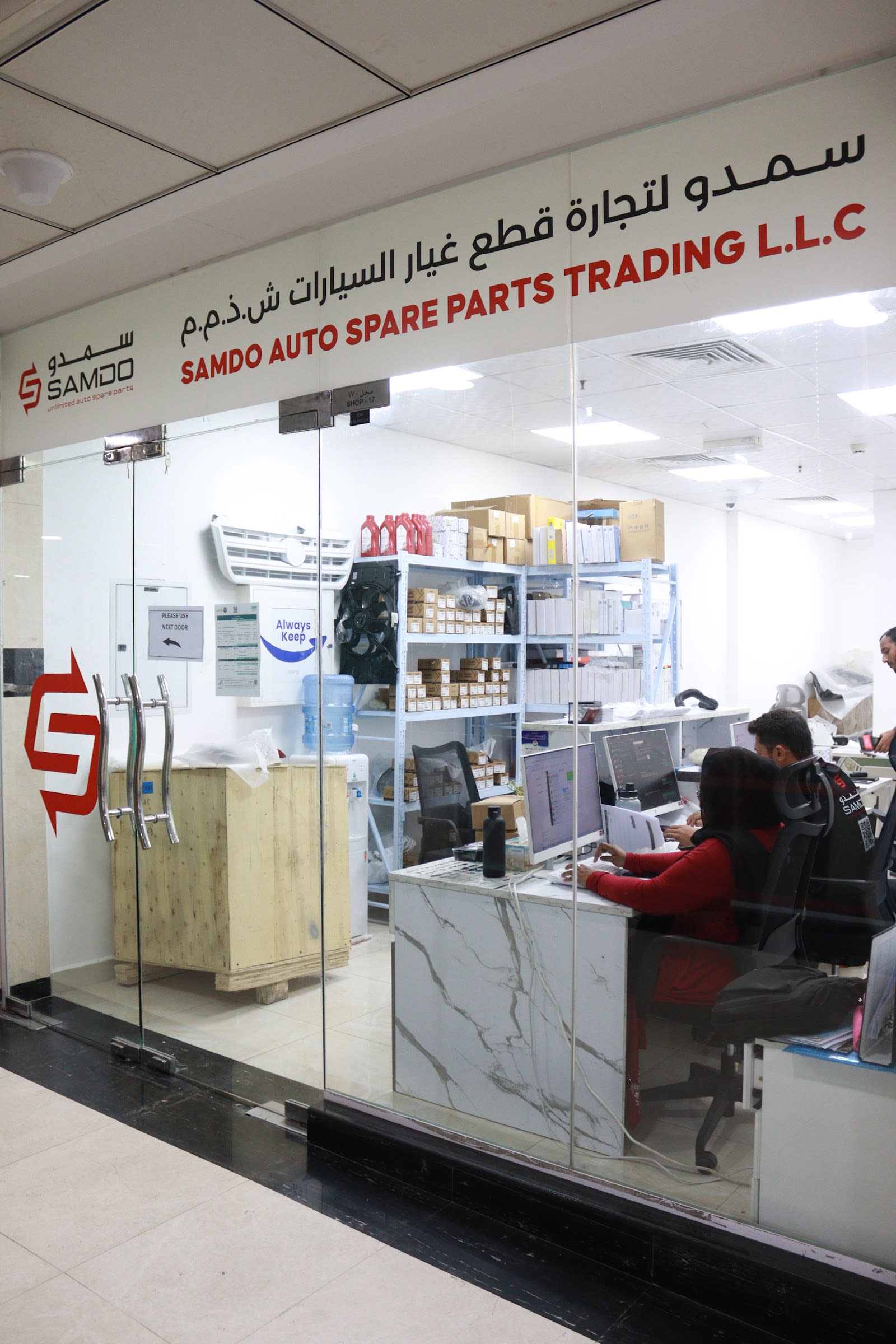 Top-Rated
Samdo Auto Spare Parts Trading LLC
Dubai · AL Asmawi Commercial Building 1 El - Shop 17 - Al Manama St - Ras Al Khor Industrial Area 2 - Dubai
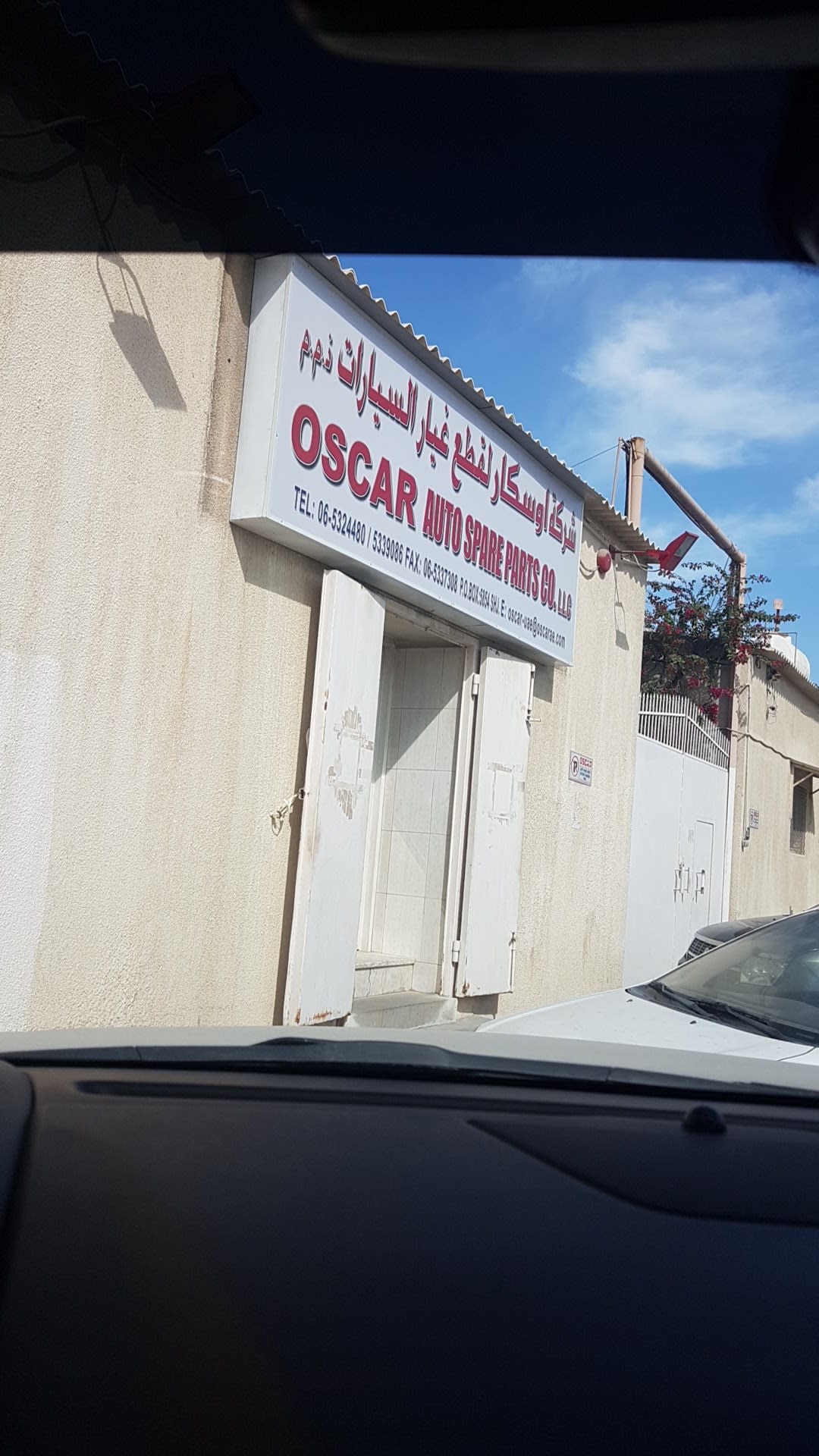 Top-Rated
Oscar Auto Spare Parts Co LLC SP
Sharjah · Building 20 - First Industrial St - beside Em-post Office - Industrial Area 2 - Industrial Area - Sharjah
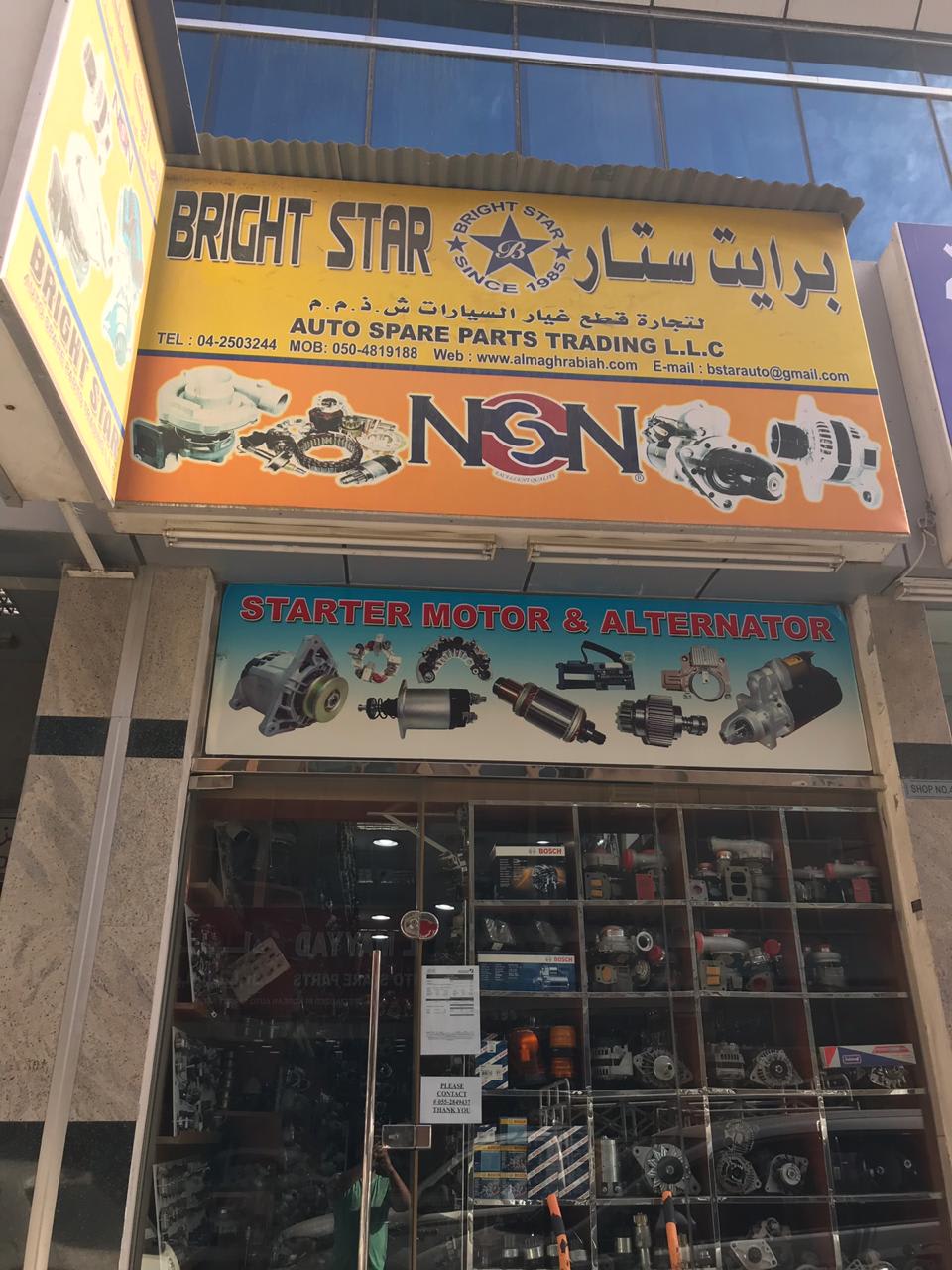 Top-Rated
BRIGHT STAR AUTO SPARE PARTS TRADING LLC
Shop # 4, Silver Island Building, 38 C Street, Near Fish Roundabout
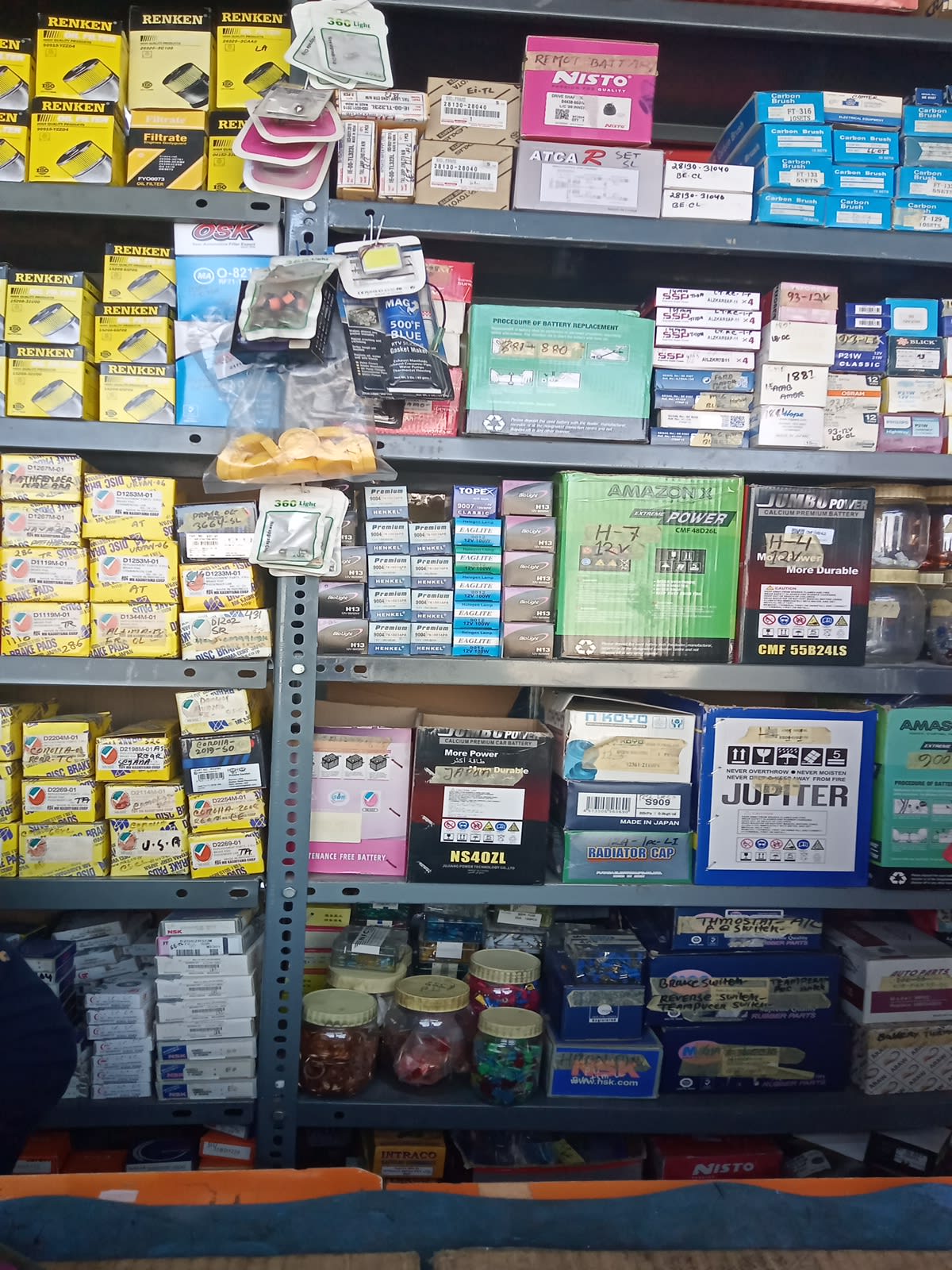 Top-Rated
Al Amani TVR Group
Dubai · Business Bay - Dubai
 Top-Rated
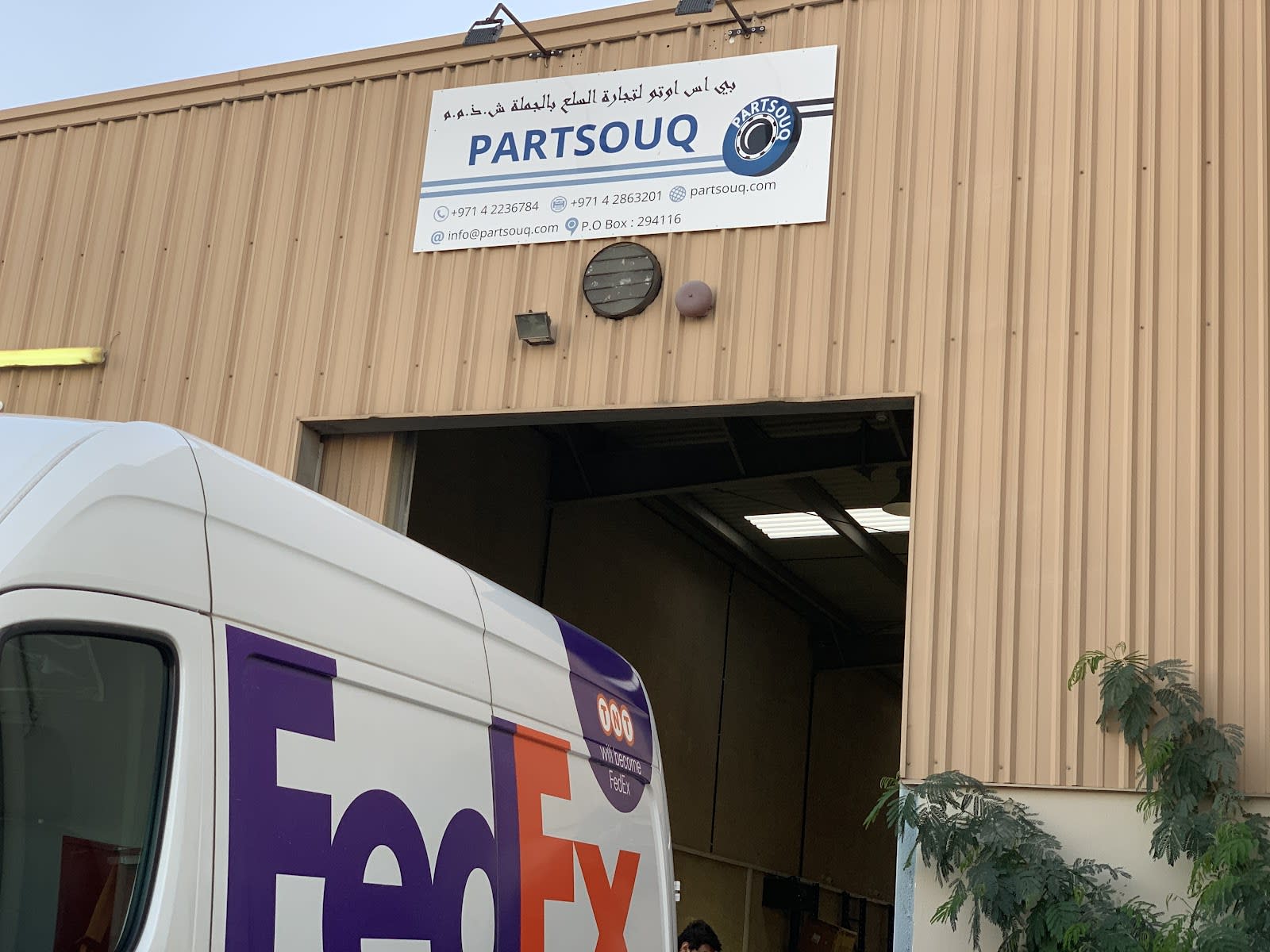
PARTSOUQ - PS AUTO GOODS WHOLESALERS L.L.C
Dubai · RAS AL KHOR 2, ST 7, Building 7, WH-11 - Dubai
 Top-Rated
Noor Din Ditta Auto Spare Parts Trading Branch-3
Sharjah · 8C56+QVF - Shop 1, 56th Street, Industrial Area 3 - Industrial Area 3 - Industrial Area - Sharjah
Where to actually buy this
Shops whose own website lists these parts, or whose stock we have recorded ourselves. Last checked July 2026. Not paid placement.
Stocks bumpers, fenders and side mirrors — aftermarket. It carries Depo, Casp, YTM and Dlaa and 1 more and delivers across all seven emirates.
4.2 on Google from 94 reviews
Stocks bumpers, fenders and side mirrors — aftermarket, new parts. It carries Depo, TYG, Double Horse and Viewmark and 4 more and delivers to Dubai, Sharjah and Abu Dhabi.
4.4 on Google from 85 reviews
- Awawdeh Auto Spare PartsSharjah
Stocks bumpers, fenders and body kits — genuine and aftermarket, both new and used. It carries Magneti marelli, Hella, Bosch and Valeo and 1 more and delivers.
4.4 on Google from 305 reviews
- WINWAY AUTO PARTSDubai
Stocks bumpers, side mirrors and auto glass — genuine OEM. It carries Mopar and delivers to Dubai, Abu Dhabi and Sharjah.
4.8 on Google from 34 reviews
- Speedway Auto Spare Parts Al AinAbu Dhabi
Stocks headlight assemblies and taillight assemblies — aftermarket. It carries B.G.F TAIWAN, DEPO, ERISTIC GASKET and MAXRAD and 5 more and delivers.
3.9 on Google from 8 reviews
Stocks headlight assemblies and taillight assemblies — aftermarket. It carries Prime, TYC, TYG and Gordon and 5 more and delivers.
4.5 on Google from 4 reviews
Listings are compiled from each business’s own public information. If you run one of these shops and want the entry corrected or removed, email easycarpartsteam@gmail.com.
Ask a human · free · no account
Rather not ring around?
Tell us the car and the part once — we'll send you the shops that actually stock it.
Free · usually a reply in minutes · no obligation
Still easier on a form? The request goes to the same matched UAE suppliers, free, with only the number of shops you choose able to contact you.
Open the request formKeep reading
Body parts — FAQs
- How much is a used bumper in the UAE?
- Typically AED 250 to 900 unpainted for common cars, against roughly AED 800 to 3,000 at the agency and AED 300 to 1,200 for quality aftermarket. A used bumper already in your factory colour code can skip painting entirely; otherwise budget AED 300 to 800 to paint a panel properly, more for pearls and three-stage colours. These are indicative trade ranges rather than dated quotes.
- Are aftermarket headlights any good?
- The established Taiwanese makers, Depo and TYC among them, are the trade standard here for halogen lamps on common cars: new, certified, and typically far below agency price. The difference between a reputable aftermarket lamp and an unbranded copy is beam pattern, sealing and plastic quality, none of which you can see on the shelf. For LED and adaptive units the calculation reverses, and a tested used genuine lamp usually gives better light than a copy at the same money, though it may need coding to the car.
- Can I buy a used airbag in the UAE?
- No, never. Airbags, seatbelt pretensioners, crash sensors and airbag control modules are single-use restraint components with unknown storage history that cannot be tested without being fired, and there is a documented global counterfeit trade in airbag modules. Reputable yards will not sell them used, and a yard that offers to is telling you something about the rest of its stock.
- How do I make sure a body part fits my car?
- Send your chassis number plus a photograph of the damaged part. Facelifts change bumpers, lamps and grilles partway through a generation, GCC-spec, US-spec and Japanese-import versions of the same model can carry different pressings, marker lamps and mounting, and trim changes bring parking-sensor, fog-lamp and camera apertures. Model name and year alone cannot resolve any of that; the chassis number pins the exact build.
- What is the cheapest way to fix minor accident damage in the UAE?
- Used genuine panels in your factory colour code, certified aftermarket lamps, and an independent body shop for fitting and paint. Comparing two or three suppliers on one request routinely halves an agency estimate. The saving is largest when the colour code matches, because that removes AED 300 to 800 of paint per panel, which is often bigger than the difference between part grades.
- Will my insurance let me use aftermarket or used body parts?
- It depends on the age of the car and on whether you are claiming. The UAE Unified Motor Vehicle Insurance Policy, issued under Insurance Authority Board of Directors Decision No. 25 of 2016, mandates agency repair only during the first year after initial registration, and legal commentary on the same policy describes non-original parts of equivalent grade as permitted beyond that. The two to three years of agency cover most policies advertise is a contractual benefit rather than the regulatory minimum. If you are paying cash rather than claiming, none of it binds you and the whole market is open.
- When is a car declared a total loss in the UAE?
- Under the Unified Motor Vehicle Insurance Policy, when repair costs exceed 50 per cent of the vehicle's value before the accident. Legal commentary on the same policy describes damage to the chassis or structural pillars requiring cutting or welding as a total loss regardless of the repair cost. On an older car with a modest market value the 50 per cent threshold arrives sooner than owners expect, which is also why the UAE has such deep used body-part stock.
- Where is my car's paint code?
- On the vehicle identification plate, usually in the driver's door jamb, and sometimes under the bonnet or in the boot. It is a short alphanumeric code. Give it with every parts request: it lets a yard offer a panel that already matches so you can skip paint, and it lets a painter quote accurately when paint is needed.
- Why does a panel in my exact colour code still not match?
- Because ultraviolet exposure fades paint unevenly. Bonnets, roofs and the upper surfaces of wings take far more sun than doors and lower panels, so a car that has spent several UAE summers outdoors is a different colour from its own factory code. A donor panel from an indoor-parked car will not match, and neither will a freshly sprayed one. The professional fix is blending, where the painter fades the new colour into the adjacent panels so the transition falls across a shoulder line rather than at a panel gap.
- Does replacing a bumper need sensor calibration?
- On a car with forward-facing radar, corner radars, ultrasonic parking sensors or cameras, it frequently does. Calibration is either static, using a target board at a measured distance on a level floor, or dynamic, driving a defined route while the system relearns, and both need equipment and time. Ask whether calibration is included before agreeing a quote, because it is the item most often missing from a cheap one, and a car driven away without it may have an assistance system aiming at the wrong place.
- What is behind a bumper cover, and how do I know if it is damaged?
- A steel or aluminium reinforcement bar, then crash boxes designed to deform once and be replaced, then the radiator support and the chassis rails. The visible signs that an impact went past the cover are uneven panel gaps, a bonnet that no longer closes flush, headlamps sitting at different heights, bent radiator or condenser fins visible through the grille, and coolant staining. Any of those means a bumper-only quote will be revised upward once the car is on a lift.
- Are counterfeit car parts a problem in the UAE?
- Enforcement reporting suggests a real trade. Press reports described more than 2.5 million counterfeit auto parts worth around AED 7.46 million seized in roughly 20 raids in 2024, and around AED 10.5 million of fake Toyota parts in 2020. Those are press-reported enforcement figures rather than an official register. Counterfeiting concentrates on high-volume branded consumables such as filters and brake pads rather than on body panels, and the realistic body-parts risk is uncertified manufacture rather than counterfeiting: a bad beam pattern, a poor fit, a mirror glass that debonds.
- What is ECAS certification and does it apply to body parts?
- The Emirates Conformity Assessment Scheme is the UAE's product conformity scheme, and mandatory certification, registration and marking for motor vehicle spare parts has applied since 1 April 2019. It was administered by ESMA, which merged into the Ministry of Industry and Advanced Technology in 2020. A legitimate new aftermarket part sold here is expected to have certification behind it, and a supplier who can name the certification their stock holds is a better supplier than one who cannot.
- Which body parts are safe to buy used?
- Doors, bonnets, tailgates, wings, bumper covers, reinforcement bars, crash boxes, radiator supports, mirrors, lamps, grilles, glass other than windscreens, interior trim, seats and body control modules. None of those wear out in normal use, so a five-year-old undamaged one is functionally the same as a new one. Never used: airbags, seatbelt pretensioners, crash sensors and airbag control modules, and replace rather than reuse seatbelt assemblies from a serious accident.
- Why do headlights go cloudy so fast in the UAE?
- Ultraviolet exposure degrades the polycarbonate lens and the protective coating over it, and this climate delivers a great deal of it. Restoration kits polish away the damage and remove what is left of the coating with it, which is why a restored lamp often hazes again faster than it did originally. That is the mechanism rather than a measured local rate, and it is the honest reason a better-made lamp is worth the difference.
- What ages a car body in the UAE if it is not rust?
- Ultraviolet and heat acting on the finishes. Clearcoat delamination on horizontal surfaces, which cannot be polished out and needs the panel refinishing. Unpainted plastic on bumpers, mirror caps and arch liners chalking from black to grey. Door and boot seals hardening, which shows as wind noise and water ingress. And the double-sided adhesive behind trim strips and mouldings releasing in heat. Coastal humidity and salt do drive corrosion where water sits, but the finishes go first.
- Should I buy a used or an aftermarket wing mirror?
- It depends on what is inside it. A plain powered mirror is a straightforward choice and either route works. A mirror carrying a blind-spot warning module, a surround-view camera, a puddle lamp, an indicator repeater or memory positioning is a different part, and on those a used genuine unit is usually the safer buy and may still need coding. Check whether the glass is heated and whether it is auto-dimming, because both change the part number and neither is visible in a photograph of a broken mirror.
- What should I send when requesting a body-part quote?
- Your chassis number, your paint code from the vehicle identification plate, a straight-on photograph of the damage, a low-angle photograph showing the panel gaps, and a daylight photograph of the whole car so the yard can judge fade. Say whether you want used genuine, aftermarket or the cheapest that fits, and say whether you are claiming or paying yourself. Then ask two questions back: is the part painted or unpainted, and does anything on it need calibration or coding.
Ask a human · free · no account
Still not the question you had?
Ask it directly — a person reads every message.
Free · usually a reply in minutes · no obligation