Motul engine oil in the UAE
Engine oil, transmission fluid, brake fluid and coolant
Motul is a trademark of its owner. We are not an authorised Motul dealer or distributor, and nothing here is endorsed by them. The name and mark are shown to say which parts we quote and source.
The quick answer
Motul is a French lubricant maker that describes itself as a multi-generation family business and names no parent company, which makes it unusual among the oil brands sold in the UAE. Its own account of itself starts in 1853 with Swan & Finch, a New York oil lubricant manufacturer that was later bought by a French importer, and the Motul name dates from 1957. The three ranges the company currently publishes are 300V for competition, Specific for cars whose manufacturers demand a particular approval, and NGEN, introduced in 2023 on re-refined base oils. The four-tier ladder people quote from forums is not on this page, and the reason is given below.
Ask a human · free · no account
Looking for genuine Motul?
We'll only send you shops that actually stock it.
Free · usually a reply in minutes · no obligation
Key facts
- Motul describes itself as a multi-generation family business and names no parent company, so it is not part of an oil major, a chemical group or a state producer.
- The business traces to 1853 and Swan & Finch, a New York manufacturer of oil lubricants, which was later acquired by the French importer Supra Penn. Supra Penn became Motul in 1957.
- Motul says it produced the first multigrade lubricant in 1953, the first semi-synthetic engine oil in 1966 and the first fully synthetic multigrade in 1971. Those are the company's own claims about its own history.
- 300V is the competition line. Motul rebuilt it in 2011 around a technology it calls ESTER Core and describes as inspired by aeronautics.
- Specific is the range Motul created in 2002 expressly to meet manufacturer approvals, which makes it the range a modern car with a strict handbook is pointed at.
- NGEN, introduced in 2023, is Motul's line built on re-refined base oils.
- The only car engine oils that rendered on Motul's own UAE storefront were 300V variants. Whether that is the whole local catalogue or a filtered view is not something the page tells you.
- Motul's public relationships with car makers are race team sponsorships. It publishes no list of vehicles that leave a factory filled with its oil.
Rather fill in a form? Send the same request here and matched UAE suppliers reply on WhatsApp either way.
Open the request formMotul — the range
| Range | How it is built | What it is for |
|---|---|---|
| 300V | Competition oil built on what Motul calls ESTER Core, a technology it describes as inspired by aeronautics | Racing and competition use, including road racing and off-road variants |
| Specific | A range created in 2002 for the express purpose of meeting manufacturer approvals | Modern cars whose handbooks demand a particular approval rather than a general grade |
| NGEN | Introduced in 2023, built on re-refined base oils under a technology Motul calls NGEN Core | Buyers choosing on environmental impact where the specification still permits it |
| Classic Cars | A named product category on Motul's own UAE storefront | Older cars, whose lubricant needs are not served by a modern low-viscosity oil |
Source: Motul — who we are, company origins and the innovation timeline, read 2026-09-03; Motul — technologies, including NGEN Core and re-refined base oils, read 2026-09-03; Motul — the United Arab Emirates site and its product categories, read 2026-09-03
Which one fits your car
| If this is your car | Use | Why |
|---|---|---|
| Track day, race weekend or a competition engine | 300V | This is what the line is for. It is also the only car engine oil family that rendered on Motul's own UAE storefront. |
| Modern car whose handbook names a manufacturer approval | Specific | The range exists for this case. Motul does not publish which approvals sit on which pack, so read the pack. |
| You want the lower-impact option and the specification allows it | NGEN | Re-refined base oils. The specification your car needs still decides whether this is an option at all. |
| Older or classic car | Classic Cars | A category Motul publishes for this market. Few lubricant brands do, and an old engine is a genuinely different problem. |
The range descriptions are the manufacturer’s. Matching them to a car is our guidance, and it is a starting point rather than a fitment check — the part number is what actually decides. Send us the make, model and year and we will confirm it.
Original equipment
No vehicle manufacturer is named here as fitting Motul at the factory, and on this brand the temptation runs through motorsport rather than through marketing copy. Motul's visible relationships with car makers are race team sponsorships and race series supply, and those are commercial agreements about a competition programme. A team running your marque's cars on a brand of oil is not evidence that the road car of that marque left its factory filled with it, and treating the two as the same claim is the easiest false sentence available on this page. The most telling thing Motul publishes on the subject is the existence of the Specific range itself, created in 2002 for manufacturer approvals, which is a company organising itself around the fact that approvals are earned per specification rather than granted per badge.
Where it is made
Nothing is listed, because nothing could be sourced. Motul's own facilities page and its extended history page both return errors, and the company page that does render carries no headquarters address, no plant list and no research site. What is sourced is corporate rather than industrial: the business became Motul in 1957 through a French company, and it is French today. Where any particular bottle was blended is not something Motul publishes and not something we are prepared to infer from the country the company is registered in, because a lubricant group's registered home and its filling lines routinely sit in different places.
Motul in the UAE
Motul runs a United Arab Emirates storefront of its own with a dealer locator on it, so the brand has a deliberate local presence rather than arriving here incidentally. What that site does not do, on any page that rendered for us, is name a UAE importer, distributor, office or address. So there is no entity to name and we are not going to promote a shop into that role: a trading house listing Motul in its stock is a shop that stocks Motul, which is a different and much weaker statement than being the brand's appointed distributor. Our own supplier records find the brand named by a single UAE chain, which is too thin a base for any claim about how easy it is to find.
A French company that started in New York
Motul's own account of where it came from is more interesting than the usual founding story, and it is worth getting right because almost every retelling of it drops half. The lineage starts in 1853 with Swan & Finch, a New York manufacturer of oil lubricants. Swan & Finch was later acquired by Supra Penn, a French importer and distributor, and it was Supra Penn that became Motul in 1957.
So the honest short version is that Motul is a French company with an American ancestor, and the name is younger than the business by about a century. That is a different thing from a French company founded in 1853, which is how it is usually compressed, and different again from an American brand that moved, which is how it is sometimes told the other way round.
The company puts itself in four continents and around a hundred and sixty countries today. It also publishes a run of firsts about itself: the first multigrade lubricant in 1953, the first semi-synthetic engine oil in 1966, the first fully synthetic multigrade in 1971. Every one of those is Motul describing Motul. They are not disputed here and they are not endorsed either; they are stated as the company's own claims, because an industry first is precisely the sort of assertion that gets repeated until it becomes background fact.
Independent, in a market of majors and state producers
The lubricant aisle in a UAE parts shop is mostly owned by very large organisations. Some of those names belong to integrated energy companies, some belong to national oil producers, and several have changed owner within the last few years in ways their packaging does not mention. Motul is the exception on the shelf: it describes itself as a multi-generation family business and names no parent company anywhere we could read.
That is worth a paragraph rather than a footnote, because it is one of the few structural facts about an oil brand that a buyer can actually use. It does not make the oil better and nothing on this page suggests it does. What it does is change what the brand is optimising for and how quickly it can change direction, and it means the answer to who owns Motul does not carry a date attached to a pending transaction the way several of its competitors' answers currently do.
It is also the reason this page has no ownership section of the kind you might expect. There is no holding company to trace, no acquisition to date and no share transfer waiting on a regulator. The company says it is family-run, it names no parent, and that is the whole of the corporate story.
The ladder everyone quotes, and why it is not on this page
Ask anybody who has bought Motul what the range looks like and you will get four numbers in order: 300V at the top, then 8100, then 6100, then 4100, with an explanation of which base stocks sit under each. It is the single most repeated piece of information about this brand on the internet. It is not on this page, and that is a decision rather than an oversight.
Every source we could reach for it was a forum thread or a retailer's product page. Motul's own product and technology pages are built in a way that returns navigation rather than content to a plain fetch, so we never read the ladder on a page Motul controls, and one of the technical terms that is always attached to it did not appear on a single Motul page we did read. That combination is exactly what a well-established falsehood looks like from the inside, and it is also exactly what a perfectly true fact looks like when the site hosting it will not load. We cannot tell which, and a page that publishes it anyway has stopped distinguishing between the two.
This matters more on oil than it would on most parts. A tier ladder is not trivia; it is a purchasing instruction. Somebody reads that 6100 sits a step below 8100, decides a step down is affordable, and buys a specification their engine was not built for. If the ladder we published turned out to be a forum's paraphrase of a catalogue from another market and another decade, the person who followed it would have been misled by us, in a way that costs real money, on the strength of a claim we never checked.
The practical answer is unglamorous and it works regardless of which ladder is right. The number on the front of a Motul pack is a line name. What decides whether the oil belongs in your engine is the viscosity grade and the specification, both printed on the back, and neither of those changes according to which tier somebody on a forum thinks the front number represents.
What Motul does publish, and why each range exists
Three current ranges are sourced from Motul's own pages, and each of them exists for a stated reason, which is more useful than a ranking anyway.
300V is the competition line. Motul first produced it in 1971 as what it says was the first fully synthetic multigrade, and rebuilt it in 2011 around a technology it calls ESTER Core, describing the inspiration as aeronautical. We are not going to expand on what that technology is beyond the name, because Motul's own technology page rendered too thin to support an explanation and an invented one would be worse than none. What can be said with confidence is what the line is for: competition, which is a use case with a race weekend at one end of it rather than a service interval.
Specific is the range created in 2002, and the reason it exists is the most quietly informative thing on the whole brand. Motul built a range whose entire purpose was to meet manufacturer approvals. That is a company responding to the fact that modern engines stopped being satisfied by a viscosity grade and started demanding a named specification, and it tells you where to look if you drive something recent with a strict handbook. What Motul does not publish, anywhere we could read, is which approvals each Specific product actually carries, so the range points you at the right shelf and the pack has to do the rest.
NGEN arrived in 2023 and is built on re-refined base oils under a technology Motul calls NGEN Core. It is the newest of the three and the one whose selling point is environmental rather than mechanical. As with everything else here, whether it is an option for your car is decided by the specification, not by the intention.
A race sponsorship is not a factory fitment
Motul is heavily present in motorsport, and its own regional site carries racing partnerships prominently. That visibility produces one specific misreading that is worth heading off: seeing a marque's race team running Motul and concluding that the road cars of that marque leave the factory on it.
They are unrelated claims. A race programme is a commercial agreement in which a lubricant company pays for association and supplies a competition product to a team, usually a product that is not sold for road use at all. A factory fill is a supply contract into a production line, and it is the sort of thing a manufacturer names in its own service documentation. One does not imply the other in either direction, and there are plenty of examples in this industry of a brand that races with a marque it does not fill for and a brand that fills for a marque it never races with.
So there is no list of car makers on this page. If a shop tells you your car was built on Motul, the question that settles it is not which team it sponsors. It is whether the specification your manufacturer publishes for your engine appears on the back of the pack in front of you.
The UAE storefront shows racing oil, and we cannot tell you why
Motul runs a United Arab Emirates site of its own, and its product listing groups the local catalogue into categories including competition oil, engine lubricants, transmission fluids, brake fluids, coolants and antifreezes, additives, greases and classic cars. That is a broad catalogue on paper.
When we actually read the car engine oil listing, every product that rendered was a 300V variant. Road racing grades, off-road grades, factory line grades, all of them competition products.
There are two explanations and we cannot distinguish between them. Either the UAE catalogue really is led by 300V, which would be unusual but not impossible in a market with a large modified and enthusiast scene, or the page we read was filtered in some way we could not see. We are reporting the observation rather than the conclusion, because the conclusion is where a page like this would ordinarily invent something.
What follows from it practically is a caution rather than a fact. If you have read about a Motul product on a forum and you are assuming it is on a shelf in Dubai, check before you drive. The brand's local presence is real and its local product listing is not obviously the same as its global one.
Nobody publishes where Motul is made, and that includes Motul
The pages that would carry a plant list are not there. Motul's facilities page and its long-form history page both return errors, and the company page that does load carries the corporate story with no address, no factory and no research site attached to it.
We know the general shape from the founding chain: a French company today, formed when Supra Penn took the Motul name in 1957. We do not know where the blending happens, we do not know how many sites there are, and we are not naming a French city on the strength of it being the sort of thing everybody assumes.
That refusal costs almost nothing in practice, because country of origin on a lubricant is a much weaker signal than people expect. Base oils are traded internationally, blending is licensed and regionalised, and the same brand routinely fills the same specification on more than one continent. What you can check is on the pack in your hand, and it is worth more than any guess about a factory.
The classic car category, and who it is actually for
One of the categories Motul publishes for this market is Classic Cars, and it is unusual enough to be worth ending on. Most lubricant brands quietly drop older applications, because the volume sits in modern low-viscosity oils meeting recent specifications and an old engine is a small and awkward market.
It matters here more than it would in most places. The UAE has a genuine classic and restoration scene, and it also has a large population of older cars still in daily use that were never designed around the oils sold for new ones. An engine built decades ago has different clearances, different seal materials and a different tolerance for a thin oil than an engine designed this decade, and pouring the newest specification into it because newer sounds better is a real way to create a leak or a consumption problem that was not there before.
We are not publishing which products sit in that category or what they are specified for, because the listing did not give us that. What the category does is tell you the conversation exists. If you are running something old, the useful thing to say at the counter is that the car is old, rather than asking for the best oil they have.
Shops for engine oil in the UAE
These shops are here because their recorded stock covers at least one of engine oil, transmission fluid, gear oil, brake fluid and coolant — not because we have confirmed that each one carries Motul. We hold no reliable shop-by-shop record of which brands are on which shelf, so ring or message before you travel.
Where to actually buy this
Shops whose own website lists these parts, or whose stock we have recorded ourselves. Last checked July 2026. Not paid placement.
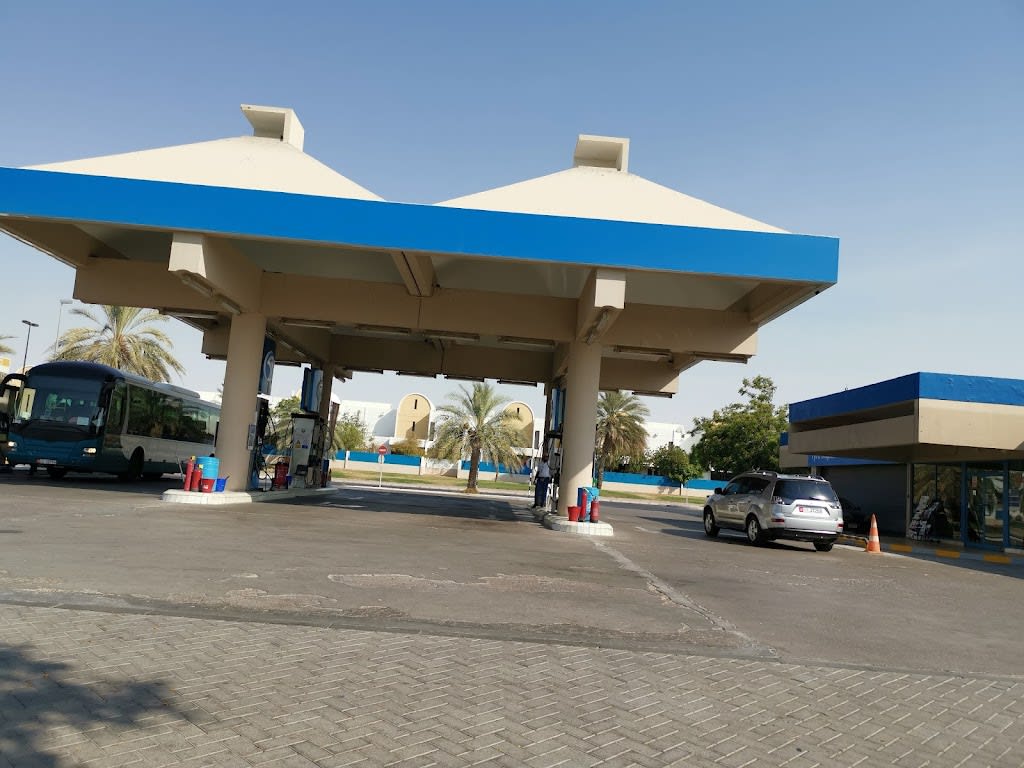
- ADNOC Service StationAbu Dhabi
Stocks engine oil and coolant. It carries Adnoc and fits what it sells.
4.1 on Google from 389 reviews
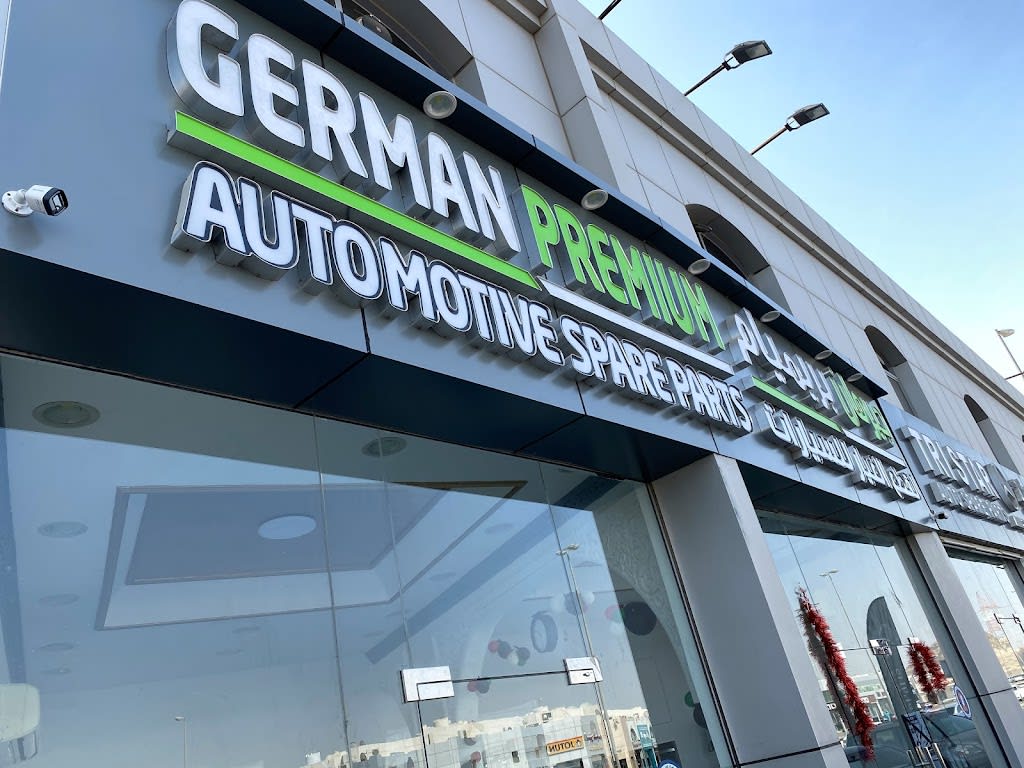
- GERMAN PREMIUM jyrmn brymym lqTaaAbu Dhabi
Stocks engine oil — new parts. It delivers.
4.5 on Google from 20 reviews
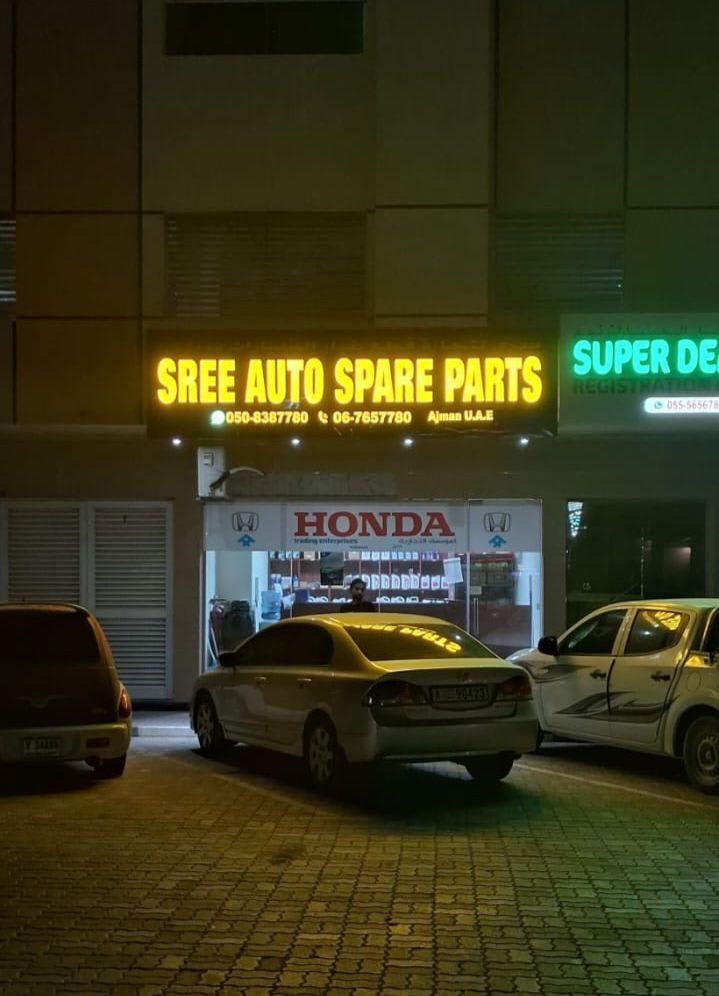
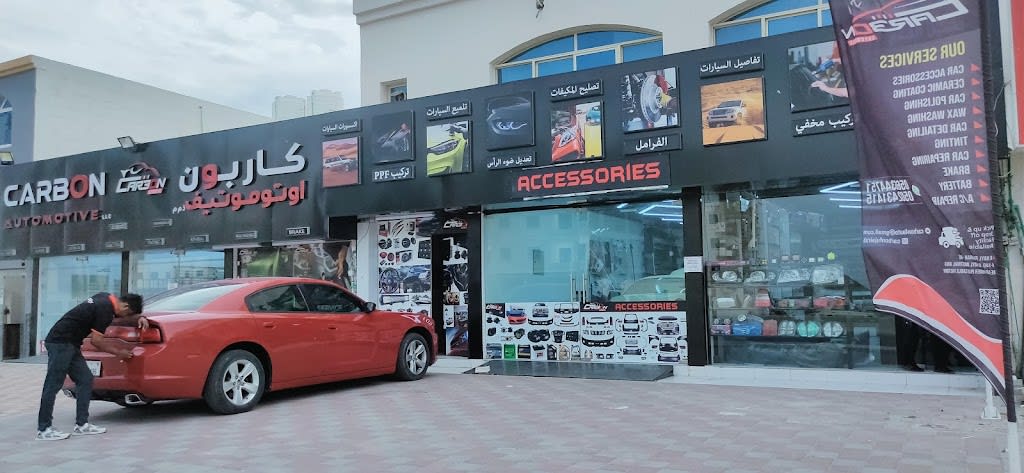
Stocks engine oil. It fits what it sells.
4.9 on Google from 127 reviews

Listings are compiled from each business’s own public information. If you run one of these shops and want the entry corrected or removed, email easycarpartsteam@gmail.com.
Still easier on a form? The request goes to the same matched UAE suppliers, free, with only the number of shops you choose able to contact you.
Open the request formKeep reading
Motul — common questions
- Where is Motul from?
- It is a French company, and its own account of its origins begins somewhere else entirely. The lineage starts in 1853 with Swan & Finch, a New York manufacturer of oil lubricants, which was later acquired by the French importer and distributor Supra Penn. Supra Penn took the Motul name in 1957, so the company is French and the business it grew out of was American.
- Who owns Motul?
- Motul describes itself as a multi-generation family business and names no parent company on anything we could read. That makes it unusual on a UAE shelf, where most of the surrounding names belong to integrated energy companies or national producers, and it means there is no acquisition to date and no pending ownership change attached to the answer.
- What is the difference between Motul 300V and 8100?
- This page does not answer it, and the reason is the most useful thing we can tell you. The four-tier ladder people quote for Motul, and the base-oil explanation attached to it, could not be sourced from any page Motul controls: its product and technology pages return navigation rather than content to us, and one of the technical terms always cited with that ladder never appeared on a Motul page we read. We would be repeating a forum, and a tier ladder is a purchasing instruction rather than trivia. What is sourced is that 300V is the competition line. Choose by the grade and the specification on the back of the pack, which is what actually decides fitness either way.
- What is ESTER Core?
- It is the name Motul gives to the technology behind the 300V line as rebuilt in 2011, and the company describes the inspiration as aeronautical. We are deliberately not expanding on it further. Motul's own technology page rendered too thin to support an explanation, and an explanation written from general chemistry rather than from the manufacturer would be our words wearing their badge.
- What is Motul Specific for?
- Cars whose manufacturers require a named approval rather than just a viscosity grade. Motul created the range in 2002 for exactly that purpose, which is a fairly direct statement about where a modern car with a strict handbook should be looking. Motul does not publish which approvals each product in the range carries, so the range narrows the shelf and the code on the pack has to finish the job.
- What is Motul NGEN?
- A line introduced in 2023 and built on re-refined base oils, under a technology Motul calls NGEN Core. It is the range whose argument is environmental rather than mechanical. Whether it is a candidate for your car is still decided by whether it meets the specification your engine needs.
- Which car makers fit Motul at the factory?
- We name none, because Motul publishes none. Its visible relationships with car makers are race team sponsorships, and a sponsorship is a commercial agreement about a competition programme rather than evidence that a road car left a production line filled with the same brand. If somebody tells you your car was built on Motul, ask to see your manufacturer's own specification against the code on the pack.
- Is Motul only for racing?
- No, although its UAE listing makes it look that way. The company publishes a broad local catalogue covering engine lubricants, transmission fluids, brake fluids, coolants, additives, greases and classic cars, alongside the competition oil. What we observed is narrower than that: every car engine oil that rendered on the local product listing was a 300V competition variant. We report that as an observation and cannot tell you whether the catalogue really is racing-led here or whether the page was filtered.
- Where is Motul oil made?
- We could not source it. Motul's facilities page and its long-form history page both return errors, and the page that does load carries no address, no plant list and no research site. The company is French and the name dates from 1957, and that is as far as the sourced trail goes. We are not naming a city on the strength of general assumption.
- Does Motul have a distributor in the UAE?
- Motul runs its own UAE site with a dealer locator, so the local presence is deliberate. No importer, distributor, office or address is named on any page that rendered for us, so this page names none. A trading house that stocks the brand is a shop that stocks it, which is not the same thing as being appointed by the manufacturer.
- Does Motul sell anything besides engine oil?
- Yes. Its UAE product listing covers transmission fluids, brake fluids, coolants and antifreezes, additives, hydraulic fluids, greases, maintenance and care products, and a classic cars category, alongside the engine oil and the 300V competition line. The classic car category is the unusual one, since most brands quietly stop serving older engines.
Ask a human · free · no account
Not sure the Motul part you found is the real one?
Send us the number on the box and the car — we'll tell you.
Free · usually a reply in minutes · no obligation
Where these facts came from
Checked against the manufacturer’s own published material on the dates below. Anything we could not source is named as unsourced on this page rather than left out.
- Motul — who we are, company origins and the innovation timeline — read 2026-09-03
- Motul — the United Arab Emirates site and its product categories — read 2026-09-03
- Motul — United Arab Emirates product listing, car engine oils as they rendered — read 2026-09-03
- Motul — technologies, including NGEN Core and re-refined base oils — read 2026-09-03