Nisshinbo brake pads in the UAE
Brake friction materials — disc pads and brake linings
Nisshinbo is a trademark of its owner. We are not an authorised Nisshinbo dealer or distributor, and nothing here is endorsed by them. The name and mark are shown to say which parts we quote and source.
The quick answer
Nisshinbo Brake Inc. is the braking arm of Nisshinbo Holdings Inc., a Japanese group established in 1907 that began making friction material in 1946. It is a friction specialist in the narrow sense: it makes disc pads and brake linings, and it does not make discs, calipers or hydraulics. It is a genuine original-equipment friction supplier rather than an aftermarket-only label, but it names none of the manufacturers it supplies. The other thing worth knowing is historical and still widely reported wrongly: Nisshinbo owned TMD Friction, and with it Textar, Pagid, Mintex and Bendix, from 2011 until it sold the business at the end of 2023.
Ask a human · free · no account
Looking for genuine Nisshinbo?
We'll only send you shops that actually stock it.
Free · usually a reply in minutes · no obligation
Key facts
- Nisshinbo Brake Inc. is part of Nisshinbo Holdings Inc., a Japanese group established in 1907. The group began producing friction material in 1946.
- Nisshinbo makes friction only: disc pads and brake linings. Brake discs, calipers, master cylinders and hoses are not part of the catalogue.
- Nisshinbo says it supplies friction products from sites in five countries. It names group companies in the United States, Korea and Thailand alongside Japan.
- Nisshinbo is an original-equipment friction supplier in its own right, and it publishes no list of which manufacturers it supplies.
- Nisshinbo Holdings owned TMD Friction, and therefore Textar, Pagid, Mintex, Bendix, Don and Cobreq, from September 2011 until it sold the business to AEQUITA in early December 2023.
- Sources that describe TMD Friction as a Nisshinbo subsidiary today are out of date by more than two years.
- Nisshinbo publishes copper-regulation-compliant pads, but no aftermarket product line names that we could read.
Rather fill in a form? Send the same request here and matched UAE suppliers reply on WhatsApp either way.
Open the request formNisshinbo — the range
| Range | How it is built | What it is for |
|---|---|---|
| Disc pads | Friction material formed onto a backing plate | Disc-braked axles, from compact cars through ordinary passenger cars to sports cars |
| Brake linings | Friction material for the shoes inside a brake drum | Drum-braked axles, including large trucks and buses |
| Copper-compliant friction | Formulations made to meet restrictions on copper content in friction material | Vehicles whose original pad specification restricts copper |
| Industrial friction | Friction material for brake devices outside the vehicle catalogue | Machinery and equipment rather than road vehicles |
Source: Nisshinbo Holdings — the automobile brakes business, friction from 1946, read 2026-09-03; Nisshinbo Brake Inc. — corporate site, group companies and copper compliance, read 2026-09-03
Which one fits your car
| If this is your car | Use | Why |
|---|---|---|
| Ordinary passenger car with discs on both axles | Disc pads | The core of the catalogue. Front and rear pads are separate part numbers. |
| Compact car or older vehicle running drums on the rear | Brake linings | Linings go on shoes inside a drum. They are not pads and do not cross-reference to them. |
| Large truck or bus | Brake linings | Nisshinbo names heavy vehicles among the brake devices its friction goes into. |
| Sports car or a car driven harder than the average | Disc pads | Nisshinbo names sports cars in the same product family as ordinary cars, not a separate one. |
| The original pad was specified with restricted copper content | Copper-compliant friction | Nisshinbo publishes compliant formulations. Match the specification, not the appearance. |
The range descriptions are the manufacturer’s. Matching them to a car is our guidance, and it is a starting point rather than a fitment check — the part number is what actually decides. Send us the make, model and year and we will confirm it.
Original equipment
We name no OE contract for Nisshinbo, and the shape of that refusal is different from the usual one. Nisshinbo is not a brand pretending to be a manufacturer: it genuinely produces friction material for vehicle assembly lines, it describes itself as a global brake supplier and it says its products are used in brake devices for everything from compact cars to large trucks and buses. What it never does is name a single customer. The best-known claim in circulation, that Nisshinbo has been Mazda's original-equipment brake supplier for over half a century, appears in distributor copy and trade write-ups and in nothing Nisshinbo publishes. If which factory fitted your car matters, that question is answered by the vehicle manufacturer's own catalogue and not by a friction brand's badge.
Where it is made
Japan
The home of the business. Nisshinbo Holdings was established in 1907 and the group started producing friction material in 1946, which is where the brake business comes from.
Source: Nisshinbo Holdings — the automobile brakes business, friction from 1946, read 2026-09-03
United States
Nisshinbo names Nisshinbo Automotive Manufacturing Inc. as its group company in the United States.
Source: Nisshinbo Brake Inc. — corporate site, group companies and copper compliance, read 2026-09-03
South Korea
Nisshinbo names Saeron Automotive Corporation among its group companies in Asia.
Source: Nisshinbo Brake Inc. — corporate site, group companies and copper compliance, read 2026-09-03
Thailand
Nisshinbo names Nisshinbo Somboon Automotive Co., Ltd. among its group companies in Asia.
Source: Nisshinbo Brake Inc. — corporate site, group companies and copper compliance, read 2026-09-03
Nisshinbo says it supplies friction products from sites in five countries and names group companies covering four of them, counting Japan. The fifth is not named. Nor is there any published mapping from an article number to the plant that produced it, so a box carrying this brand will not tell you which of the five it came out of.
Nisshinbo in the UAE
Nisshinbo names no UAE company, no Gulf office and no regional distributor anywhere we could read. A Dubai trading business does advertise itself as the source for Nisshinbo in this region. That is the business describing itself, which is not verification of anything, and naming it here would hand an unchecked authorisation claim the weight of our page. So the honest position is the plain one: we hold no manufacturer-published route into this market for this brand, that is a limit of what Nisshinbo publishes rather than a statement about whether you can buy it here, and any shop making the claim should be asked to show it to you on the manufacturer's paper.
A friction company, and nothing else on that corner
The single most useful thing to know about this brand before you go shopping is how narrow it is. Nisshinbo makes brake friction. That means disc pads, which are the friction material formed onto a backing plate and squeezed against a disc, and brake linings, which are the material riveted or bonded to a curved shoe that presses outwards inside a drum. It does not make brake discs. It does not make calipers, master cylinders, hoses or fluid.
That matters at the counter in a way most brand facts do not. If you have decided you want Nisshinbo on the car, you have decided about roughly a third of the braking parts you are likely to be replacing, and someone else is supplying the rest. A shop offering you a full Nisshinbo brake job is either mixing brands without saying so or is selling you something under a name that does not make it.
The scope is also why comparing Nisshinbo with a full braking brand is a category error rather than a fair fight. Nisshinbo's own description of itself is a friction materials producer whose output is used in brake devices for compact cars, ordinary passenger cars, sports cars, large trucks and buses. It is being exactly what it says it is: the wearing part, at scale, across a very wide range of vehicle weights.
The ownership fact almost every other page still gets wrong
Search for Nisshinbo and brakes and a good proportion of what comes back will tell you, in the present tense, that TMD Friction is a subsidiary of Nisshinbo Holdings. That was true. It stopped being true in early December 2023.
The sequence is worth having straight, because it explains why so much of the writing about European brake brands is quietly stale. Nisshinbo Holdings bought TMD Friction in September 2011, and with it a portfolio of European friction brands: Textar, Pagid, Mintex, Bendix, Don and Cobreq. It held that business for twelve years. In August 2023 the sale was announced, and in early December 2023 TMD Friction passed to AEQUITA, a privately owned industrial group headquartered in Munich, which is who owns those brands today.
So a UAE buyer comparing Nisshinbo against Textar or Bendix in 2026 is comparing two unrelated companies, not a parent against its own subsidiary. Anything written before 2024, and a great deal written since, will imply otherwise. The Nisshinbo brand itself was listed among TMD's brands in the 2023 announcement and does not appear on TMD's aftermarket line-up today, which is consistent with the badge having gone back to the seller. Consistent with is not the same as proven, and we could not read a statement from either side confirming who operates the Nisshinbo aftermarket brand in this region now.
Trusted by the world's automakers, and not one of them named
Nisshinbo's own headline about its brake business is that it is trusted by the world's automakers, and it describes itself as a global brake supplier whose friction goes into brake devices across the vehicle weight range. There is no reason to doubt any of that. Producing friction material at original-equipment volumes across five countries is not something a company does by selling to parts counters.
And then it stops. No marque, no model, no programme, no year. We looked on the holdings site and on the brake company's own site and found no customer named anywhere.
That is a different situation from a brand with nothing to claim, and the difference is worth being clear about rather than glossing. A pure aftermarket label that has never sold a part to a factory and a genuine original-equipment supplier that declines to name its customers will both give you an empty list. Nisshinbo is the second kind. What it will not give you is a way of knowing whether your car is one of the ones it supplies, and neither, in honesty, will anyone else who is not reading from the vehicle manufacturer's own catalogue.
Why there are no Nisshinbo product line names on this page
Most brake brands sell you a ladder. There is an entry line, a mid line and a premium line, each with a name, and the names do a lot of work in a shop because they let a counter and a customer talk about a part without either of them looking anything up.
This page has none, and the reason is simply that we could not read them. The Nisshinbo brake company's own website renders as an empty shell to everything we tried, including its own legal imprint page, and no aftermarket line name was obtainable from any Nisshinbo property. The table on this page is therefore built from the product families Nisshinbo Holdings does publish on a page that loads: disc pads, brake linings, copper-compliant friction formulations, and friction for industrial brake devices.
We could have filled that table from a retailer's listing in about four minutes, and it would have looked better and been worth less. A line name lifted off a seller and printed under a manufacturer's heading is an invented fact wearing a manufacturer's badge, and once it is on a page it gets quoted back at counters by people who assume we checked. If someone hands you a Nisshinbo box with a line name on it, that name is real; it is just not one we can source, so we are not going to tell you what it means.
Copper, and the part of it we are not going to summarise
Copper has been used in brake friction for a long time because it conducts heat away from the pad face. It also ends up in road runoff as the pad wears, which is why its use in friction material has become a regulated question rather than purely an engineering one.
Nisshinbo publishes that it makes copper-regulation-compliant pads. That is the sourced claim and it is the whole of the sourced claim. We are not going to summarise which regulations, in which markets, at which thresholds or from which dates, because we did not read that from Nisshinbo and a confident-sounding paragraph of regulatory detail is exactly the kind of thing that is easiest to get subtly wrong and hardest for a reader to check.
For a buyer here the practical version is small but real. Copper content changes how a friction material behaves, so a low-copper or copper-free pad is not simply a greener version of the same part. If the vehicle was specified for one, it was specified for one. Match the specification rather than assuming that two pads that fit the same caliper are the same pad.
Five countries, and the counter conversation that follows from it
Nisshinbo says it supplies friction from sites in five countries. It names group companies covering four: Japan at home, Nisshinbo Automotive Manufacturing Inc. in the United States, Saeron Automotive Corporation in Korea and Nisshinbo Somboon Automotive Co., Ltd. in Thailand. The fifth is not named and we are not going to guess at it.
None of those pages says which site makes which part number, so the country printed on a Nisshinbo box tells you where that box was filled and nothing about whether the pad inside is right for your car. A Japanese group name on the label does not promise a Japanese-built pad, and Nisshinbo has never suggested it does.
Which leaves the conversation to have at the counter, and for a brand this quiet it is a short one. Ask which axle the pad is for and get the part number in writing. Ask what is going on the other axle, because Nisshinbo will not be supplying your discs. And if the shop tells you this is the pad your car was built with, ask them to show you that from the carmaker's catalogue rather than from the brand's reputation, because on this brand there is no published customer list to fall back on either way.
Shops for brakes in the UAE
These shops are here because their recorded stock covers at least one of brake pads and brake shoes — not because we have confirmed that each one carries Nisshinbo. We hold no reliable shop-by-shop record of which brands are on which shelf, so ring or message before you travel.
Where to actually buy this
Shops whose stock we have recorded ourselves. Last checked July 2026. Not paid placement.
- Popular Auto PartsAbu Dhabi
Listed for brake parts and batteries — genuine and aftermarket. It carries Mopar and Popular Tyre and matches parts to your VIN.
5.0 on Google from 6 reviews
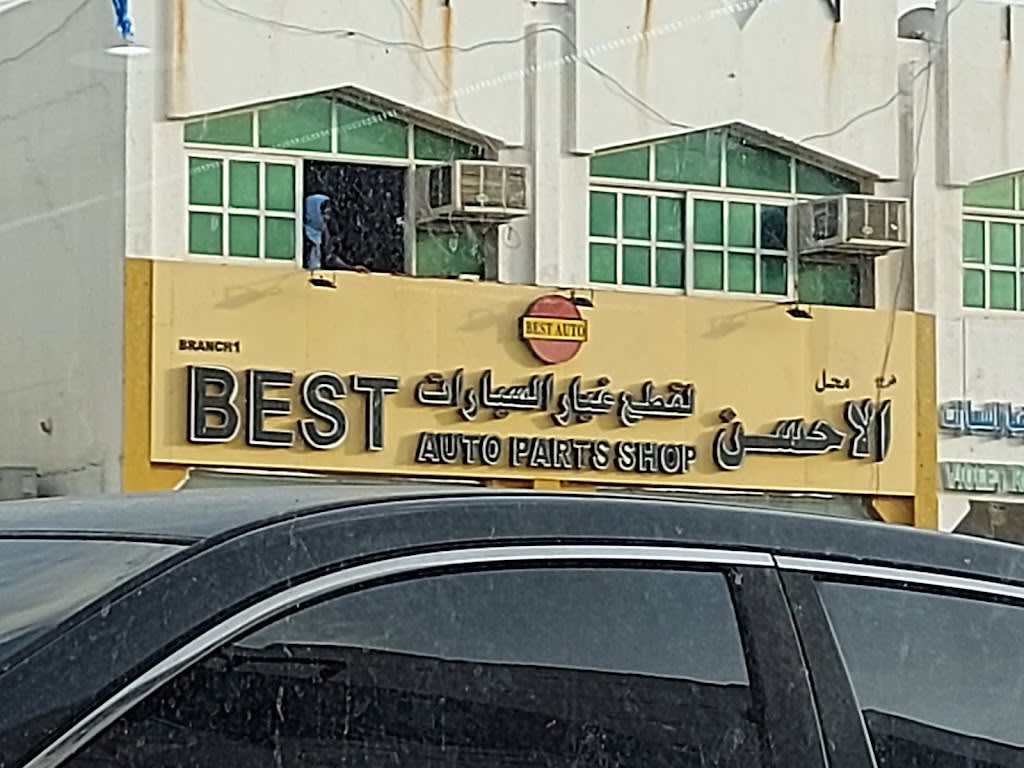
- Best Auto Parts Al ainAbu Dhabi
Listed for oils and filters and batteries — genuine and aftermarket. It carries Acdelco, Toyota, Nissan and Honda and 3 more and delivers.
3.8 on Google from 32 reviews
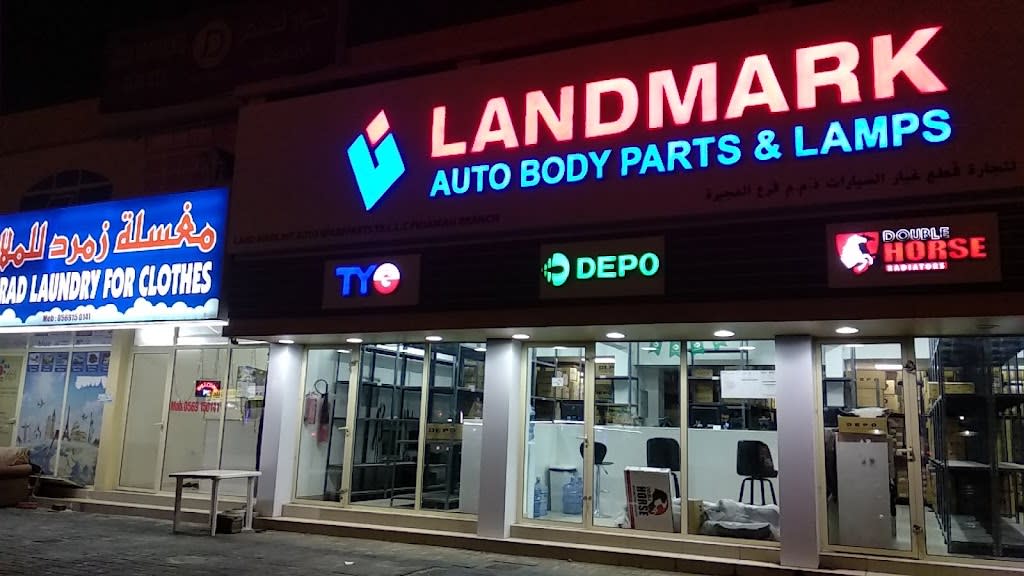
Listed for body panels and lights and A/C and cooling parts — aftermarket. It carries Depo, TYG, Double horse and Viewmark and 4 more and delivers.
3.9 on Google from 16 reviews
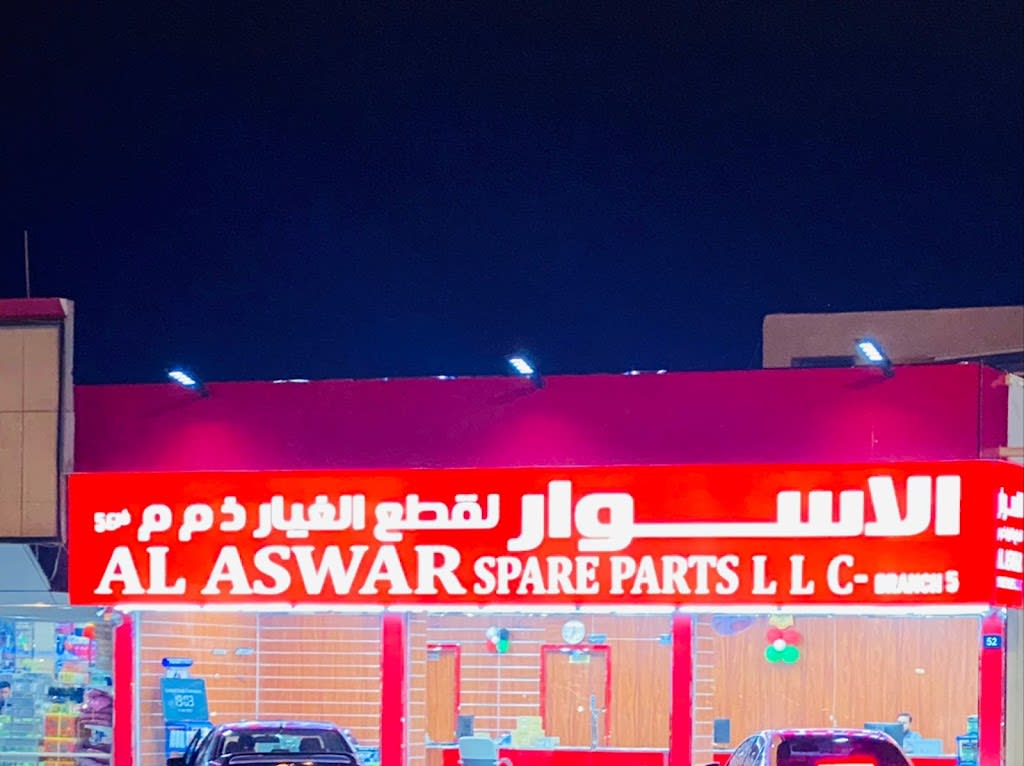
- AL ASWAR SPARE PARTSSharjah
Listed for oils and filters and batteries — genuine OEM, new parts. It carries Toyota, Nissan, Lexus and Infiniti.
4.7 on Google from 3 reviews
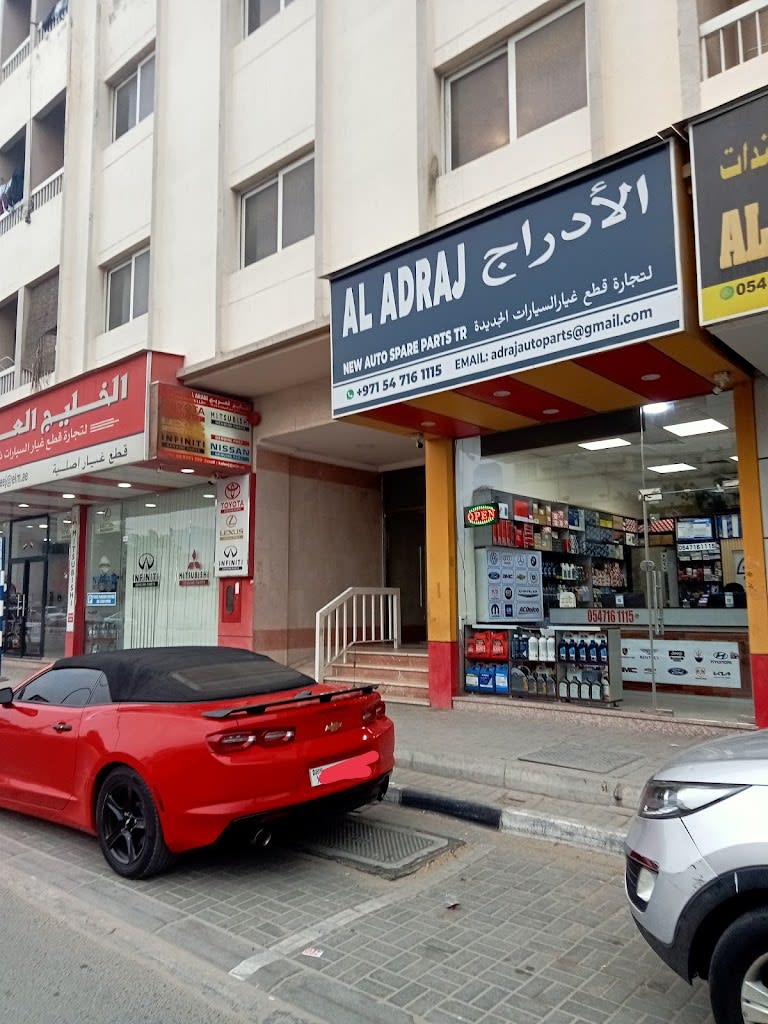
Listed for brake parts and body panels and lights — genuine and aftermarket, new parts. It carries Febi bilstein, Ferodo, Textar and TRW and sells trade as well as retail.
4.3 on Google from 77 reviews
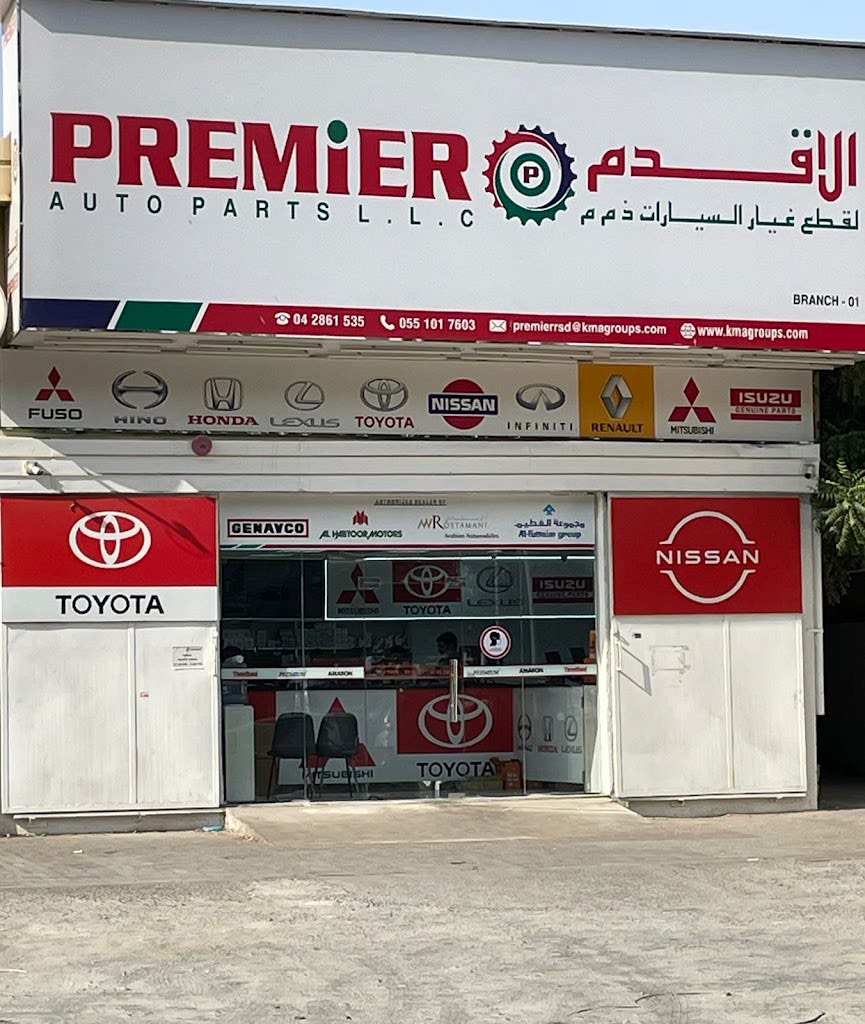
- PREMIER AUTO PARTSDubai
Listed for accessories and car electronics — genuine OEM, new parts. It carries Threebond, Autograde and Amaron and sells trade as well as retail.
4.3 on Google from 141 reviews

Listings are compiled from each business’s own public information. If you run one of these shops and want the entry corrected or removed, email easycarpartsteam@gmail.com.
Still easier on a form? The request goes to the same matched UAE suppliers, free, with only the number of shops you choose able to contact you.
Open the request formKeep reading
Nisshinbo — common questions
- What does Nisshinbo actually make?
- Brake friction, and only brake friction: disc pads for disc brakes and brake linings for the shoes inside a drum. It does not make brake discs, calipers, master cylinders, hoses or fluid. If you are replacing a full corner, only part of it can carry this brand.
- Is Nisshinbo an original-equipment supplier or an aftermarket brand?
- It is a genuine original-equipment friction supplier that also sells into the aftermarket. Nisshinbo describes itself as a global brake supplier and says its friction is used in brake devices from compact cars to large trucks and buses. What it does not do is publish which manufacturers those are.
- Is it true that Nisshinbo supplies Mazda?
- That claim is widely repeated and we could not source it to Nisshinbo. It appears in distributor copy and trade write-ups rather than on any Nisshinbo page we could read, so this page does not repeat it, even in a hedged form.
- Does Nisshinbo own Textar, Mintex, Pagid and Bendix?
- Not any more. Nisshinbo Holdings bought TMD Friction, which carries those brands, in September 2011 and sold it to AEQUITA of Munich in early December 2023. A lot of material online still describes TMD Friction as a Nisshinbo subsidiary; it has been wrong for over two years.
- Why does this page not list Nisshinbo product lines?
- Because we could not read any. The Nisshinbo brake company's own website returns an empty shell on every path we tried, including its imprint, and no aftermarket line name was obtainable from any Nisshinbo property. The table here uses the product families Nisshinbo Holdings publishes instead. Copying line names off a retailer would have looked better and meant nothing.
- What is the difference between a brake pad and a brake lining?
- A pad is friction material on a backing plate that a caliper squeezes against a disc. A lining is friction material on a shoe that is pushed outwards against the inside of a drum. Nisshinbo makes both. They are different parts with different part numbers and they do not cross-reference to each other.
- Where are Nisshinbo brake pads made?
- Nisshinbo says it supplies from sites in five countries and names group companies in Japan, the United States, Korea and Thailand. The fifth is unnamed, and no article number is tied to a plant anywhere it publishes, so a country printed on the carton is packing information rather than a specification.
- What are copper-compliant brake pads?
- Friction formulations made to meet restrictions on how much copper the material may contain. Nisshinbo publishes that it makes them. We are deliberately not summarising which rules apply where, because we did not read that detail from Nisshinbo. The practical point is that a low-copper pad behaves differently, so match the specification rather than assuming any pad that fits is equivalent.
- Does Nisshinbo have a UAE distributor?
- Nisshinbo names no UAE company, no Gulf office and no regional distributor anywhere we could read. A Dubai trading business advertises itself as the regional source; that is a business describing itself and not something we can verify, so we do not name it. Ask any shop making the claim to show it to you on the manufacturer's paper.
- How does Nisshinbo compare with Akebono?
- They are both Japanese and they are not the same kind of company. Akebono makes friction and the brake hardware it works inside, and it publishes a list of the manufacturers it supplies. Nisshinbo makes friction only and publishes no customer list at all. Neither of those facts tells you which pad suits your car; both tell you what you are actually choosing between.
- What does a set of Nisshinbo pads cost here?
- No number appears on this page. Friction pricing moves with the axle, the vehicle weight class and the shop, and a figure written into a brand page ages badly and then gets quoted long after it stopped being true. Give us the car and we will go and find what is being asked for the part today.
Ask a human · free · no account
Not sure the Nisshinbo part you found is the real one?
Send us the number on the box and the car — we'll tell you.
Free · usually a reply in minutes · no obligation
Where these facts came from
Checked against the manufacturer’s own published material on the dates below. Anything we could not source is named as unsourced on this page rather than left out.
- Nisshinbo Holdings — the automobile brakes business, friction from 1946 — read 2026-09-03
- Nisshinbo Brake Inc. — corporate site, group companies and copper compliance — read 2026-09-03
- TMD Friction — confirmation of the AEQUITA acquisition, December 2023 — read 2026-09-03
- TMD Friction — new investor announcement naming Nisshinbo as the seller, August 2023 — read 2026-09-03
- TMD Friction acquired by Nisshinbo Holdings, September 2011 (third-party source) — read 2026-09-03
- TMD Friction — the current aftermarket brand line-up, Nisshinbo absent — read 2026-09-03