Ferodo brakes in the UAE
Brake pads, discs, drums, shoes, calipers, hydraulics and brake fluid
Ferodo is a trademark of its owner. We are not an authorised Ferodo dealer or distributor, and nothing here is endorsed by them. The name and mark are shown to say which parts we quote and source.
The quick answer
Ferodo is a braking brand of DRiV Automotive, the aftermarket business inside Tenneco, and it sells a full braking catalogue rather than pads alone: pads, discs, drums, shoes, calipers, hydraulics, brake fluid, cables and accessories. Its light-vehicle pad range is organised by technology rather than by a good-better-best ladder, with FUSE+ and ECO-FRICTION as the two named technologies and separate lines for electric and hybrid cars and for light commercial vehicles. Ferodo names exactly two factory fitments anywhere on its own site, both of them for ECO-FRICTION and both of them dated, and everything else it says about vehicle manufacturers is general. There is no Ferodo or Tenneco presence published for the UAE.
Ask a human · free · no account
Looking for genuine Ferodo?
We'll only send you shops that actually stock it.
Free · usually a reply in minutes · no obligation
Key facts
- Ferodo is a DRiV Automotive brand. DRiV is the aftermarket business of Tenneco, and Tenneco has been privately held since funds managed by Apollo completed its acquisition in November 2022 and its shares stopped trading on the New York Stock Exchange.
- Ferodo names two factory fitments on its own site and they are both ECO-FRICTION: Mercedes-Benz C-Class since March 2014, and Audi A4 since September 2015.
- ECO-FRICTION is Ferodo's low-copper and zero-copper friction technology, developed over what Ferodo describes as five years of research with 1,500 materials tested and 25 different new components.
- Ferodo sells a whole braking system, not just friction: the light-vehicle catalogue covers pads, discs, calipers, shoes and maxi kits, drums, hydraulics, brake fluids, cables and accessories.
- The marque-specific pages on ferodo.com for Citroen, Opel, Ford and Fiat describe which vehicles the parts fit. They are not statements that those manufacturers fit Ferodo at the factory.
- Ferodo publishes no founding year. Its own heritage page claims more than 125 years and dates two milestones instead: support for early mass-market motoring such as the Austin 7 in 1922, and top-level racing as early as 1926.
- Tenneco's own location finder returns no Middle East or UAE site, so this page names no Ferodo presence in the Emirates.
Rather fill in a form? Send the same request here and matched UAE suppliers reply on WhatsApp either way.
Open the request formFerodo — the range
| Range | How it is built | What it is for |
|---|---|---|
| ECO-FRICTION | Low-copper and zero-copper friction material | Everyday cars, and the only Ferodo range with a named factory fitment |
| FUSE+ | Ferodo's named pad technology, positioned as performance combined with comfort | Road cars where noise and pedal feel matter as much as stopping power |
| Electric and hybrid pads | A separate pad line for electrified vehicles | Electric and hybrid cars, where regenerative braking changes how the pad is used |
| Light commercial vehicle pads | A separate pad line for vans and light commercials | Vans and light commercial vehicles carrying weight on a working duty cycle |
| Premier | Ferodo's commercial-vehicle pad line, and the benchmark its own copy measures against | Commercial vehicles. Ferodo describes ECO-FRICTION as being as good as a Premier pad without the copper |
| Racing DS | Ferodo's competition friction line, latest evolution DS3.12 | Circuit and competition use on modern sports cars, not a road service interval |
Source: Ferodo — ECO-FRICTION brake pads, the research figures and the two named factory fitments, read 2026-09-03; Ferodo — the named light-vehicle brake pad ranges, read 2026-09-03; Ferodo — full light-vehicle and commercial catalogue, racing line and the DRiV ownership footer, read 2026-09-03
Which one fits your car
| If this is your car | Use | Why |
|---|---|---|
| An ordinary family car being returned to standard braking | ECO-FRICTION | The mainstream Ferodo choice, and the range Ferodo itself names on two factory fitments. |
| A road car where brake noise and pedal feel are the complaint | FUSE+ | Ferodo positions this technology on comfort as much as on outright stopping power. |
| An electric or hybrid car | Electric and hybrid pads | Regenerative braking means the friction brakes work less often and cooler. Ferodo lists a separate line rather than reusing the road pad. |
| A van or light commercial doing daily delivery work | Light commercial vehicle pads | A loaded van is a different duty cycle from a car of the same size. Ferodo splits the catalogue accordingly. |
| A truck or bus in commercial service | Premier | The commercial-vehicle friction line. Ferodo's own comparison copy treats it as the standard the greener pad had to match. |
| Track days and competition | Racing DS | Competition friction is built for a session, not a service interval. It is not a road upgrade. |
The range descriptions are the manufacturer’s. Matching them to a car is our guidance, and it is a starting point rather than a fitment check — the part number is what actually decides. Send us the make, model and year and we will confirm it.
Original equipment
Mercedes-Benz
Ferodo states on its own ECO-FRICTION page that the range has been fitted as original equipment on the Mercedes-Benz C-Class since March 2014. Read it exactly as written: it is a start date for one friction range on one model line, it is not a statement that every Ferodo pad is a factory part, and Ferodo publishes no end date, so it does not by itself tell you what a C-Class built this year leaves the factory with.
Source: Ferodo — ECO-FRICTION brake pads, the research figures and the two named factory fitments, read 2026-09-03
Audi
The same Ferodo page states that ECO-FRICTION has been fitted as original equipment on the Audi A4 since September 2015. The same reading applies. Two models, one friction technology, two start dates, and nothing said about any other car in either manufacturer's range.
Source: Ferodo — ECO-FRICTION brake pads, the research figures and the two named factory fitments, read 2026-09-03
Two contracts are listed because two are what Ferodo actually names. Everywhere else on its own site the claim is general: it says it has a hundred years of heritage and is chosen by vehicle manufacturers, and it talks about original-equipment DNA, without naming anyone. There is a second thing on ferodo.com that looks like an answer and is not, and it is worth knowing about before a shop shows it to you. Ferodo runs dedicated product pages for Citroen, Opel, Ford and Fiat. Those pages exist because Ferodo covers those cars in its catalogue, which is a statement about fitment and not about who supplies the production line. Reading a coverage page as a supply contract is the single easiest mistake to make on a braking brand, and it produces a claim that sounds sourced and is not.
Where it is made
Ferodo does not publish where its parts are built, and we are not going to infer it from the brand's history. Third-party accounts place the original works at Chapel-en-le-Frith in Derbyshire from 1902, and that is a genuine part of the story of the name, but a factory that opened before the First World War is not evidence about where a pad in a box in Sharjah was pressed in 2026. The brand has passed through Turner and Newall, Federal-Mogul and now Tenneco, and each of those owners ran a different manufacturing footprint. So the honest answer is that the country printed on a Ferodo carton is a logistics fact, and it is neither a quality signal nor an authenticity test.
Ferodo in the UAE
We looked for a Ferodo or Tenneco presence in the Emirates on the manufacturer's own material and found none. Tenneco runs a location finder on its own site and it returns no Middle East site at all, let alone a UAE one, so there is no regional office to name here and no authorised distributor list to quote from. That is a statement about what Tenneco publishes, not a finding about the market: Ferodo boxes plainly reach this country, because parts counters here sell them. What it means practically is that if a UAE seller tells you it is the appointed Ferodo distributor, there is nothing on Ferodo's side we can check that against, and you should treat the claim the way you would treat any other claim a shop makes about itself.
The name is an anagram, and the company will not tell you when it started
Ferodo is one of the older names in braking and it is oddly reticent about its own beginning. Its heritage page claims more than 125 years and offers two dated waypoints rather than a founding date: it says it supported early mass-market motoring such as the Austin 7 in 1922, and that it reached top-level global racing as early as 1926. There is no year on the page for when the company itself began.
The story that fills the gap is third-party rather than Ferodo's own, and it is worth repeating with that label attached because it explains the word on the box. The brand is generally traced to Herbert Frood, who began making friction material at the end of the nineteenth century and moved production to Chapel-en-le-Frith in Derbyshire in 1902. Ferodo is an anagram of Frood. That is a pleasing piece of trivia and it is also a small lesson in how to read a brand page: the fact that a name has a hundred-year story behind it says nothing at all about the compound in the box you are being handed today.
For a buyer at a counter here, the useful version of the heritage claim is narrow. Ferodo has been making friction material for a very long time, its catalogue is unusually broad, and its longevity is not a specification. The specifications are in the range table above and in the part number on the box.
Ferodo names two factory fitments, and only two
Almost every braking brand implies original-equipment supply and almost none publishes it. Ferodo is a partial exception, and the exception is precise enough to be worth quoting rather than summarising. On its own ECO-FRICTION page it says the range has been fitted as original equipment on the Mercedes-Benz C-Class since March 2014 and on the Audi A4 since September 2015.
That is a real claim from the manufacturer, with a marque, a model and a start date, and it is the strongest evidence of factory supply anywhere on Ferodo's site. It is also narrower than it will be made to sound at a counter. It covers one friction technology, not the whole Ferodo catalogue. It covers two model lines, not two manufacturers. And both dates are start dates with no end date published, so a page written in 2026 cannot honestly turn them into a statement about what a car built this year leaves the factory wearing.
The way to use it is as a question rather than as an answer. If a seller tells you your car came out of the factory on Ferodo, the two sentences above are the shape of the evidence that would settle it: a named model with a date. Ask for the part number against the vehicle manufacturer's own catalogue, and treat a badge on a carton as a badge on a carton.
Everything else Ferodo says about manufacturers is the general form. Its heritage page talks about being chosen by vehicle manufacturers and about original-equipment DNA. That is positioning. It names nobody, so we name nobody from it.
A Citroen page is a coverage page, not a supply contract
There is a second thing on ferodo.com that a shop can show you as though it settled the question, and it does not. The site runs dedicated product pages for Citroen, Opel, Ford and Fiat. They exist because Ferodo has deep catalogue coverage on those cars and wants an owner searching for their own marque to land somewhere useful.
A coverage page answers the question does this brand make a part for my car. A supply contract answers the question did my car leave the factory with this brand fitted. They are opposite directions of the same relationship and they look identical when they are summarised. A manufacturer's name on a parts brand's website is, by default, the first of those and not the second, and the burden is on the sentence to say otherwise. On the ECO-FRICTION page it does say otherwise, in so many words. On the marque pages it does not.
This distinction is not pedantry and it is not unique to Ferodo. It is the specific way a page like this goes wrong: somebody reads five marque names off a manufacturer's own domain, writes them into a table headed original equipment, and publishes an invented contract with a real source attached. That is worse than an unsourced guess, because it looks checked.
Copper is being engineered out of brake pads, and ECO-FRICTION is Ferodo's answer
Copper has been a standard ingredient in friction material for decades because it conducts heat well and keeps the pad stable when it gets hot. It is also the reason brake dust is an aquatic pollution problem, which is why legislation in several markets has pushed it out of the compound. Reformulating around it is genuinely hard: take copper out and the pad has to recover its thermal behaviour from something else, and the something else changes noise, wear and pedal feel at the same time.
Ferodo puts numbers on how much work that took. Its ECO-FRICTION page describes five years of dedicated research and extreme friction testing, 1,500 materials tested and 25 different new components, with the resulting compound at low or zero copper. It claims a significant reduction in fine particle emissions, noise suppression, and up to seventeen per cent more stopping power than competitors' brands on selected vehicles, and says the range was brake tested on six popular vehicle models.
Read the stopping-power number carefully, because Ferodo has qualified it twice in its own sentence. It is up to seventeen per cent, and it is on selected vehicles, against unnamed competitors. That is a manufacturer's marketing claim about its own product, properly hedged by the manufacturer, and it should not be restated as a flat fact by anyone else. What is not hedged, and is the more useful part, is the composition: low or zero copper is a compositional statement rather than a performance one, and it is the reason the range exists.
The other thing worth knowing is that Ferodo benchmarks this range against its own commercial line. Its copy describes ECO-FRICTION as being as good as a Ferodo Premier pad, minus the copper. That tells you the greener pad was not positioned as a compromise, and it tells you Premier is the internal yardstick.
Ferodo sells the whole brake, which changes how you should order
Most people meet Ferodo as a pad brand and that undersells the catalogue in a way that costs money. The light-vehicle range covers brake pads, brake discs, calipers, brake shoes and maxi kits, brake drums, hydraulics, brake fluids, brake cables and accessories. The commercial-vehicle range adds linings and its own drums and discs. There is also a racing catalogue, which extends beyond cars.
The practical consequence is about how a job is quoted. Brakes are a system, and the parts wear against each other: a pad works against a disc, a shoe against a drum, and the hydraulic side has its own service life that nobody looks at until the pedal goes long. A counter that only sells you the friction is quoting the cheap half of the job, and a disc that is at its minimum thickness will eat a new set of pads and take the improvement with it.
So when you order, order the pair. Ask what the disc measures, not whether it looks scored. Ask whether the fluid has been changed within its interval, because brake fluid absorbs water and a car that lives in this climate and does short journeys does not get the heat cycles that would drive it out. Ferodo sells all of those things under one name, which makes it easy to buy the set from one counter, and easy to be sold one part of it.
Who owns Ferodo now, and why the footer is a small warning
The badge has changed hands more than once and the current answer is not the one most search results give. Ferodo is a brand of DRiV Automotive, which is the aftermarket business inside Tenneco. Tenneco acquired Federal-Mogul, which had acquired Ferodo, and Tenneco itself is no longer a listed company: funds managed by affiliates of Apollo completed its acquisition and its common stock ceased trading on the New York Stock Exchange in November 2022. Any source that still describes Ferodo's parent as a New York listed company is running four years behind.
There is a smaller detail on Ferodo's own site that is worth noticing for its own sake. The copyright line in the footer reads 2024. That is not evidence of anything sinister; brand sites go a while between refreshes. It is a reminder that a brand's own website is a snapshot with a date on it, that range line-ups and ownership descriptions both age, and that this page records what the site said on the day it was read rather than what it will say indefinitely.
None of the corporate history changes what a pad does. It matters for exactly one reason: when someone tells you a brand is what it used to be, or is not what it used to be, they are usually working from an ownership story rather than from a specification, and neither version of that story is a substitute for the part number.
What is missing here, and why the absence is a real answer
Three things a brake-brand page is normally expected to carry are not on this one, and each absence was a decision rather than an oversight.
There is no UAE distributor. Tenneco publishes a location finder and it returns no Middle East site, so there is no regional office to name and nothing on the manufacturer's side to check a seller's claim against. Ferodo parts are obviously sold here. What is missing is any published counterpart at the manufacturer, and inventing one would be far worse than the gap.
There is no counterfeit-identification guide. Ferodo publishes no packaging check, no code and no authentication service that we could find, so there is nothing to teach you. Anyone who offers you a definitive Ferodo authenticity test has got it from somewhere other than Ferodo, and a wrong test is more dangerous than no test because it makes you reject genuine parts and accept well-printed fakes.
And there is no price. Manufacturers do not publish installed prices in this market, what you pay turns on the axle, the range and the counter, and a stale number on a brand page ages into a lie. If you want the current number for a specific car, send us the car.
Shops for brakes in the UAE
These shops are here because their recorded stock covers at least one of brake pads, brake discs, brake shoes, calipers, brake fluid and master cylinder — not because we have confirmed that each one carries Ferodo. We hold no reliable shop-by-shop record of which brands are on which shelf, so ring or message before you travel.
Where to actually buy this
Shops whose own website lists these parts, or whose stock we have recorded ourselves. Last checked July 2026. Not paid placement.
- Best Auto Parts ShopAbu Dhabi
Stocks brake fluid — new parts. It carries Castrol, Shell, Total and BP and 16 more and delivers.
4.2 on Google from 48 reviews
- Popular Auto PartsAbu Dhabi
Listed for engine parts and electrical parts — genuine and aftermarket. It carries Mopar and Popular Tyre and matches parts to your VIN.
3.7 on Google from 14 reviews
Listed for tyres and wheels and batteries — new parts. It fits what it sells.
4.3 on Google from 21 reviews
Listed for accessories and car electronics and interior trim — aftermarket. It fits what it sells.
4.3 on Google from 1,716 reviews
- AL ASWAR SPARE PARTSSharjah
Listed for oils and filters and batteries — genuine OEM. It carries Castrol, Nissan, Panasonic and Amaron and 1 more.
4.3 on Google from 43 reviews
- Al Aswar Auto Spare partsSharjah
Listed for oils and filters and batteries — genuine OEM, new parts.
3.5 on Google from 4 reviews

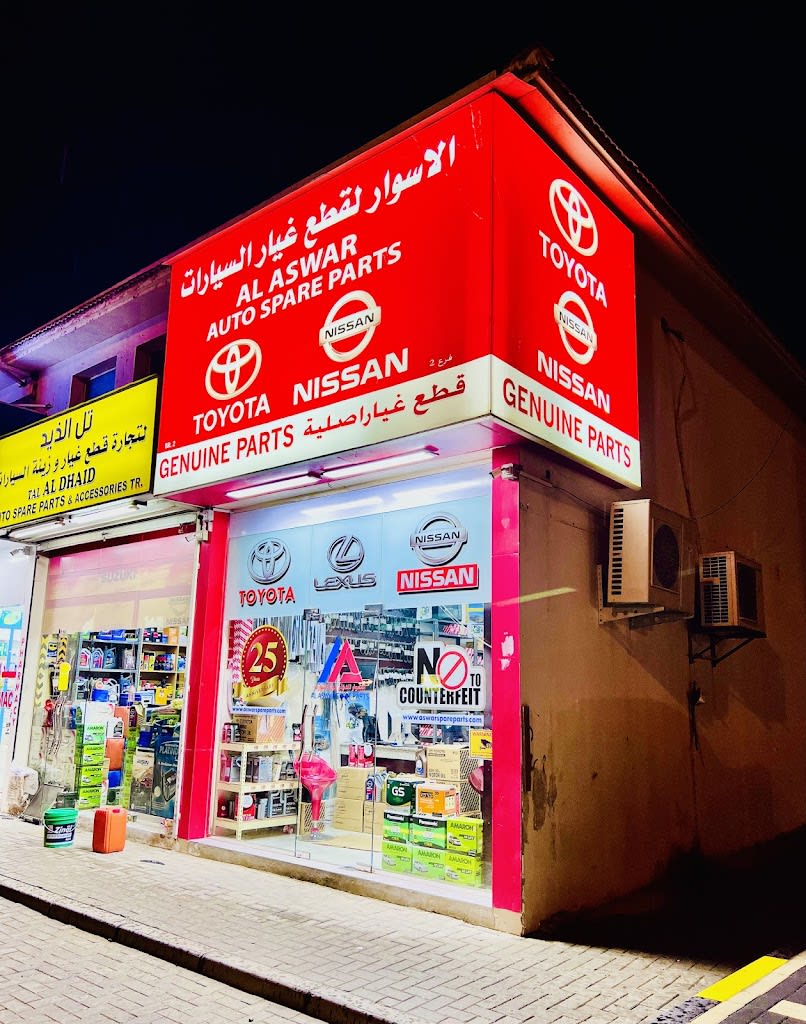
Listings are compiled from each business’s own public information. If you run one of these shops and want the entry corrected or removed, email easycarpartsteam@gmail.com.
Still easier on a form? The request goes to the same matched UAE suppliers, free, with only the number of shops you choose able to contact you.
Open the request formKeep reading
Ferodo — common questions
- Which cars come with Ferodo brakes from the factory?
- Ferodo names two on its own site, and both are for its ECO-FRICTION range: the Mercedes-Benz C-Class since March 2014 and the Audi A4 since September 2015. Those are start dates for one friction range on two model lines. Ferodo names no other factory fitment anywhere we could find, so anything beyond those two is a claim someone else has made.
- Ferodo has pages for Citroen, Ford, Opel and Fiat. Does that mean it supplies them?
- No. Those are catalogue coverage pages, which tell you Ferodo makes parts that fit those cars. Supply means the manufacturer fits the brand on the production line, which is a different claim in the opposite direction. Ferodo does state factory fitment explicitly where it means it, on the ECO-FRICTION page, and it does not state it on the marque pages.
- What is ECO-FRICTION and why does copper matter?
- ECO-FRICTION is Ferodo's low-copper and zero-copper friction technology. Copper was used because it moves heat well and keeps a pad stable when hot, and it is being legislated out because brake dust carries it into water. Ferodo says the reformulation took five years of research with 1,500 materials tested and 25 different new components, and it claims reduced fine particle emissions and noise suppression alongside the composition change.
- Who owns Ferodo?
- Ferodo is a DRiV Automotive brand, and DRiV is the aftermarket business of Tenneco. Tenneco is no longer publicly traded: funds managed by affiliates of Apollo completed its acquisition and the shares stopped trading on the New York Stock Exchange in November 2022. Sources that still describe Ferodo's parent as a New York listed company are out of date.
- When was Ferodo founded?
- Ferodo does not publish a founding year. Its own heritage page claims more than 125 years and dates two milestones instead, an association with early mass-market motoring such as the Austin 7 in 1922 and top-level racing as early as 1926. The commonly repeated 1897 origin and the Herbert Frood story are third-party rather than Ferodo's own account, which is why this page labels them that way.
- Is Ferodo just a brake pad brand?
- No, and treating it as one is how people end up buying half a brake job. The light-vehicle catalogue covers pads, discs, calipers, shoes and maxi kits, drums, hydraulics, brake fluids, cables and accessories, and there is a separate commercial-vehicle range and a racing range. If you are replacing pads, get the disc measured at the same time rather than judged by eye.
- Does Ferodo have an official distributor in the UAE?
- None that the manufacturer publishes. Tenneco's own location finder returns no Middle East or UAE site, so there is no regional entity to name and no distributor list to quote. That does not mean Ferodo is not sold here, because it plainly is. It means a seller's claim to be the appointed distributor cannot be checked against anything Ferodo publishes.
- Which Ferodo pad should I buy for an ordinary car?
- Ferodo does not sell a good, better, best ladder for light vehicles. It sells named technologies, and the two on the road-car side are FUSE+, which it positions on performance combined with comfort, and ECO-FRICTION, which is the low-copper compound. There are separate lines for electric and hybrid cars and for light commercial vehicles. Choose by what the car is, not by a price step.
- Are electric-car brake pads really different?
- Ferodo lists a separate line for electric and hybrid cars rather than reusing the road pad, and the reason is duty cycle. Regenerative braking does much of the slowing, so the friction brakes are used less often and run cooler, which changes what the compound has to do and how the surfaces behave between uses. Buying the line the manufacturer built for the application is the simple answer.
- How do I tell a genuine Ferodo pad from a fake?
- We cannot teach you a Ferodo-specific check, because Ferodo publishes none that we could find. There is no packaging code, hologram or verification service on its site to point you at, and inventing a test would be worse than admitting the gap, because a wrong test makes you reject good parts and accept convincing fakes. Buy from a counter you would be willing to walk back into, and check the number on the box against the part coming off the car.
- Where are Ferodo brakes made?
- Ferodo does not publish it, and we are not going to work backwards from history. The brand's original English works and its current manufacturing footprint are separate questions, and the brand has changed owners several times, each with a different set of plants. The country on the carton is a logistics fact rather than a quality signal or an authenticity test.
- What does DS3.12 mean on a Ferodo racing pad?
- DS is Ferodo's competition friction line and DS3.12 is its latest evolution for modern sports cars. Competition friction is engineered for a session on track rather than for a road service interval, so it is not an upgrade for a daily car and should not be sold to you as one.
Ask a human · free · no account
Not sure the Ferodo part you found is the real one?
Send us the number on the box and the car — we'll tell you.
Free · usually a reply in minutes · no obligation
Where these facts came from
Checked against the manufacturer’s own published material on the dates below. Anything we could not source is named as unsourced on this page rather than left out.
- Ferodo — full light-vehicle and commercial catalogue, racing line and the DRiV ownership footer — read 2026-09-03
- Ferodo — the named light-vehicle brake pad ranges — read 2026-09-03
- Ferodo — ECO-FRICTION brake pads, the research figures and the two named factory fitments — read 2026-09-03
- Ferodo — Road Born, Track Proven heritage page, the 125-year claim and the 1922 and 1926 milestones — read 2026-09-03
- Tenneco — global location finder, returning no Middle East or UAE site — read 2026-09-03
- Tenneco Inc. — Form 8-K, completion of the Apollo acquisition and the end of NYSE trading, November 2022 — read 2026-09-03
- Encyclopaedia entry on Ferodo — the 1897 origin, Herbert Frood, Chapel-en-le-Frith and the anagram (third-party source) — read 2026-09-03