ATE brakes in the UAE
Brake pads, discs, hydraulics and brake fluid
ATE is a trademark of its owner. We are not an authorised ATE dealer or distributor, and nothing here is endorsed by them. The name and mark are shown to say which parts we quote and source.
The quick answer
ATE is the braking brand founded on the work of Alfred Teves in Frankfurt, and it is unusual among brake brands in that it publishes a dated list of the cars its systems went into rather than a vague claim to supply the industry. Its aftermarket range for this side of the world is four things: ATE Original pads, ATE Ceramic pads, the grooved ATE PowerDisc, and ATE Classic for older vehicles. The ownership answer changed recently and is worth getting right: the automotive division that carries ATE was part of Continental until it was listed as an independent company, AUMOVIO SE, on 18 September 2025, and ATE's own website has not fully caught up with that.
Ask a human · free · no account
Looking for genuine ATE?
We'll only send you shops that actually stock it.
Free · usually a reply in minutes · no obligation
Key facts
- ATE publishes a dated history naming the cars its brakes went into, which almost no braking brand does. The Adler Standard in 1926, the Ford 17M in 1960, the Ferrari 365 GTB and Porsche 911 S in 1972 and the BMW M1 in 1979 are all named with their years.
- The world's first integrated ABS to reach series production was the ATE ABS MK II in 1984, used by Ford in the United States and in Europe.
- In 1998 the Brake and Chassis Group of ITT Industries was sold to Continental AG, and Continental Teves was founded.
- On 18 September 2025 the automotive business division that had been part of Continental AG was listed as an independent company under the name AUMOVIO SE, and the aftermarket entity behind ATE now trades under that group.
- ATE's own website currently contradicts itself on this: one page still describes ATE as part of Continental and quotes Continental's own figures, while the footer of the same site and the history page name AUMOVIO.
- The ATE PowerDisc carries a continuous groove that ATE says draws off dirt and gases, resists scoring under intensive stress, and doubles as a wear indicator you can read at a glance.
- ATE names no distributor, importer or regional company anywhere in the United Arab Emirates.
Rather fill in a form? Send the same request here and matched UAE suppliers reply on WhatsApp either way.
Open the request formATE — the range
| Range | How it is built | What it is for |
|---|---|---|
| ATE Original | The standard ATE pad, and the one ATE pairs with its own discs | Everyday replacement, and the pad ATE names as usable with the PowerDisc |
| ATE Ceramic | A special pad formula that ATE describes as producing significantly less dust and less abrasion | Premium and lifestyle vehicles, and now smaller cars as the range has expanded |
| ATE PowerDisc | A brake disc carrying a continuous groove across the friction face | Drivers wanting the sportier option, and anyone who wants wear readable at a glance |
| ATE Classic | A separate programme for older and classic vehicles | Cars old enough that the current catalogue does not cover them |
Source: ATE — Original brake pads, and the recommendation to pair them with ATE discs, read 2026-09-03; ATE — Ceramic brake pads, the dust, abrasion and wear claims and the vehicle segments named, read 2026-09-03; ATE — PowerDisc, the functions of the continuous groove and the note that Original pads may be used with it, read 2026-09-03; ATE — company history, the dated fitments from 1926 to 1984, the ITT sale to Continental in 1998 and the AUMOVIO SE listing of 18 September 2025, read 2026-09-03
Which one fits your car
| If this is your car | Use | Why |
|---|---|---|
| A normal car being put back to standard braking | ATE Original | ATE's own recommendation is to run its Original pads with its Original discs, and it says the same pads can also be used with a PowerDisc. |
| A car where brake dust on the wheels is the owner's actual complaint | ATE Ceramic | ATE says these wear significantly less than conventional low-metallic pads and stir up much less dust. It is a cleanliness and wear choice. |
| Someone who wants the sportier disc and a wear check they can do by eye | ATE PowerDisc | The groove draws off dirt and gases and shows how far the disc has worn. When the groove disappears, the disc is done. |
| A vehicle old enough to have fallen out of the mainstream catalogue | ATE Classic | A separate programme rather than a substitution from the current range. Ask for it by name rather than accepting a near-fit. |
The range descriptions are the manufacturer’s. Matching them to a car is our guidance, and it is a starting point rather than a fitment check — the part number is what actually decides. Send us the make, model and year and we will confirm it.
Original equipment
Adler
In 1926 the Adler Standard became, in ATE's own words, the first car on the continent to drive with a hydraulic braking system. It is the oldest named fitment ATE publishes and it is the origin of the brand's claim to have introduced hydraulic braking to European cars.
Source: ATE — company history, the dated fitments from 1926 to 1984, the ITT sale to Continental in 1998 and the AUMOVIO SE listing of 18 September 2025, read 2026-09-03
Auto Union
In 1934 Auto Union used ATE brake systems, optimised by Teves for motor sport. This is a competition relationship from the Silver Arrow era, not a road-car supply contract, and it is ninety years old.
Source: ATE — company history, the dated fitments from 1926 to 1984, the ITT sale to Continental in 1998 and the AUMOVIO SE listing of 18 September 2025, read 2026-09-03
Mercedes-Benz
Daimler-Benz used ATE motor-sport brake systems from 1934, and in 1954 ATE pump circulation brake boosters became the first hydraulic brake boosters used in car racing, in the Mercedes-Benz Silver Arrow. Both entries are racing history from the 1930s and 1950s and neither says anything about a modern Mercedes-Benz.
Source: ATE — company history, the dated fitments from 1926 to 1984, the ITT sale to Continental in 1998 and the AUMOVIO SE listing of 18 September 2025, read 2026-09-03
Ford
Three dated entries, spanning twenty-four years. The Ford 17M of 1960 was supplied with ATE Dunlop disc brakes. From 1977 the Culpeper factory in Virginia built floating caliper disc brakes and vacuum brake boosters for Ford. And in 1984 the ATE ABS MK II, the first integrated ABS in series production anywhere, was used by Ford in the United States and in Europe.
Source: ATE — company history, the dated fitments from 1926 to 1984, the ITT sale to Continental in 1998 and the AUMOVIO SE listing of 18 September 2025, read 2026-09-03
Volkswagen
From 1977 the same Culpeper plant in Virginia manufactured floating caliper disc brakes and vacuum brake boosters for Volkswagen alongside Ford. A 1977 production arrangement is not evidence about a Volkswagen built this decade.
Source: ATE — company history, the dated fitments from 1926 to 1984, the ITT sale to Continental in 1998 and the AUMOVIO SE listing of 18 September 2025, read 2026-09-03
Ferrari
In 1972 the Teves plant at Rheinboellen supplied high-performance four-piston fixed-caliper ATE brakes for the Ferrari 365 GTB road model. One model, one year, and a plant that is named in a history entry rather than in a current plant list.
Source: ATE — company history, the dated fitments from 1926 to 1984, the ITT sale to Continental in 1998 and the AUMOVIO SE listing of 18 September 2025, read 2026-09-03
Porsche
The same 1972 entry names the Porsche 911 S as receiving the four-piston fixed-caliper ATE brakes built at Rheinboellen. It is a fitment on a specific car from a specific year and it is fifty-four years old.
Source: ATE — company history, the dated fitments from 1926 to 1984, the ITT sale to Continental in 1998 and the AUMOVIO SE listing of 18 September 2025, read 2026-09-03
BMW
In 1979 ATE floating caliper disc brakes were introduced into high-performance touring motor sport, and ATE names the BMW M1 as where they were used. A motor-sport application on one homologation car, dated 1979.
Source: ATE — company history, the dated fitments from 1926 to 1984, the ITT sale to Continental in 1998 and the AUMOVIO SE listing of 18 September 2025, read 2026-09-03
This table is unusually full for a braking brand, and the reason it can be published at all is that ATE dates everything. Read it as a history of an engineering company rather than as a shopping list. Every entry names a car and a year, no entry has an end date, and not one of them is a statement about a vehicle built in the last thirty years. What the list genuinely tells a buyer is that ATE has been designing braking systems at the front of the industry for a century, which is a reason to take the brand seriously. What it does not tell you is whether your car left its factory with ATE parts on it, and no honest reading of a 1972 entry can be made to answer that. If a seller uses the words Porsche or Ferrari to sell you a set of pads, the year is the question to ask.
Where it is made
ATE does not publish a current plant list, and the two factories that appear in its material are both historical. The Teves plant at Rheinboellen is named in a 1972 entry and the Culpeper factory in Virginia in a 1977 one. Presenting either as a current manufacturing country would be turning a dated milestone into a present-tense fact, which is exactly the error the rest of this page is written to avoid. So the honest position is that we do not know where a given ATE part was made, and the country on the box is a logistics detail rather than a specification.
ATE in the UAE
We could not source any ATE presence in the Emirates. There is no regional office, no importer and no authorised distributor named on the manufacturer's own material, and unlike some brands in this trade there is not even a group location page listing a Gulf entity to point at. That is a statement about what is published, not a claim that ATE is unavailable here, and it should not be read as one. It does mean that if a UAE seller describes itself as the appointed ATE distributor, there is nothing on the manufacturer's side to check it against, and repeating that claim on this page would simply be laundering it.
From a Frankfurt accessory business to the letters on the box
ATE begins with a person. Alfred Teves set up in business in 1906 as a general representative for automotive accessories and showed at the Frankfurt motor show that same year. In 1909 he co-founded a radiator works with the engineer Matthaeus Braun, which secured Audi, Wanderer and Hansa as customers. In 1911 the Alfred Teves machine and fittings works was founded in its own right, and in 1921 the three letters ATE replaced the badge the company had been using.
That sequence explains a small thing that confuses people at parts counters: ATE and Teves are the same company, so a box, a caliper casting and an old workshop manual can each use a different one of the two names for the same thing. If a supplier offers you Teves when you asked for ATE, that is not a substitution.
It also explains why the brand's centre of gravity is hydraulics rather than friction. ATE came at braking from the fluid side, and the parts of the catalogue that people forget it makes, master cylinders, boosters and brake fluid, are the older half of the business rather than an extension of it.
Every date on the list is doing work
The table above is longer than almost any other brand page on this site can honestly manage, and that is because ATE writes its history as a series of dated engineering firsts with the customer named. The Adler Standard in 1926. Auto Union and Daimler-Benz in motor sport in 1934. The Mercedes-Benz Silver Arrow in 1954. The Ford 17M, nicknamed the bathtub, on ATE Dunlop discs in 1960. Four-piston fixed calipers on the Ferrari 365 GTB and the Porsche 911 S in 1972. Ford and Volkswagen out of Culpeper, Virginia from 1977. The BMW M1 in 1979.
Every one of those is a real, first-party, named fitment, and every one of them is decades old. That combination is what makes the list both worth publishing and easy to misuse, so here is the rule this page applies to itself: the year is not an ornament on the sentence, it is the sentence. Written as it stands, the 1972 entry tells you ATE was building four-piston calipers for two of the fastest road cars of the era. Written without its year, the same words become a claim about Ferrari and Porsche today, and that claim is not sourced, is very probably false, and would be the most quotable line on the page.
The practical version for someone standing at a counter is short. A brand's history is a reason to trust its engineering, not evidence about your car. If it matters whether your specific vehicle was built with ATE parts, that is answered by the part number against the manufacturer's catalogue, and by nothing on a brand page anywhere.
In September 2025 ATE stopped being a Continental brand, and the website has not fully caught up
The ownership answer here changed recently enough that most sources are wrong, and unusually, one of the sources that is wrong is ATE's own website.
The chain is straightforward. In 1998 the Brake and Chassis Group of ITT Industries was sold to Continental AG, and Continental Teves was founded out of it. That is where ATE spent the next twenty-seven years. Then, in ATE's own words on its own history page, the automotive business division previously part of Continental AG was listed as an independent company under the new name AUMOVIO SE on 18 September 2025, and the aftermarket entity now trades under that group.
The contradiction is on the same site. As read on 3 September 2026, the group and network page still describes ATE as part of Continental and quotes Continental's own scale figures for 2024, while the footer of that same page carries an AUMOVIO Aftermarket copyright line and the history page describes the separation. Both statements are published by the manufacturer at once.
This page reports that rather than picking a winner, because picking one would be inventing a certainty that does not exist in the source. What it means for a buyer is mild but real: for a while yet, ATE packaging, ATE paperwork and ATE web pages will disagree about who owns the brand, and a box that says Continental on it is not evidence of anything being wrong with the part inside.
Original, Ceramic, and the groove on a PowerDisc
ATE's aftermarket range for this part of the world is small and easy to hold in your head, which is a virtue. There are two pad families and a disc worth naming, plus a separate programme for old cars.
ATE Original is the standard pad, and ATE's own guidance is to run it with ATE Original discs. ATE Ceramic is the alternative, and ATE describes it in terms of what it does not do rather than what it does: significantly less dust formation, less abrasion, and reduced wear on both the pad and the disc, from what it calls a special pad formula. Note that ATE does not publish the composition of that formula on its Ceramic page, so this page does not tell you what is in it. ATE positions the range on premium and lifestyle vehicles and says the expansion of the small car segment has brought more vehicles into it.
The PowerDisc is the more interesting product, because the feature is visible and its purpose is not obvious. It carries a continuous groove across the friction face, and ATE gives it several jobs at once: a sporty look, more performance and safety, the drawing off of dirt and gases that would otherwise degrade braking, resistance to scoring under intensive stress, and abrasion control at a glance. That last one is the underrated part. The groove is a wear gauge, so a disc's remaining life can be judged by looking at it rather than by measuring, and when the groove has gone the disc has gone. ATE also states that Original pads can be used with the PowerDisc, so choosing the disc does not force a pad decision.
One caution about sources rather than products: ATE runs a separate North American website with its own catalogue. The four ranges above are read from the European material, which is the relevant one here, and a line described on the American site should not be assumed to reach a counter in Sharjah.
The first ABS in series production was an ATE, and what that is worth now
In 1984 ATE put the ABS MK II into series production, and it was the first integrated anti-lock braking system in the world to get there. Ford used it in the United States and in Europe. That is a genuine landmark: integrated means the hydraulic modulator and the control were built as one unit rather than bolted onto an existing brake system, which is the architecture every car has used since.
It is worth understanding why that history is not an argument for buying ATE pads today. Anti-lock braking is now a regulated, universal, invisible system, and the part of it that fails on an older car is usually a wheel speed sensor, a corroded reluctor ring or a hydraulic unit, none of which is a friction decision. The brand that invented the category does not thereby make the best replacement pad for your car, and the pad decision should be made on the compound, the application and the part number.
What the history does justify is taking ATE's brake fluid and hydraulic parts seriously as a category rather than as an afterthought, because that is the side of the business the innovations came from. In this climate, fluid is the item most often left alone for too long: it absorbs water over time, water lowers the boiling point, and a car doing short journeys in heat never gets the sustained hard braking that would reveal the problem until the one occasion it does.
There is no ATE presence published for the UAE
We looked and found nothing. No ATE regional office, no named importer, no authorised distributor list, and no group locations page naming an entity in the Emirates. That is a blunt result and it is worth stating rather than papering over.
It is not a finding about availability. ATE parts are sold in this country and any parts counter will tell you so. It is a finding about publication: there is no manufacturer-side record that a seller's claim can be measured against, which changes what a claim of authorisation is worth here. If it matters to you, ask to see it on the manufacturer's paper, and be aware that with the brand mid-way through a change of corporate parent the paper itself may be in transition.
The practical alternative is the one that works for any brand with no local footprint. Buy from a counter with a fixed address that you would be willing to return to, match the number on the box to the part coming off the car before you pay, and ask what the warranty is and who honours it, because on a brand with no regional entity the answer is the shop and not the manufacturer.
Reading a 1972 fact in 2026
This page carries more named vehicle manufacturers than most brand pages on this site, and it also carries more warnings about them, which looks contradictory until you see what the warnings are for. Names in an original-equipment table are the single most valuable thing a parts brand can publish and the single easiest thing to misread, and ATE has given us the rare version that can be published safely because it dated everything.
So the closing thought is a reading instruction. When you see Ferrari and Porsche against ATE, read 1972. When you see Ford, read three separate entries across 1960, 1977 and 1984. When you see Mercedes-Benz, read a racing car from the 1950s. Those are honest, checkable facts about a serious engineering company, and every one of them stops being honest the moment the year is dropped.
There is no price on this page and there will not be one. What a set of pads or a pair of discs costs here depends on the axle, the range and the counter, and a number written once and left to age is worse than no number at all.
Shops for brakes in the UAE
These shops are here because their recorded stock covers at least one of brake pads, brake discs, brake fluid, master cylinder and calipers — not because we have confirmed that each one carries ATE. We hold no reliable shop-by-shop record of which brands are on which shelf, so ring or message before you travel.
Where to actually buy this
Shops whose own website lists these parts, or whose stock we have recorded ourselves. Last checked July 2026. Not paid placement.
- Best Auto Parts ShopAbu Dhabi
Stocks brake fluid — new parts. It carries Castrol, Shell, Total and BP and 16 more and delivers.
4.2 on Google from 48 reviews
- Popular Auto PartsAbu Dhabi
Listed for brake parts and batteries — genuine and aftermarket. It carries Mopar and Popular tyre and matches parts to your VIN.
4.1 on Google from 23 reviews
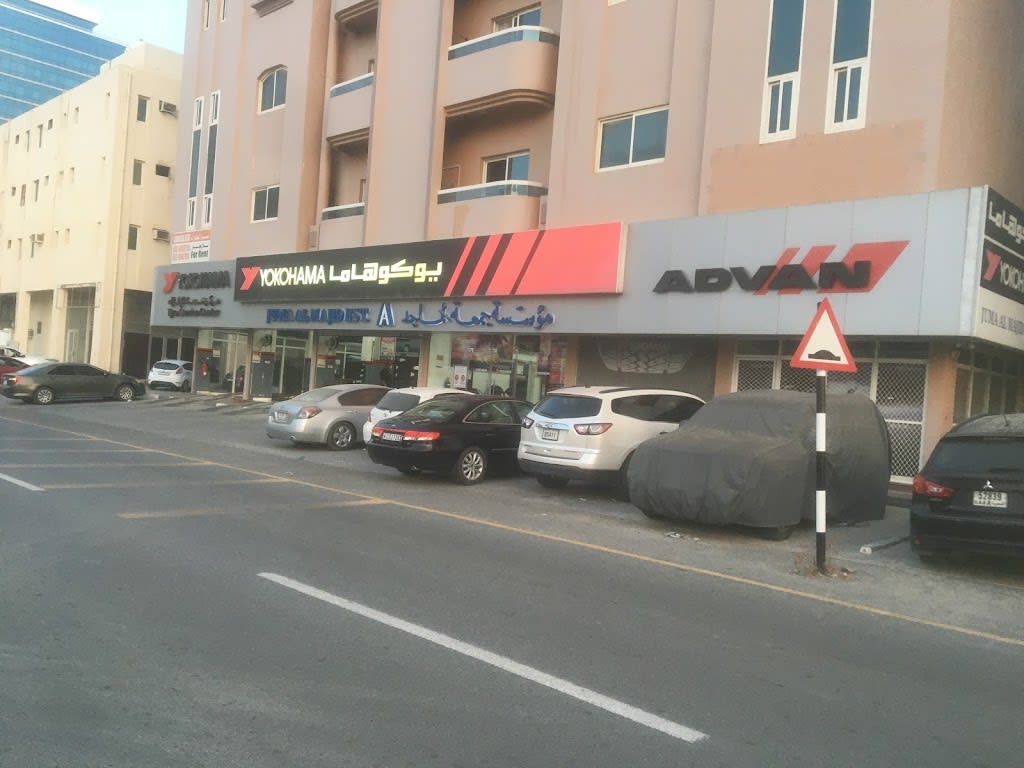
- Yokohama Tyres- Juma Al Majid CoFujairah
Listed for tyres and wheels — new parts. It carries Yokohama and fits what it sells.
3.6 on Google from 36 reviews
Listed for engine parts and gearbox and clutch parts. It carries Jimny and delivers.
4.3 on Google from 196 reviews
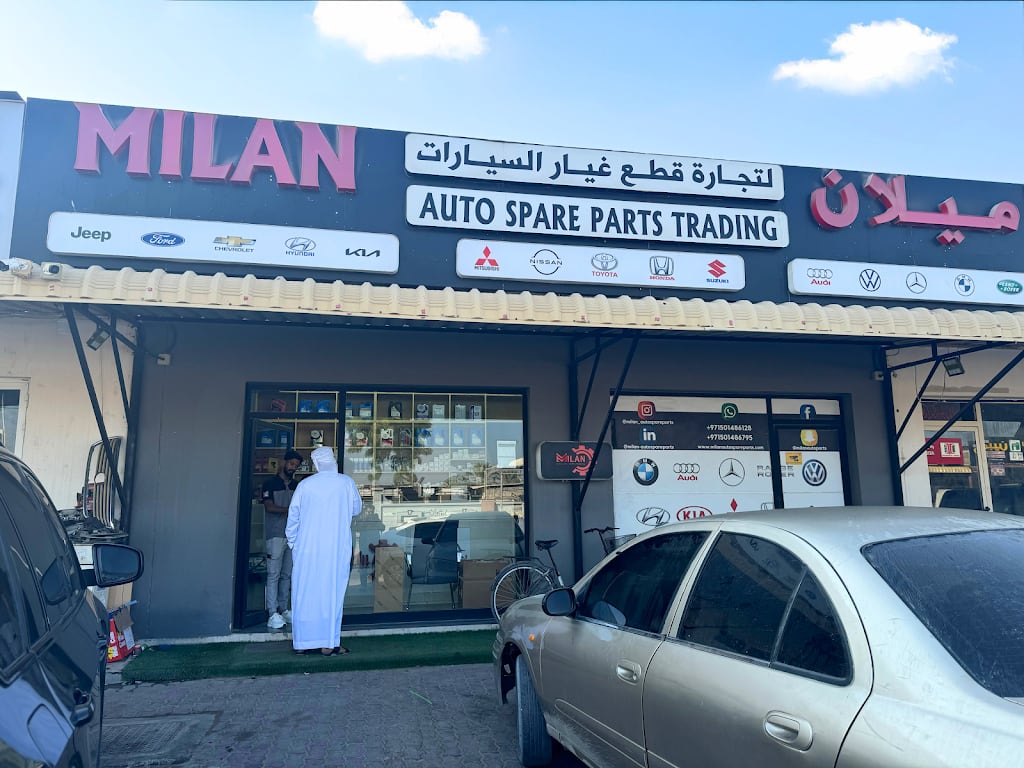
- Milan Auto Spare PartsUmm Al Quwain
Listed for engine parts and body panels and lights — genuine and aftermarket. It delivers to Abu Dhabi, Dubai and Sharjah.
4.7 on Google from 115 reviews
Listed for tyres and wheels and batteries — new parts. It fits what it sells.
4.3 on Google from 21 reviews


Listings are compiled from each business’s own public information. If you run one of these shops and want the entry corrected or removed, email easycarpartsteam@gmail.com.
Still easier on a form? The request goes to the same matched UAE suppliers, free, with only the number of shops you choose able to contact you.
Open the request formKeep reading
ATE — common questions
- Are ATE and Teves the same thing?
- Yes. The company was founded on the work of Alfred Teves, the Alfred Teves machine and fittings works was founded in 1911, and the three letters ATE replaced the earlier badge in 1921. Boxes, castings and old manuals use both names for the same manufacturer, so being offered Teves when you asked for ATE is not a substitution.
- Who owns ATE now?
- The automotive business division that carries ATE was part of Continental AG until it was listed as an independent company, AUMOVIO SE, on 18 September 2025, and the aftermarket entity behind the brand now trades under that group. Continental had itself acquired the business in 1998, when the Brake and Chassis Group of ITT Industries was sold to it.
- Why does the ATE website say it is part of Continental?
- Because as read on 3 September 2026 it says both things at once. One page still describes ATE as part of Continental and quotes Continental's own figures, while the footer of that same page and the history page name AUMOVIO and give the September 2025 listing date. This page reports the contradiction rather than choosing a side, because choosing one would be inventing a certainty the source does not contain.
- Does Porsche or Ferrari fit ATE brakes today?
- Nothing on this page supports that. ATE names the Ferrari 365 GTB and the Porsche 911 S as receiving its four-piston fixed calipers in 1972, more than fifty years ago, with no end date and no statement about any later model. Read every entry in the table with its year attached, and if factory fitment on your car matters, check the part number against the vehicle manufacturer's own catalogue.
- What is the groove on an ATE PowerDisc for?
- Several things at once, in ATE's own description. It draws off the dirt and gases that would otherwise degrade braking performance, it helps prevent scoring under intensive stress, it gives the disc a sportier appearance, and it acts as a wear gauge you can read by eye. When the groove has worn away, the disc needs replacing.
- Do I need special pads for an ATE PowerDisc?
- No. ATE states that its Original brake pads can also be used with the PowerDisc, so choosing the grooved disc does not force a different pad. ATE's general recommendation is Original pads with Original discs and it offers the PowerDisc as the sportier alternative.
- What is in an ATE Ceramic pad?
- ATE does not say, and neither will we. Its Ceramic page describes a special pad formula and talks about the results rather than the composition: significantly less dust formation, less abrasion, and reduced wear on both pads and discs compared with conventional low-metallic pads. Any more specific ingredient list you find has come from somewhere other than ATE.
- Did ATE really invent ABS?
- It put the first integrated anti-lock braking system into series production. The ATE ABS MK II reached series production in 1984 and was used by Ford in the United States and in Europe. Integrated means the hydraulic modulator and the control were built as a single unit, which is the architecture the industry has used ever since.
- Does ATE have a distributor in the UAE?
- None that the manufacturer publishes. There is no ATE regional office, importer or authorised distributor named on its own material, and no group location page listing an entity in the Emirates. Parts are clearly sold here, but a seller's claim to be the appointed distributor has nothing on the manufacturer's side to be checked against.
- Where are ATE brakes made?
- Not published. The two plants named in ATE's own material are historical rather than current: the Teves works at Rheinboellen appears in a 1972 entry and the Culpeper factory in Virginia in a 1977 one. Treating either as a current manufacturing country would be exactly the sort of tense error this page is written to avoid.
- Is ATE Classic just an old part number?
- It is a separate programme for older and classic vehicles rather than a leftover from the current range. If your car is old enough to have dropped out of the mainstream catalogue, ask for Classic by name, because the alternative a counter offers will otherwise be the nearest current part rather than the one designed for the car.
- Should I change brake fluid on a schedule in the UAE?
- Fluid is the part of the system most often forgotten, and the hydraulic side is where this brand's engineering came from in the first place. Brake fluid absorbs water over time and water lowers its boiling point, and a car doing short journeys in heat never brakes hard enough for long enough to expose the problem until the one occasion it matters. Follow the vehicle manufacturer's interval rather than waiting for a symptom.
Ask a human · free · no account
Not sure the ATE part you found is the real one?
Send us the number on the box and the car — we'll tell you.
Free · usually a reply in minutes · no obligation
Where these facts came from
Checked against the manufacturer’s own published material on the dates below. Anything we could not source is named as unsourced on this page rather than left out.
- ATE — company history, the dated fitments from 1926 to 1984, the ITT sale to Continental in 1998 and the AUMOVIO SE listing of 18 September 2025 — read 2026-09-03
- ATE — group and network page, which describes ATE as part of Continental while its own footer names AUMOVIO Aftermarket — read 2026-09-03
- ATE — Ceramic brake pads, the dust, abrasion and wear claims and the vehicle segments named — read 2026-09-03
- ATE — PowerDisc, the functions of the continuous groove and the note that Original pads may be used with it — read 2026-09-03
- ATE — Original brake pads, and the recommendation to pair them with ATE discs — read 2026-09-03