Sakura filters in the UAE
Air, oil, fuel, cabin and specialist filters for vehicles, machines and marine engines
Sakura is a trademark of its owner. We are not an authorised Sakura dealer or distributor, and nothing here is endorsed by them. The name and mark are shown to say which parts we quote and source.
The quick answer
Sakura is a filter brand made in Indonesia. Sakura Filter says on its own site that it operates under PT Selamat Sempurna Tbk, a listed Indonesian manufacturer in the ADR Group, and it gives two Indonesian production centres, one in North Jakarta and one in Banten. It claims fifty years in filtration, more than 7,000 part numbers covering original equipment, original-equipment service and aftermarket applications, capacity of roughly 96 million pieces a year, and sales in more than 125 countries. The catalogue is unusually weighted towards trucks, buses, heavy equipment and marine engines rather than towards passenger cars alone.
Ask a human · free · no account
Looking for genuine Sakura?
We'll only send you shops that actually stock it.
Free · usually a reply in minutes · no obligation
Key facts
- Sakura Filter states on its own about page that it operates under PT Selamat Sempurna Tbk, an Indonesian company. The brand name is Japanese; the manufacturing is not.
- Sakura gives two production centres, one of about five hectares in North Jakarta and one of about seventy-five hectares in Banten, with capacity of roughly 96 million pieces a year or eight million a month.
- Sakura publishes more than 7,000 part numbers, described as covering original equipment and original-equipment service as well as the aftermarket, across American, European and Asian applications.
- The published application list runs to automotive, commercial vehicles, trucks and buses, heavy equipment, marine and industrial. It is not a passenger-car catalogue with extras attached.
- Sakura's certifications, as published by the company, are IATF 16949, ISO 14001:2015, ISO/IEC 17025:2017 and Authorised Economic Operator status.
- Sakura shows supplier-award recognition from Suzuki, Mitsubishi, Hino, Isuzu, Toyota, Daihatsu and Yanmar. Awards are recognition from a customer, not a published fitment contract.
- PT Selamat Sempurna belongs to Indonesia's ADR Group, has been listed on the Indonesia Stock Exchange since 1996, and exports the large majority of what it makes.
Rather fill in a form? Send the same request here and matched UAE suppliers reply on WhatsApp either way.
Open the request formSakura — the range
| Range | How it is built | What it is for |
|---|---|---|
| Air filter | Element filtering the air drawn into the engine | Petrol and diesel engines across the car, commercial, heavy equipment and marine catalogues |
| Oil filter | Element filtering engine lubricating oil | The routine service filter, and the largest single family in most catalogues |
| Fuel filter | Element filtering fuel before it reaches the injection system | Petrol and diesel, with the diesel side carrying the heavier duty |
| Cabin air filter | Element filtering the air entering the passenger compartment | Cars and commercial cabs specified with a cabin filter |
| Fuel and water separator | Separator that removes water carried in the fuel before it reaches the pump | Diesel engines, and the family that matters most in trucks, machines and boats |
| Coolant filter | Element fitted into the coolant circuit | Heavy-duty diesel engines specified with coolant filtration, which most cars are not |
| Blow-by gas filter | Element in the crankcase ventilation path | Engines specified with crankcase gas filtration |
| Urea filter | Element filtering the diesel exhaust fluid feed | Diesel engines running an exhaust after-treatment system that consumes urea |
| Hydraulic oil filter | Element filtering hydraulic fluid rather than engine oil | Heavy equipment and industrial machinery, not passenger cars |
Source: Sakura Filter — the published product category list, read 2026-09-03
Which one fits your car
| If this is your car | Use | Why |
|---|---|---|
| Routine service on a Japanese or Korean passenger car | Oil filter | The family the brand is best known for at a counter here. Match the part number rather than the box picture. |
| Diesel pickup or light truck run in dusty conditions | Air filter | Sakura catalogues the same family across cars, commercials and heavy equipment, so the same brand can cover a fleet with mixed vehicles. |
| Diesel engine drawing fuel from a tank that collects water | Fuel and water separator | A separator and a plain fuel filter are different parts. On a diesel the separator is the one protecting the injection system. |
| Truck or bus engine specified with coolant filtration | Coolant filter | Almost no passenger car takes one. If a counter offers it for a car, that is a question rather than an upgrade. |
| Modern diesel running exhaust after-treatment | Urea filter | Part of the after-treatment system rather than the engine. Neglecting it produces fault codes, not smoke. |
| Excavator, loader or other hydraulic machine | Hydraulic oil filter | Hydraulic fluid, not engine oil. The two families are not interchangeable in any direction. |
The range descriptions are the manufacturer’s. Matching them to a car is our guidance, and it is a starting point rather than a fitment check — the part number is what actually decides. Send us the make, model and year and we will confirm it.
Original equipment
Sakura is the brand in this batch where an original-equipment table would have been easiest to fill and least honest. Here is everything Sakura publishes on the subject, in full. It describes itself as a Tier 1 OEM supplier. It says its part numbers cover original equipment and original-equipment service as well as the aftermarket. And its awards section shows supplier recognition from seven manufacturers: Suzuki, Mitsubishi, Hino, Isuzu, Toyota, Daihatsu and Yanmar. Taken together, that is strong evidence that Sakura genuinely sells to vehicle and engine makers. What it is not is a statement that a particular model, in a particular year, leaves a particular factory carrying a particular Sakura part number, and no such statement exists on Sakura's site. Seven marque names printed under a heading reading Original equipment would have said the second thing while the small print said the first. So the names are here, described as what they are, and the table stays empty.
Where it is made
Indonesia
Sakura publishes two production centres. One occupies about five hectares in North Jakarta. The other is roughly seventy-five hectares in Banten, at the ADR industrial complex at Kadujaya, Curug, in Tangerang. Between them Sakura gives capacity of around 96 million pieces a year. This is the whole of the manufacturing footprint the brand publishes, and it is Indonesian.
Source: Sakura Filter — about us, PT Selamat Sempurna, the two production centres, capacity, certifications and supplier awards, read 2026-09-03
One qualification on the entry above, because it is a page about Sakura and not about PT Selamat Sempurna's whole group. The two plants named are the ones Sakura publishes for this brand. The parent group is larger, makes radiators, brake parts, coolant and dump hoists under other names, and exports across more than a hundred markets, so a Sakura-branded box is one output of a wider Indonesian manufacturer rather than the only thing those sites do. Sakura does not publish which of the two plants produces which part number.
Sakura in the UAE
Nothing on Sakura's own site names an importer, an agent, a regional office or a distributor for this country, and we found no first-party statement about the Middle East at all. Sakura does say its parts reach more than 125 countries, which is a claim about reach rather than about who handles it here. We also hold detailed stock records for a few hundred UAE parts businesses and none of them records carrying this brand. Treat that as a limit of our records rather than a finding about the market: only a minority of those businesses list any brands at all, so a blank is a statement about our own coverage. Ask a counter directly before making a trip for it.
The single most useful fact about Sakura
Sakura is made in Indonesia. Not in Japan.
That sentence is worth the whole page, because almost nothing about the brand suggests it. The name is a Japanese word. The catalogue leans heavily towards Japanese applications. It sits on a shelf beside genuinely Japanese filter brands and it is bought, in this market more than most, on the assumption that the name tells you where the box came from.
Sakura Filter's own about page states that the brand operates under PT Selamat Sempurna Tbk, and it gives an Indonesian address for its main site: the ADR industrial complex at Kadujaya in Curug, Tangerang, in Banten province. There is nothing hidden about it. The company publishes its plants, their sizes, its output and its certifications, and none of that would be worth publishing if it were embarrassing.
So this is a correction rather than a warning. The product is what the manufacturer says it is; it is the assumption a buyer arrives with that is wrong. If country of origin genuinely matters to how you buy filters, this is the brand where knowing it changes your answer, and knowing it is free.
Who PT Selamat Sempurna is
The company behind the brand is not a small operation and it is not obscure. PT Selamat Sempurna has been listed on the Indonesia Stock Exchange since 1996 and is part of Indonesia's ADR Group, which also puts out radiators, brake parts, coolant and dump hoists under ADR names. Filters and radiators are its two big lines and it is among the largest producers of both in the country.
It is also an export business first. The large majority of its revenue comes from outside Indonesia, across more than a hundred destination markets, and the Sakura trademark is registered in more than a hundred countries. That is a different shape from a domestic manufacturer whose exports are an afterthought, and it explains why a brand few people outside the trade could place geographically turns up on counters from Africa to the Gulf.
Sakura itself claims fifty years in the filtration business, sales into more than 125 countries, and more than 7,000 part numbers, described as the widest range of applications it can offer across original equipment, original-equipment service and aftermarket. It does not publish a founding year for the brand under that name, and this page does not invent one.
Two plants, and what the certifications actually certify
The published manufacturing footprint is two sites. One in North Jakarta occupies roughly five hectares. The other, in Banten, occupies roughly seventy-five. Combined output is given as about 96 million pieces a year, or eight million a month.
The certifications Sakura lists are IATF 16949, ISO 14001:2015, ISO 17025:2017 and Authorised Economic Operator status. It is worth being precise about what each of those is, because certification badges get read as quality guarantees and they are not quite that. IATF 16949 is the automotive quality management standard, and holding it is essentially a condition of selling into vehicle manufacturing at all. ISO 14001 is environmental management. ISO 17025 covers the competence of testing and calibration laboratories, which means the company's own test lab is accredited rather than that any given part passed a test. Authorised Economic Operator is a customs status about supply-chain security and it speeds goods through borders.
Together they describe a manufacturer set up to supply industry rather than a trading house putting its name on somebody else's element. That is a meaningful thing to know, and it is a different claim from any statement about how a Sakura filter performs against another brand, which nobody here is in a position to make.
Tier 1 supplier, an awards wall, and the gap between them
Sakura describes itself as a Tier 1 OEM supplier and sells part numbers labelled for original equipment and original-equipment service alongside its aftermarket range. Its awards section shows supplier recognition from Suzuki, Mitsubishi, Hino, Isuzu, Toyota, Daihatsu and Yanmar.
Seven manufacturers is a lot of manufacturers, and it would be silly to pretend that means nothing. Vehicle makers do not hand supplier awards to companies they do not buy from. Read it as what it is and it tells you something real: Sakura is not a badge-only aftermarket label, it does business with vehicle and engine builders, and it does so at a scale that gets noticed.
What an award does not tell you is which part. It does not say that a Hilux left the line with a Sakura element in it, or which model years, or which markets, or which part number. Recognition for being a good supplier and a published statement of factory fitment are two different documents, and Sakura publishes the first and not the second.
The distinction matters at a counter, because the sentence a shop will use is not the careful one. If somebody tells you Sakura is the original filter for your Isuzu, the honest response is to ask which catalogue says so. If the answer is the vehicle manufacturer's own parts catalogue with a number in it, that is an answer. If the answer is the awards page, it is not.
This catalogue was drawn for trucks and machines
Look at the applications Sakura lists and a pattern appears that most filter brand pages would smooth over. The published list is automotive, commercial, trucks and buses, heavy equipment, marine and industrial.
The product families follow. Alongside the four every car needs, Sakura catalogues coolant filters, fuel and water separators, blow-by gas filters, air and oil separators, urea filters, hydraulic oil filters, air breathers, hydraulic breathers, gas filters, water filters, filter bags and dust-collector components. Most of those never go near a passenger car. Coolant filtration is a heavy-duty diesel practice. Hydraulic breathers belong on machines. Filter bags and dust-collector parts are industrial extraction.
For a reader in this country that is more useful than it sounds. A great deal of the vehicle population here is not a family saloon: it is pickups, light trucks, tippers, buses, plant on sites and boats. A brand whose catalogue was drawn with those in mind is likelier to have the odd part than a brand built around European passenger cars, and the same badge covering a mixed fleet is a real convenience for whoever is buying for it.
It also means the brand's centre of gravity is not where a casual buyer assumes. If you are choosing Sakura for a hatchback, you are buying from the edge of a catalogue whose bulk is aimed somewhere heavier.
Part numbers, and a code table we are not printing
A short prefix key for Sakura part numbers circulates on cross-reference sites, and it is easy to find. We have deliberately not published it.
The reason is not that it is necessarily wrong. It is that Sakura's own products page publishes no prefix key at all, so anything we printed would be transcribed from third-party lookup tables that copy each other, and a prefix scheme that holds for one family and not another is worse than no scheme. A reader who trusts it orders the wrong element and blames the brand.
The check that always works costs nothing: write down or photograph the number on the filter coming off the car, and read the number on the box you are handed before you leave the counter. In a market with as many independent counters as this one, that habit beats any decoding table, and it works for every brand rather than for one.
What this page could not establish
Sakura publishes no counterfeit-identification procedure that we could find. Some manufacturers publish a specific, physical, at-the-counter check, and where they do it belongs on a page like this because it is free and it works. Making one up for a brand that has not published one would let a reader condemn a genuine filter with total confidence, which is worse than leaving the section out.
There is no Sakura statement about the Middle East on the company's own site, no named regional entity and no named importer for this country. The brand says its parts go to more than 125 countries and does not say who moves them here.
And there is no price on this page. Sakura publishes no retail figure for this market, a filter's price depends on the family, the application and the counter, and a number typed into a brand page once will be wrong within a year without anybody noticing. Where we quote prices at all, we date them and revisit them.
What the name buys you, and what it does not
The honest summary of this brand is short. Sakura is a large, certified, export-oriented Indonesian filter manufacturer with a very broad catalogue, real business with vehicle and engine makers, and a Japanese name it is fully entitled to use.
The name buys you nothing about where the filter was built, and this is the one page where that is worth saying out loud, because it is the assumption that sends people to the brand in the first place. Nobody is being deceived; Sakura publishes its plants on its own website. It is simply that nobody reads the about page of a filter company before buying a filter.
If country of origin is not part of how you choose parts, none of this changes anything and the catalogue breadth is probably the more useful fact on the page. If it is, you now know the answer, which is more than the box was going to tell you.
Shops for filters in the UAE
These shops are here because their recorded stock covers at least one of oil filter, air filter, fuel filter and cabin filter — not because we have confirmed that each one carries Sakura. We hold no reliable shop-by-shop record of which brands are on which shelf, so ring or message before you travel.
Where to actually buy this
Shops whose own website lists these parts, or whose stock we have recorded ourselves. Last checked July 2026. Not paid placement.
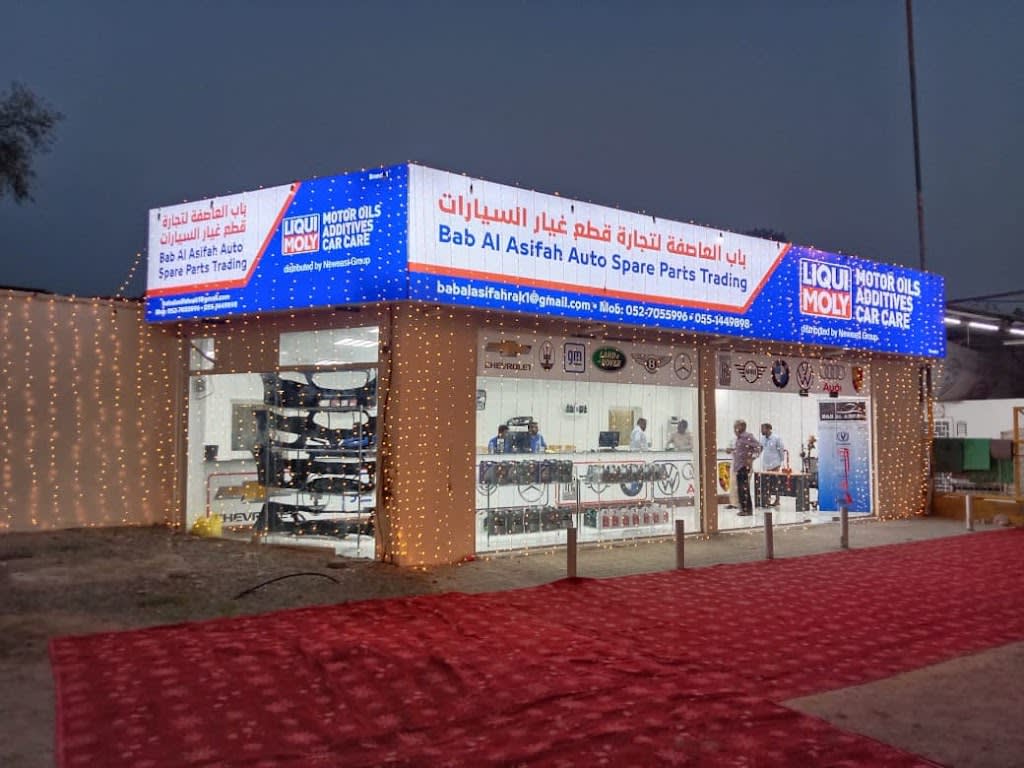
- Bab Al Asifah Auto Spare Parts Tr bb laaSf@Ras Al Khaimah
Stocks oil filters, air filters and cabin filters — genuine and aftermarket, new parts. It sells trade as well as retail.
5.0 on Google from 6 reviews
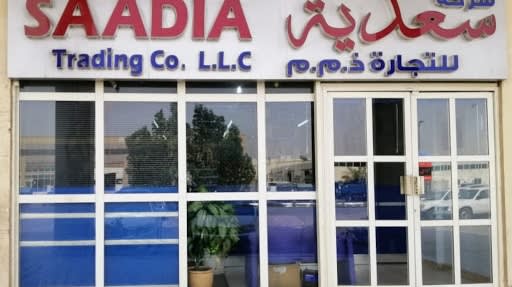
- Saadia Trading CompanyAbu Dhabi
Stocks oil filters, air filters and fuel filters — genuine OEM. It carries Hino, Mitsubishi, Iveco and Valeo and 2 more and ships outside the UAE.
4.6 on Google from 20 reviews
- Car spare partsDubai
Stocks oil filters, air filters and fuel filters. It carries Bosch, Bremi, Astou and Addo and 11 more.
4.5 on Google from 2 reviews
- Sparemate Auto Spare Parts TradingAbu Dhabi
Stocks oil filters, air filters and cabin filters — genuine OEM.
4.4 on Google from 32 reviews
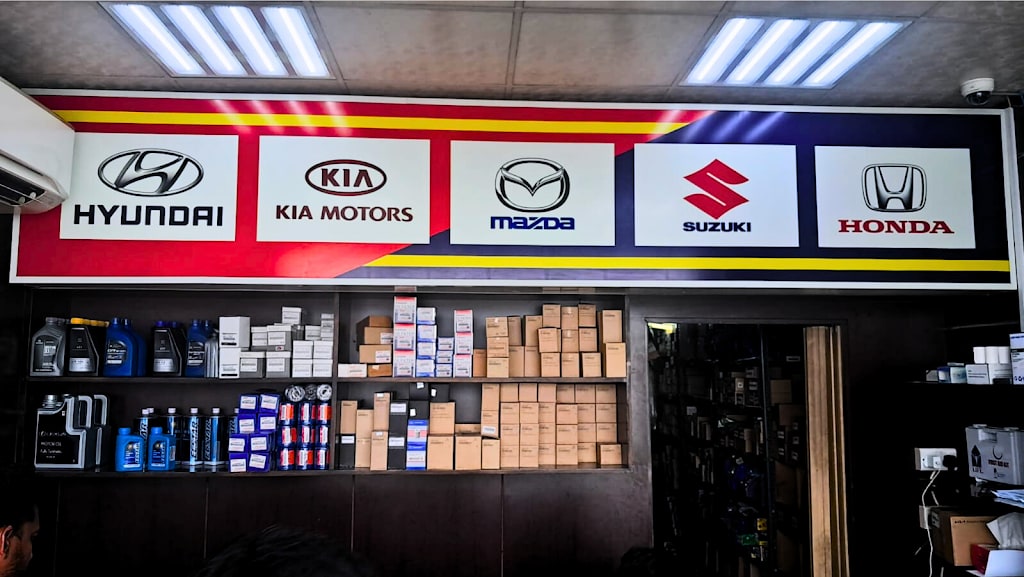
Stocks air filters and cabin filters — genuine and aftermarket, new parts. It carries Amaron, Varta, Bosch and ACDelco and 9 more, fits what it sells and delivers to Dubai, Abu Dhabi and Sharjah.
5.0 on Google from 18 reviews
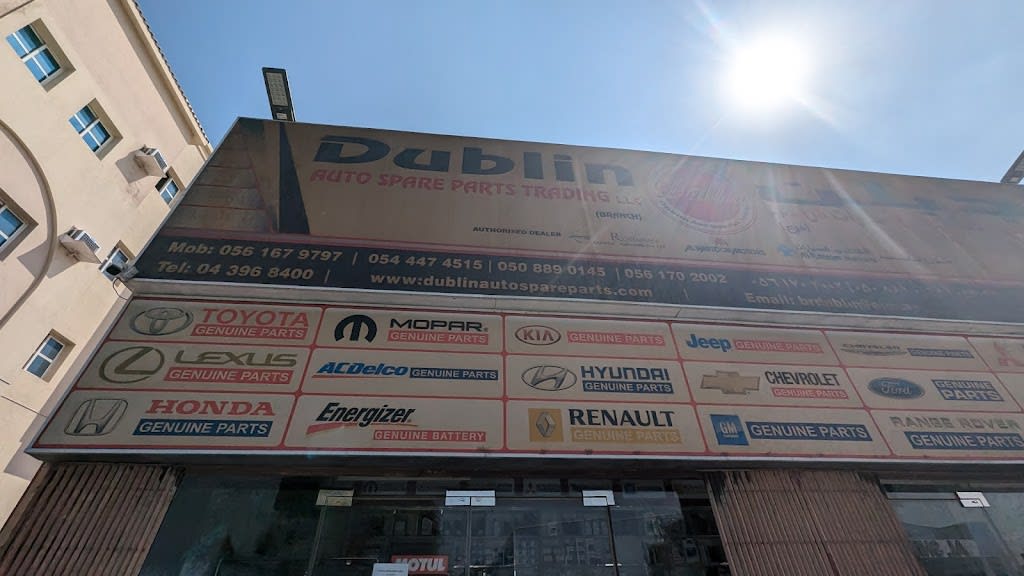
- DUBLIN AUTO SPARE PARTSRas Al Khaimah
Stocks oil filters and air filters — genuine and aftermarket, new parts. It carries Acdelco and Mopar and delivers.
5.0 on Google from 2 reviews

Listings are compiled from each business’s own public information. If you run one of these shops and want the entry corrected or removed, email easycarpartsteam@gmail.com.
Still easier on a form? The request goes to the same matched UAE suppliers, free, with only the number of shops you choose able to contact you.
Open the request formKeep reading
Sakura — common questions
- Is Sakura a Japanese brand?
- The name is Japanese and the manufacturing is Indonesian. Sakura Filter's own about page says the brand operates under PT Selamat Sempurna Tbk, an Indonesian company, and gives two Indonesian production centres, one in North Jakarta and one in Banten. It is the fact about this brand most likely to be different from what a buyer assumed.
- Who makes Sakura filters?
- PT Selamat Sempurna Tbk, part of Indonesia's ADR Group and listed on the Indonesia Stock Exchange since 1996. The same group produces radiators, brake parts, coolant and dump hoists under other names, and the large majority of its revenue comes from exports.
- Does Sakura supply Toyota or Isuzu at the factory?
- We cannot say that, and Sakura does not say it either. What Sakura publishes is that it is a Tier 1 OEM supplier, that its part numbers cover original equipment and original-equipment service as well as aftermarket, and that it has received supplier awards from Suzuki, Mitsubishi, Hino, Isuzu, Toyota, Daihatsu and Yanmar. Awards are recognition from a customer. They do not name a model, a year or a part number.
- Where are Sakura filters made?
- In Indonesia, at two published sites: about five hectares in North Jakarta and about seventy-five hectares in Banten, at the ADR industrial complex at Kadujaya in Curug, Tangerang. Sakura gives combined capacity of roughly 96 million pieces a year and does not say which site makes which part number.
- What certifications does Sakura hold?
- Sakura lists IATF 16949, which is the automotive quality management standard, ISO 14001:2015 for environmental management, ISO 17025:2017 covering the competence of its testing laboratory, and Authorised Economic Operator customs status. Those describe how the company is run and tested, not how any individual filter performs.
- How many Sakura part numbers are there?
- Sakura publishes more than 7,000, described as covering original equipment, original-equipment service and aftermarket applications, and spanning American, European and Asian vehicles across cars, commercials, trucks and buses, heavy equipment, marine and industrial uses.
- Is Sakura only for cars?
- No, and the catalogue leans away from cars more than most people expect. Alongside air, oil, fuel and cabin filters it carries coolant filters, fuel and water separators, blow-by gas filters, air and oil separators, urea filters, hydraulic oil filters, breathers, gas and water filters, filter bags and dust-collector components. Much of that is truck, machine, marine and industrial equipment.
- Can I decode a Sakura part number from its prefix?
- This page does not publish a prefix key, because Sakura's own products page does not publish one. The short prefix tables that circulate come from third-party cross-reference sites that copy one another, and a scheme that is right for one family and wrong for another will sell you the wrong element. Match the number on the filter you are replacing.
- How do I check a Sakura filter is genuine?
- Sakura publishes no counterfeit-identification procedure we could find, so this page offers none rather than inventing one. Where a manufacturer does publish a physical check it is worth using; where none exists, the workable habits are ordinary. Carry the old part number, compare it with the box at the counter, and use a seller you can go back to.
- Is there a Sakura distributor in the UAE?
- None that Sakura names. There is no Middle East entity, importer or agent on the company's own site, and no first-party statement about this country at all. Sakura says its parts reach more than 125 countries, which describes reach and not who handles it here.
- What does a Sakura filter cost in the UAE?
- No figure appears here on purpose. Sakura publishes no retail price for this market, the number varies with the family, the application and the counter, and a price typed into a brand page once goes stale quietly. Our guides carry pricing where we can date it and keep it current.
Ask a human · free · no account
Not sure the Sakura part you found is the real one?
Send us the number on the box and the car — we'll tell you.
Free · usually a reply in minutes · no obligation
Where these facts came from
Checked against the manufacturer’s own published material on the dates below. Anything we could not source is named as unsourced on this page rather than left out.
- Sakura Filter — home page, manufacturer, part number count and Tier 1 supplier claim — read 2026-09-03
- Sakura Filter — about us, PT Selamat Sempurna, the two production centres, capacity, certifications and supplier awards — read 2026-09-03
- Sakura Filter — the published product category list — read 2026-09-03
- Indonesia Investments — profile of PT Selamat Sempurna, the ADR Group, exports and stock exchange listing (third-party source) — read 2026-09-03